
Driving for Uber or Lyft in Las Vegas puts your vehicle through conditions most cars never face. Between 115-degree summer heat, stop-and-go Strip traffic, and 30,000+ miles a year on the clock, your car ages faster than the average commuter vehicle. A breakdown does not just mean a repair bill. It means lost earnings, a potential deactivation from the platform, and passengers stranded in triple-digit heat.
See how Mobile Car Care’s Essential Plan keeps rideshare vehicles road-ready for $29.99/month.
This checklist breaks down exactly what rideshare drivers in Las Vegas need to inspect on a weekly, monthly, and quarterly basis. It also covers how the desert climate accelerates wear on critical systems and how a subscription-based maintenance plan can help you budget for upkeep without surprise costs cutting into your earnings.
Why Rideshare Drivers in Las Vegas Need a Dedicated Maintenance Plan
The average American drives about 13,500 miles per year. Full-time rideshare drivers in Las Vegas often log 25,000 to 40,000 miles annually. That is roughly two to three times the normal rate, which means your oil, brakes, tires, and cooling system wear out two to three times faster. A solid car maintenance checklist is not optional at this mileage. It is a requirement.
Las Vegas adds another layer of stress. The Mojave Desert climate pushes summer temperatures above 115 degrees Fahrenheit, and asphalt surface temperatures can exceed 150 degrees. This extreme heat breaks down engine oil faster, degrades rubber components like belts and hoses, shortens battery life by up to 33%, and puts constant strain on your cooling system.
Uber and Lyft both require vehicles to pass annual inspections. A failed inspection means you cannot drive until the issue is fixed. Proactive maintenance is cheaper than reactive repairs and keeps you earning instead of waiting at a shop.
Here is the breakdown of what to check and when.
Weekly Vehicle Maintenance Checklist for Rideshare Drivers
These quick checks take 10 to 15 minutes and can prevent most roadside breakdowns. Do them every Sunday before your first ride of the week. For a broader look at seasonal concerns, see our seasonal maintenance guide for Las Vegas drivers.
- Tire pressure: Check all four tires plus the spare with a digital gauge. Las Vegas heat causes tire pressure to fluctuate by 1 to 2 PSI for every 10-degree temperature change. Under-inflated tires waste fuel and wear unevenly. Over-inflated tires lose traction, especially on hot pavement.
- Tire tread depth: Do a quick tire tread depth check by inserting a penny into the tread with Lincoln’s head facing down. If you can see the top of his head, the tread is below 2/32″ and the tire needs replacement. Rideshare drivers should replace tires closer to 4/32″ for better wet-weather grip during monsoon season (July through September).
- Engine oil level: Pull the dipstick, wipe it clean, reinsert, and check the level. Oil that looks black or gritty needs changing sooner than your mileage interval suggests, especially in summer.
- Coolant level: Check the overflow reservoir when the engine is cold. Low coolant in Las Vegas summer heat is a fast track to engine overheating. Never open a radiator cap on a hot engine.
- Windshield washer fluid: Desert dust, construction debris, and bug splatter build up fast. Passengers notice a dirty windshield, and it affects your rider rating.
- All lights: Walk around the car and check headlights, taillights, brake lights, and turn signals. A burned-out light can fail an Uber or Lyft vehicle inspection.
- Interior cleanliness: Vacuum seats and floor mats, wipe down surfaces, and check for odors. Cleanliness directly impacts your star rating and tip frequency.
Monthly Maintenance Tasks for Uber and Lyft Vehicles
Monthly checks dig deeper into systems that degrade over weeks of high-mileage driving. Set a recurring calendar reminder for the first of each month.
- Engine air filter: Pop the hood and inspect the air filter. In the Las Vegas Valley, dust and sand particles clog filters faster than in most cities. A dirty air filter reduces fuel economy by up to 10% and makes the engine work harder. Replace every 12,000 to 15,000 miles, or sooner if it looks visibly dirty.
- Cabin air filter: This filters the air your passengers breathe. A clogged cabin filter means weak A/C output and stale air. Replace every 10,000 to 15,000 miles. Your riders will notice the difference.
- Brake pad thickness: Look through the wheel spokes at the brake pads. Most pads start at 10 to 12mm thick. Replace them at 3mm or when you hear squealing. Stop-and-go traffic near the Strip, Convention Center, and airport wears pads faster than highway driving.
- Battery terminals: Check for white or greenish corrosion on the battery terminals. Clean with a wire brush if needed. For a full walkthrough, see our battery health check guide. Las Vegas heat is hard on car batteries. The average battery lasts 3 to 5 years nationally, but in desert climates, expect closer to 2 to 3 years.
- Belts and hoses: Look for cracks, fraying, or soft spots on serpentine belts and radiator hoses. Heat accelerates rubber deterioration. Learn when to replace a belt before it fails. A broken serpentine belt disables the power steering, A/C, and alternator all at once.
- Fluid levels: Check brake fluid, power steering fluid, and transmission fluid. Top off as needed with the correct specification for your vehicle.
- Wiper blades: Sun exposure degrades rubber wiper blades even when it is not raining. Replace them every 3 to 4 months in Las Vegas. When monsoon storms hit, you need wipers that actually clear water.
Quarterly and Seasonal Maintenance for Vegas Rideshare Vehicles
These are the bigger-ticket items that keep your vehicle reliable over the long haul. A quarterly schedule aligns well with the mileage rideshare drivers accumulate every 90 days.
- Oil and filter change: Most manufacturers recommend oil changes every 5,000 to 7,500 miles with synthetic oil. At rideshare mileage rates, that means every 6 to 10 weeks in Las Vegas. Stick to synthetic oil. Conventional oil breaks down faster in extreme heat.
- Tire rotation: Rotate tires every 5,000 to 7,500 miles to equalize wear across all four tires. Front tires wear faster on front-wheel-drive vehicles (which includes most popular rideshare cars like the Camry, Civic, and Corolla).
- Cooling system flush: Have the coolant tested and replaced if it has lost its protective properties. The cooling system is the single most critical system for Las Vegas driving. Read our guide on overheating checks to understand why. A failed water pump or cracked radiator hose can lead to catastrophic engine damage in minutes when ambient temperatures exceed 110 degrees.
- Brake fluid test: Brake fluid absorbs moisture over time, which lowers its boiling point and reduces braking performance. Learn more about brake fluid flushes and when you need one. Test it every 6 months and replace every 2 years or 30,000 miles.
- Alignment check: Las Vegas road construction and potholes knock wheels out of alignment. Misalignment causes uneven tire wear and poor handling. Get an alignment check every 6 months or when you notice the vehicle pulling to one side.
- A/C performance check: Your air conditioning runs 8 to 10 months a year in Las Vegas. Low refrigerant, a failing compressor, or a clogged condenser will leave you and your passengers sweating. A/C failure during a summer shift is a deal-breaker for rider satisfaction.
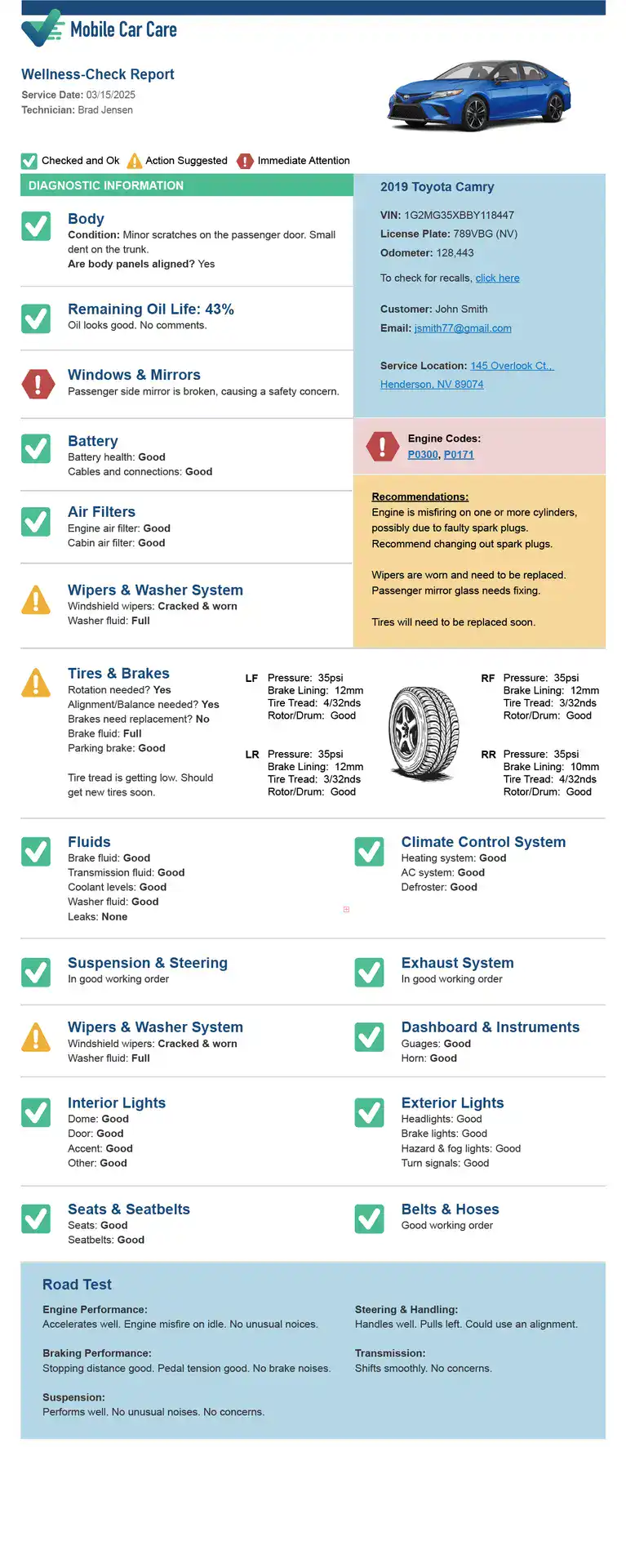
- 85-point professional inspection: A complete quarterly vehicle inspection catches problems you might miss on your own. Mobile Car Care’s 85-point inspection covers safety systems, fluids, tires, brakes, battery, belts, lights, and more, all performed at your location so you do not lose driving time.
How Does Las Vegas Heat Affect Your Rideshare Vehicle?
Las Vegas is one of the harshest climates in the country for vehicles. Here is how the heat specifically impacts the systems rideshare drivers depend on most.
Battery Life
Heat is worse for car batteries than cold. High temperatures accelerate the chemical reaction inside the battery, causing internal corrosion and fluid evaporation. According to AAA, batteries in hot climates last an average of 30 months compared to 51 months in cooler regions. For rideshare drivers running the electrical system hard (phone chargers, GPS, A/C blower), battery failure can happen even sooner. Test your battery voltage monthly during summer.
Cooling System Strain
Your engine produces about 4,000 degrees Fahrenheit during combustion. The cooling system’s job is to keep the engine block at around 200 degrees. When the outside air is already 115 degrees, the cooling system has much less margin for error. Idling in airport queue lots and casino pickup zones puts extra load on the cooling system because there is less airflow through the radiator.
Tire Degradation
Asphalt surface temperatures in Las Vegas can exceed 150 degrees in summer. This softens tire rubber and increases rolling friction, which accelerates tread wear. Tires also expand more in heat, making proper inflation critical. The National Highway Traffic Safety Administration (NHTSA) reports that under-inflated tires are a factor in roughly 11,000 crashes per year.
Oil Breakdown
Engine oil thins out as it gets hotter. When combined with the extended operating hours of rideshare driving, oil breaks down faster and loses its ability to protect engine components. Stick to full synthetic oil rated for high-temperature operation. Check your owner’s manual for the recommended viscosity grade.
Interior and Exterior Wear
UV radiation in the Mojave Desert is among the highest in the country. It fades paint, cracks dashboards, and degrades seat materials. Use a windshield sunshade when parked. Consider window tint (Nevada allows 35% VLT on all windows except the windshield) to protect the interior and keep the cabin cooler for passengers.
What Does a Professional 85-Point Vehicle Inspection Cover?
Mobile Car Care’s 85-point inspection is designed to catch issues before they become breakdowns. Here is what a technician checks during a typical visit:
- Safety systems: All lights, horn, seat belts, safety warning indicators, defroster
- Tires: PSI, tread depth, sidewall damage, lug nut torque, spare tire condition
- Brakes: Pad thickness, rotor condition, brake fluid level and color
- Battery: Voltage testing, terminal condition, cable integrity
- Fluids: Engine oil, coolant, brake fluid, power steering fluid, transmission fluid, windshield washer fluid
- Belts and hoses: Condition, tension, signs of cracking or leaks
- Filters: Engine air filter and cabin air filter condition
- Exterior: Paint condition, glass, wipers, mirrors, body damage
- Interior: Dashboard warnings, seat condition, controls
- Operational check: Shocks and struts, steering response, parking brake, exhaust system
- Test drive: Real-world assessment of acceleration, braking, suspension, and transmission behavior
After each inspection, you receive a digital report with photos, observations, and recommendations. This report is useful documentation if Uber or Lyft requests proof of vehicle maintenance.
How Mobile Car Care’s Subscription Plans Help Rideshare Drivers
One of the biggest challenges for rideshare drivers is managing maintenance costs. Earnings fluctuate week to week, but car problems do not wait for a good week. A maintenance subscription turns unpredictable repair costs into a fixed monthly expense.
Essential Plan: $29.99 per Month
The Essential Plan includes quarterly 85-point inspections, fluid top-offs during each visit, tire pressure adjustments, and a digital inspection report. At $29.99 per month, it costs less than a single oil change at most shops. For rideshare drivers running multiple vehicles, a 10% multi-vehicle discount brings the per-car cost down further.
Add-on services are available at transparent, published prices: oil changes at $29.99 plus the cost of oil, air filter replacements included once per year, and wiper blade replacements at $9.99 plus the cost of blades.
Total Care Plan: Full Coverage
The Total Care Plan adds oil changes (up to 2 per year with parts included), battery testing and replacement (you pay only for the battery itself), wiper blade replacement, light bulb replacement, free runner service (2 times per year for shop visits that require a lift), free jump starts (2 times per year), and emergency fuel delivery. The 20% multi-vehicle discount makes this plan especially practical for drivers operating two or more rideshare vehicles.
Get started with Mobile Car Care’s Essential Plan and keep your rideshare vehicle in top condition.
Why Mobile Matters for Rideshare Drivers
Traditional shop visits eat into your earning hours. Between driving to the shop, waiting, and driving back, you lose 2 to 4 hours per visit. Mobile Car Care comes to your home, apartment complex, or wherever you park between shifts. You can get your vehicle inspected while you sleep, eat, or handle other errands. No lost income. No schedule disruption.
Frequently Asked Questions
What maintenance does Uber require for drivers in Las Vegas?
Uber requires an annual vehicle inspection in Nevada covering safety items like brakes, tires, lights, steering, suspension, and exhaust. Your vehicle must also meet age requirements (typically 15 years old or newer). Keeping up with regular maintenance helps you pass the inspection without issues and avoids deactivation.
How often should rideshare drivers change their oil?
Rideshare drivers should change their oil every 5,000 to 7,500 miles when using full synthetic oil. In Las Vegas, the extreme heat breaks down oil faster, so checking the oil condition monthly is a good practice. If the oil looks dark and gritty before you hit your mileage interval, change it early.
Do Lyft drivers need to keep maintenance records?
Lyft does not require ongoing maintenance records, but keeping them is smart. Digital inspection reports from a professional service give you documentation if a dispute arises about vehicle condition. They also help you track recurring issues and plan for upcoming expenses.
How does Las Vegas heat affect car batteries?
Las Vegas heat causes battery fluid to evaporate and accelerates internal corrosion. Batteries in hot climates last about 30 months on average compared to 51 months in cooler regions. Rideshare drivers should test battery voltage monthly during summer and plan for replacement every 2 to 3 years.
Can I deduct car maintenance costs as a rideshare driver?
Rideshare drivers who track actual vehicle expenses (instead of the standard mileage deduction) can deduct maintenance costs including oil changes, tire replacements, and inspection fees. A subscription maintenance plan with monthly statements simplifies record-keeping for tax purposes. Consult a tax professional for advice specific to your situation.
Keep Your Rideshare Vehicle Road-Ready
Driving for Uber or Lyft in Las Vegas is hard on your car. The combination of high mileage, extreme heat, and constant stop-and-go driving accelerates wear on every major system. A consistent maintenance schedule protects your vehicle, your earnings, and your passenger ratings.
The checklist above gives you a clear framework: weekly quick checks, monthly deeper inspections, and quarterly professional service. Following it will help you catch problems early, avoid costly breakdowns, and pass your annual platform inspections without surprises.