What Is a Brake Fluid Flush?
A brake fluid flush is a maintenance service that removes all the old brake fluid from your vehicle’s braking system and replaces it with fresh, clean fluid. Unlike a simple top-off that just adds new fluid to the reservoir, a flush pushes old fluid out through every brake line, caliper, and wheel cylinder to ensure the entire system is filled with uncontaminated fluid.
Brake fluid is the hydraulic link between your brake pedal and the brake pads that stop your wheels. When you press the pedal, brake fluid transfers that force through the lines to the calipers, which squeeze the pads against the rotors. If the fluid is degraded or contaminated, that transfer becomes less effective, and your stopping power suffers.
Why Brake Fluid Flush Matters
Brake fluid is hygroscopic, meaning it absorbs moisture from the air over time. Even in a sealed system, small amounts of water enter through microscopic pores in brake hoses and through the reservoir cap during normal temperature cycling.
This matters for two critical reasons:
Reduced boiling point: Fresh DOT 3 brake fluid boils at around 401 degrees Fahrenheit. As it absorbs moisture, that boiling point drops significantly. Fluid that has absorbed just 3% water can boil at temperatures your brakes regularly reach during hard stops or driving downhill. When brake fluid boils, it creates vapor pockets that compress instead of transmitting force. The result is a soft or spongy pedal that goes to the floor without stopping your car.
Internal corrosion: Water in brake fluid causes rust and corrosion inside brake lines, calipers, and the master cylinder. Corroded components eventually fail, leading to leaks and expensive repairs that far exceed the cost of a routine flush.
In Las Vegas, where summer temperatures regularly exceed 110 degrees, brake systems work harder than in cooler climates. The combination of extreme heat and stop-and-go traffic on the Strip or I-15 means your brake fluid degrades faster than the national average.
Signs You Need a Brake Fluid Flush
Your vehicle will give you several warning signs that the brake fluid needs attention. Watch for these indicators:
Spongy or Soft Brake Pedal
If your brake pedal feels mushy or sinks further than usual before the brakes engage, degraded fluid or air in the lines is a likely cause. This is the most common symptom and should not be ignored.
Discolored Brake Fluid
Fresh brake fluid is clear to light amber. Over time, it darkens as it absorbs moisture and collects contaminants. If the fluid in your brake reservoir looks dark brown or black, it is overdue for a flush. You can check this yourself by popping the hood and looking at the brake fluid reservoir, which is typically a small translucent container near the firewall on the driver’s side.
Longer Stopping Distances
If your car takes noticeably longer to come to a complete stop, degraded brake fluid could be reducing hydraulic pressure. This is especially dangerous in emergency situations.
ABS or Brake Warning Light
While these lights can indicate several issues, contaminated brake fluid is one possible trigger. A professional inspection will determine the cause. If you notice a brake fluid leak alongside a warning light, have the system inspected immediately.
It Has Been Two or More Years
Even if you do not notice symptoms, most manufacturers recommend a brake fluid flush every two to three years or every 30,000 miles. Some high-performance vehicles require it more frequently. Check your owner’s manual for the specific interval.
The Brake Fluid Flush Process
A professional brake fluid flush typically follows these steps:
- Inspection: The technician checks the current fluid condition, reservoir level, and inspects brake lines and hoses for leaks or damage.
- Old fluid removal: The old fluid is removed from the master cylinder reservoir using a syringe or vacuum pump.
- System flush: New fluid is added to the reservoir while each brake caliper or wheel cylinder bleeder valve is opened in sequence (usually starting with the wheel farthest from the master cylinder). This pushes old fluid out and replaces it with fresh fluid throughout the entire system.
- Bleeding: Each brake line is bled to remove any trapped air bubbles. Air in the lines causes the same spongy pedal feel as degraded fluid.
- Testing: The technician tests pedal feel and firmness to confirm the system is properly pressurized with no air pockets.
The entire process takes about 30 to 60 minutes for a standard vehicle with four-wheel disc brakes.
DIY vs. Professional Brake Fluid Flush
A brake fluid flush is technically possible as a DIY project, but it comes with significant considerations.
DIY Approach
You will need the correct brake fluid type for your vehicle (DOT 3, DOT 4, or DOT 5.1, as specified in your owner’s manual), a brake bleeder kit or a helper to pump the pedal, a container to catch old fluid, and basic hand tools. The process requires working under the vehicle at each wheel, which means jack stands or a lift.
The biggest risk with a DIY flush is introducing air into the system. If you do not bleed the brakes properly, you can end up with a dangerous loss of braking power. Brake fluid is also corrosive and will damage paint, so handling requires care.
Professional Service
A professional flush ensures proper fluid type, complete air removal, and a thorough inspection of the entire braking system. Technicians can also check brake caliper condition, pad thickness, and rotor wear during the service, catching problems before they become expensive repairs.
For most drivers, professional service is the safer and more practical choice, especially since the cost difference is modest compared to the risk of improper bleeding.
Brake Fluid Flush Cost
A brake fluid flush typically costs between $70 and $150 at most service shops. The exact price depends on your vehicle type, the brake fluid specification required, and your location. Luxury and performance vehicles that require DOT 4 or DOT 5.1 fluid tend toward the higher end.
Compare that to the cost of replacing a corroded brake caliper ($150 to $300 per caliper) or a failed master cylinder ($200 to $500 with labor), and a routine flush is a clear bargain.
How Mobile Car Care Helps
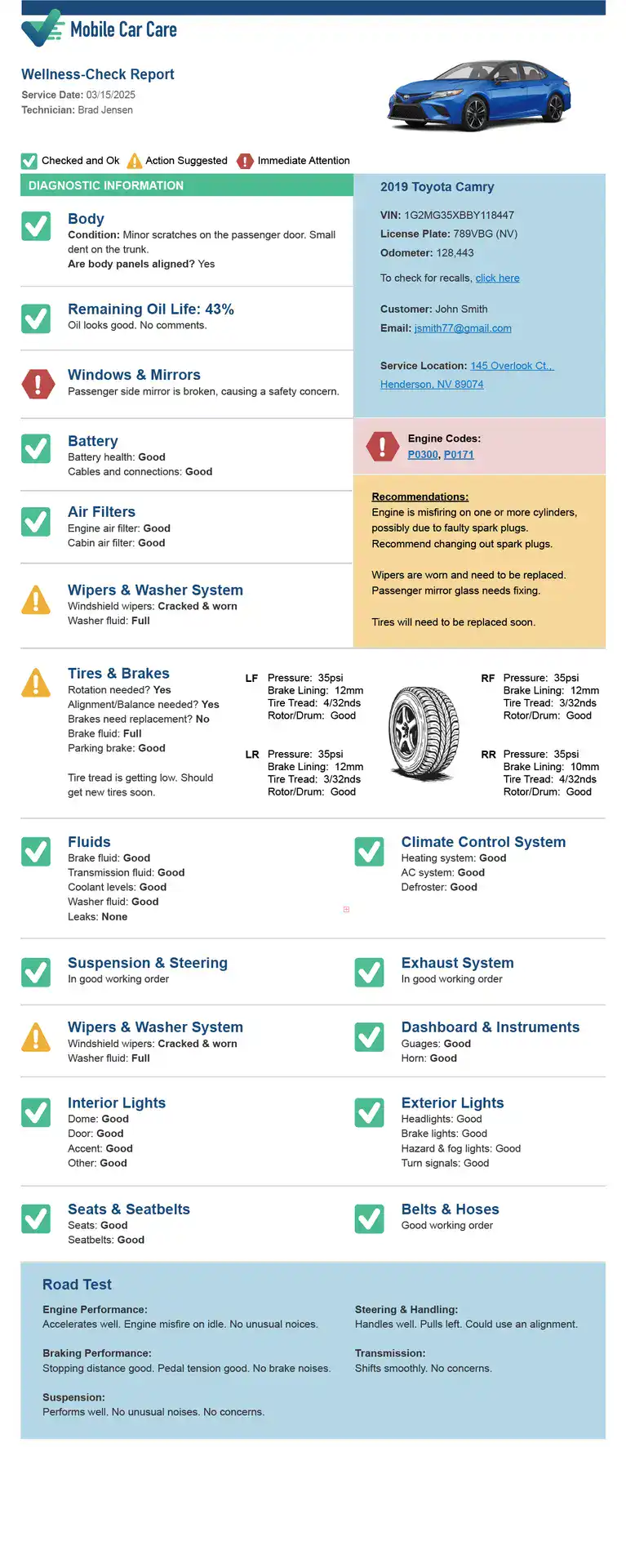
Mobile Car Care’s 85-point vehicle wellness check includes a full brake system inspection covering fluid condition, line integrity, pad wear, and rotor condition. Our technicians come to your home or office, so you never have to rearrange your day for a shop visit.
With a subscription plan, your brakes are inspected every quarter, which means we catch fluid degradation and wear issues early, before they turn into safety concerns or expensive repairs. This is especially important in the Las Vegas heat, where brake components wear faster than in moderate climates.
Staying on top of brake maintenance is part of a broader approach to complete vehicle care. Regular inspections keep all your systems in check, not just the brakes.
Frequently Asked Questions
How often should you get a brake fluid flush?
Most manufacturers recommend every two to three years or every 30,000 miles, whichever comes first. In hot climates like Las Vegas, every two years is a safer interval due to accelerated fluid degradation from heat.
What happens if you never flush your brake fluid?
Over time, the fluid absorbs enough moisture to significantly reduce its boiling point, leading to brake fade during hard stops. Eventually, internal corrosion damages calipers, lines, and the master cylinder, resulting in leaks and potential brake failure.
Is a brake fluid flush the same as bleeding the brakes?
No. Bleeding removes air bubbles from the lines but does not replace all the fluid. A flush removes and replaces all the old fluid in the entire system. A flush includes bleeding as part of the process.
Can I just top off the brake fluid instead?
Topping off adds new fluid to the reservoir but does not remove the contaminated old fluid already in the lines and calipers. It is a temporary measure, not a substitute for a flush.
What type of brake fluid does my car need?
Check your owner’s manual or the cap on your brake fluid reservoir. Most passenger vehicles use DOT 3 or DOT 4. Never mix different types unless the manufacturer explicitly allows it, as mixing can damage seals and reduce braking performance.
Keep Your Brakes in Top Shape
Your brakes are the most critical safety system on your vehicle. A brake fluid flush every two to three years is one of the simplest and most affordable ways to protect that system. If your fluid is dark, your pedal feels soft, or it has been more than two years since your last service, schedule a flush soon.
Mobile Car Care makes it easy to stay on top of brake maintenance with our mobile 85-point inspections that come to you. Our subscription plans start at $29.99 per month and include quarterly wellness checks with full brake system reviews. See our plans or call (702) 329-8424 to schedule your next inspection.