
Las Vegas recorded 118 degrees Fahrenheit in the summer of 2024. That kind of heat doesn’t just make you uncomfortable. It destroys car batteries, warps brake rotors, and turns under-inflated tires into blowout risks on I-15. If you haven’t already started preparing your car for summer, now is the time.
Schedule your pre-summer 85-point inspection with Mobile Car Care and catch problems before they leave you stranded on the side of the road.
Most summer car care guides offer the same vague advice: “check your fluids” and “watch your tires.” This guide goes deeper. Below, you’ll find a 10-point summer readiness checklist built for Las Vegas desert conditions, a month-by-month prep calendar, and a summer emergency kit list tailored to drivers in Las Vegas, Henderson car maintenance, and North Las Vegas.
Why Las Vegas Heat Is Harder on Cars Than Anywhere Else
Las Vegas averages more than 70 days per year above 100 degrees. Summer pavement temperatures routinely exceed 160 degrees in direct sunlight. That radiant heat attacks your vehicle from every direction: above, below, and reflected off surrounding concrete.
Compare that to cities like Phoenix or Dallas, which share high temperatures but lack the same intensity of stop-and-go traffic along the Strip, Tropicana Avenue, and I-15. Las Vegas drivers also face monsoon season from July through September, which brings sudden downpours, flash flooding, and rapid humidity spikes that stress rubber seals, wiper blades, and electrical systems.
The result? Cars in the Las Vegas Valley age faster. A battery that lasts five years in Seattle often fails in two to three years here. Coolant breaks down sooner. Tire rubber degrades from constant UV exposure and hot roads. If you’re driving a vehicle with more than 50,000 miles, summer prep isn’t optional.
10-Point Summer Car Care Checklist for Las Vegas Drivers
This checklist covers the maintenance items most likely to fail in extreme desert heat. Each item includes what to look for, when to act, and what a failure could cost you.
1. Cooling System Flush and Inspection
Your cooling system works overtime for six straight months in Las Vegas. Old coolant loses its ability to prevent overheating and corrosion. Manufacturers recommend flushing every 60,000 miles or five years, but in extreme heat, every 30,000 miles is safer.
Check the coolant reservoir when the engine is cold. The fluid should be bright green, orange, or pink depending on your vehicle. Brown or cloudy coolant means it’s time for a flush. Also inspect hoses for cracks, bulges, or soft spots. A radiator cap test can reveal pressure loss before it causes overheating on the road.
Cost of skipping it: A thermostat replacement runs $200 to $500. A blown head gasket from overheating? That’s $1,500 to $3,000 or more.
2. Battery Load Test
Heat is the number one killer of car batteries, according to AAA research. Extreme temperatures accelerate the chemical reaction inside your battery, causing fluid to evaporate faster and internal components to corrode. AAA data shows that extreme heat reduces battery life by up to 33% compared to moderate climates.
A load test measures whether your battery can hold a charge under stress. If your battery is more than two years old, get it tested before June. Check for white or green corrosion on the terminals, which increases electrical resistance and can prevent your car from starting. Learn more about battery state of health and what a professional battery test costs.
Cost of skipping it: A replacement battery costs $150 to $300. A tow from a parking lot in 115-degree heat costs $300 to $500 for anything beyond a few miles.
3. Tire Pressure and Condition Check
For every 10-degree increase in ambient temperature, tire pressure increases by about 1 PSI. A tire inflated to the correct 35 PSI in March could be sitting at 40 PSI or higher by July, which changes handling, braking distance, and wear patterns. Under-inflated tires are even more dangerous because heat builds up faster in the sidewalls, increasing blowout risk.
Check tire pressure in the morning before driving, when tires are cold. Look at the driver’s side door jamb sticker for the recommended PSI, not the number stamped on the tire sidewall. Also inspect tread depth using the penny test: insert a penny into the tread with Lincoln’s head facing down. If you can see the top of his head, it’s time for new tires. If your TPMS light comes on, don’t ignore it. Consider scheduling a tire check before summer begins.
Cost of skipping it: A tire blowout at highway speed can cause an accident. A new set of tires costs $400 to $1,000+, but that’s nothing compared to the risk of driving on worn rubber in 160-degree road conditions.
4. Air Conditioning System Check
Your AC system works two to three times harder in 110-degree heat than it does at 85 degrees. If you notice weak airflow, warm air, or a musty smell when you turn on the AC, get it checked before temperatures climb. Low refrigerant, a failing compressor, or a clogged cabin air filter are common culprits.
A cabin air filter clogged with Mojave Desert dust forces your blower motor to work harder, reduces cooling performance, and circulates allergens inside the car. Replace it every 15,000 miles, or more often if you drive through dusty areas or during haboob (dust storm) season.
Cost of skipping it: A cabin air filter costs $15 to $30 to replace. An AC compressor replacement runs $800 to $1,200.
5. Fluid Level Check
High heat accelerates the breakdown of every fluid in your vehicle. Check and top off these six fluids before summer:
- Engine oil: Verify the level and color. Dark, gritty oil needs to be changed.
- Brake fluid: Heat degrades brake fluid over time, reducing stopping power. A brake fluid flush is recommended every 30,000 miles.
- Transmission fluid: Check for a burnt smell or dark color. Heat from Las Vegas stop-and-go traffic on the Strip and major intersections breaks down transmission fluid faster.
- Power steering fluid: Low levels cause whining noises and stiff steering.
- Windshield washer fluid: Use a summer-rated formula that won’t evaporate off the glass instantly.
- Coolant: As covered above, flush if overdue. Top off if low.
Mobile Car Care’s Essential Plan includes fluid top-offs with every quarterly 85-point inspection, so you never have to worry about low levels heading into summer.
6. Belt and Hose Inspection
Rubber components take a beating in desert heat. Serpentine belts, timing belts, and radiator hoses dry out, crack, and lose elasticity faster when exposed to months of 100-degree-plus temperatures and intense UV radiation.
Look for visible cracks, fraying, or glazing on belts. Squeeze radiator hoses when the engine is cool. A healthy hose feels firm but flexible. A hose that’s mushy, swollen, or brittle needs to be replaced before it bursts.
Cost of skipping it: A serpentine belt replacement costs $100 to $250. A burst radiator hose can overheat your engine in minutes, leading to thousands in damage.
7. Wiper Blade Replacement
Most Las Vegas drivers overlook wiper blades because it rarely rains. But UV radiation destroys wiper rubber in six months or less. When monsoon season arrives in July, worn wipers can’t clear water fast enough, turning a sudden downpour into a visibility emergency.
Replace wiper blades before monsoon season starts. Silicone blades last longer than standard rubber in desert conditions.
8. Brake Inspection
Heat expands brake rotors and accelerates pad wear. If you hear squealing, grinding, or feel vibration when braking, get your brakes inspected immediately. Las Vegas drivers who commute through heavy traffic on I-15, US-95, or the 215 Beltway put extra stress on their braking systems through frequent stops.
Cost of skipping it: Brake pads cost $100 to $300 per axle. Warped rotors add $200 to $400 per axle for resurfacing or replacement.
9. Exterior Protection
Las Vegas UV radiation is among the most intense in the country. Extended exposure fades paint, cracks dashboards, and degrades rubber door seals and weatherstripping. Cracked weatherstripping leads to water leaks during monsoons and allows cooled air to escape, making your AC work even harder.
Apply a coat of wax or paint sealant before summer. Use a windshield sunshade when parked. If you have a garage, use it. If not, consider a car cover for extended parking periods. Check door seals for cracking and replace any that feel brittle or have visible gaps.
10. Interior Temperature Management
Cabin temperatures inside a parked car in Las Vegas can reach 170 degrees or more within 30 minutes. That heat damages electronics, cracks leather, warps plastic trim, and can even cause pressurized items like aerosol cans or lighters to explode.
Use a reflective windshield sunshade every time you park. Crack windows slightly if safe to do so. Remove electronics, sunglasses, and any pressurized items from the cabin. Consider window tint if you don’t already have it, as legal ceramic tint reduces interior temperatures by 40 to 60 percent without affecting visibility.
What Should You Keep in Your Car During a Las Vegas Summer?
Every Las Vegas driver should carry a summer emergency kit in their vehicle from May through October. If your car breaks down on the highway, temperatures inside and outside the vehicle can become dangerous within minutes. Here’s what to pack:
- Water: At least one gallon per person. Dehydration can set in within an hour in extreme heat.
- Reflective windshield sunshade: Reduces cabin heat while you wait for help.
- Cooling towels: Soak in water and drape around your neck for instant relief.
- Portable phone charger: Heat drains phone batteries faster. A dead phone in a breakdown situation is a serious safety risk.
- Jumper cables or a portable jump starter: Battery failures spike in summer.
- Flashlight: Essential if you break down after dark on unlit stretches of highway.
- Basic tool kit: Screwdrivers, pliers, duct tape, and zip ties handle minor fixes.
- First aid kit: Include sunburn relief cream and electrolyte packets.
Month-by-Month Summer Prep Calendar
Don’t try to do everything at once. Spread your summer preparation across the spring months so nothing gets missed:
| Month | What to Do |
|---|---|
| April | Schedule a pre-summer inspection. Check battery, coolant level, and tire condition. Replace wiper blades if worn. |
| May | Get an AC performance check. Flush coolant if overdue. Top off all fluids. Apply paint sealant or wax. |
| June | Verify tire pressure weekly as temperatures climb. Check belt condition. Stock your emergency kit. |
| July | Monsoon season begins. Confirm wiper blades are fresh. Check door seals. Monitor coolant temps on the dashboard during drives. |
| August | Re-check battery health (peak heat stress month). Inspect tires for any heat-related cracking or bulging. |
| September | Late monsoons continue. Check brake performance. Begin planning your fall maintenance based on any wear noted over summer. |
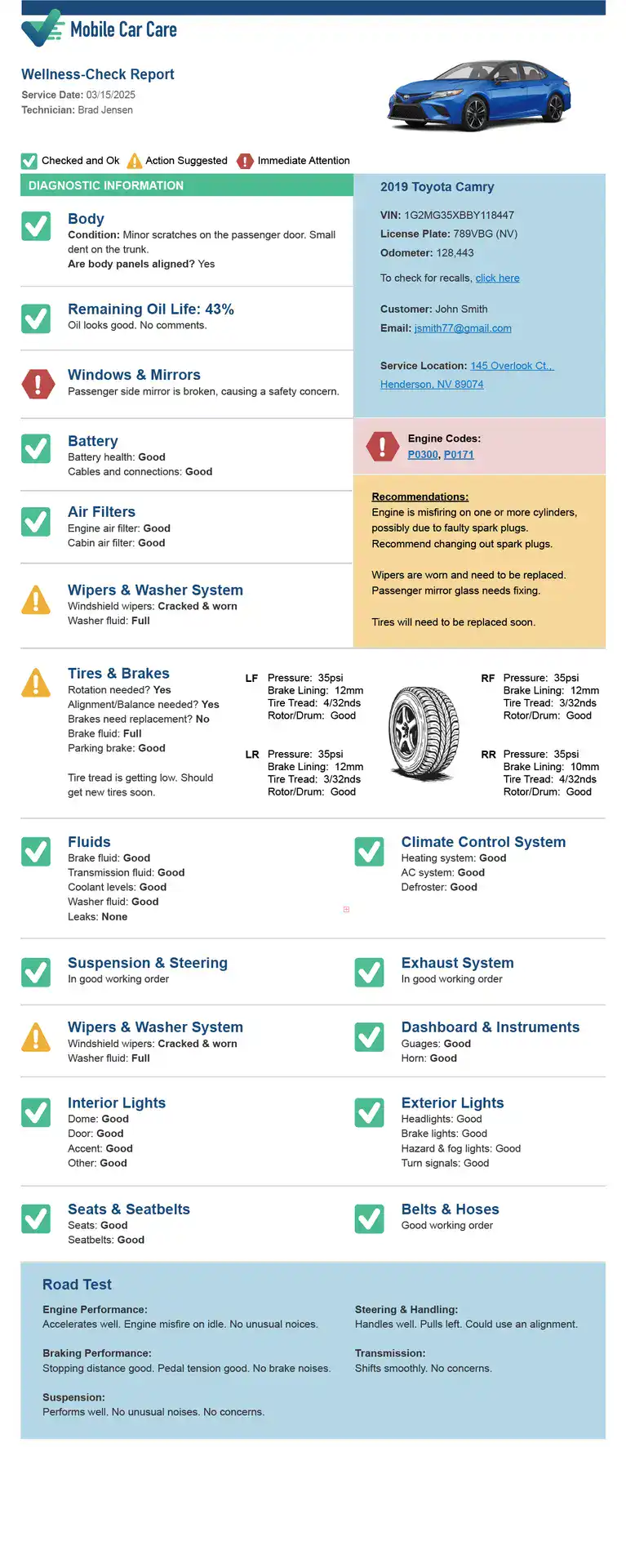
The easiest way to stay on top of this calendar? Mobile Car Care’s quarterly 85-point inspection covers every item on this list. Starting at $29.99 a month, you get scheduled inspections, fluid top-offs, and professional eyes on your vehicle before each season change.
Why Mobile Maintenance Makes Sense in Summer
Here’s something most car care guides won’t mention: driving a car with a failing cooling system or bald tires across town to a repair shop in 115-degree heat is itself a risk. You’re putting miles on a compromised vehicle in the worst possible conditions.
Mobile Car Care brings the inspection to your driveway, office parking lot, or wherever your car is parked. There’s no need to sit in a waiting room, arrange a ride, or lose half your day. A trained technician performs an 85-point inspection on-site, checks every item on this summer checklist, and sends you a digital report with photos and recommendations.
For families with multiple vehicles, the Total Care plan includes a 20% multi-vehicle discount, free jump starts, emergency fuel delivery, and runner service to get your car to a shop if it needs work beyond what’s handled on-site. It’s the most practical way to keep every vehicle in your household summer-ready without burning weekends at the mechanic.
Frequently Asked Questions
How do I protect my car from Vegas heat?
Park in shade or a garage whenever possible. Use a reflective windshield sunshade. Apply UV-protective wax or paint sealant to the exterior. Keep coolant and all fluids topped off. Get your battery tested if it’s more than two years old, and check tire pressure weekly during summer months. A seasonal maintenance checklist helps you track everything.
How often should I check tire pressure in summer?
Check tire pressure at least once a week during Las Vegas summers. Do it in the morning before driving, when the tires are cold. Hot roads and high ambient temperatures cause pressure to increase throughout the day, and over-inflated tires wear unevenly and lose traction.
What temperature is too hot for a car battery?
Temperatures above 100 degrees Fahrenheit accelerate the chemical reactions inside a car battery, causing internal fluid to evaporate and plates to corrode faster. In Las Vegas, where summer temperatures regularly exceed 110 degrees, battery lifespan drops to two to three years compared to the four to five-year average in cooler climates. Get a load test done before summer starts.
Can extreme heat damage car paint?
Yes. Prolonged UV exposure fades paint, breaks down clear coat, and causes oxidation. Las Vegas has some of the highest UV index readings in the country. Parking in direct sunlight day after day without protection accelerates the damage. Waxing, paint sealant, and covered parking all help preserve your vehicle’s finish.
When does monsoon season start in Las Vegas?
Las Vegas monsoon season typically runs from mid-June through September, with peak activity in July and August. Sudden heavy rain, flash flooding, and dust storms (haboobs) are common. Make sure your wiper blades are fresh, your tires have adequate tread depth, and your door seals are intact before monsoon season begins.
Get Your Car Summer-Ready Today
Las Vegas summer doesn’t wait for anyone. Temperatures can jump from the 80s to 110+ in a matter of weeks, and by the time your AC fails or your battery dies, you’re dealing with an emergency instead of a scheduled maintenance visit.
Book a pre-summer inspection with Mobile Car Care. A trained technician comes to your location, performs a full 85-point inspection, and identifies problems before they become breakdowns. Plans start at $29.99/month and cover quarterly inspections, fluid top-offs, and priority scheduling. Call (702) 329-8424 or visit mobilecarcare.com to get started.