
That faint humming sound you hear on the highway? It’s easy to dismiss as just road noise, but it could be your car’s way of telling you something important. This subtle sound is often the first sign of a failing wheel bearing—a small, crucial part that lets your wheels spin freely. Ignoring it is a gamble you don’t want to take, as a worn bearing can lead to serious safety issues and expensive, cascading repairs. This guide will help you decode those strange noises and feelings. We’ll walk you through what a wheel bearing does and how a simple wheel bearing check can give you the clarity and peace of mind you need to stay safe on the road.
Key Takeaways
- Trust your senses to spot trouble early: A new humming sound, a loose-feeling steering wheel, or uneven tire wear are clear signs that a wheel bearing needs attention before it becomes a serious safety issue.
- A simple “wheel rock” test can confirm your suspicions: Safely lift your car and try to wiggle the tire from the top and bottom—any significant play or clunking is a strong indicator that it’s time to call a professional.
- Proactive checks protect your safety and your wallet: Don’t wait for a breakdown. Regular inspections catch failing bearings before they become dangerous or lead to a cascade of expensive, related repairs.
What Is a Wheel Bearing (and Why Should You Care)?
You’ve probably heard the term “wheel bearing” before, but what exactly is it? Think of it as one of the most important yet overlooked parts of your car. A wheel bearing is essentially a set of steel balls held together in a metal ring, called a race. Tucked inside the hub of your wheel, its main job is to help your wheels spin smoothly and freely with as little friction as possible.
While they’re built to last, they don’t last forever. Ignoring a worn-out wheel bearing can lead to bigger, more expensive problems down the road—and more importantly, it can compromise your safety. Understanding what this small part does is the first step toward recognizing when something’s wrong.
How Wheel Bearings Keep You Rolling
At its core, a wheel bearing’s job is to let your wheels spin smoothly. It accomplishes this by using its internal steel balls to reduce friction between the wheel and the axle. These bearings are packed with grease to keep everything moving effortlessly, supporting the entire weight of your vehicle as you drive.
Most wheel bearings are designed to last a long time, typically between 75,000 and 150,000 miles. However, their lifespan can be cut short by a few common factors. Consistently driving on poorly maintained roads, through deep puddles, or in dusty conditions can cause the grease to break down or become contaminated. This leads to increased friction and premature wear, which is why regular checks are so important for keeping your vehicle in good shape.
The Link Between Bearing Health and Your Safety
This is where we get serious for a moment. A healthy wheel bearing isn’t just about a smooth ride; it’s a critical safety component. When a bearing starts to fail, it can make your car unpredictable and hard to handle. You might notice your steering feels loose or that the car pulls to one side, especially when turning or braking.
Ignoring these signs can have severe consequences. As the bearing wears down, it can generate enough heat to damage the axle and hub. In the worst-case scenario, a completely failed bearing can cause the wheel to seize up or even detach from your car while you’re driving. Understanding the risks of a bad wheel bearing makes it clear why paying attention to those early warning signs is non-negotiable for keeping you and your family safe on the road.
Signs of a Bad Wheel Bearing: What to Look, Listen, and Feel For
Think of your car as a patient that can’t talk—it uses sounds, feelings, and visual cues to tell you when something is wrong. A failing wheel bearing is one of those issues that sends out clear signals, long before it becomes a major problem. The key is knowing how to interpret them. You don’t need to be a mechanic to spot these warning signs. By paying attention to what you hear, feel, and see, you can catch a bad bearing early and keep yourself safe on the road. Let’s walk through the three main senses you’ll use to diagnose a potential issue.
Listen for Grinding, Humming, or Clicking
Your ears are often the first to notice a problem. When a wheel bearing starts to fail, the smooth, quiet ride you’re used to gets interrupted by new, unwelcome noises. You might hear a persistent humming, growling, or grinding sound that seems to be coming from one of your wheels. A key giveaway is that the noise often changes with your speed, getting louder as you accelerate and sometimes disappearing at certain speeds. You might also notice it more when you’re turning. Don’t just turn up the radio to drown it out; this is your car’s way of asking for help.
Feel for a Loose Steering Wheel or Pulling
Next, pay attention to how your car feels in your hands. A healthy car should feel tight and responsive. If your steering suddenly feels loose, vague, or less precise than it used to be, a worn wheel bearing could be the culprit. You might notice a slight vibration in the steering wheel that gets worse as you speed up. Another common symptom is the car pulling or veering to one side without you turning the wheel. This indicates that the failing bearing is creating drag and resistance on one of your wheels, compromising your control and safety.
Look for Uneven Tire Wear and Vibrations
Finally, a quick visual check can tell you a lot. A bad wheel bearing can cause your tires to wear down unevenly. If you notice that the tread on one tire is wearing out much faster on one edge compared to the other, it’s a major red flag. This happens because the wobbly bearing is causing the wheel to sit at an improper angle. You might also feel this as a vibration through the body of the car. If you suspect an issue, a professional can safely lift the car and check for any wobble or excessive play in the wheel, confirming the diagnosis.
How to Safely Check Your Wheel Bearings at Home
Checking your wheel bearings is a straightforward way to catch problems before they escalate. With a few basic tools and a little bit of time, you can perform a simple inspection right in your driveway. This check will give you a better sense of your car’s health and help you decide if it’s time to call in a professional. Let’s walk through the four key steps to do it safely.
Step 1: Gather Your Tools and Prioritize Safety
Before you do anything else, let’s talk about safety. You’ll be lifting a corner of your car, so it’s crucial to do it correctly. Park on a flat, solid surface—your garage or a level driveway is perfect. You’ll need a car jack, at least two jack stands, wheel chocks, and a lug wrench.
First, place the wheel chocks behind the wheels on the opposite end of the car you plan to lift. This prevents the car from rolling. Next, use your jack to lift the vehicle until the tire is off the ground. Now, for the most important part: place a jack stand securely under the car’s frame near the jack. Never work on a car that’s only supported by a jack. A good guide on vehicle safety can walk you through the finer points.
Step 2: Perform the “Wheel Rock” Test
With the wheel safely in the air, it’s time for the “wheel rock” test. This is the classic method for detecting a bad bearing. Grab the tire with your hands at the 12 and 6 o’clock positions (top and bottom). Try to wiggle the wheel by pushing with one hand and pulling with the other. Does it feel loose or have any “play” in it?
Now, move your hands to the 3 and 9 o’clock positions (sides) and repeat the process. Any significant movement or clunking sound is a strong indicator that the wheel bearing is worn and needs attention. A healthy wheel bearing will have little to no give, so if you feel looseness, you’ve likely found the source of your problem.
Step 3: Conduct a Visual Inspection
If you’re comfortable with a few more steps, a visual inspection can tell you a lot. This involves removing the wheel, which you can do with your lug wrench. Once the wheel is off, you may see a dust cap in the center of the wheel hub. Carefully pry this off to expose the bearing and grease.
Take a look at the grease. Is it thick and clean, or does it look gritty and dirty? If the grease looks “cruddy,” as some mechanics call it, it’s a sign that contaminants have gotten in and the bearings need to be cleaned and repacked with fresh grease. This is often a job best left to a professional, as it requires specific tools and know-how.
Step 4: Listen as You Spin the Wheel
The final test is all about sound. While the wheel is still lifted off the ground, place your hands on the tire and give it a good, steady spin. As it rotates, listen closely. Do you hear any grinding, growling, or humming noises? A healthy bearing should be nearly silent.
A rough, crunchy, or grinding sound is a tell-tale sign of a failing bearing. These are the same wheel bearing warning signs you might hear while driving, but they’re much easier to isolate when you’re focused on a single wheel. If you hear anything suspicious, it’s time to stop driving and get it checked out. If you’re not sure what you’re hearing, a Quick Check from a mobile mechanic can give you a definitive answer without a trip to the shop.
Common Mistakes to Avoid When Checking Bearings
When you’re trying to diagnose a problem with your car, it’s easy to fall into a few common traps. Checking wheel bearings is no exception. Getting it right means you can catch a problem early, but a few simple missteps can give you a false sense of security, leaving a serious issue undetected. The goal isn’t just to go through the motions; it’s to perform a check you can actually trust.
Knowing what not to do is just as important as knowing the right steps. From relying too heavily on one sense to performing a physical test incorrectly, these oversights can make the difference between catching a failing bearing and finding out about it the hard way. Let’s walk through the most frequent mistakes so you can avoid them and get a clear, accurate picture of your vehicle’s health. This way, you can feel confident in your assessment and make an informed decision about what to do next.
Don’t Rely on Sound Alone
One of the most common pieces of advice you’ll hear is to spin the wheel and listen for noise. While a grinding or humming sound is a definite red flag, the absence of noise doesn’t automatically mean everything is fine. As experts at Counterman Magazine point out, relying on sound is a “common but flawed test” because it’s simply not foolproof. A bearing can be in the early stages of failure long before it starts making an audible protest. Relying only on your ears means you could miss the problem until it becomes much more serious. That’s why a physical check is always necessary.
How to Check for “Play” the Right Way
The “wheel rock” test is the most reliable part of a DIY bearing check, but only if you do it correctly. The key is to apply force in the right direction. To start, grab each wheel at the top and bottom (the 12 and 6 o’clock positions). Try to rock it in and out along the axle. A tiny bit of movement is normal, but if you feel a noticeable clunking or significant “play,” the bearing is likely worn. Pushing and pulling from the sides (3 and 9 o’clock) tests other components, like tie rods, so stick to the top-and-bottom method for an accurate bearing assessment.
Avoid These Simple Inspection Oversights
Even if a bearing feels okay, its lifespan can be cut short by improper installation. According to Fleet Equipment Magazine, two of the most common wheel bearing maintenance issues are bearings being set too loose or too tight. A bearing that’s too tight can overheat from excess friction, while one that’s too loose can wobble and wear out prematurely. While this is mostly a concern during installation, it’s something to be aware of if you’ve recently had work done. It highlights why precision is so important and why sometimes, leaving it to a professional ensures the job is done right from the start.
Know When to Call a Professional
Doing your own wheel bearing check is a great way to stay on top of your car’s health, but it’s crucial to know when a professional needs to step in. Some symptoms are too serious to ignore, and a DIY inspection can only tell you so much. Think of your home check as a first step—it helps you spot potential trouble, but an expert has the tools and experience to make a definitive diagnosis. Getting a professional opinion is the smartest, safest choice you can make.
Red Flags That Mean “Stop Driving Now”
Some warning signs demand immediate action. If you hear a loud, metallic grinding sound or feel intense vibrations through the steering wheel, your car is signaling a critical failure. These aren’t “wait and see” symptoms. Your only move should be to pull over to a safe location as soon as you can and call for a tow. Continuing to drive is incredibly dangerous, as a completely failed bearing can cause you to lose control of the vehicle. Your safety is the absolute priority, so don’t take any chances with these red flags.
The Real Risks of Driving on a Bad Bearing
Pushing your luck with a bad wheel bearing is a serious gamble. A failing bearing can make your car unpredictable and hard to control, especially when turning or braking. In the worst-case scenario, the wheel could completely detach from your car while you’re on the road. Beyond the immediate danger, ignoring the problem guarantees a bigger, more expensive headache. A bad bearing will damage connected parts like the hub and suspension. Proactive maintenance, like our Essential Plan, helps catch these issues early, saving you from dangerous situations and costly repairs.
Understanding the Limits of a DIY Check
Your at-home inspection is a valuable screening tool, but it isn’t definitive. For example, just spinning the wheel and listening for noise isn’t a foolproof test; some failing bearings are quiet until they’re under the car’s full weight. While checking for “play” by rocking the wheel can point to a worn bearing, it takes experience to know how much movement is too much. If your DIY check leaves you feeling unsure, that’s the perfect time to call us. A professional Quick Check can confirm your findings and give you a clear path forward.
How Often Should You Check Your Wheel Bearings?
Knowing how to check your wheel bearings is one thing, but knowing when is just as important for preventing surprise breakdowns. Unlike an oil change, there isn’t a strict, universal schedule for wheel bearing inspections. Instead, it’s about understanding your car’s mileage, your driving habits, and the conditions you typically face on the road. Creating a simple rhythm for these checks can save you from much bigger headaches down the line.
A General Timeline for Inspections
Most wheel bearings are designed to last a long time, typically between 75,000 and 150,000 miles. However, this is a huge range, and you shouldn’t treat it as a guarantee. Think of it more as a window of time when you should start paying closer attention. If your car is approaching the 75,000-mile mark, it’s a great idea to have your bearings inspected during your next routine service. Their actual lifespan can be shorter if you frequently drive on poorly maintained roads or in harsh weather. The quality of the bearing itself also plays a big role, which is why it’s important to know what to look for as your car ages.
What Causes Wheel Bearings to Wear Out Faster?
Your daily drive has a bigger impact on wheel bearings than you might think. Hitting a nasty pothole or curb can damage a bearing instantly, while consistently driving on rough, bumpy roads will gradually wear them down. Other common causes of premature wear include driving through deep water or mud, which can contaminate the grease inside the bearing. It’s not just about external factors, either. Things like unbalanced tires or a faulty installation can put extra stress on the bearings, significantly shortening their life. Even consistently carrying heavy loads in your vehicle can contribute to faster wear and tear.
How to Build a Simple Maintenance Schedule
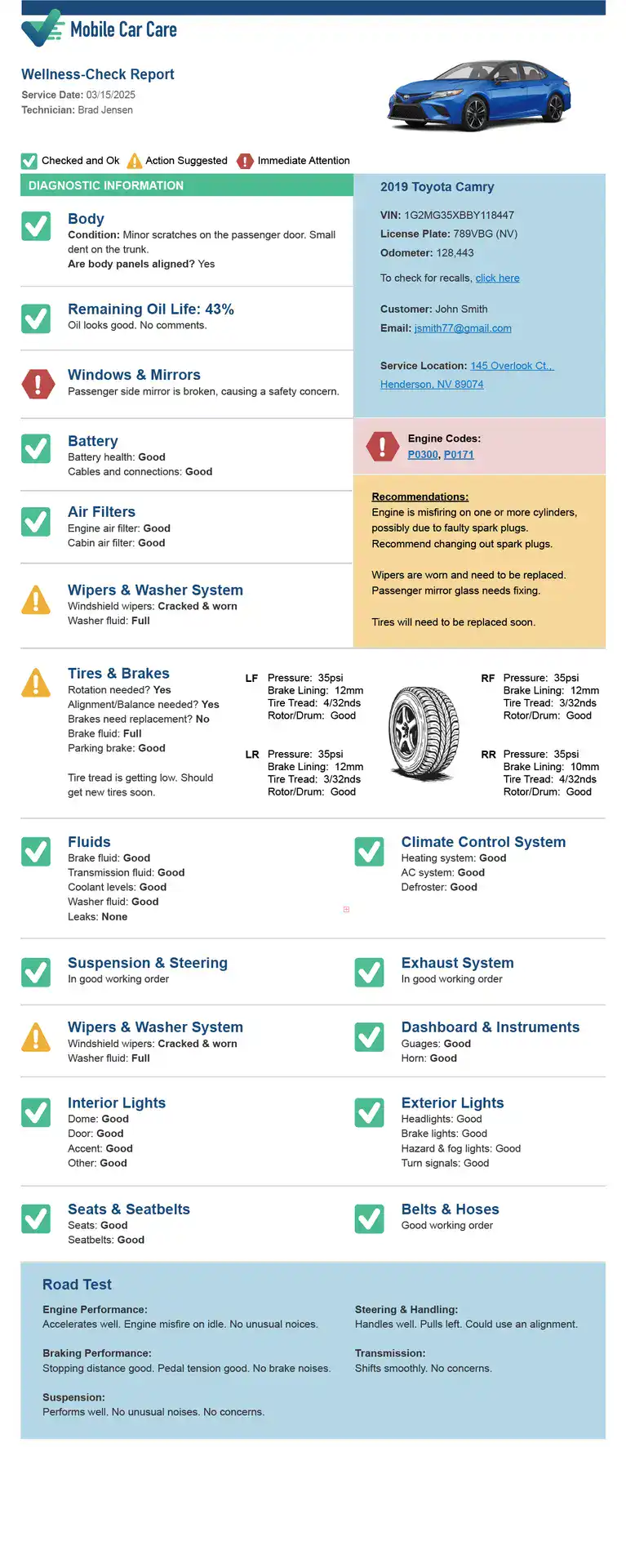
The easiest way to stay on top of wheel bearing health is to build it into a routine you already have. A great time to have them checked is during a tire rotation or wheel alignment. If you’re not sure where to start, a proactive maintenance plan can take the guesswork out of it. For instance, our Essential Plan includes a comprehensive 85-point vehicle wellness check that covers your wheels and suspension. By having a professional regularly inspect these components, you can catch subtle signs of wear long before they become a problem, ensuring your car stays safe and reliable without adding another item to your mental to-do list.
How Proactive Checks Protect Your Wallet
Let’s talk about something we all love: saving money. When it comes to your car, being proactive isn’t just about safety—it’s one of the smartest financial decisions you can make. A strange noise today could be a minor fix, but left unchecked, it can easily become a major drain on your bank account. By catching potential problems early, you stay in control of your car’s health and your budget. It’s about shifting from reactive, expensive repairs to smart, preventative care that keeps you on the road and out of the repair shop.
Catching Small Issues Before They Become Costly Repairs
That faint humming sound you only hear on the highway? It’s easy to ignore, but it’s often your car’s way of giving you a heads-up. When it comes to wheel bearings, an early warning sign is a gift. Addressing it promptly means a straightforward replacement. Experts warn that driving on a bad bearing is a significant safety concern that also puts unnecessary stress on other components. A simple check can identify the problem before it gets worse, saving you from a much bigger headache and a more complicated, expensive fix down the road.
The Hidden Costs of a “Wait and See” Approach
The “wait and see” approach with car maintenance is a risky game for your wallet. Ignoring a failing wheel bearing can cause a chain reaction of damage. The constant vibration and friction can harm the hub, the CV joint, and even your suspension system. Suddenly, you’re not just replacing one part—you’re facing a repair bill for three or four. What could have been a manageable expense has now multiplied. This is the true cost of procrastination. It turns a predictable maintenance task into an unexpected financial emergency that disrupts your life and your budget.
A Smarter Way to Stay Ahead with Mobile Car Care
So, how do you stay ahead without adding another chore to your never-ending to-do list? You let the experts come to you. Regular inspections are the key to preventing wheel bearing problems and other surprise issues. With Mobile Car Care, you don’t have to find time to visit a garage. Our technicians perform comprehensive wellness checks right in your driveway. Our Essential Plan is designed for this exact purpose—to catch small issues before they snowball. It’s a simple, stress-free way to protect your car, your time, and your wallet.
Related Articles
- What Is an Undercarriage Inspection & Why It Matters – Mobile Car Care
- Suspension Inspection: What to Expect & Costs – Mobile Car Care
- How to Do a Tire Tread Depth Check at Home – Mobile Car Care
- Alignment Check vs. Full Alignment: Which Do You Need? – Mobile Car Care
Frequently Asked Questions
Is it really that dangerous to drive on a bad wheel bearing for a short time? Yes, it absolutely is. While it might seem like a minor noise at first, a failing wheel bearing compromises your car’s stability and your control over the vehicle. Continuing to drive puts immense stress on the hub and suspension. The worst-case scenario is the wheel seizing up or detaching completely while you’re driving. It’s a risk that is never worth taking, so if you suspect an issue, it’s best to stop driving and get it checked immediately.
Will a bad wheel bearing trigger a warning light on my dashboard? Typically, no. Most cars do not have a specific sensor that monitors the health of your wheel bearings. This is why it’s so important to rely on your senses—what you hear, feel, and see. Your car will give you clues like humming noises, steering vibrations, or uneven tire wear long before a dashboard light would ever come on. Don’t wait for a light to tell you something is wrong.
What does a wheel bearing replacement typically cost? The cost can vary quite a bit depending on your vehicle’s make and model, as well as whether the bearing is a press-in style or part of a full hub assembly. Generally, you can expect the repair to fall somewhere between a few hundred and many hundreds of dollars per wheel. Catching the problem early is the best way to keep costs down, as it prevents the failing bearing from damaging other, more expensive parts.
If one wheel bearing fails, should I replace the others at the same time? This is a great question. While it’s not always required, it can be a smart, proactive move. Wheel bearings on the same axle are subjected to the same conditions and mileage, so they often wear out at a similar rate. Replacing them in pairs can save you a future trip for the same repair and ensure your car handles evenly. It’s worth discussing with your technician to see if it makes sense for your vehicle.
Can I just replace the wheel bearing myself? While a DIY check is very manageable, a full replacement is a job best left to a professional. Replacing a wheel bearing requires specialized tools, like a hydraulic press, to properly seat the new bearing without damaging it. An incorrect installation can cause the new bearing to fail very quickly, putting you right back where you started. For a critical safety component like this, professional installation ensures the job is done right.