Let’s be honest, finding time for car maintenance feels impossible. Between work, family, and everything else, a trip to the repair shop is the last thing you want to add to your to-do list. Yet, the health of your car’s suspension is directly tied to your safety on the road. It affects everything from steering control to braking distance. A regular suspension inspection is a simple, proactive step that ensures your vehicle is safe and reliable. The best part? It doesn’t have to disrupt your day. We’ll explore how you can get this essential check-up done right in your own driveway.
Key Takeaways
- Tune into your car’s signals: A rough ride, steering issues, or uneven tire wear are clear indicators that your suspension needs attention. Acting on these signs early is key to maintaining control and avoiding bigger problems.
- View inspections as proactive care, not just a cost: A professional suspension check is a small investment that provides a clear diagnosis of your car’s health. This knowledge helps you prevent minor issues from becoming major, costly repairs, ensuring your vehicle remains safe and reliable.
- Make maintenance fit your life, not the other way around: You don’t have to sacrifice your day at a repair shop. A mobile service brings certified technicians to you, making it simple to get a thorough inspection and stay on top of your car’s health without disrupting your schedule.
What Is a Suspension Inspection? (And Why It Matters)
Most of us don’t think much about our car’s suspension until we hit a pothole and the jolt feels a little too personal. But this system is one of the most important parts of your vehicle, working quietly behind the scenes to keep your rides smooth and, more importantly, safe. A suspension inspection is a thorough check-up of all the components that connect your car to its wheels. Think of it as a wellness visit for your car’s undercarriage. It’s about catching small issues before they turn into major, expensive problems that could leave you stranded or compromise your safety on the road. Understanding what your suspension does and why it needs regular attention is the first step toward being a more confident and proactive car owner.
What Your Suspension System Does
Think of your car’s suspension as its support system. It’s a network of parts—including springs, shock absorbers (or struts), and linkages—that has two main jobs. First, it supports the vehicle’s weight and absorbs the impact from bumps, potholes, and uneven roads, giving you a comfortable ride. Second, and more critically, it works to keep your tires firmly on the ground. This constant contact is what helps you control your car, ensuring your steering is stable and responsive. Without a healthy suspension, every drive would feel like an off-road adventure, and not in a fun way.
How a Healthy Suspension Keeps You Safe
A well-maintained suspension is a non-negotiable for vehicle safety. It’s the key to how well your car handles in everyday and emergency situations. A healthy suspension allows you to steer precisely, brake effectively, and maintain control, especially when you’re navigating sharp turns, driving on rough surfaces, or needing to stop suddenly. When components are worn out, it can seriously affect your car’s performance. You might find your vehicle takes longer to stop in an emergency, your tires lose their grip on the road, or your steering feels sluggish. These aren’t just minor annoyances; they’re safety risks.
Common Suspension Myths, Busted
There are a few common misconceptions about suspension systems that are worth clearing up. One is that suspension issues are only a concern for off-road vehicles. The truth is, daily driving on paved roads, with its fair share of potholes and speed bumps, causes plenty of wear and tear. Another myth is that suspension problems are always obvious. While some signs are hard to miss, many issues develop gradually and can be difficult to detect without a professional inspection. Finally, many people think the suspension is purely for comfort. While it definitely makes for a smoother ride, its primary role is ensuring your car is safe and controllable.
Is Your Car Trying to Tell You Something? Suspension Warning Signs
Your car can’t speak, but it definitely communicates. When something is off with the suspension system—the network of springs, shocks, and linkages that connects your car to its wheels—it will send you signals. The key is knowing how to listen and what to look for. Ignoring these signs can lead to bigger, more expensive problems and compromise your safety on the road. If you notice any of the following warning signs, it’s a clear signal that your car is due for a suspension check.
Feeling Bumps and Hearing Noises
Remember when your car used to glide over small bumps in the road? If you’re now feeling every single crack and pebble, your suspension is likely worn. A failing system can’t absorb impacts the way it should, leading to a rough, jarring ride. You might also hear clunking or knocking sounds when you go over bumps, which can indicate loose or damaged components. Beyond just comfort, a worn-out suspension can make your car take longer to stop and reduce how well your tires grip the road, especially in wet conditions. Don’t just turn up the radio to drown out the noise; it’s your car’s way of asking for help.
Trouble Steering or Handling
Does your car seem to have a mind of its own lately? If you feel it drifting or pulling to one side while you’re driving, that’s a classic sign of a suspension issue. You might also notice a “loose” feeling in the steering wheel or that your car sways uncomfortably during turns or in crosswinds. When your suspension isn’t working correctly, your car becomes harder to control, which can be dangerous. Your ability to react quickly and steer effectively is crucial for safety, so any change in handling should be taken seriously.
Uneven Tire Wear and Other Visual Cues
Sometimes, the first clues are ones you can see. Take a moment to look at your tires. Do you see uneven wear, where one part of the tire is more worn down than another? This “balding” pattern often points to a problem with the suspension or alignment, as the tires aren’t making even contact with the road. Another visual check is to look at your car when it’s parked on a level surface. If one corner sits lower than the others, you could have a worn-out spring. You can also peek under the car at the shocks or struts; if they look oily or greasy, they are likely leaking fluid and need to be replaced.
The “Bounce Test” and Other Telltale Signs
Here’s a simple diagnostic you can do right in your driveway. Go to one corner of your car and push down firmly on the hood or trunk a few times. When you let go, the car should rebound once and then settle. If it bounces up and down more than once or twice before stabilizing, your shocks or struts are probably worn out. Repeat this test on all four corners. It’s a quick, easy way to get a sense of your suspension’s health. If your car fails this test or you’ve noticed any of the other signs, it’s time to schedule a professional look with a service like our Quick Check Plan.
What to Expect During a Professional Suspension Inspection
So you’ve scheduled an inspection—or you’re thinking about it. It’s a great move for your car’s health and your peace of mind. Knowing what’s happening under your car can feel a bit mysterious, so let’s pull back the curtain. Here’s a straightforward look at what our technicians do during a suspension check, so you know exactly what to expect when we arrive.
What We Check: A Component-by-Component Look
Think of your car’s suspension as its skeleton. It’s a whole network of parts working together, and we give each one a thorough look. Our inspection focuses on the key players in your vehicle’s suspension system, including the shocks, struts, and springs. These are the components that absorb bumps and keep your tires firmly on the road. We’re on the lookout for any signs of wear and tear—things like fluid leaks from the shocks or struts, cracked bushings, or parts that are bent, broken, or loose. We also pay attention to what we hear and feel, noting any unusual noises or vibrations that point to a problem.
The Tools and Techniques We Use
A proper suspension inspection is more than just a quick glance. Our technicians start with a detailed visual check, but the real work happens when we get a clear view of the undercarriage. We use professional-grade jacks to safely lift your vehicle, allowing us to get up close with every component. This lets us manually check for looseness in the joints and look for damage that’s impossible to see from above. We also use specialized tools to test how the parts are performing and ensure everything is aligned correctly, giving you a complete picture of your suspension’s health.
How Long It Takes and What to Expect
We know your time is valuable, which is why we bring the service to you. A dedicated suspension inspection typically takes about an hour to complete. We work efficiently to diagnose any issues without disrupting your day. This comprehensive 85-point wellness check is a core part of our service, whether you book a one-time Quick Check or are part of our recurring maintenance plans. For ongoing peace of mind, this entire inspection is included in both our Essential Plan and Total Care Plan.
How to Read Your Inspection Report
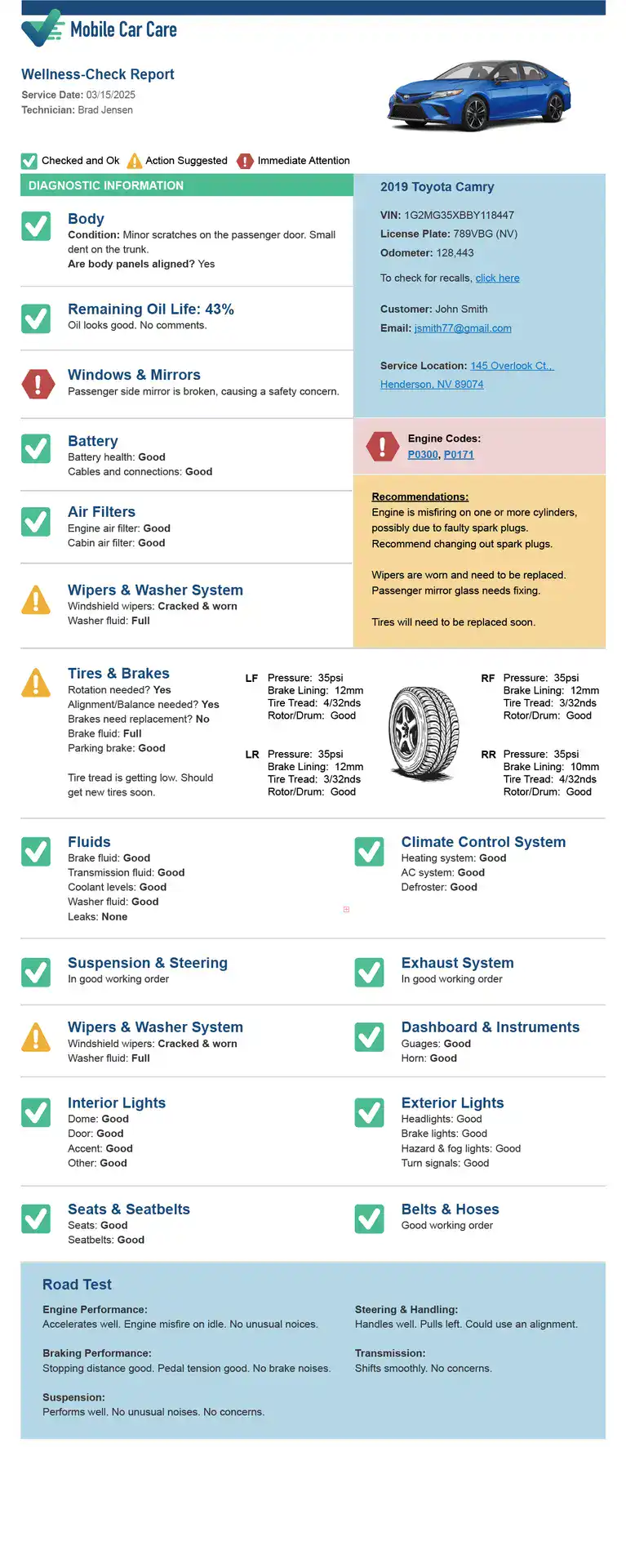
Once we’re finished, we don’t just hand you a piece of paper filled with confusing terms. We walk you through our findings with a clear, detailed report. It will outline the condition of each component we inspected, highlighting anything that looks good and flagging areas that need attention. We’ll explain what the issues are, what they mean for your safety and vehicle performance, and what we recommend as the next steps. Our goal is to give you the information you need to make confident, informed decisions about any necessary repairs.
Breaking Down the Cost of a Suspension Inspection
Talking about car repair costs can feel overwhelming, but it doesn’t have to be. When it comes to your suspension, knowing what to expect financially gives you the confidence to make the right decisions for your vehicle. An inspection is a relatively small investment in your car’s long-term health and your safety on the road.
What’s the Average Cost?
So, what’s the bottom line for a suspension check? Generally, the average cost for a suspension system inspection is between $98 and $143. Think of this as the price for a professional diagnosis. A skilled technician will put your car through a series of tests to pinpoint exactly what’s going on with your shocks, struts, and all the related components. This initial fee covers the expert time and labor required to give you a clear picture of your suspension’s condition before any repair work begins.
Factors That Affect the Price
That average cost is a great starting point, but it’s important to know what it includes. The price mainly covers the labor for the inspection itself. It typically doesn’t include taxes or shop fees, and the final cost can vary a bit depending on your location. This inspection fee is separate from any potential repairs that might be needed. The goal of the inspection is to identify issues; fixing them is the next step. At Mobile Car Care, we’re always upfront about our pricing, so you’ll know exactly what the inspection covers before we start.
What About Potential Repair Costs?
If the inspection does uncover a problem, the repair costs will depend on what needs fixing. Suspension work can be complex. It often involves lifting the car, removing wheels, and using specialized tools to handle parts like coil springs, which can be dangerous to work with without proper training and equipment. This is why it’s a job best left to the pros. After our inspection, we provide a detailed report outlining any necessary repairs and a clear estimate, so you can make an informed decision without any pressure.
How Preventive Care Saves You Money
This is where being proactive really pays off. Spending a hundred dollars on an inspection might seem like just another expense, but it can save you from much larger repair bills down the road. Regular inspections help catch suspension problems early before a small issue turns into a major failure that affects other parts of your car. Our recurring maintenance plans, like the Essential Plan, are designed to do just that. By keeping a regular eye on your vehicle’s health, we help you stay ahead of costly surprises and keep your car running safely and smoothly.
Choosing the Right Pro for Your Suspension Check
Finding the right person to look after your car can feel as daunting as finding a good doctor. You want someone knowledgeable, trustworthy, and who understands your specific needs. When it comes to something as critical as your suspension, you can’t afford to take chances. A thorough inspection from a qualified professional not only keeps you safe but also saves you from more expensive repairs down the road. The key is knowing what to look for so you can hand over your keys with confidence. By focusing on a technician’s credentials, reputation, and the convenience of their service, you can find a partner who will keep your ride smooth and secure.
What to Look For in a Technician
When you’re vetting a technician, think beyond a friendly smile. Look for concrete proof of their expertise. Are they ASE-certified? That means they’ve passed rigorous tests from the National Institute for Automotive Service Excellence and are committed to their craft. It’s also smart to ask if they have experience with your car’s make and model. A technician who specializes in your type of vehicle will be familiar with its specific quirks and common issues. A great technician will be happy to answer your questions and explain their process, ensuring you feel comfortable and informed every step of the way.
Checking Reviews and Reputation
In the age of online reviews, a little homework goes a long way. Before booking an appointment, spend a few minutes checking out what past customers have to say. Look for a certified and trusted service provider with consistently positive feedback. Pay attention to comments about honesty, clear communication, and the quality of the work performed. Did they take the time to explain the problem? Were the final costs in line with the initial quote? A strong reputation built on trust is one of the best indicators that you’re choosing a service that will deliver on its promises and treat you and your car right.
Why a Mobile Service Makes Sense
Let’s be honest—who has time to sit in a repair shop waiting room? This is where a mobile service changes the game. Instead of rearranging your entire day to drop off your car, a certified technician comes directly to your home or office. It’s the ultimate convenience, eliminating travel time and logistical headaches. With a service like Mobile Car Care, you can get a comprehensive 85-point wellness check, including a full suspension inspection, while you carry on with your day. Our Total Care plan is designed for busy people who value both their time and their peace of mind.
Simple Tips to Keep Your Suspension Healthy
Staying proactive is the best way to avoid major suspension problems. A great rule of thumb is to have your suspension inspected at least once a year or every 12,000 miles. You can easily stay on top of this with regular wellness checks that fit into your schedule. In between professional inspections, you can help by driving smart—try to avoid potholes, go easy over speed bumps, and don’t overload your vehicle with excess weight. Also, keep an eye on your tire pressure, as properly inflated tires help absorb shock and reduce strain on your suspension components.
Related Articles
- Independent Car Inspections: What Every Car Buyer Must Know
- Pre-Purchase Car Inspection: A Smart Buyer’s Guide
- Used Car Pre-Purchase Inspection Guide: Everything You Need to Know
- 85-Point Inspection: What’s Included & Why It Matters
- Vehicle Inspection Service: Your Complete Guide
Frequently Asked Questions
How often should I get my suspension checked if I don’t notice any problems? Think of it like a yearly physical for your car. Even if you feel fine, you go to the doctor for preventive care. We recommend a suspension inspection at least once a year or every 12,000 miles. Everyday driving, with its unavoidable potholes and speed bumps, causes gradual wear and tear. A regular check helps catch these small issues before they affect your safety or lead to a much bigger repair bill.
Is a suspension inspection the same thing as a wheel alignment? That’s a great question, as they’re often confused but are two different services. A wheel alignment focuses on adjusting the angles of your wheels so they are perfectly parallel to each other and perpendicular to the ground. A suspension inspection is a much more comprehensive check of the entire system that holds your car up—the shocks, struts, springs, and joints. A bad suspension can certainly cause your wheels to go out of alignment, but they are separate procedures.
My car seems a little bouncy, but it drives fine. Can I wait to get it checked? It’s easy to get used to small changes in how your car feels, but that extra bounciness is a classic sign that your shocks or struts are wearing out. While it might not seem urgent, those parts are responsible for keeping your tires in firm contact with the road. When they’re worn, your car can take longer to stop in an emergency and may be harder to control in a sharp turn. It’s a matter of safety, not just comfort, so it’s best to have it looked at soon.
If the inspection finds a problem, do I have to get it fixed right away? Not at all. The purpose of our inspection is to give you a clear and honest picture of your car’s health. We’ll provide a detailed report that explains what we found, what is critical for your safety, and what can be monitored over time. Our job is to give you the information you need to make a confident decision on your own terms, without any pressure.
Is a suspension check something I can do myself? You can definitely perform simple checks at home, like the “bounce test” we mentioned, to get a general sense of your suspension’s condition. However, a professional inspection is far more thorough. Our technicians safely lift the vehicle to get a clear view of the undercarriage, allowing them to spot fluid leaks, check for looseness in the joints, and identify cracked or worn parts that are impossible to see otherwise.