Let’s be honest, with a packed schedule, car maintenance can easily fall to the bottom of the to-do list. Between work, family, and everything else, who has time to worry about their tires? But here’s the thing: learning to check and adjust tire pressure is one of the most effective ways to prevent bigger, more expensive problems down the road. It saves you money on gas, extends the life of your tires, and, most importantly, keeps you and your loved ones safer. This isn’t about adding another complicated chore to your life; it’s about a simple, five-minute habit that offers incredible peace of mind. We’ll show you exactly how to do it.
Last updated: March 2026. All tire pressure guidelines, NHTSA statistics, and recommendations verified for accuracy.
Key Takeaways
- Prioritize Proper Inflation for a Safer, Cheaper Ride: Keeping your tires at the manufacturer’s recommended pressure is crucial for responsive steering and braking. It also improves your gas mileage and helps your tires wear evenly, saving you money in the long run.
- Get an Accurate Reading Every Time: For a correct measurement, always use a reliable pressure gauge on “cold” tires before you’ve driven for the day. Find the right PSI on the sticker inside your driver’s side door jamb, not on the tire’s sidewall.
- Make Monthly Checks a Habit: Check your tire pressure at least once a month and more frequently during seasonal temperature shifts. Never ignore your TPMS warning light—it’s a direct signal that your tires need immediate attention.
Why Proper Tire Inflation Matters More Than You Think
Driving on underinflated tires isn’t just inconvenient—it’s dangerous and expensive. According to the National Highway Traffic Safety Administration, underinflated tires contribute to approximately 11,000 accidents annually in the United States.
Here’s what happens when your tire pressure drops even 5 PSI below the recommended level:
- Fuel efficiency decreases by up to 3%, costing you an extra $0.10-$0.15 per gallon
- Tire lifespan reduces by 25%, meaning you’ll replace tires years earlier than necessary
- Braking distance increases significantly, especially on wet roads
- Risk of tire blowout increases, particularly during Las Vegas summer months when road temperatures exceed 150°F
The good news? Maintaining proper tire pressure is one of the simplest and most cost-effective ways to keep your vehicle safe—and you don’t even need to leave your driveway to get it done.
Drive Safer and Improve Performance
Your tires are your car’s only connection to the road, and proper inflation is key to maintaining a solid grip. When tire pressure is too low or too high, it affects your ability to steer and brake effectively. Underinflated tires can flex too much, leading to overheating and increasing the risk of a blowout. Overinflated tires have a smaller contact patch with the road, reducing traction. Both scenarios make it harder to control your vehicle, especially in an emergency, and can lead to serious accidents. Keeping your tires at the right pressure ensures they respond exactly as you expect them to.
Save Money on Gas and Tires
Beyond safety, keeping your tires properly inflated is one of the easiest ways to save money. When tires are underinflated, they create more rolling resistance, which means your engine has to work harder to move the car. This extra effort burns more fuel, costing you more at the pump. Improper inflation also causes uneven and premature tire wear. Regularly checking your tire tread depth alongside your pressure helps you catch these issues early. By simply maintaining the correct pressure, you can extend the life of your tires by thousands of miles. It’s a small habit that adds up to significant savings on both fuel and tire replacement costs over time.
How Temperature Affects Your Tires
If your tire pressure light seems to pop on with the first cold morning of fall, you’re not imagining things. Air contracts when it gets cold and expands when it heats up. As a general rule, your tire pressure will decrease by about 1 PSI for every 10-degree drop in ambient temperature. This is why it’s so important to check your tires more frequently as the seasons change. A perfectly inflated tire in the summer could easily become underinflated after a chilly autumn night, affecting your car’s safety and performance before you even leave the driveway.
The Real Cost of Improper Inflation
That little warning light on your dashboard—the Tire Pressure Monitoring System (TPMS)—is more than just an annoyance. When it stays on, it’s a clear signal that something is wrong. A solid TPMS light usually means one or more of your tires is about 25% below its recommended tire pressure. Driving on a tire that low is not only unsafe but also accelerates wear and tear and hurts your fuel economy. Ignoring the light means you’re putting unnecessary stress on your tires and spending more on gas than you need to. It’s a direct indicator that your tires need immediate attention.
Get the Right Tools for the Job
Before you can check your tire pressure, you need a few simple tools. Having the right equipment on hand makes the process quick, easy, and accurate. Think of it like having the right ingredients before you start cooking—it just makes everything go more smoothly. You don’t need a full mechanic’s toolkit, just a reliable pressure gauge and the knowledge of what to look for. It’s about feeling prepared and confident, knowing you can handle this simple but crucial part of car care yourself.
This small bit of preparation removes any guesswork and ensures you’re keeping your car safe and efficient. We’ll walk through exactly what you need, from picking the right gauge to understanding what your car is trying to tell you with its dashboard lights. By the end of this section, you’ll have a clear understanding of the tools and information required to check your tires like a pro, giving you one less thing to worry about in your busy schedule. It’s a straightforward way to take control of your vehicle’s health and ensure every drive is a safe one for you and your family.
How to Pick a Pressure Gauge
When it comes to checking your tire pressure, you have two main options: use the gauge at a gas station or buy your own. While using a gas station’s gauge is convenient in a pinch, they often get dropped, exposed to the elements, and used by countless drivers, which can make them inaccurate. For reliable readings, owning your own tire pressure gauge is the way to go. It’s a small investment that pays off by ensuring you get a correct reading every single time. Having one in your glove box means you can check your tires from the comfort of your driveway, on your own schedule, without having to make a special trip. This simple tool is essential for regular maintenance and gives you peace of mind.
Digital vs. Analog: Which Is Better?
You’ll find two common types of gauges: digital and analog (often called “pencil” or “dial” gauges). Analog gauges are classic and affordable, but they can sometimes be tricky to read accurately, especially in low light. Digital gauges, on the other hand, have a clear, often backlit screen that gives you a precise number, taking all the guesswork out of the equation. For most people, a digital gauge is the better choice. It’s incredibly user-friendly and helps you get a fast, exact reading without having to squint at tiny lines. The goal is to make this process as simple as possible, and a digital gauge does just that, helping you get the job done quickly and correctly.
What Your Car’s TPMS Light Means
Most modern cars come equipped with a Tire Pressure Monitoring System (TPMS). It’s that little horseshoe-shaped symbol with an exclamation point that lights up on your dashboard. If this light flashes for about a minute when you start your car and then stays on, it usually means there’s a problem with the TPMS system itself. However, if the light comes on and stays solid, it’s your car’s way of telling you that one or more of your tires has low pressure. This warning typically triggers when a tire is about 25% below its recommended level, so it’s a signal you shouldn’t ignore. When you see it, find a safe place to check your tires as soon as possible. For a deeper dive into what triggers this warning, read our complete TPMS light guide.
Where to Find Your Recommended PSI
So, what’s the right pressure for your tires? Don’t look at the tire itself—the number printed on the tire’s sidewall is the maximum pressure the tire can hold, not the recommended one for daily driving. The correct pressure, measured in PSI (pounds per square inch), is set by your vehicle’s manufacturer to ensure optimal performance and safety. You can find this information in your owner’s manual or, more conveniently, on a sticker inside the driver’s side door jamb. Sometimes, this sticker is located inside the glove box door or on the fuel door. This number is the key to ensuring your car handles properly and your tires wear evenly, so make sure you’re using the manufacturer’s specific recommendation.
The Best Time to Check Your Tires
For the most accurate reading, you should always check your tires when they are “cold.” This doesn’t mean they need to be ice-cold, just that the car hasn’t been driven for at least three hours. As you drive, the friction with the road heats up your tires, causing the air inside to expand and temporarily increase the pressure. Checking them while they’re warm can give you a false, inflated reading. The best practice is to check your tire pressure first thing in the morning before you go anywhere. Making this a part of your monthly routine ensures your measurements are consistently accurate and your tires are always properly inflated for the road ahead.
How to Check and Adjust Tire Pressure: A Step-by-Step Guide
Checking your tire pressure is one of the quickest and most important things you can do for your car. It might sound technical, but it’s a straightforward task that only takes a few minutes. Getting into the habit of checking your tires regularly will keep you safer on the road, help your tires last longer, and even save you a bit of money on gas. Think of it as a mini health check-up for your vehicle that prevents bigger headaches down the line. All you need is a reliable pressure gauge and a few minutes of your time. Let’s walk through the process together, step by step, so you can feel confident doing it yourself.
Step 1: Start with Cold Tires
For the most accurate reading, you should always check your tire pressure when the tires are “cold.” This doesn’t mean they need to be ice-cold, just that they haven’t been driven on for a while. When you drive, the friction with the road heats up your tires, causing the air inside to expand and increasing the pressure. A reading on warm tires can be misleadingly high, causing you to let out air you actually need. The best time to check is in the morning before you head out for the day or at least three hours after you’ve parked your car. This simple timing trick ensures you’re working with the correct baseline pressure.
Step 2: Get an Accurate Reading
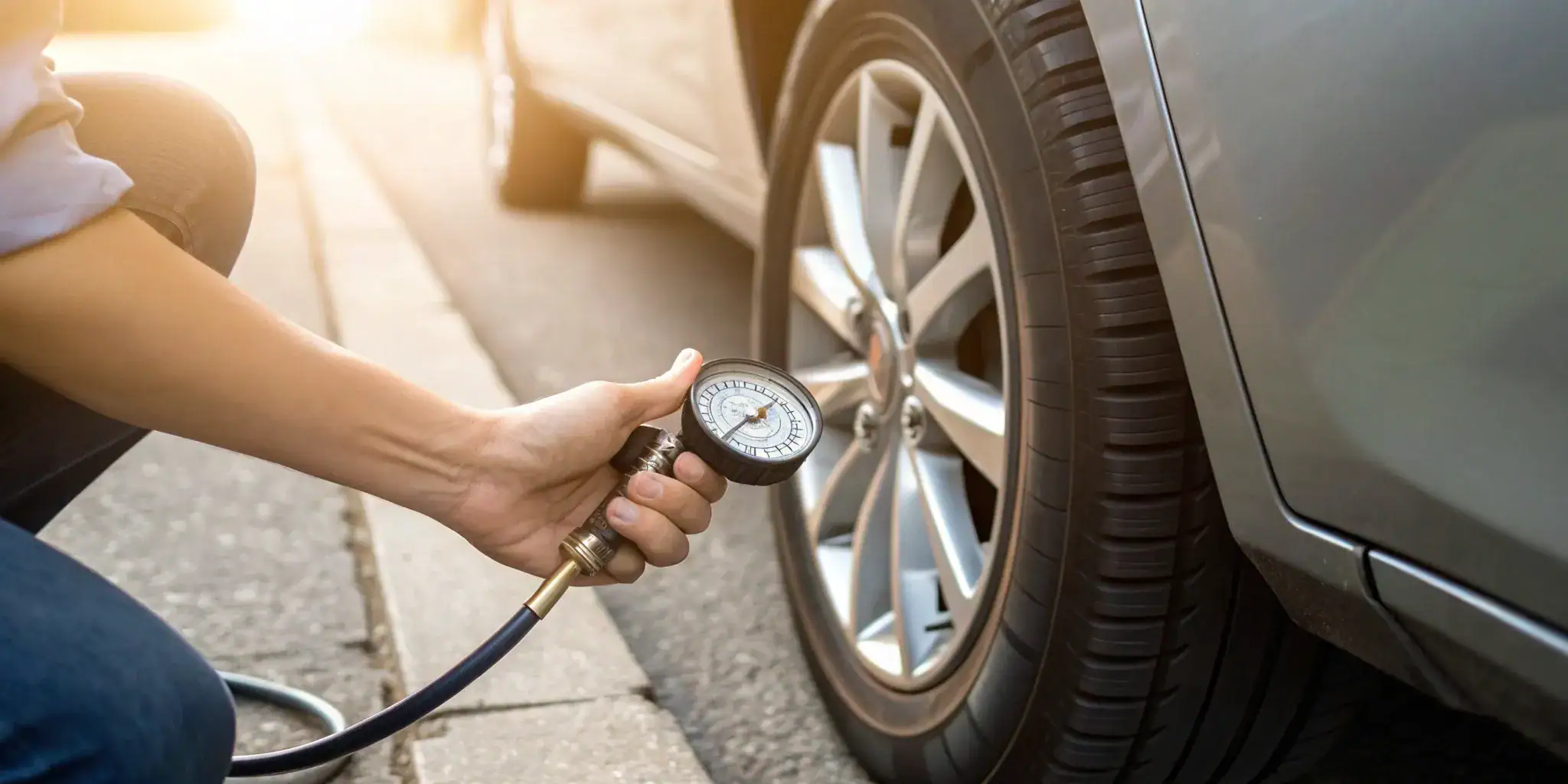
Once your tires are cool, it’s time to grab your pressure gauge. Unscrew the small plastic cap from the tire’s valve stem—it looks like a tiny black or green hat—and set it somewhere safe so you don’t lose it. Press the gauge firmly onto the valve stem. You’ll hear a brief hiss of air; keep pressing until the hissing stops. The gauge will then show you the tire’s pressure in pounds per square inch (PSI). If you’re using a digital gauge, the number will pop up on the screen. For a stick gauge, a small bar will slide out with measurement marks. Just read the number to see where your tire stands.
Step 3: Check All Five Tires (Yes, the Spare Too!)
It’s easy to forget, but your spare tire needs love, too! A flat spare won’t do you any good when you’re stuck on the side of the road with a flat. Make sure to check the pressure on all four of your main tires and your spare. The recommended PSI for the spare might be different—and often higher—than your regular tires, so check your owner’s manual or the sticker inside the driver’s door jamb for the correct number. Keeping all your tires properly inflated, including the one you hope you never have to use, is a key part of being prepared for anything the road throws at you.
Step 4: Adjust Tire Pressure by Adding or Releasing Air
Now it’s time to adjust tire pressure to match the recommended PSI for your vehicle. If the pressure is too high, you’ll need to let some air out. You can do this by pressing the small pin in the center of the valve stem with the nub on your pressure gauge or a small tool. Let the air out in short bursts, checking the pressure after each one until you hit the right number. If the pressure is too low, you’ll need to add air using an air compressor. Most gas stations have one you can use. Add air in short intervals, re-checking the pressure frequently so you don’t overinflate the tire.
Step 5: Double-Check Your Work
Once you’ve adjusted the pressure on all your tires, do one last check to make sure everything is just right. Most importantly, don’t forget to screw the valve caps back on tightly. These little caps are more than just decoration; they act as a seal to keep dirt, dust, and moisture out of the valve mechanism, which helps prevent leaks. Giving each tire a final glance and ensuring the caps are secure is the perfect way to wrap up your check. If this process feels like a hassle, a service like our Quick Check Plan can handle it for you, giving you total peace of mind.
Common Mistakes to Avoid
Checking your tire pressure seems straightforward, but a few common slip-ups can lead to inaccurate readings and a false sense of security. Getting it right is about more than just following the steps—it’s also about knowing what not to do. Let’s walk through some of the most frequent mistakes so you can avoid them and keep your car running safely and efficiently. Think of this as your guide to a perfect pressure check, every time. By sidestepping these simple errors, you’re taking a huge step toward better performance, longer-lasting tires, and, most importantly, a safer ride for you and your family.
Why a Visual Check Isn’t Enough
It’s tempting to just give your tires a quick glance and assume everything’s fine if they don’t look flat. But a tire can be significantly underinflated long before it appears visibly low. Relying on a visual check is one of the most common and riskiest mistakes you can make. In fact, tire-related surveys show that only about half of drivers use a proper gauge, while many others just eyeball it. A tire that’s low by 10 PSI might look perfectly normal but can seriously affect your car’s handling and fuel economy. Always use a quality pressure gauge to get an accurate reading. It’s the only way to know for sure that your tires are properly inflated.
How Temperature Can Give False Readings
Have you ever noticed your tire pressure warning light comes on during a cold snap? That’s because temperature directly impacts tire pressure. As the air outside gets colder, the air inside your tires contracts, causing the pressure to drop. Conversely, heat makes the air expand, increasing the pressure. This is particularly important to monitor if your vehicle is stored in a hot desert climate. A temperature change of just 18 degrees Fahrenheit can alter your tire pressure by about 1.6 PSI. For the most accurate reading, always check your tires when they’re “cold”—meaning the car has been parked for at least three hours or hasn’t been driven more than a mile. Checking after a long drive will give you an artificially high reading.
What to Do About Uneven Pressure
So you’ve used your gauge and found the pressure is off. What’s next? If the reading is too high, press down on the small pin in the center of the valve stem to release air in short bursts until you reach the correct PSI. If the pressure is too low, you’ll need to add air. You can use a personal air compressor or one at a local gas station. Add air gradually, checking the pressure frequently until it matches the recommended level in your owner’s manual or door jamb sticker. Keeping all four tires at their specified pressure ensures even wear and stable handling on the road.
When It’s Time to Call a Professional
While checking tire pressure is a manageable task, there are times when it’s best to call in an expert. If you find one tire is constantly losing air, you notice any cracks or bulges in the sidewall, or you’re just not confident in what you’re doing, don’t hesitate to seek professional help. Improperly inflated tires are a major safety hazard, making it harder to steer and stop your car and increasing the risk of a blowout. For total peace of mind, a professional service like our Quick Check Plan can ensure everything is in perfect shape, right in your own driveway.
Make Tire Maintenance a Habit
Turning tire checks into a regular habit is one of the simplest and most effective things you can do for your car and your peace of mind. It doesn’t have to be a complicated chore you dread. Think of it as a quick, five-minute wellness check for your vehicle that keeps you safer, saves you money, and prevents bigger headaches down the road. Like any routine, the key is consistency. Once you get into the rhythm of it, you’ll wonder why you ever put it off. By making it a non-negotiable part of your month, you’re taking proactive control of your car’s health and ensuring every trip you take is on a solid, secure foundation. It’s a small investment of time that pays off with every mile you drive.
Set a Regular Check-Up Schedule
The easiest way to stay on top of your tire pressure is to put it on a schedule. The general rule of thumb is to check your tire pressure at least once a month. A great way to remember is to tie it to another monthly event, like the first Saturday of the month or when you pay your rent or mortgage. Set a recurring reminder on your phone so you don’t even have to think about it. You should also make a point to check your tires before heading out on a long road trip. Our road trip inspection checklist covers everything you need to verify, including tire pressure. This quick check ensures your tires are properly prepared for the extra stress.
Adjust for Seasonal Changes
Have you ever noticed your tire pressure light seems to pop on during the first cold snap of the year? That’s not a coincidence. Temperature fluctuations have a direct impact on the air inside your tires. For every 10-degree drop in the ambient temperature, your tires can lose about one PSI of pressure. The reverse is true when it gets warmer. That’s why it’s so important to check your pressure more frequently as the seasons change. For a comprehensive guide to seasonal vehicle preparation, see our seasonal car maintenance tips. In the fall and winter, you’ll likely need to add a bit of air, while in the spring and summer, you might find your tires are slightly overinflated and need to have some air released.
Warning Signs You Shouldn’t Ignore
Your car has a built-in helper for monitoring tire pressure: the Tire Pressure Monitoring System, or TPMS. If you see that little dashboard light shaped like a flat tire with an exclamation point, pay attention. A solid TPMS light is your car’s way of telling you that one or more of your tires is significantly underinflated—usually by about 25% or more. This is an immediate signal to pull over when it’s safe and check your tires. Ignoring it can lead to poor handling, excessive tire wear, and even a dangerous blowout. Don’t just dismiss it and hope it goes away; it’s a critical safety alert.
How Professional Services Can Help
If you’re not comfortable checking and adjusting your tire pressure yourself, or if you simply don’t have the time, professional help is always an option. Most gas stations and nearly all tire shops have air compressors you can use, though some may charge a small fee. A mechanic can quickly check your pressure, fill your tires to the correct PSI, and inspect them for any signs of damage or uneven wear. This is also a great time to ask them to check the pressure in your spare tire, which is often forgotten. It’s a quick and easy stop that can give you confidence that the job was done right.
The Convenience of At-Home Tire Care
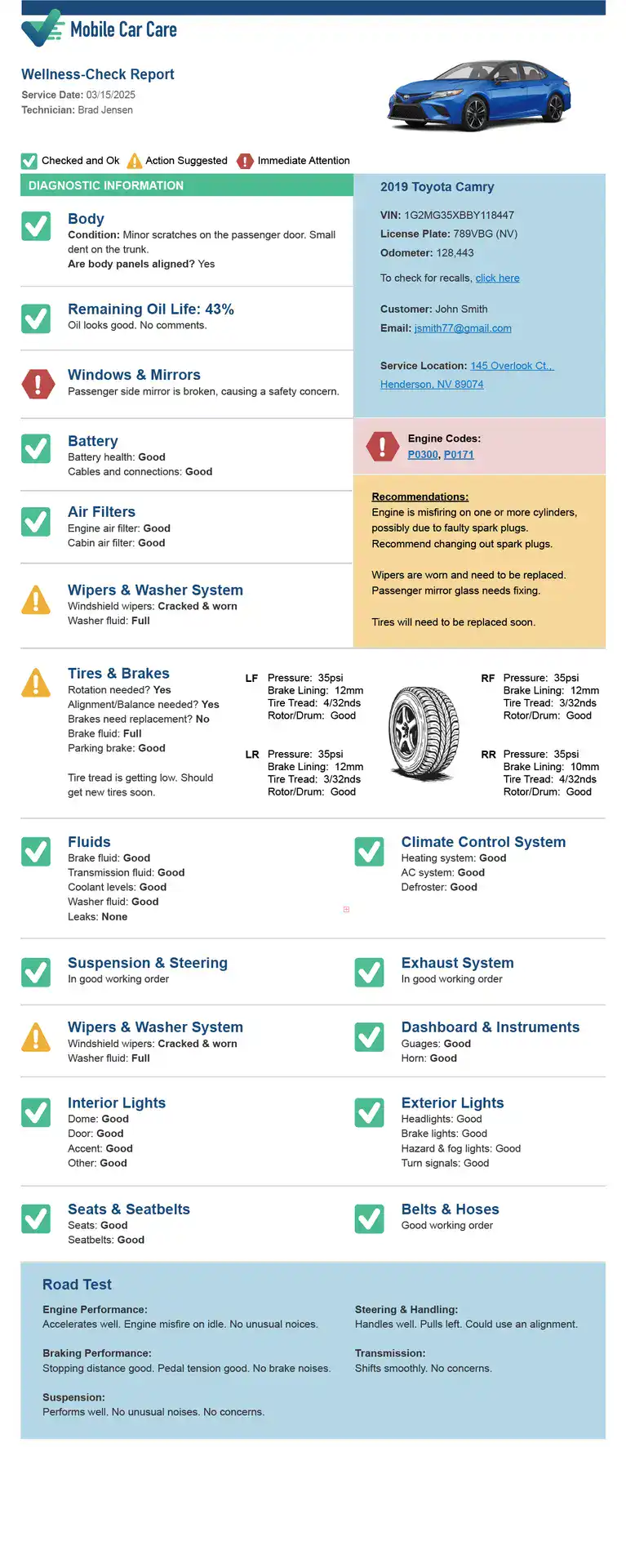
The ultimate way to make tire maintenance a seamless habit is to have it done for you, right in your own driveway. While you can always keep a small pressure gauge in your glove box for manual checks, nothing beats the convenience of a professional service that comes to you. With our Essential Plan, regular tire pressure checks and tire pressure adjustment are part of a comprehensive 85-point vehicle wellness inspection. We handle the checks, the adjustments, and the detailed report, so you can focus on your busy life. It’s the perfect way to ensure your tires are always in top shape without ever having to visit a gas station or repair shop again.
Related Articles
- Quarterly Car Care at Home: Your Simple Guide – Mobile Car Care
- How to Teach Teens Car Upkeep: Safety and Confidence – Mobile Car Care
- Monthly Car Checkups for Parked Vehicles: A Quick Guide – Mobile Car Care
- Monthly Car Inspection Checklist for Students – Mobile Car Care
Frequently Asked Questions
How often should I really be checking my tire pressure? A good rule of thumb is to check your tires at least once a month and always before a long road trip. The easiest way to make it a habit is to tie it to another monthly task, like the first Saturday of the month. Setting a recurring reminder on your phone is a simple trick that ensures you never forget this quick but important safety check.
Why does my tire pressure light always come on when it gets cold? You’re not imagining it! Air contracts when it gets cold, causing the pressure inside your tires to drop. A temperature change of just 10 degrees can be enough to lower your tire pressure by one PSI, which often triggers the warning light. Think of it as your car’s friendly reminder to add a bit of air to stay safe during seasonal changes.
Is the PSI number on the side of the tire the right one to use? This is a common and important mix-up. The number printed on the tire’s sidewall is the maximum pressure the tire can safely hold, not the recommended pressure for your specific vehicle. For the correct PSI, always refer to the sticker inside your driver’s side door jamb or your owner’s manual. Using the manufacturer’s recommendation ensures your car handles safely and performs its best.
What’s the biggest mistake people make when it comes to their tires? Relying on a visual check is the most common pitfall. A tire can be significantly underinflated long before it actually looks flat, which can compromise your car’s handling and fuel efficiency. The only way to know for sure if your pressure is correct is to use a reliable tire pressure gauge. It takes just a few seconds and removes all the guesswork.
My pressure is low. Is it okay to just fill it up at the gas station after driving there? While filling a low tire is always better than ignoring it, you get the most accurate reading when your tires are “cold,” meaning the car has been parked for at least three hours. Driving heats the tires and temporarily increases the pressure, which might cause you to underfill them. If you have to fill them when they’re warm, it’s a good idea to re-check the pressure the next morning to make sure it’s just right.