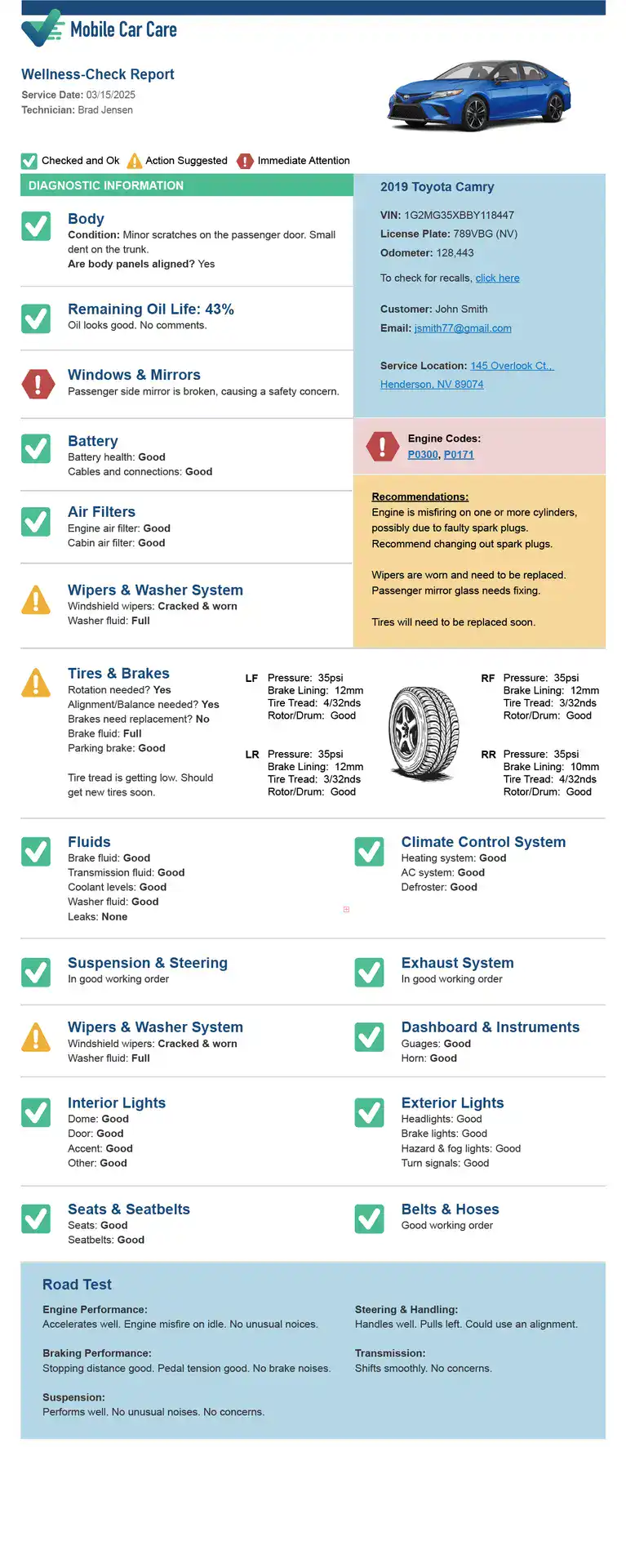
Buying a used car is exciting, but it can also be risky. A pre-purchase car inspection (PPI) is the single best way to protect yourself from hidden mechanical problems, safety hazards, and costly surprises. Whether you’re buying from a dealership, a private seller, or an online marketplace, a thorough inspection before you sign can save you thousands of dollars and a lot of headaches.
In this guide, we’ll cover everything you need to know about pre-purchase inspections: what’s included, how much they cost, where to get one, and why a mobile inspection service might be your smartest option.

What Is a Pre-Purchase Car Inspection?
A pre-purchase car inspection is a comprehensive evaluation of a vehicle’s mechanical, structural, and cosmetic condition performed by a qualified technician before you finalize a purchase. Unlike a basic test drive or a quick look under the hood, a PPI follows a structured checklist that covers every major system in the vehicle.
The goal is simple: identify existing problems, potential future repairs, and any signs of previous accident damage so you can make an informed buying decision.
A thorough PPI typically takes between 1 and 2 hours and covers 100 or more individual checkpoints. At the end, you receive a detailed written report that documents everything the technician found, giving you a clear picture of the vehicle’s true condition before you commit to the purchase.
What Does a Pre-Purchase Inspection Include?
A quality pre-purchase inspection typically covers these key areas:
Engine and Drivetrain
- Engine condition, oil leaks, and fluid levels
- Transmission performance (shifting smoothness, fluid quality)
- Drive belts, hoses, and cooling system
- Exhaust system condition
Brakes and Suspension
- Brake pad thickness and rotor condition
- Brake line integrity and fluid quality
- Shock absorbers, struts, and springs
- Steering rack and tie rod ends
- Wheel bearings and CV joints
Electrical System
- Battery health and charging system
- Starter motor function
- All lights (headlights, brake lights, signals, interior)
- Power windows, locks, and mirrors
- Infotainment system and climate control

Undercarriage and Frame
- Frame or unibody damage (signs of previous accidents)
- Rust or corrosion
- Fluid leaks from below
- Catalytic converter and exhaust pipe condition
Exterior and Interior
- Paint condition and panel alignment (mismatched paint may indicate body work)
- Glass condition (chips, cracks)
- Tire tread depth and wear patterns
- Upholstery, dashboard, and trim condition
- Odor inspection (mold, smoke, coolant smells)
Road Test
- Acceleration and braking performance
- Steering alignment and handling
- Unusual noises (clunks, squeals, grinding)
- Transmission shifting under load
Diagnostic Scan
- OBD-II code scan for stored and pending trouble codes
- Emissions readiness check
How Much Does a Pre-Purchase Car Inspection Cost?
Pre-purchase inspection costs vary based on location, the depth of the inspection, and who performs it:
| Inspection Type | Typical Cost Range |
|---|---|
| Basic visual + scan | $100 – $150 |
| Comprehensive multi-point | $150 – $300 |
| Luxury or specialty vehicle | $200 – $500+ |
| Mobile inspection (at seller’s location) | $150 – $350 |
Most standard PPIs fall in the $150 to $250 range. That’s a small price compared to discovering a $3,000 transmission issue or hidden frame damage after the sale.
Consider the math: a $200 inspection that catches a $2,500 engine problem pays for itself more than 12 times over. Even if the inspection reveals nothing wrong, you gain the peace of mind that comes with knowing exactly what you’re buying.
Cost vs. Risk: Why the Math Always Favors an Inspection
According to industry data, the average used car buyer spends between $15,000 and $30,000 on a pre-owned vehicle. Repair costs for undiscovered issues can range from a few hundred dollars for minor fixes to well over $5,000 for major problems like transmission failure, head gasket replacement, or frame straightening.
Here’s how common hidden problems compare to the cost of an inspection:
| Hidden Problem | Average Repair Cost | PPI Detection Rate |
|---|---|---|
| Head gasket failure | $1,500 – $3,000 | High (coolant/oil analysis) |
| Transmission rebuild | $2,000 – $5,000 | High (road test + scan) |
| Frame damage (prior accident) | $3,000 – $10,000+ | High (undercarriage check) |
| Catalytic converter replacement | $1,000 – $2,500 | Moderate (OBD + visual) |
| Suspension overhaul | $800 – $2,000 | High (road test + visual) |
A $150 to $250 inspection is the cheapest insurance policy you’ll ever buy when making a five-figure purchase. Whether the report comes back clean or reveals serious issues, you’re making your decision with full information instead of guesswork.
Where to Get a Pre-Purchase Inspection
You have several options for getting a PPI done:
Independent Mechanic Shop
A trusted local mechanic can perform a thorough inspection. The downside: you usually need to bring the car to the shop, which means coordinating with the seller and potentially driving an uninspected vehicle.
Dealership Service Center
Dealerships offer inspections, but they tend to be more expensive and may focus on brand-specific issues. They’re a reasonable choice if you’re buying a certified pre-owned vehicle from the same brand.
Mobile Inspection Service
A mobile inspection service sends a qualified technician directly to wherever the car is located, whether that’s a seller’s driveway, a dealership lot, or a parking lot where you’re meeting a private seller. This is often the most convenient option, especially for out-of-town purchases.
Mobile inspections eliminate the logistical challenge of getting an uninspected car to a shop. The technician comes to you with all the diagnostic equipment needed for a comprehensive evaluation.

Why a Mobile Pre-Purchase Inspection Makes Sense
There are several advantages to choosing a mobile inspection over a traditional shop visit:
- Convenience: No need to transport the car. The inspector comes to the vehicle’s location.
- Seller-friendly: Private sellers are more likely to agree to an on-site inspection than driving their car to your chosen mechanic.
- Time savings: Schedule the inspection around your availability. Many mobile services offer same-day or next-day appointments.
- Neutral ground: The inspection happens at the car’s location, reducing the chance of the seller making last-minute “repairs” before you arrive at a shop.
- Comprehensive reporting: Most mobile services provide a detailed written report with photos, making it easier to negotiate price based on findings.
Pre-Purchase Inspection Checklist: What to Ask For
When booking your pre-purchase inspection, make sure the service includes these essential items. Print this checklist and bring it with you:
- Fluid analysis — Check all fluids (oil, coolant, brake, transmission, power steering) for level and condition
- OBD-II scan — Read any stored diagnostic trouble codes
- Brake measurement — Actual pad thickness and rotor measurements, not just “looks good”
- Tire assessment — Tread depth readings and wear pattern analysis
- Undercarriage inspection — Look for rust, frame damage, and leaks from below
- Test drive — At least 10–15 minutes of driving on varied roads
- Written report — A detailed document (ideally with photos) covering every inspected area
- VIN verification — Confirm the VIN matches the title and listing
Red Flags a Pre-Purchase Inspection Can Catch
A good PPI can reveal issues you’d never spot on a test drive:
- Mismatched paint or uneven panel gaps — Previous collision repair (bodywork can cost $2,000–$10,000+)
- Milky oil or coolant — Head gasket failure ($1,500–$3,000 to repair)
- Worn brake pads below 3mm — Immediate replacement needed ($200–$600)
- Active OBD codes — Emission or engine management issues the seller may have “cleared”
- Undercarriage rust or weld marks — Structural damage or flood history
- Uneven tire wear — Alignment issues or worn suspension components ($400–$1,200)
- Low battery voltage (below 12.4V) — Battery replacement needed soon ($150–$300)
- Transmission slippage or delayed shifts — Potential rebuild needed ($2,000–$5,000)
Any of these findings gives you leverage to negotiate a lower price or walk away from a bad deal entirely.
When Should You Skip a Pre-Purchase Inspection?
Almost never. But there are a few situations where a PPI is less critical:
- Brand-new vehicles covered by full manufacturer warranty
- Certified Pre-Owned (CPO) vehicles that come with a manufacturer-backed inspection report and extended warranty
- Vehicles under $2,000 where the inspection cost represents a significant percentage of the purchase price (though even here, a basic inspection can prevent safety hazards)
For any used car purchase over $5,000, a pre-purchase inspection should be considered non-negotiable.
How to Negotiate After a Pre-Purchase Inspection
If the inspection reveals issues, here’s how to use the findings:
- Get repair estimates for every issue identified in the report
- Prioritize safety items — Brakes, tires, suspension, and structural issues are non-negotiable
- Total the costs and present them to the seller with the inspection report
- Request a price reduction equal to or greater than the estimated repair costs
- Walk away if the seller won’t negotiate on serious findings — there are always other cars
A detailed PPI report transforms the negotiation from opinion-based to evidence-based. Sellers find it much harder to dismiss documented findings with photos and measurements.
What Happens After the Inspection?
Once you receive your inspection report, you have three clear options:
- Proceed with the purchase if the vehicle checks out. You’ll have documented proof of the car’s condition at the time of sale, which is valuable for warranty claims and resale.
- Negotiate a lower price based on documented repair needs. Present the report to the seller and request a reduction that covers the cost of necessary fixes.
- Walk away from the deal if the inspection reveals serious structural, safety, or mechanical issues that make the vehicle a poor value at any reasonable price.
Regardless of the outcome, you’ll make your decision with complete information rather than hoping for the best. Keep the inspection report in your records. If you proceed with the purchase, it serves as a baseline document for the vehicle’s condition, which can be valuable when scheduling future maintenance or filing insurance claims.
Frequently Asked Questions
How long does a pre-purchase car inspection take?
A thorough pre-purchase inspection typically takes 45 minutes to 1.5 hours, depending on the vehicle’s age, condition, and the depth of the inspection. Mobile inspections may take slightly longer as the technician sets up on-site.
Can I do a pre-purchase inspection myself?
While you can do a basic visual check, a professional PPI uses diagnostic equipment (OBD-II scanners, multimeters, lift access) that most buyers don’t have. A trained technician also knows where to look for hidden issues like subtle signs of neglected maintenance that untrained eyes miss.
Should I get a pre-purchase inspection on a certified pre-owned car?
CPO vehicles come with a dealer inspection, but an independent PPI provides an unbiased second opinion. If the CPO warranty is comprehensive, a PPI is less urgent but still worthwhile for vehicles over $15,000.
What if the seller refuses to allow an inspection?
A seller who refuses a pre-purchase inspection is a major red flag. Legitimate sellers understand that buyers want to verify the vehicle’s condition. Walk away from any deal where the seller won’t allow an independent inspection.
Is a pre-purchase inspection worth it for cheap cars?
Even for cars under $5,000, a PPI can catch safety-critical issues like bad brakes, failing suspension, or structural damage. The $150–$250 cost is worth it to avoid buying a car that’s unsafe to drive.
How soon before buying should I schedule the inspection?
Schedule the inspection as early as possible in the buying process, ideally before making a deposit or signing any paperwork. Most mobile inspection services can accommodate same-day or next-day appointments, so there’s no reason to delay. If you’re shopping for multiple vehicles, scheduling inspections for your top two or three choices can save time and help you compare vehicles objectively based on documented condition rather than gut feeling.
Schedule Your Pre-Purchase Inspection Today
Don’t let a used car purchase become an expensive mistake. A pre-purchase inspection gives you the information you need to buy with confidence, negotiate from a position of strength, and avoid costly hidden problems.
Mobile Car Care offers comprehensive mobile vehicle inspections at your location. Our certified technicians bring professional diagnostic equipment directly to wherever the car is, whether it’s a dealership, a private seller’s home, or anywhere in between.
Contact Mobile Car Care today to schedule your pre-purchase car inspection and buy your next vehicle with complete confidence.