Mobile Car Battery Check Las Vegas Heat Guide
A mobile car battery check in Las Vegas is best scheduled before desert heat turns a borderline battery into a no-start morning. A battery can crank normally in March, then struggle after weeks of hot parking lots, short trips, heavy air conditioning use, and higher under-hood temperatures. For Las Vegas, Henderson, and North Las Vegas drivers, preventive testing gives a clearer answer than waiting for the first slow start.
Want the battery checked without adding a shop errand? Book a Mobile Car Care Quick Check for an on-site preventive inspection before summer, travel, or a busy family schedule.
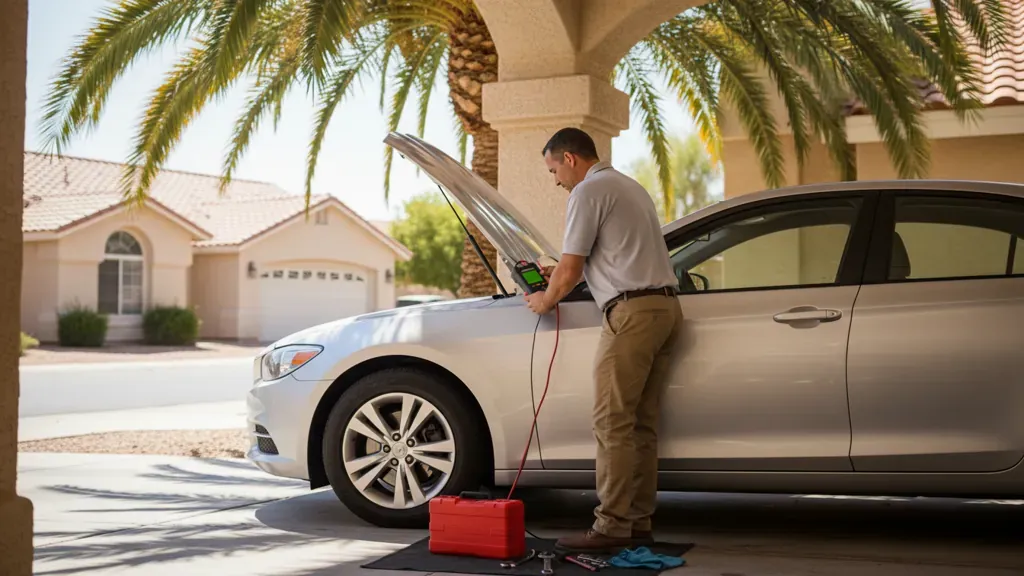
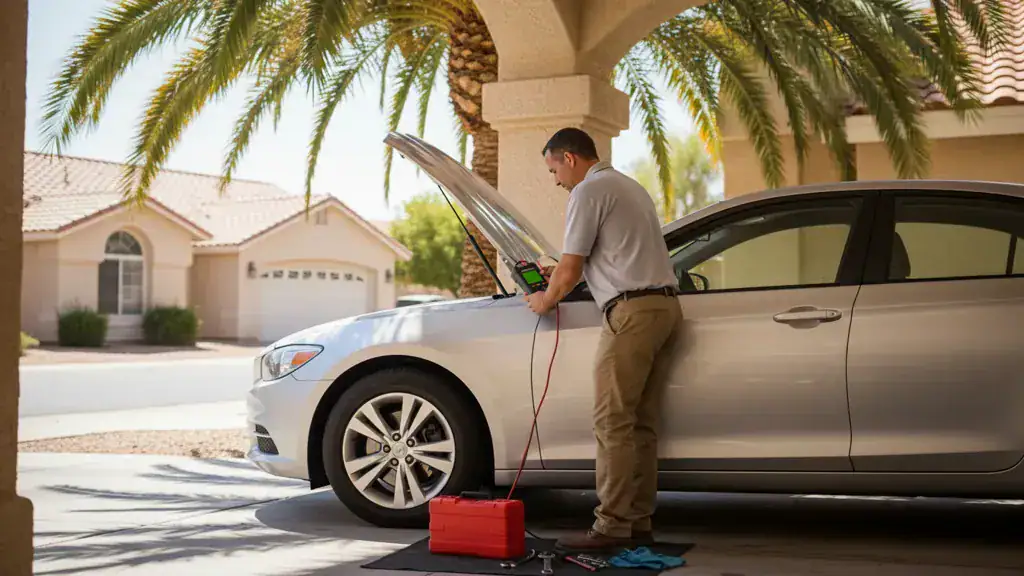
This guide explains when battery testing makes sense, which warning signs deserve attention, what a useful check should cover, and why Mobile Car Care positions on-site inspections and maintenance plans as prevention. If the car is already dead or needs immediate roadside battery replacement, that is a different service need. This article focuses on reducing the odds of getting there.
Why Las Vegas heat makes preventive battery testing matter
Drivers often associate weak batteries with cold winters, but Las Vegas heat creates its own battery problem. Hot ambient air, radiant pavement, and high under-hood temperatures can speed up chemical wear inside a battery. The damage may build quietly while the vehicle still starts most days. By the time the starter sounds slow, the usable margin may already be smaller than the driver realizes.
Local driving patterns add more stress. A car that sits outside during work hours in Summerlin, Henderson, or North Las Vegas may bake for much of the day. A family vehicle running frequent short errands can restart several times without long recharge periods. A commuter using air conditioning, phone charging, and other electrical loads expects the charging system and battery to keep up. Testing helps separate a healthy battery from one that is merely getting by.
Mobile Car Care already covers the wider heat picture in its summer car care guide for Las Vegas. Battery testing deserves a narrower guide because a car can have adequate coolant, tires, and oil, yet still leave a driver stranded if the battery has lost reserve capacity.
When should Las Vegas drivers schedule a battery check?
There is no single calendar date that fits every battery, driving pattern, or vehicle. The practical goal is to test before high-consequence periods, not after a failure interrupts them. In Southern Nevada, these four timing windows are especially useful.
Before the first sustained summer heat
Schedule a battery check in spring or early summer if the battery has been through at least one Las Vegas summer, the vehicle parks outdoors often, or you do not know the battery’s age. Early testing gives time to monitor, plan, or replace through the appropriate service path without making a rushed decision on a 110-degree day.
Before a road trip through the desert
A battery that seems acceptable on neighborhood trips can be a poor gamble before a long drive toward California, Utah, Arizona, or northern Nevada. Road trips pile on hot starts, fuel stops, and electrical loads, and they often happen when the trunk is packed and the schedule is tight. Pair a battery test with a broader pre-road-trip car inspection checklist.
Before college move-in or a new school routine
August move-in weeks and back-to-school schedules can turn one weak start into a major disruption. Students driving to UNLV, CSN, or Nevada State, and parents helping them prepare, benefit from checking basics before the semester starts. Mobile Car Care’s guide to car maintenance for Las Vegas college students covers the broader habit of preventive planning.
After warning signs or repeated jump starts
If the engine cranks slowly, the lights dim oddly at startup, corrosion is visible at the terminals, the case looks swollen, or the car has needed a jump, schedule testing promptly. A preventive inspection is still helpful for documenting what is happening, but repeated jump starts are no longer a routine maintenance signal. They point to a time-sensitive problem that should not be ignored.
Warning signs that justify a mobile car battery check
A battery does not always give a clean warning. Still, drivers should pay attention when one or more of these signs appears:
- Slower cranking: The engine turns over with less confidence than usual, especially after sitting in heat.
- Clicking or intermittent no-start behavior: The electrical system attempts to engage, but the engine does not start normally.
- Headlights or interior lights behaving differently at startup: Dimming can signal the battery or charging system needs closer review.
- Battery age is unknown: A used car, inherited car, or student vehicle may have no clear service record.
- Visible terminal corrosion: White, blue, or green buildup can interfere with clean connections.
- Swollen or distorted battery case: Heat-related physical changes deserve prompt attention.
- Recent jump start: Even if the car now runs, the cause should be understood before the next hot day.
Some of these symptoms can involve terminals, charging components, or other electrical issues rather than the battery alone. That is why guessing from one symptom is less useful than a structured check that looks at context.
If the car still starts but you are noticing one of these patterns, review the Essential Plan to see how routine on-site inspections fit into preventive maintenance.
What should a useful battery check include?
A useful battery check should do more than look under the hood and say the car started. The point is to understand whether the battery appears ready for the demands ahead and whether surrounding conditions suggest an added risk. Depending on the vehicle and inspection scope, a technician may review the following:
- Battery condition and visible physical concerns
- Terminal and cable condition, including obvious corrosion
- Available battery test readings from appropriate diagnostic equipment
- Relevant starting behavior observed during the appointment
- Related maintenance context that can affect confidence before heat or travel
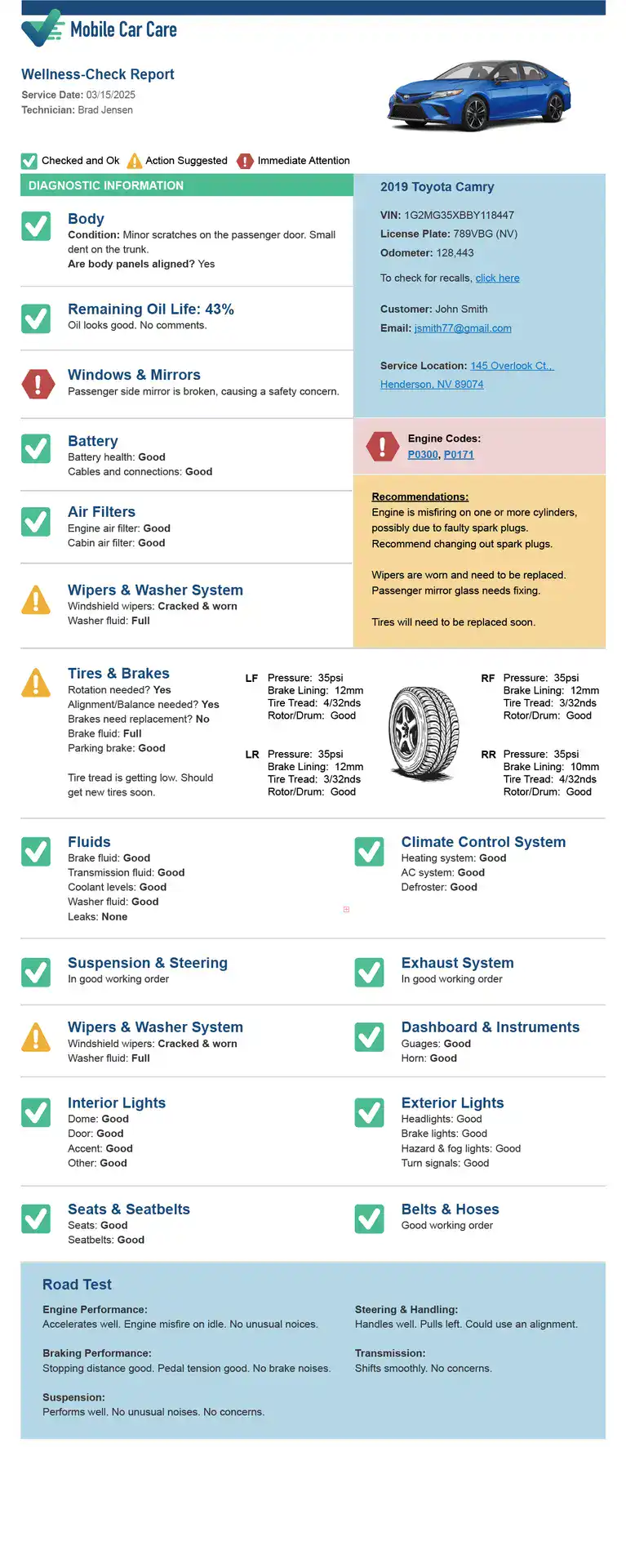
Mobile Car Care’s 85-point vehicle inspection overview explains how a broader on-site review helps owners see issues in context rather than managing each symptom as an isolated surprise. For a Las Vegas battery concern, that context matters. A driver preparing for summer may also want to know whether tires, fluids, and visible under-hood conditions show any other heat-related maintenance flags.
Battery check, battery replacement, or emergency help?
These needs are related, but they are not identical. Choosing the right one helps set expectations.
| Situation | Best next step | Why |
|---|---|---|
| Car starts normally, but summer is coming or battery age is unknown | Preventive mobile battery check or inspection | Gives time to plan before a failure creates urgency |
| Slow start, visible corrosion, or the battery struggled recently | Schedule testing soon | Documents the concern while the vehicle may still be drivable |
| Travel, school move-in, or high-mileage week is approaching | Pre-event inspection with battery attention | Reduces avoidable disruption during a time-sensitive week |
| Car is already disabled or repeatedly needs a jump | Seek immediate repair or battery service fit for that condition | This is no longer purely preventive planning |
The parent concern for this guide is prevention. Mobile Car Care’s on-site inspection model is built for drivers who would rather identify trouble while the car is in the driveway, at home, or during a planned maintenance visit than react after plans are disrupted.
How on-site checks fit busy Las Vegas households
Many drivers put off maintenance because the process consumes half a day. That delay becomes more likely when a battery has not failed yet. An on-site model changes the decision. Rather than deciding whether a vague worry deserves driving across town and waiting, the owner can use a scheduled visit to check the battery alongside other preventive items.
This is especially useful for:
- Parents checking a teen driver’s car before summer or a new school term
- Adult children helping an older parent stay ahead of inconvenient breakdowns
- Households with more than one vehicle and different service histories
- Drivers in Henderson or North Las Vegas who want maintenance handled where the car already sits
- Owners of older vehicles who want fewer surprise interruptions
Mobile Car Care offers a one-time Quick Check for specific moments, plus subscription options for owners who prefer a recurring preventive rhythm. The Total Care Plan is positioned for drivers who want broader support beyond basic recurring checks, while the Essential Plan focuses on routine preventive visibility.
For drivers who keep saying, “I should get that checked,” visit Mobile Car Care and choose the inspection or maintenance plan that matches how you drive.
A simple Las Vegas battery testing calendar
Use this schedule as a practical reminder system rather than a rigid rule. Vehicle age, parking conditions, trip plans, and recent symptoms should adjust the timing.
- March through May: Check battery concerns before the most punishing heat arrives.
- Two to three weeks before a desert road trip: Test early enough to make an informed decision without departure-day pressure.
- Late July or early August: Review student and family vehicles before move-in days and school schedules accelerate.
- Any time starting behavior changes: Do not wait for the next calendar reminder.
- During recurring preventive inspections: Ask that battery concerns be tracked in the full context of the vehicle.
This calendar also helps prevent overreacting to a single hot-day worry. The point is not to replace every battery prematurely. The point is to test at sensible times so the owner can respond to actual condition, age, and planned use.
How this guide differs from general battery heat advice
Mobile Car Care already publishes education about why car batteries die faster in Las Vegas heat. That article explains the heat problem and general warning signs. This guide serves a more specific search intent: when a local driver should schedule a mobile car battery check, which moments create the best preventive timing, and how an on-site inspection fits routine planning before summer, road trips, and college move-in periods.
That distinction matters. A driver asking why a battery fails is learning the cause. A driver searching for a mobile car battery check in Las Vegas is closer to deciding whether to schedule a preventive service. The article should answer that decision clearly without turning a planned inspection into an emergency-repair promise.
Frequently asked questions
How often should Las Vegas drivers think about battery testing?
Consider testing before sustained summer heat, before important travel, when battery age is unknown, and whenever startup behavior changes. Vehicles that park outdoors or serve high-consequence family routines may deserve closer attention.
Can heat weaken a battery before the car shows obvious symptoms?
Yes. A battery can lose margin before a driver hears a slow crank or notices lights behaving differently. That is why preventive checks are useful before the hottest part of the year.
Is a mobile battery check the same as emergency roadside service?
No. This guide focuses on preventive inspections for a vehicle that can be scheduled and assessed ahead of trouble. If the car is currently disabled or repeatedly needs jump starts, the need is more urgent than routine preventive planning.
What should I do if my battery age is unknown?
Treat unknown age as a reason to test, especially before summer heat or a road trip. A preventive check can help you move from guessing to planning.
Plan the check before Las Vegas heat chooses the timing
A battery problem is far easier to manage during a planned appointment than in a parking lot when the temperature is climbing. If the vehicle still starts, but the battery is older, its history is unclear, or an important travel or school date is approaching, schedule the check while you still control the calendar.
Mobile Car Care helps Las Vegas Valley drivers build that preventive habit through on-site inspections, Quick Checks, and subscription plans designed around ongoing vehicle wellness. Start with the inspection path that fits the moment, then use the findings to decide what the car needs next.