
Summer Car Care Las Vegas: How to Protect Your Vehicle from Extreme Nevada Heat
Las Vegas summer heat doesn’t just make life uncomfortable—it’s one of the most punishing environments a vehicle can face. When temperatures climb past 110°F and stay there for weeks on end, cars pay the price. Rubber degrades, fluids evaporate, batteries fail, and cooling systems push past their limits. If you’ve lived here longer than one summer, you already know: car care in Las Vegas isn’t optional, it’s survival. This guide covers everything Las Vegas residents need to do before and during summer to keep their vehicles running safely in the desert heat.
Why Las Vegas Summer Heat Is Uniquely Brutal on Vehicles
Most car maintenance schedules are written for moderate climates. Las Vegas is not a moderate climate. The valley regularly hits 115°F in July and August, and pavement surface temperatures can exceed 160°F. What that means for your car:
- Engine coolant evaporates faster — even small leaks that wouldn’t matter in cooler cities can cause rapid coolant loss here.
- Batteries die sooner — contrary to what most people assume, heat kills car batteries faster than cold. Las Vegas batteries often fail after just 2–3 years instead of the national average of 4–5 years. Our guide on car batteries in Las Vegas heat explains exactly why.
- Tires over-inflate and wear unevenly — hot asphalt raises tire temperatures rapidly, increasing blowout risk if tires are already near the wear limit.
- AC systems are maxed out — your air conditioning works harder here than anywhere else. An underperforming AC system that’s “fine” in spring will fail in August.
- Rubber seals, belts, and hoses crack — sustained UV exposure and heat cycles dramatically accelerate rubber degradation.
The bottom line: vehicle maintenance intervals that work in other cities aren’t adequate for Las Vegas summers. You need to check more, check more often, and catch problems before the heat turns them into breakdowns.
Summer Car Maintenance Checklist: 8 Things to Inspect Before the Heat Peaks
Ideally, you’ll run through this checklist in late April or early May, before daily highs are consistently above 100°F. Here’s what needs attention:
1. Coolant Level and Condition
The cooling system is your engine’s first line of defense against overheating. Check that the coolant reservoir is filled to the “max” line and that the fluid looks clean—not brown or rusty. If it’s been more than two years or 30,000 miles since a coolant flush, do it before summer. Contaminated coolant loses its heat-transfer efficiency, which is the last thing you want in July.
2. Car Battery
Have your battery load-tested, not just voltage-checked. A battery can read 12.6 volts at rest but fail under the load of starting a hot engine. If your battery is more than 2 years old, test it now. If it’s 3+ years old and hasn’t been replaced, seriously consider proactive replacement. Our mobile battery replacement service can swap it out at your home or office with no shop visit required.
3. AC Refrigerant and Performance
Turn your AC on max and measure how cold the air coming from the center vent gets. It should reach 40–45°F on a moderate day. If it’s blowing 55°F or warmer, refrigerant may be low or there may be a leak in the system. Don’t wait on this one—a failed AC in Las Vegas summer is not just uncomfortable, it’s a safety issue. Learn more about AC maintenance in Las Vegas or schedule our mobile AC service.
4. Tire Pressure and Tread Depth
For every 10°F increase in ambient temperature, tire pressure rises approximately 1 PSI. Check your tire pressure in the morning before the car heats up—this gives you the closest reading to actual cold inflation. Also check tread depth: any tire at or near 2/32″ should be replaced before summer. Hot pavement gives compromised tires very little margin for error.
5. Engine Oil Level and Viscosity
Heat thins oil, reducing its ability to lubricate engine components. Check your oil level monthly during summer and make sure you’re using the viscosity grade recommended by your manufacturer—some vehicles benefit from a slightly higher-viscosity oil in extreme heat climates. If you’re due for an oil change, our mobile oil change service comes directly to you.
6. Windshield Wiper Blades
Las Vegas wiper blades take a beating even in “dry” years. UV exposure causes the rubber to harden and crack, which means your blades will streak and skip exactly when the monsoon rains hit in July and August. Replace wiper blades before summer monsoon season every year—they’re inexpensive and the visibility difference is dramatic.
7. All Other Fluid Levels
Brake fluid, power steering fluid, transmission fluid, and windshield washer fluid all need to be topped off and inspected. Heat accelerates the absorption of moisture into brake fluid, which lowers its boiling point—a serious concern for anyone navigating steep mountain exits like those on the way to Red Rock Canyon or Mount Charleston.
8. Belts and Hoses
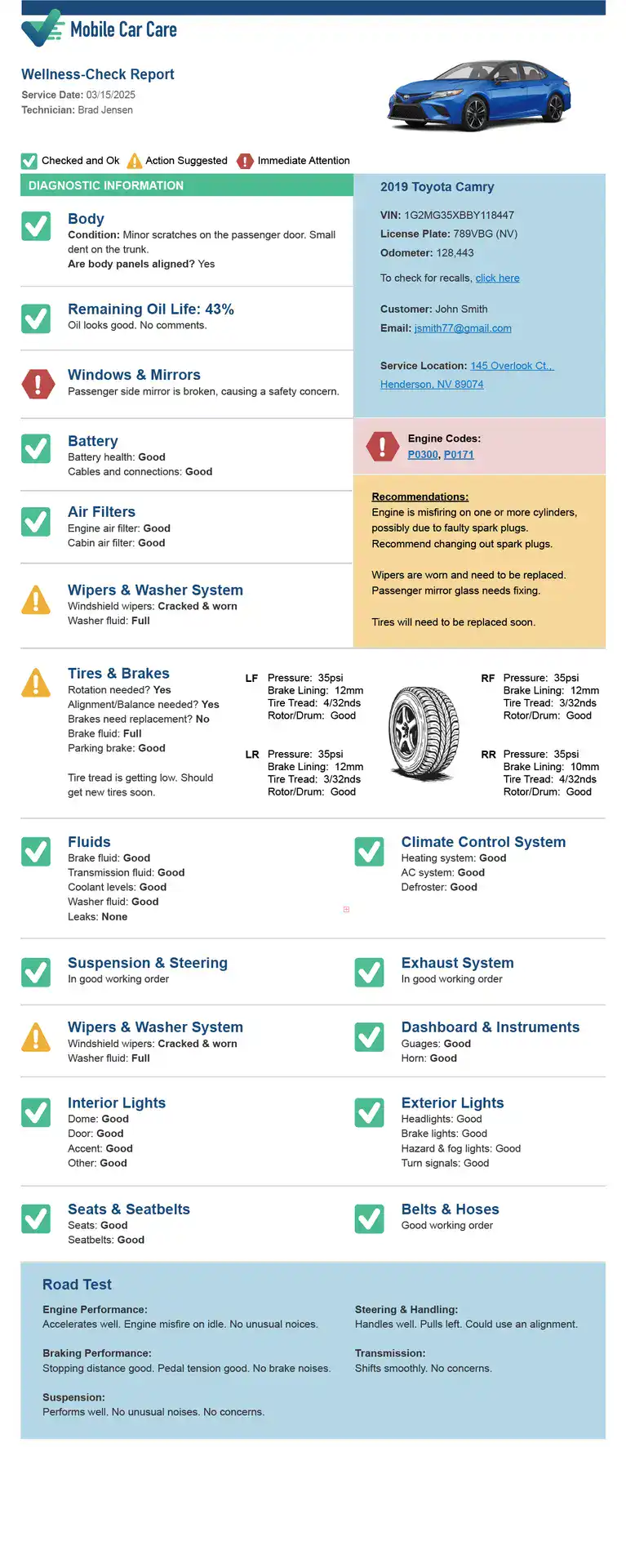
Squeeze your radiator hoses. They should feel firm and pliable—not hard and brittle, not soft and mushy. Check the serpentine belt for cracking, fraying, or glazing. A belt failure in a Las Vegas parking lot in August is exactly the kind of situation you want to avoid. Our technicians check belts and hoses as part of our comprehensive 85-point inspection.
Warning Signs Your Car Is Overheating—and What to Do
Even with proper preparation, overheating can happen. Know the warning signs:
- Temperature gauge creeping toward “H” — Don’t ignore this. Pull over safely as soon as possible.
- Steam rising from the hood — This is an emergency. Pull over immediately and turn off the engine.
- Sweet smell inside the cabin — The smell of burning coolant often enters the cabin before you see the gauge spike.
- AC suddenly blowing warm — Some vehicles cut AC power when the engine is close to overheating to reduce load.
If your car overheats: Pull over and turn off the engine. Do NOT open the radiator cap—pressurized coolant can cause serious burns. Wait at least 20–30 minutes before checking anything under the hood. Call for help rather than attempting to drive to a shop.
How a Mobile Mechanic Solves the Las Vegas Summer Car Care Problem
Here’s the irony of summer car care in Las Vegas: the time of year when your car needs the most attention is also the time of year when driving to a shop and sitting in a waiting room is the least appealing. Most traditional shops don’t have air-conditioned waiting rooms that can handle a two-hour wait during a 115°F afternoon.
Mobile Car Care exists to solve exactly this problem. Our ASE-certified technicians come directly to your home, office, or any location in the Las Vegas Valley—including Henderson and North Las Vegas—and perform a thorough 85-point vehicle inspection without you ever leaving the comfort of air conditioning.
Our Essential Plan includes quarterly inspections, fluid top-offs, and basic maintenance for $29.99/month. That means when summer rolls around, your vehicle is already on a regular inspection schedule—no scrambling to book appointments or sitting in a hot parking lot.
For residents who want complete peace of mind, the Total Care Plan adds minor repairs, jump starts, and emergency fuel delivery. In a Las Vegas summer, that’s not just convenient—it’s a safety net.
Ready to get ahead of the heat? Subscribe to a maintenance plan or book a one-time vehicle wellness check before temperatures peak.
FAQ: Summer Car Care in Las Vegas
How do I keep my car cool in Las Vegas summer?
Park in shade or a covered garage whenever possible. Use a windshield sunshade—interior temperatures in a parked car in Las Vegas can exceed 170°F, which degrades plastics, electronics, and upholstery. Crack windows slightly to allow heat to escape if you can do so safely. Before you get in, open the doors for 30–60 seconds to let hot air escape before running the AC. And keep up with AC maintenance—a properly charged system will cool the cabin much faster when you first get in.
What is a summer car maintenance checklist for Nevada?
For Nevada specifically, focus on: (1) coolant level and flush if overdue, (2) battery load test, (3) AC refrigerant level and vent temperature, (4) tire pressure and tread depth, (5) engine oil level and viscosity, (6) wiper blade condition before monsoon season, (7) brake, transmission, and power steering fluid levels, and (8) belt and hose inspection. If your vehicle is more than 5 years old, add a full cooling system pressure test to the list.
How often should I get my car serviced in Las Vegas summer?
Las Vegas heat accelerates wear on nearly every system in your vehicle, so standard national maintenance intervals often need to be shortened. Oil changes should follow your manufacturer’s “severe duty” schedule if one exists—many vehicles recommend shorter intervals for extreme heat climates. Battery and cooling system checks should happen at least once before summer and once mid-season. A quarterly inspection schedule, like the one included in Mobile Car Care’s Essential Plan, is ideal for Las Vegas driving conditions.
What temperature is too hot for a car in Las Vegas?
Most engines are designed to operate up to around 240–250°F coolant temperature before serious damage occurs. But problems start well before that. If your temperature gauge is reading in the upper third of its range during normal driving, something is wrong. Ambient air temperature of 115°F means your engine is working significantly harder to stay within normal operating range—which is exactly why preventive maintenance matters so much here.
Does heat kill car batteries faster in Las Vegas?
Yes. Heat accelerates the internal chemical reactions inside a lead-acid battery, causing it to degrade faster. Las Vegas residents typically see battery life of 2–3 years versus the national average of 4–5 years. If your battery is approaching the 2-year mark, get it load-tested before summer—don’t wait for it to fail in a parking garage in August.