
Las Vegas Summer Kills Car Batteries. Here’s Why Yours Might Be Next.
Most drivers think freezing temperatures are a car battery’s worst enemy. Cold weather gets all the press, all the warnings, all the roadside horror stories. But if you drive in Las Vegas, the real threat is sitting right outside your window. The same heat that cracks sidewalks, buckles asphalt, and sends tourists fleeing for their hotel pools is quietly destroying the battery under your hood, month after month, long before you ever notice a warning sign.
Protect your battery before summer hits. Join the Mobile Car Care Essential Plan and get a quarterly 85-point inspection including battery testing, fluid top-offs, and more, delivered right to your driveway.
The numbers tell the story. A car battery that lasts four to five years in a mild climate like Seattle or Denver may fail in two to three years in Las Vegas. During the summer months, when temperatures regularly hit 110 to 117 degrees Fahrenheit on the surface, battery fluid evaporates, internal components degrade at an accelerated rate, and drivers are left stranded in parking lots, driveways, and at traffic lights, often with zero warning. Understanding why this happens, what signs to watch for, and how to stay ahead of a dead battery is not optional in the Las Vegas Valley. It’s basic vehicle survival.
Why Las Vegas Heat Is Uniquely Brutal on Car Batteries
Las Vegas sits in the Mojave Desert at an elevation of about 2,000 feet. The city averages 294 sunny days per year. In July and August, high temperatures routinely exceed 110 degrees Fahrenheit, and the ambient temperature inside a parked car can reach 160 to 180 degrees. That’s not an exaggeration. A vehicle sitting in a strip mall parking lot for two hours in August is essentially being slow-cooked from the outside in.
Under the hood, the environment is even more extreme. Engine compartments in extreme heat can reach temperatures well above ambient air temperature, especially shortly after the engine is shut off. The battery sits in this superheated environment, absorbing and holding heat with very little natural cooling. Unlike cold climates where the battery simply slows down in the cold, in Las Vegas, the battery is chemically breaking down every single day of summer.
This is compounded by the fact that many Las Vegas residents make short, frequent trips, parking for extended periods in direct sun without shade. Every stop-and-start cycle in extreme heat puts additional stress on a battery that may already be compromised. And because the Las Vegas Valley has over 600 square miles of metro area with limited public transit, most residents have no alternative when a vehicle goes down.
The Science: How Heat Destroys Your Battery from the Inside Out
A conventional lead-acid car battery contains a series of lead plates submerged in a liquid electrolyte solution, typically a mix of sulfuric acid and water. When the battery charges and discharges, chemical reactions at the surface of those plates produce electrical energy. This process is temperature-sensitive in both directions, but heat causes a specific and irreversible type of damage.
When temperatures rise, the electrolyte fluid inside the battery evaporates faster. As fluid levels drop, the lead plates become exposed. Exposed plates undergo a process called sulfation, where lead sulfate crystals form on the plate surfaces. These crystals permanently reduce the battery’s ability to hold and deliver a charge. No amount of recharging can fully reverse advanced sulfation. Once a battery has significant plate exposure, its useful life is measured in weeks, not months.
Heat also accelerates internal corrosion on the battery’s terminals and cables. White or blue-green powder building up on the terminals is sulfate corrosion, a direct byproduct of heat-accelerated chemical activity. Corroded terminals increase electrical resistance, which means the battery has to work harder to deliver the same starting power, which generates more heat, which causes more corrosion. It becomes a self-reinforcing cycle that ends with a vehicle that won’t start.
Additionally, high temperatures increase the battery’s self-discharge rate. A battery sitting unused in a cool garage might hold its charge for weeks. That same battery in a hot Las Vegas garage during August can lose meaningful charge in just a few days, even when the vehicle is not being driven.
Want to understand all the ways summer heat affects your vehicle beyond the battery? Read our guide to car AC maintenance in Las Vegas to see how the cooling system is fighting the same battle.
What Are the Warning Signs of a Failing Car Battery in the Heat?
Heat-damaged batteries often fail suddenly because the degradation happens internally, out of sight, long before behavioral symptoms appear. But there are warning signs if you know what to look for. Catching them early is the difference between a proactive battery replacement and an emergency tow.
- Slow engine cranking at startup: If you notice the engine takes a fraction of a second longer to turn over when you start the car, especially after the vehicle has been sitting in the sun, the battery may be struggling. This is often the first noticeable sign of reduced capacity.
- Electrical accessories behaving erratically: Dimming headlights, a radio that resets, power windows that move slowly, or dashboard lights flickering can all indicate that the battery is not delivering consistent voltage. Heat accelerates the internal resistance that causes voltage drops.
- Battery warning light on the dashboard: When the battery icon illuminates, many drivers assume it is an alternator issue. While the alternator should be checked, the light most commonly triggers because the battery is not accepting or holding a charge properly.
- Swollen or bloated battery case: Extreme heat can cause the battery case itself to swell or warp. If you open the hood and the battery looks distorted or misshapen compared to a normal rectangular profile, it has been subjected to excessive internal heat and should be replaced immediately.
- Sulfur or rotten egg smell near the battery: This indicates hydrogen gas escaping from a damaged or overcharged battery. It is a serious warning sign that the battery is failing and potentially dangerous. Stop driving and have it inspected right away.
- Battery older than two years: In Las Vegas, a two-year-old battery is approaching middle age. By three years, it should be tested regularly. By four years, replacement should be considered regardless of apparent performance. Do not wait for a failure to act.
For a broader look at vehicle warning signs that demand attention, see our post on 10 warning signs your car needs immediate maintenance.
Do not wait for a breakdown to find out your battery is failing. Mobile Car Care’s Essential Plan includes quarterly battery voltage testing at your location, so small problems are caught before they leave you stranded.
How Las Vegas Heat Compares to Cold Climates: The Myth of Winter Battery Damage
Cold weather reduces a battery’s available cranking power. In freezing temperatures, the chemical reactions inside the battery slow down, requiring more current to start the engine. This is why cold climates see a spike in battery failures during winter mornings. But here’s the critical distinction: cold weather reveals weakness. Heat creates it.
A battery that fails on a cold Minnesota morning was very likely damaged during the preceding summer. The heat weakened the plates and reduced the battery’s reserve capacity. When winter arrived, the battery no longer had enough margin to compensate for the cold. The cold gets blamed for a failure that heat caused months earlier.
In Las Vegas, there is no cold season to reveal damage. The heat damages the battery continuously through spring, summer, and into fall. The failure can happen at any time of year, on any day, often in the worst possible location: a highway, a shopping center, a parking structure with no shade. The AAA reports that battery failure is one of the leading causes of roadside service calls nationwide, and in hot climate cities, summer is consistently the peak season for those calls.
How Mobile Car Care’s Quarterly Inspection Catches Battery Problems Before They Become Breakdowns
The traditional approach to vehicle maintenance means waiting until something breaks, then taking a day off to sit in a shop waiting room. Mobile Car Care was built specifically to break that cycle, and battery health monitoring is one of the clearest examples of why the subscription model matters in the Las Vegas market.
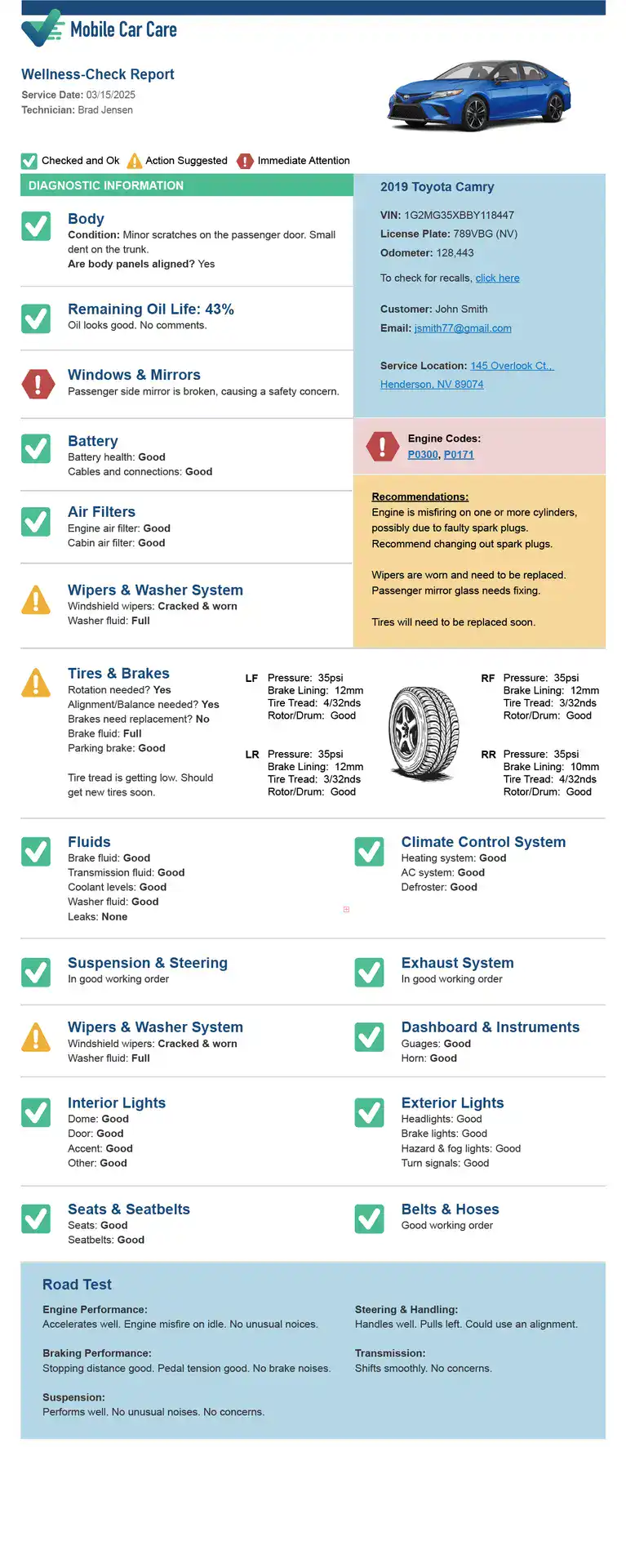
Every Essential Plan subscriber receives a comprehensive 85-point vehicle inspection every quarter, performed by ASE-certified technicians at the subscriber’s home, office, or preferred location. Battery voltage testing is a standard component of every inspection. The technician uses professional-grade diagnostic equipment to test cold cranking amps, reserve capacity, and voltage under load conditions. These tests reveal battery degradation long before any visible symptoms appear.
When our technicians identify a battery trending toward failure, they document it in the digital inspection report with photos and specific readings. Subscribers receive this report by email immediately after the inspection. That gives vehicle owners time to plan a replacement on their schedule, not in response to an emergency. The difference between knowing a battery is at 60 percent capacity in April and finding out it is at zero capacity on a 114-degree August afternoon is not trivial. It is the difference between a planned, affordable replacement and an emergency situation that can include towing fees, lockout fees, and the cost of being stranded miles from home.
In addition to voltage testing, the quarterly inspection includes a check of the battery terminals for corrosion, a visual inspection of the battery case for swelling or damage, and a review of the battery cables and connections. Corroded terminals are cleaned and treated as a standard part of the service, because clean connections extend battery life and improve starting reliability at no additional cost to subscribers.
Regular inspections also pay off financially over time. Read more about how regular vehicle inspections save you money long-term.
What Essential Plan Subscribers Receive for Battery Protection
The Essential Plan at $29.99 per month is designed to provide comprehensive preventive maintenance at a price point that is genuinely accessible. The battery-related coverage includes:
- Quarterly battery voltage and load testing with professional diagnostic equipment
- Terminal inspection and corrosion treatment at every visit
- Battery case inspection for heat damage, swelling, or physical deterioration
- Cable and connection review to ensure optimal electrical conductivity
- A written digital inspection report documenting battery health with specific readings
- Technician recommendations on replacement timeline based on measured performance
Subscribers with multiple vehicles receive a 10 percent discount on the monthly rate, which makes protecting every vehicle in the household affordable. Families with teen drivers or elderly parents who rely on a vehicle will particularly benefit from knowing that every car in the household is being monitored quarterly by a professional technician.
For families who want maximum coverage beyond the battery, the Total Care Plan includes everything in Essential plus free runner services, minor repairs, jump starts, and emergency fuel delivery, giving subscribers a complete safety net for any vehicle situation.
Our car safety inspection checklist for families outlines exactly what to look for across your household vehicles throughout the year.
How Often Should You Replace Your Car Battery in Las Vegas?
The general guideline in moderate climates is to replace a car battery every four to five years. In Las Vegas, that guideline does not apply. The heat exposure in the Mojave Desert accelerates battery degradation significantly enough that two to three years is a more realistic expectation for most battery types.
The type of battery matters. Standard flooded lead-acid batteries are the most heat-sensitive and tend to fail soonest in desert conditions. Enhanced flooded batteries and absorbed glass mat (AGM) batteries handle heat better, with AGM options being the preferred choice for vehicles driven primarily in hot climates. AGM batteries are sealed, which prevents electrolyte evaporation, and they have better resistance to plate corrosion. They typically cost more upfront but outlast flooded batteries by one to two years in Las Vegas conditions.
Regardless of battery type, the right answer to “how often should I replace it” is: replace it when testing shows it has degraded significantly, not on a rigid schedule. A battery tested quarterly gives you real performance data over time. You can see the capacity trending downward and make a planned, informed replacement decision before the battery fails. That is exactly the kind of proactive insight that the Mobile Car Care inspection program provides.
Protecting Your Battery Between Quarterly Visits
While quarterly professional inspections are the foundation of battery health in Las Vegas, there are practical steps every vehicle owner can take between visits to extend battery life and reduce the risk of a failure.
- Park in shade whenever possible: Reducing the ambient temperature around your vehicle by even 20 to 30 degrees can meaningfully slow battery degradation over the course of a Las Vegas summer. Covered parking structures, carports, and shade trees all help.
- Avoid excessive short trips: Every time you start the engine, the battery delivers a large burst of current. The alternator recharges the battery while the engine runs, but short trips of five minutes or less may not fully recharge the battery after the start. Batteries that are repeatedly partially discharged and never fully recharged develop sulfation faster.
- Turn off accessories before shutting down: Leaving the air conditioning, headlights, or infotainment system active when the engine is off drains the battery. In extreme heat, even a modest parasitic drain can discharge a compromised battery enough to prevent starting.
- Keep terminals clean: If you notice white powder building up on the battery terminals, a simple cleaning with baking soda, water, and a wire brush removes sulfate corrosion and restores good electrical contact. Your Mobile Car Care technician handles this during every quarterly visit, but if you notice significant buildup between visits, it is worth addressing promptly.
Your battery cannot tell you when it’s about to fail. Mobile Car Care’s technicians can. Sign up for the Essential Plan today and get professional battery testing delivered to your location every quarter, starting at just $29.99 per month.
Frequently Asked Questions About Car Battery Las Vegas Heat
Does Las Vegas heat really shorten car battery life compared to cold climates?
Yes. Heat accelerates battery degradation far more than cold weather. Cold temperatures reduce available power temporarily, but heat causes permanent physical damage: electrolyte evaporation, plate sulfation, and internal corrosion. Batteries in Las Vegas often fail in two to three years, compared to four to five years in moderate climates.
What temperature is considered too hot for a car battery?
Batteries are typically rated to perform best at around 77 degrees Fahrenheit. Performance begins to degrade above 95 degrees, and at temperatures above 110 degrees, which are common in Las Vegas engine compartments during summer, the rate of electrolyte evaporation and plate sulfation increases significantly. Batteries exposed to sustained high temperatures repeatedly throughout the summer may degrade in a single season.
How do I know if my car battery is dying because of heat?
Common signs include slow engine cranking at startup, dimming headlights or flickering dashboard lights, erratic electrical accessories, a swollen or warped battery case, a sulfur smell near the battery, or a battery warning light on the dashboard. If your battery is more than two years old and you drive in Las Vegas, have it tested by a professional even if no symptoms are present.
Is an AGM battery worth the extra cost in Las Vegas?
For Las Vegas drivers, AGM (absorbed glass mat) batteries are generally a worthwhile investment. They are sealed, which prevents electrolyte evaporation in high heat. They also handle heat-induced corrosion better and typically last one to two years longer than standard flooded batteries in desert conditions. The higher upfront cost is usually offset by the longer replacement interval.
How does Mobile Car Care test my car battery?
Mobile Car Care technicians use professional-grade diagnostic equipment to perform a load test on your battery, which measures voltage and cranking amps under realistic starting conditions. This gives a more accurate picture of real-world battery health than a simple resting voltage check. Results are included in your digital 85-point inspection report, which is emailed to you immediately after the visit.