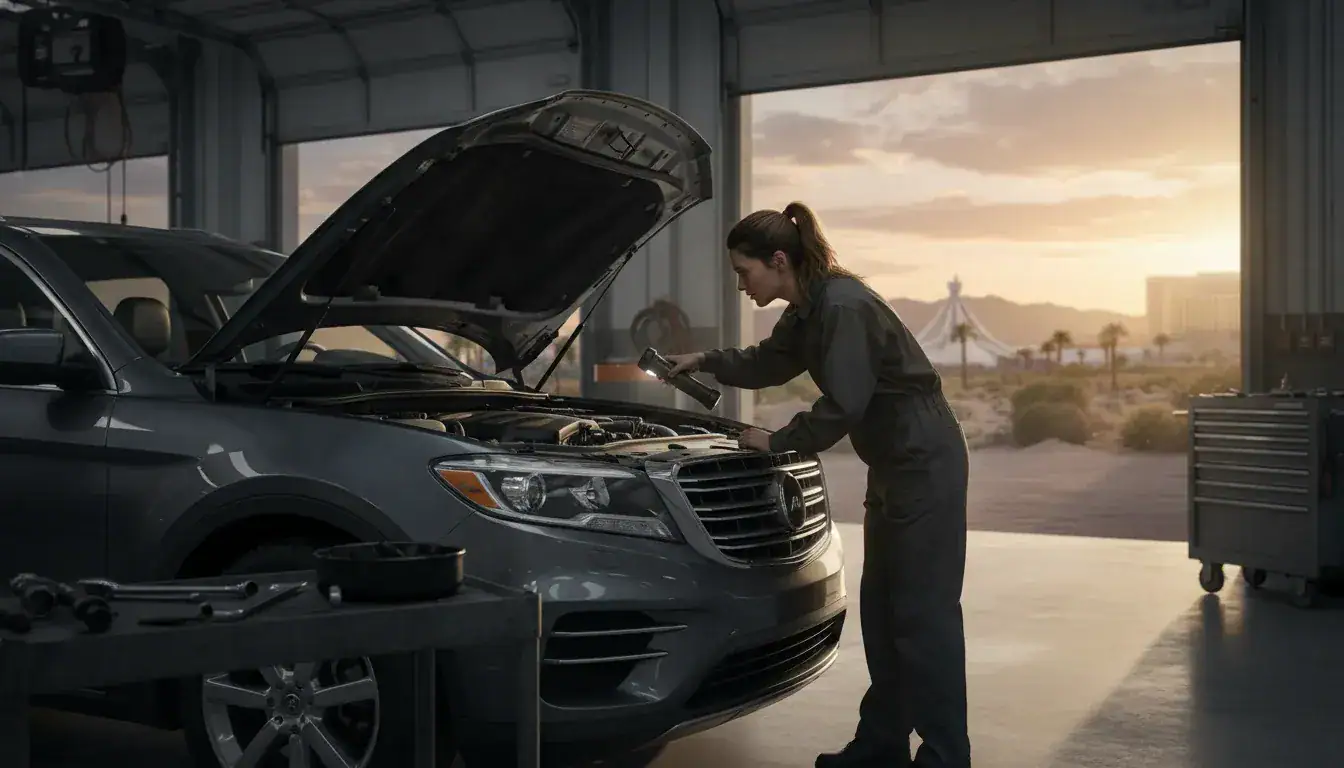
Desert road trips from Las Vegas are different. A weekend run to Death Valley, Zion, Lake Havasu, Phoenix, Southern California, or the Utah parks can take your car from city traffic to long empty stretches where heat, elevation changes, and limited services turn small maintenance problems into trip-ending breakdowns. A pre road trip car inspection Las Vegas drivers can trust should focus on the systems that fail fastest in the desert: the battery, cooling system, tires, fluids, brakes, lights, belts, hoses, and air conditioning.
Planning to leave town soon? Book a one-time Quick Check before your trip and Mobile Car Care will bring an 85-point vehicle wellness inspection to your home, office, or preferred location in the Las Vegas Valley.
This checklist is written for local drivers heading into extreme heat, remote highways, mountain grades, and long-distance travel. Use it a week before departure if possible, not the night before. That gives you time to fix weak spots before you are loaded with luggage, passengers, pets, and a full tank of gas.
Why a Las Vegas Road Trip Inspection Is Different
In many cities, a pre-trip inspection is mostly about confirming that the vehicle is generally safe. In Las Vegas, it also needs to answer a more serious question: can this car handle sustained desert stress without leaving you stranded?
Las Vegas summer temperatures regularly climb past 100 degrees. Pavement can be far hotter than the air temperature, especially on I-15, US-95, I-11, and the open highways that lead toward Death Valley, Arizona, Utah, and California. Heat accelerates battery wear, raises tire pressure, punishes coolant systems, dries rubber components, and makes every fluid work harder.
The local travel patterns add risk, too. A trip from Las Vegas to Death Valley can put you in areas with limited shade and long gaps between services. Drives toward Zion, Bryce Canyon, Flagstaff, or Southern California often include steep grades where engines, transmissions, brakes, and cooling systems work harder than they do in normal Las Vegas commuting.
That is why this inspection should be more than a quick glance at the gas gauge. It should be a practical check of the systems most likely to fail when the desert is least forgiving.
Quick Answer: What Should You Check Before a Desert Road Trip?
Before a desert road trip from Las Vegas, check your battery, coolant level and condition, radiator hoses, tire pressure, tire tread, spare tire, engine oil, brake fluid, transmission fluid, windshield washer fluid, brakes, lights, belts, wiper blades, air conditioning, and emergency supplies. If the car is older, has warning lights, has more than 50,000 miles, or has not been inspected recently, schedule a professional inspection before leaving.
Here is the short version of the pre-trip inspection:
- Test the battery and inspect terminals for corrosion.
- Check coolant level, color, hoses, leaks, and overheating history.
- Set tire pressure when tires are cold and inspect tread, sidewalls, and spare tire.
- Confirm oil, brake fluid, power steering fluid, transmission fluid, and washer fluid levels.
- Inspect brakes for noise, vibration, soft pedal feel, and visible wear.
- Test headlights, brake lights, turn signals, hazards, horn, wipers, defroster, and A/C.
- Look for leaks, cracked belts, bulging hoses, and dashboard warning lights.
- Pack water, basic tools, tire equipment, jumper cables, and roadside safety items.
1. Battery: Test It Before the Heat Does
Battery problems are one of the most common reasons Las Vegas drivers get stranded. Heat speeds up chemical wear inside the battery, and a battery that seemed fine during short city drives can fail after sitting in a hot parking lot or starting repeatedly during a long travel day.
Before a road trip, look for white, blue, or green corrosion around the terminals. Make sure the battery is securely mounted and that the cables are tight. If your battery is more than two years old, has needed a jump recently, cranks slowly, or triggers electrical issues, get it tested before you leave.
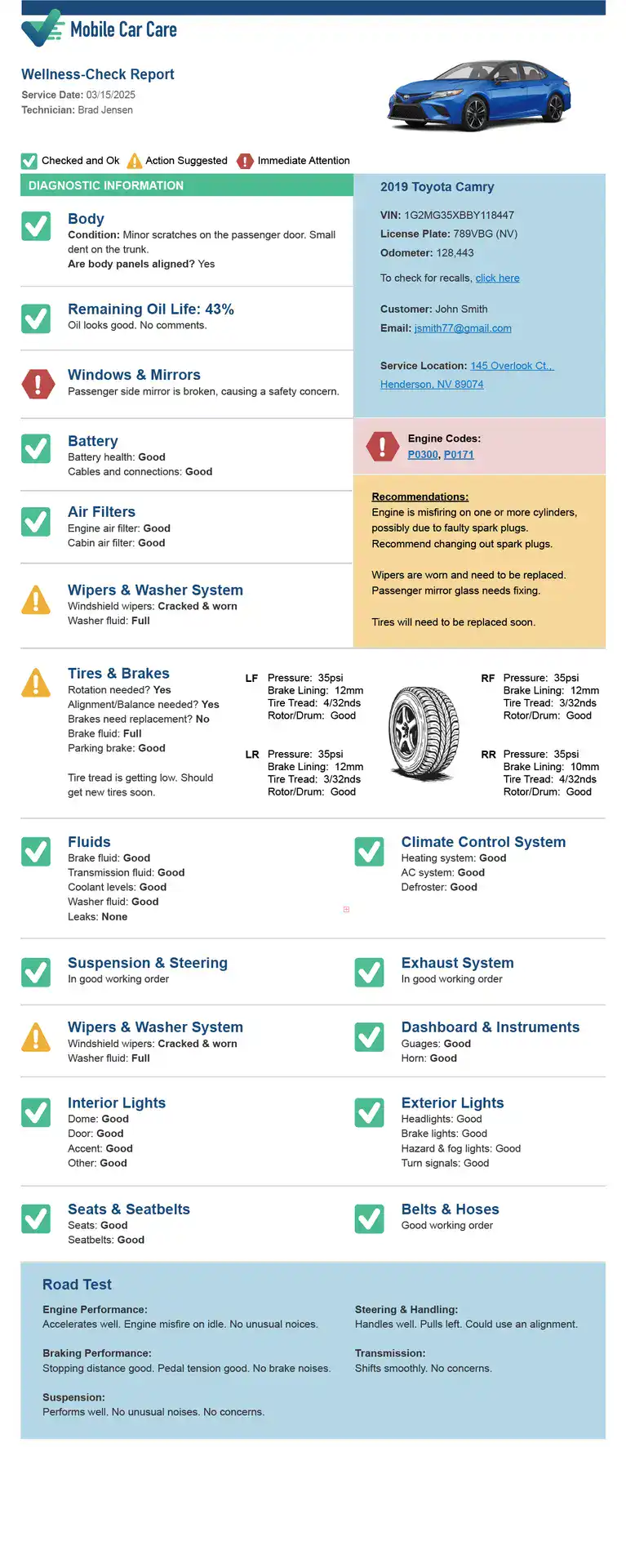
A basic voltage check is helpful, but a load test is better because it shows how the battery performs under stress. Mobile Car Care’s Quick Check includes battery voltage testing as part of the 85-point vehicle review, which is especially useful before remote desert driving.
2. Cooling System: Prevent Overheating Before You Climb Grades
Your cooling system is the difference between a normal desert drive and a smoking hood on the shoulder. Long climbs, slow traffic, high air temperatures, and A/C use all increase engine heat. If the coolant is low, old, contaminated, or leaking, the risk climbs quickly.
Only check coolant when the engine is cool. Look at the reservoir level and note the fluid color. Healthy coolant is usually green, orange, pink, yellow, or blue depending on the vehicle. Brown, rusty, oily, cloudy, or gritty coolant needs attention. Also inspect the radiator area, water pump area, and the ground under the vehicle for signs of leaks.
Pay close attention to hoses. Desert heat can turn rubber brittle, soft, swollen, or cracked. A hose that bursts on the way to Utah or California can stop the trip immediately. If your temperature gauge has been running hotter than usual, the heater smells sweet, the coolant warning light is on, or you see dried residue near a hose connection, do not ignore it.
3. Tires: Check Pressure, Tread, Sidewalls, and the Spare
Tires take a beating on hot pavement. Under-inflated tires flex more, build more heat, and increase the chance of a blowout. Over-inflated tires can reduce traction and wear unevenly. Because pressure changes with temperature, check tire pressure when the tires are cold and set it to the number on the driver’s door placard, not the maximum number printed on the tire sidewall.
Inspect tread depth and look for uneven wear. Cupping, feathering, bald shoulders, or one tire wearing faster than the others can point to alignment, suspension, or inflation issues. Also check the sidewalls for cracks, bubbles, cuts, or embedded objects. A tire that looks questionable in your driveway will not become safer on I-15 in July.
Do not forget the spare. Many drivers discover a missing, flat, damaged, or inaccessible spare only after they need it. Confirm the spare is present, properly inflated, and that the jack, lug wrench, wheel lock key, and inflation kit are in the vehicle.
4. Fluids: Confirm Levels Before Long Heat Exposure
Fluids protect the parts that are working hardest during a road trip. Low or neglected fluids can lead to overheating, poor braking, steering issues, transmission damage, poor visibility, and expensive repairs far from home.
Check these fluids before leaving Las Vegas:
- Engine oil: Confirm level and condition. If the oil is very low, very dark, gritty, or overdue, handle it before the trip.
- Coolant: Check level, color, and signs of leaks only when the engine is cool.
- Brake fluid: Low brake fluid may indicate wear or a leak. Do not start a road trip with questionable braking.
- Transmission fluid: Follow your owner’s manual. Heat and mountain grades can make transmission problems worse.
- Power steering or hydraulic fluid: If your vehicle uses it, check for low levels, noise, stiffness, or leaks.
- Windshield washer fluid: Fill it before desert travel. Dust, bugs, and sudden weather can ruin visibility quickly.
Mobile Car Care’s subscription plans include fluid top-offs at scheduled wellness checks. For a one-time road trip inspection, the Quick Check reviews fluid levels and documents observations so you know what needs attention before departure.
5. Brakes: Listen, Feel, and Inspect Before Mountain Driving
Road trips from Las Vegas often involve grades, traffic, and heavier-than-normal vehicle loads. Passengers, luggage, coolers, bikes, and camping gear all add weight, which makes brakes work harder. If the brake system is already marginal, a long descent can expose the problem fast.
Before the trip, pay attention to squealing, grinding, vibration, pulling, or a pedal that feels soft, spongy, or lower than normal. Look through the wheels if possible and check whether pads appear thin or rotors look deeply grooved. A burning smell after braking, steering wheel shake, or brake warning light should be handled before leaving town.
Brakes are not a place to guess. If something feels off, get the vehicle checked. A professional inspection can identify visible brake wear, rotor concerns, fluid issues, warning lights, and other safety concerns before you are driving through remote terrain.
6. Lights, Wipers, Visibility, and Safety Controls
Good visibility matters on every trip, but desert driving adds glare, dust, bugs, sudden rain, and dark rural highways. Test every light before you leave: headlights, high beams, brake lights, reverse lights, turn signals, hazards, and license plate lights. If you are towing or using a cargo carrier, confirm nothing blocks the lights.
Check wiper blades for cracking, skipping, streaking, or loose rubber. In Las Vegas, wipers can dry out even when they are rarely used. Monsoon storms can arrive quickly, and worn blades can make the windshield nearly impossible to see through during heavy rain.
Also test the horn, defroster, mirrors, seat belts, dashboard warnings, and windshield washer spray. These are simple checks, but they matter when road conditions change fast.
7. Air Conditioning: Comfort Is a Safety Issue in the Desert
In Las Vegas, A/C is not just about comfort. A weak air conditioning system can become a safety issue during extreme heat, especially for children, older adults, pets, and anyone sensitive to heat. Before a desert road trip, run the A/C long enough to confirm it blows cold air consistently at idle and while driving.
Watch for weak airflow, clicking sounds, musty smells, water on the passenger floor, or air that cools briefly and then warms up. Those symptoms can point to cabin filter problems, blower issues, refrigerant leaks, compressor concerns, or drainage problems.
If the A/C struggles in Las Vegas before you leave, it will likely struggle more in Death Valley traffic, a California backup, or a hot Arizona fuel stop. Get it checked early enough to make repairs if needed.
8. Belts, Hoses, Leaks, and Warning Lights
Some of the most important pre-trip clues are visible before the vehicle ever moves. Open the hood and look for cracked belts, frayed edges, shiny belt glazing, loose components, wet areas, dried residue, or fluid on the ground. A small leak in town can become a major problem after hours of heat and vibration.
Dashboard warning lights deserve the same attention. A check engine light, battery light, oil pressure light, brake warning light, coolant warning, tire pressure light, or stability control warning should be diagnosed before a long trip. If the light is flashing, treat it as urgent and do not continue driving unless a qualified professional says it is safe.
This is one area where a professional review helps. Mobile Car Care’s Quick Check includes leak and belt checks, safety warning light checks, operational checks, and a vehicle test drive so you receive a clearer picture than a driveway glance can provide.
When Should You Schedule the Inspection?
Schedule your inspection at least five to seven days before departure if you can. That timing gives you room to order parts, replace a battery, address tire concerns, service fluids, or make a repair without rushing. If you wait until the day before the trip, you may learn about a problem but not have time to solve it.
If your trip is longer than a few hours, includes remote desert highways, involves children or older passengers, or uses a vehicle you do not drive often, schedule earlier. The same goes for vehicles with more than 50,000 miles, older tires, a battery more than two years old, inconsistent A/C, warning lights, or a history of overheating.
A good timeline looks like this:
- Two weeks before: Book the inspection, review maintenance history, and note any symptoms.
- One week before: Complete the inspection and handle any recommended service.
- Two days before: Recheck tire pressure, fluid levels, lights, and emergency supplies.
- Departure morning: Look under the vehicle for leaks and confirm no warning lights appear.
Need a professional set of eyes before you go? Schedule a Quick Check and get a documented 85-point vehicle review before your road trip.
What Mobile Car Care Checks During a Quick Check
Mobile Car Care’s Quick Check is designed for exactly this kind of situation: you want a one-time vehicle wellness review before a specific event, trip, purchase, or concern. The service comes to your home, office, or preferred location within the Las Vegas service area, so you do not have to spend hours at a shop before leaving town.
The Quick Check centers on an 85-point inspection and a digital report with photos, observations, and recommendations. For road trip planning, the most relevant items include:
- Battery voltage testing
- Fluid level checks, including oil, brake, coolant, hydraulic, power steering, windshield washer, and transmission fluid where applicable
- Tire PSI, tire wear, visible damage, lug nuts, and spare tire presence
- Safety checks for lights, brakes and rotors, horn, seat belts, safety warning lights, and defroster
- Filter inspection for air and cabin filters
- Leak and belt checks
- Interior and exterior condition review
- Operational checks for shocks, struts, steering, parking brake, and exhaust system
- A vehicle test drive
Quick Check is an inspection service, not a promise that every possible failure can be predicted. But it gives you documented information before you commit to hours of desert driving, and it helps you prioritize what should be handled before departure.
DIY Inspection vs. Professional Quick Check
A DIY inspection is useful, especially for tire pressure, lights, washer fluid, visible leaks, and emergency gear. Every driver should do those basics. The difference is depth, documentation, and experience.
| Inspection Area | DIY Check | Professional Quick Check |
|---|---|---|
| Battery | Look for corrosion and slow starts | Voltage testing and documented condition notes |
| Cooling system | Check coolant reservoir level when cool | Visual leak, hose, belt, and overheating risk review |
| Tires | Set pressure and look for obvious damage | PSI, wear, damage, lug nut, and spare tire checks |
| Brakes | Listen for noises and feel for vibration | Brake and rotor safety check plus test drive observations |
| Trip confidence | Based on what you can see | Based on an 85-point checklist and digital report |
If your vehicle is newer, maintained, and driven daily, a DIY check may be enough for a short local trip. If you are driving into the desert, carrying family, heading through mountain grades, or using an older vehicle, a professional inspection is the safer choice.
What Emergency Supplies Should Las Vegas Drivers Pack?
Even a well-maintained vehicle should carry desert-appropriate emergency supplies. Pack more water than you think you need, especially if you are traveling with children, seniors, or pets. Add a phone charger, power bank, flashlight, reflective triangles or flares, jumper cables or a jump pack, tire inflator, tire pressure gauge, basic first aid kit, gloves, towels, sunscreen, and snacks.
For longer trips, consider a printed route, extra coolant or water for emergencies, a small tool kit, a blanket, and contact information for roadside assistance. If you are traveling through remote areas, tell someone your route and expected arrival time.
These supplies do not replace a pre-trip inspection. They are a backup plan. The goal is still to prevent the breakdown, not simply survive it more comfortably.
Common Mistakes Las Vegas Drivers Make Before Road Trips
The biggest mistake is assuming a car is road-trip ready because it handles short errands around town. A vehicle can seem fine between Summerlin, Henderson, North Las Vegas, and the Strip but still be unprepared for hours of high-speed heat exposure.
Other common mistakes include checking tire pressure after driving instead of when tires are cold, ignoring a battery that is more than two years old, leaving with old wiper blades because it rarely rains, forgetting the spare tire, dismissing a small coolant leak, and waiting until the last minute to schedule service.
Another mistake is treating A/C as optional. In the desert, weak A/C can make a breakdown more dangerous and can make passengers miserable even if the car keeps moving. If the system is not cooling properly in town, address it before the trip.
FAQ: Pre Road Trip Car Inspection in Las Vegas
How long before a road trip should I inspect my car?
Inspect your car five to seven days before a road trip whenever possible. That gives you time to fix a weak battery, tire issue, coolant concern, fluid problem, or brake concern before departure.
What is the most important thing to check before a Las Vegas desert road trip?
The most important systems are the battery, cooling system, tires, fluids, and brakes. These systems are most likely to be stressed by extreme heat, long highway stretches, mountain grades, and remote desert travel.
Is a Quick Check the same as a repair appointment?
No. Mobile Car Care’s Quick Check is a one-time vehicle wellness inspection built around an 85-point checklist and digital report. It identifies observations and recommendations so you can decide what needs attention before your trip.
Should I get an inspection if my car has no warning lights?
Yes, especially before a long desert road trip. Many tire, battery, coolant, brake, belt, hose, and fluid issues can exist before a dashboard warning light appears.
Can Mobile Car Care inspect my vehicle at my home before I leave?
Yes. Mobile Car Care provides on-site vehicle wellness inspections within the Las Vegas metropolitan area, including Las Vegas, Henderson, and North Las Vegas.
Book Your Pre-Trip Quick Check Before You Leave Las Vegas
A good road trip starts before the engine turns over. If you are heading from Las Vegas into the desert, do not rely on luck, dashboard lights, or a quick gas-station glance at your tires. Check the systems that matter, handle problems early, and leave with a clear understanding of your vehicle’s condition.
Before your next desert drive, book Mobile Car Care’s one-time Quick Check. The 85-point inspection comes to you and gives you a digital report before you hit the road.
Want ongoing help beyond one trip? Compare the Essential Plan and Total Care Plan for quarterly vehicle wellness checks and preventive maintenance support in the Las Vegas Valley.