Car Maintenance for College Students in Las Vegas — Keeping Your Vehicle Running at UNLV, CSN, and NSC
If you’re a college student driving in Las Vegas, your car is not just a convenience — it’s a lifeline. Between commuting to UNLV, CSN, or NSC, picking up shifts at a part-time job, and squeezing in study sessions, a breakdown on I-15 or a dead battery in the campus parking lot can torpedo your entire day. Yet car maintenance for college students in Las Vegas is one of the most consistently neglected tasks on every student’s to-do list.
Las Vegas is hard on vehicles. Summer temperatures routinely exceed 115°F, baking fluids, aging batteries, and cracking tires faster than in nearly any other U.S. city. Add in long commutes on desert highways, and the formula for an expensive, stressful breakdown is already written — unless you stay ahead of it.
This guide covers the specific maintenance tasks Las Vegas college students can’t afford to skip, the warning signs your car is trying to tell you something, how a one-time vehicle review can help before a busy semester, and how a simple, affordable subscription plan can eliminate the hassle entirely.
Why Las Vegas Heat Punishes Neglected Vehicles
Before diving into what to check, it helps to understand why the stakes are higher here than in most college towns. Las Vegas’s desert climate creates several accelerated wear conditions that students from cooler states may never have encountered:
- Battery degradation: Heat is the number-one killer of car batteries. The average car battery lasts 5 years in a temperate climate; in Las Vegas, that figure can drop to 3 years or fewer. A battery that seems fine in November can fail silently by August.
- Coolant breakdown: Your engine’s cooling system works overtime in triple-digit heat. Old coolant loses its ability to prevent overheating, putting you at serious risk of engine damage on long stretches of desert highway.
- Tire blowouts: Hot pavement combined with underinflated or aging tires is a recipe for a dangerous blowout. Tire pressure drops in cooler weather and spikes in extreme heat — students who set pressure in winter may be dangerously over-inflated by August.
- Fluid evaporation: Oil, brake fluid, power steering fluid, and windshield washer fluid all evaporate or degrade faster in high-heat environments, leaving systems dry faster than the recommended service intervals suggest.
Most students are also first-time solo car owners who lack the tribal knowledge their parents had — they don’t know what sounds “normal” and what sounds like a $1,200 repair waiting to happen. That knowledge gap, combined with Vegas heat, is a dangerous combination.
The 6 Car Maintenance Tasks College Students Most Often Skip
1. Oil Changes
Oil is your engine’s bloodstream. Old, dirty oil loses its viscosity and can no longer adequately lubricate engine components — leading to accelerated wear and, eventually, catastrophic engine failure. Most vehicles need an oil change every 3,000–7,500 miles depending on the oil type and make; in Las Vegas heat, erring toward the shorter interval makes sense.
The student trap: Many students wait until the dashboard oil light turns on. By that point, oil pressure has already dropped to dangerous levels. Check your oil level with the dipstick at least once a month — it takes two minutes.
2. Tire Pressure and Condition
Underinflated tires don’t just waste gas — they increase stopping distances and blowout risk. Check your tire pressure monthly (or before any long drive) using a simple gauge. The correct PSI is listed on the sticker inside your driver’s door jamb, not on the tire sidewall.
Also inspect tire tread depth. The easy test: insert a penny into a tread groove with Lincoln’s head facing down. If you can see the top of his head, your tires are dangerously worn and need replacement.
3. Battery Health
As mentioned above, Las Vegas heat kills batteries faster than almost anything else. If your car is slow to start, especially in the morning, or if your lights dim when idling, those are early warning signs. Most auto parts stores will test your battery for free, and a proactive inspection as part of a regular vehicle check can catch a failing battery before it leaves you stranded in a campus parking structure at 9 p.m.
4. Coolant and Fluid Top-Offs
Your vehicle has several fluids that need to stay at the right level: engine coolant, brake fluid, transmission fluid, power steering fluid, and windshield washer fluid. Ignoring these can cause anything from a cracked windshield on the highway to complete brake failure. In Las Vegas’s heat, coolant in particular should be checked every few months — not once a year.
5. Brakes
Squealing or grinding when you brake, a vibrating pedal, or pulling to one side are all signs your brakes need immediate attention. Brake pads have a limited lifespan, and worn pads damage rotors — turning a $200 pad replacement into a $600+ rotor job. College students frequently delay brake service because it feels expensive; in reality, delaying it makes it far more expensive.
6. Air Filter
Las Vegas is a desert. Dust and particulates are relentless, and a clogged air filter starves your engine of oxygen, reducing fuel efficiency and performance. Air filter checks should happen roughly annually — but if you drive through dusty conditions frequently (think Red Rock Canyon weekend trips), check it sooner.
Building a Simple Maintenance Calendar Around Your School Schedule
One of the best things a college student can do is tie car maintenance checkpoints to the academic calendar rather than trying to remember mileage intervals:
| Time of Year | What to Check |
|---|---|
| Before Fall Semester (August) | Battery test, tire pressure + tread, coolant level, oil change if due, air filter |
| Before Winter Break (December) | Brakes, fluids full check, wiper blades, tire condition |
| Before Spring Semester (January) | Oil check, tire pressure (pressure drops in cooler temps) |
| Before Summer (May) | Full cooling system check, battery, tires, fluids — highest-stakes check before peak heat |
This simple framework means you’re proactively reviewing your vehicle four times a year — which aligns almost exactly with the quarterly inspections included in Mobile Car Care’s Essential Plan.
The Convenience Problem: Why Students Avoid the Shop
Ask any college student why they’ve been putting off an oil change for three months, and the answer is almost always one of three things:
- “I don’t have time.” Between classes, work, and studying, finding a two-hour block to drop off and pick up a car feels impossible.
- “I don’t know who to trust.” Being a newcomer to Las Vegas — especially for out-of-state students — means you don’t have a trusted shop. The fear of being oversold or overcharged is real.
- “I’ll do it next week.” Deferred maintenance is the default for any low-urgency task that requires effort to schedule.
These aren’t excuses — they’re legitimate friction points. And they’re exactly why traditional car maintenance models fail college students. Driving to a shop, waiting 90 minutes, and hoping you’re not being upsold doesn’t fit the student lifestyle.
Mobile Car Care: The Service That Comes to You
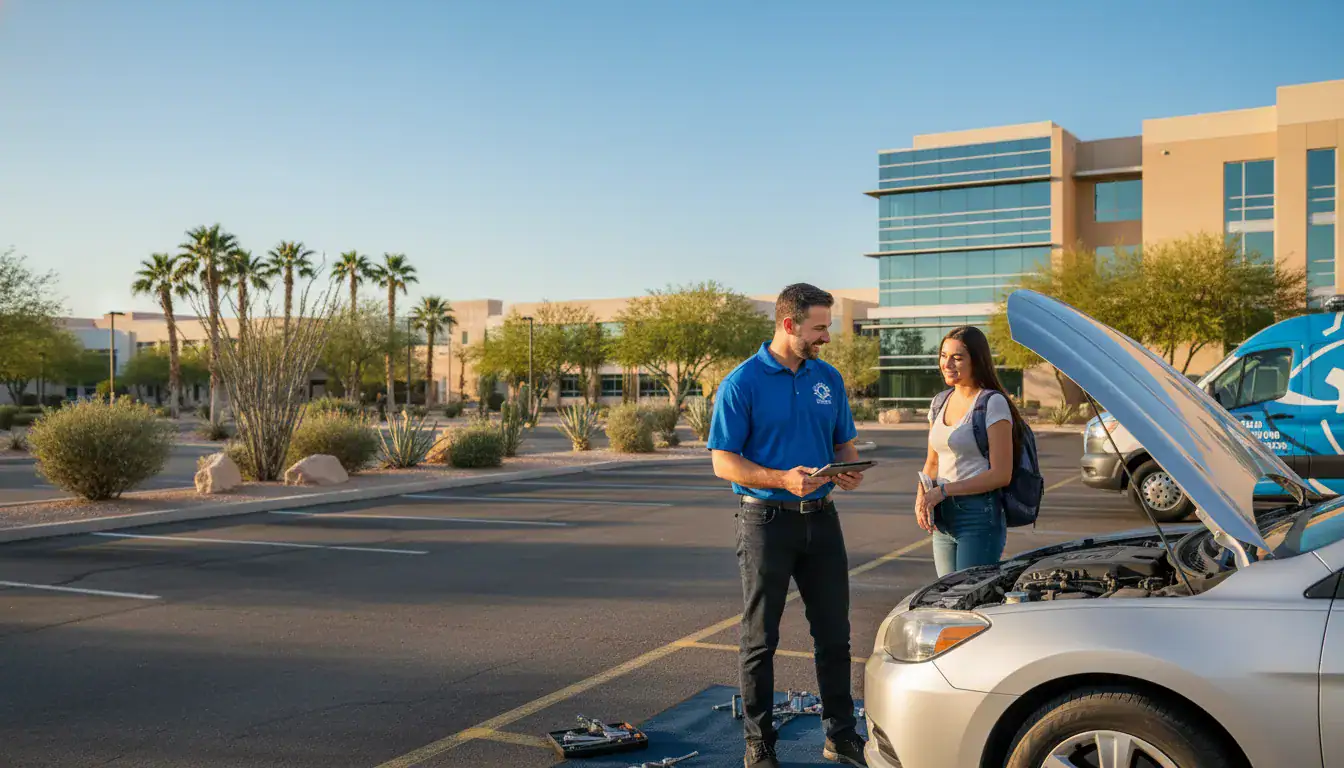
Mobile Car Care LLC was built to solve exactly this problem. Rather than requiring you to visit a shop, their ASE-certified technicians come to wherever your car is — your apartment parking lot, your campus, your workplace — and perform a comprehensive vehicle inspection and maintenance service on-site.
For college students at UNLV, CSN, or NSC, this means your car gets checked while you’re in class, studying at home, or sleeping. You don’t lose a single hour of your day.
The Essential Plan: $29.99/Month
Mobile Car Care’s Essential Plan is specifically designed to be affordable for budget-conscious households — and at $29.99 per month, it typically costs less than a single oil change at a traditional shop. Here’s what’s included:
- Quarterly 85-point vehicle inspections — a comprehensive check of safety systems, fluids, tires, battery, brakes, belts, filters, and more
- Fluid top-offs — keeping oil, coolant, brake fluid, and other critical fluids at proper levels between major services
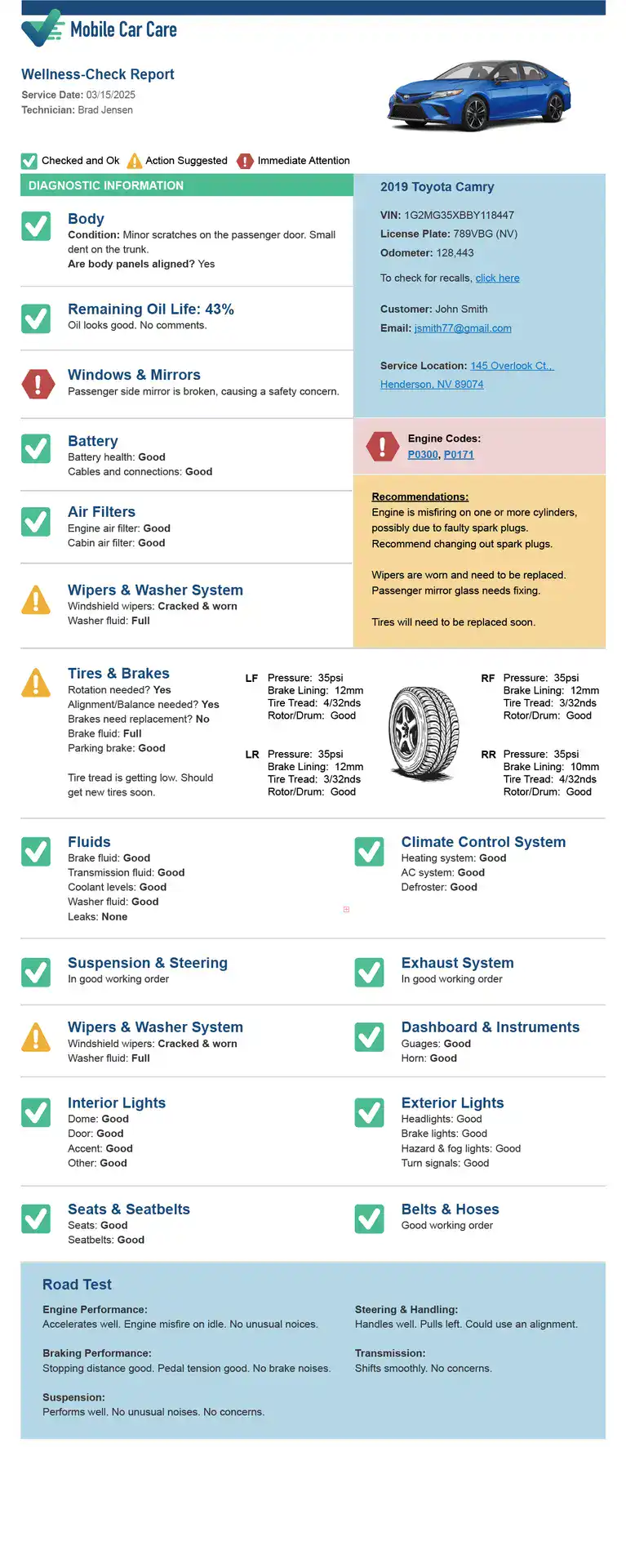
- Digital inspection reports — a full written report with photos sent directly to your email after every visit, so you always know exactly what’s happening with your car
- 10% multi-vehicle discount — if a parent wants to add their vehicle to the same plan
A single tow truck call in Las Vegas averages $75–$150 for a short-distance tow. One breakdown pays for five months of the Essential Plan. The math isn’t complicated.
For Students Who Want Full Coverage: Total Care
Students who want the added safety net of emergency services should consider the Total Care Plan, which adds:
- Jump starts
- Emergency fuel delivery
- Minor on-site repairs
- Free runner services (tire changes, lockout assistance)
For students commuting long distances — from Henderson to UNLV’s campus on Maryland Parkway, or from the northwest valley to CSN’s Cheyenne campus — that emergency coverage can be genuinely life-saving during summer months.
What a Mobile Car Care Visit Looks Like
Here’s the typical experience for a college student subscriber:
- Schedule once, set a recurring appointment. You select a time and location — your apartment complex, a campus parking area, or anywhere you park regularly. The technician comes to you on a predictable schedule.
- Go about your day. You don’t need to be present. Leave your car where it’s parked and carry on with classes or work.
- Receive your report. Within minutes of the visit’s completion, you receive a detailed digital report with photos, fluid levels, observations, and any recommendations — all transparent, no surprise upsells.
- Act on recommendations. If something needs attention (say, a cabin air filter replacement), you can authorize the service or take the information to a shop of your choice. No pressure.
The entire experience is designed around the reality of busy people who can’t afford downtime — which describes every college student in Las Vegas.
A Word for Parents: Keep Your Student Safe from 500 Miles Away
If you’re a parent whose son or daughter is attending UNLV, CSN, or NSC, you already know the anxiety of wondering whether their car is safe and whether they’re actually getting the oil changed. Mobile Car Care’s digital inspection reports solve this problem directly: every quarterly check generates a detailed report with photos that can be shared with parents, giving everyone the same information.
The multi-vehicle discount also means a parent and student can share a plan, keeping both vehicles covered under one affordable subscription. Learn more about how Mobile Car Care supports young drivers and family vehicle safety.
Common Questions from College Students About Car Maintenance in Las Vegas
How often do I really need an oil change in Las Vegas?
More often than you think. In extreme heat, conventional oil breaks down faster than in temperate climates. If your vehicle uses conventional oil, aim for every 3,000–5,000 miles. Synthetic oil can extend that to 7,500 miles, but never ignore the interval entirely. When in doubt, have it checked quarterly — which is exactly what the Essential Plan provides.
Can Mobile Car Care come to UNLV’s campus?
Yes. Mobile Car Care serves the entire Las Vegas metropolitan area, including campus-adjacent areas and student apartment complexes near UNLV, CSN, and NSC. Schedule a service at any location where your car is parked.
What if something serious is wrong with my car?
Mobile Car Care focuses on preventive maintenance and inspections rather than major mechanical repairs. If the technician identifies a serious issue, they’ll document it clearly in your report and refer you to a trusted local shop — with no pressure and no hidden agenda. The goal is honest, transparent information, not upselling.
Is the $29.99/month plan worth it if my car is fairly new?
Absolutely. Newer cars still need regular fluid checks, tire monitoring, and battery testing — especially in Las Vegas heat. Regular inspections also protect your warranty compliance and catch small issues before they become big ones. The peace of mind alone is worth more than the subscription cost when you’re a student who can’t afford a surprise $800 repair bill mid-semester.
What does the 85-point inspection actually cover?
The inspection covers every major system on your vehicle: safety systems (lights, horn, seat belts, brakes), tires (pressure, tread, damage, lug nuts), battery voltage, all fluid levels, filters, belts, leaks, suspension, steering, exhaust, and interior/exterior condition. The technician also conducts a vehicle test drive. Full details are available in the Mobile Car Care terms of service.
Don’t Wait for a Breakdown to Think About Maintenance
Las Vegas is one of the worst places in America to have a car breakdown. Summer heat makes roadside waits dangerous, tow costs are high, and if you’re between paychecks during finals week, an unexpected repair can cascade into missed classes and financial stress you don’t need.
The good news is that most breakdowns are completely preventable. A small amount of attention to car maintenance for college students in Las Vegas — or a $29.99/month plan that handles it for you — is all it takes to stay on the road through your academic career.
Ready to take car maintenance off your plate entirely? Start your Essential Plan today and get your first 85-point inspection scheduled at your apartment, campus parking area, or anywhere your car lives. You’ve got enough to study for — your car care shouldn’t be on the test.
Questions? Contact the Mobile Car Care team to learn more about service coverage near UNLV, CSN, and NSC.