
That glowing engine symbol can make you feel powerless, leaving you at the mercy of a mechanic’s diagnosis. But you have more control over the situation than you think. With a little knowledge, you can turn from a worried driver into an informed car owner. Understanding the most common reasons a check engine light comes on, knowing how to react to a solid versus a flashing light, and having a clear plan of action puts you in the driver’s seat. This guide is designed to empower you with the information you need to tackle the problem confidently and make smart, stress-free decisions for your car.
Key Takeaways
- Know the Difference Between Solid and Flashing: A steady light is your car’s way of saying, “Get me checked out soon,” but a flashing light is an emergency signal to pull over immediately to prevent serious damage.
- Always Start with the Easiest Fix: Before you worry, check your gas cap—a loose cap is a frequent and simple cause. If that doesn’t solve it, the next step is to get the diagnostic code read to learn the specific issue.
- Prevent the Problem with Regular Care: The best way to keep the light off is through consistent maintenance. Proactive check-ups help find and fix minor issues before they become major, expensive repairs.
Why Is My Check Engine Light On?
That little glowing engine icon on your dashboard can spark immediate panic. We’ve all been there. Your mind races, picturing worst-case scenarios and expensive repair bills. But before you worry, take a deep breath. The check engine light is simply your car’s way of communicating. It’s a signal that something needs your attention, but it doesn’t automatically mean disaster. Think of it as a heads-up from your vehicle’s onboard computer system. The issue could be as simple as a loose gas cap or a sign of something more complex that needs a professional look. Understanding what that light is trying to tell you is the first step to getting it sorted out without the stress.
What Your Car Is Trying to Tell You
At its core, the check engine light means your vehicle’s computer has detected a problem with the engine, transmission, or emissions system. The computer uses sensors to monitor your car’s performance, and when a sensor reports a reading that’s outside the normal range, it triggers the light. The most important thing to notice is whether the light is solid or flashing. A solid, steady light is a non-emergency warning. It’s telling you to get the car checked out soon, but you can likely continue driving. A flashing light, however, is a serious alert indicating a severe problem, like an engine misfire, that could cause major damage if you keep driving.
Is It Your Engine or Something Else?
The check engine light covers a huge range of potential issues, from incredibly minor to seriously urgent. One of the most common culprits is a loose or faulty gas cap, which is an easy and free fix. Other frequent causes include a failing oxygen sensor, worn-out spark plugs, or a problem with the catalytic converter. While it’s tempting to ignore the light and hope it goes away, that’s never a good idea. Putting off a diagnosis can allow a small, simple fix to turn into a major one. Ignoring the warning can lead to expensive repairs, damage other components, and hurt your fuel economy.
6 Common Reasons Your Check Engine Light Is On
That little glowing engine symbol can feel like your car is sending you a cryptic message. While it’s easy to assume the worst, the check engine light can point to a wide range of issues—some surprisingly simple, others more serious. Understanding the most common culprits can help you figure out your next steps without the immediate panic. Let’s walk through the six most frequent reasons that light might be on.
A Loose Gas Cap
Believe it or not, the fix could be as simple as twisting your gas cap until it clicks. A loose or broken gas cap can disrupt the pressure in your fuel system, which your car’s computer will register as a leak. As the team at AutoZone explains, “a loose gas cap can cause pollution and waste gas. If it’s loose or broken, the system leaks, and the light comes on.” Before you do anything else, pull over safely and double-check that your gas cap is secured. If you tighten it and the light goes off after a few drives, you’ve found your problem.
A Failing Oxygen Sensor
Your car’s oxygen sensor, or O2 sensor, plays a big role in fuel efficiency. It measures the amount of unburned oxygen in your exhaust system to help your car’s computer adjust the fuel-to-air mixture for optimal performance. These sensors can get worn out over time, especially after about 80,000 miles. A failing oxygen sensor can’t provide the right data, which leads to decreased fuel economy and, you guessed it, triggers the check engine light. Replacing it is a common repair that can save you money on gas in the long run.
Catalytic Converter Trouble
The catalytic converter is a critical part of your exhaust system that converts harmful gases like carbon monoxide into less harmful emissions. If it’s not working correctly, you’ll fail an emissions test and see that check engine light pop on. Often, a failing catalytic converter is a symptom of another problem. Issues like a misfiring engine or a blown head gasket can cause the converter to overheat and fail. That’s why it’s so important to address the root cause and not just replace the part.
A Faulty Mass Airflow Sensor
The mass airflow (MAF) sensor is another key player in maintaining your car’s fuel efficiency. Its job is to measure the amount of air entering the engine so the computer can add the right amount of fuel. Over time, the MAF sensor can get dirty or fail, especially if your engine air filter isn’t replaced regularly. When it malfunctions, it can cause your car to stall, hesitate during acceleration, and get poor gas mileage. A quick cleaning might solve the problem, but sometimes the sensor needs to be replaced entirely.
An Engine Misfire
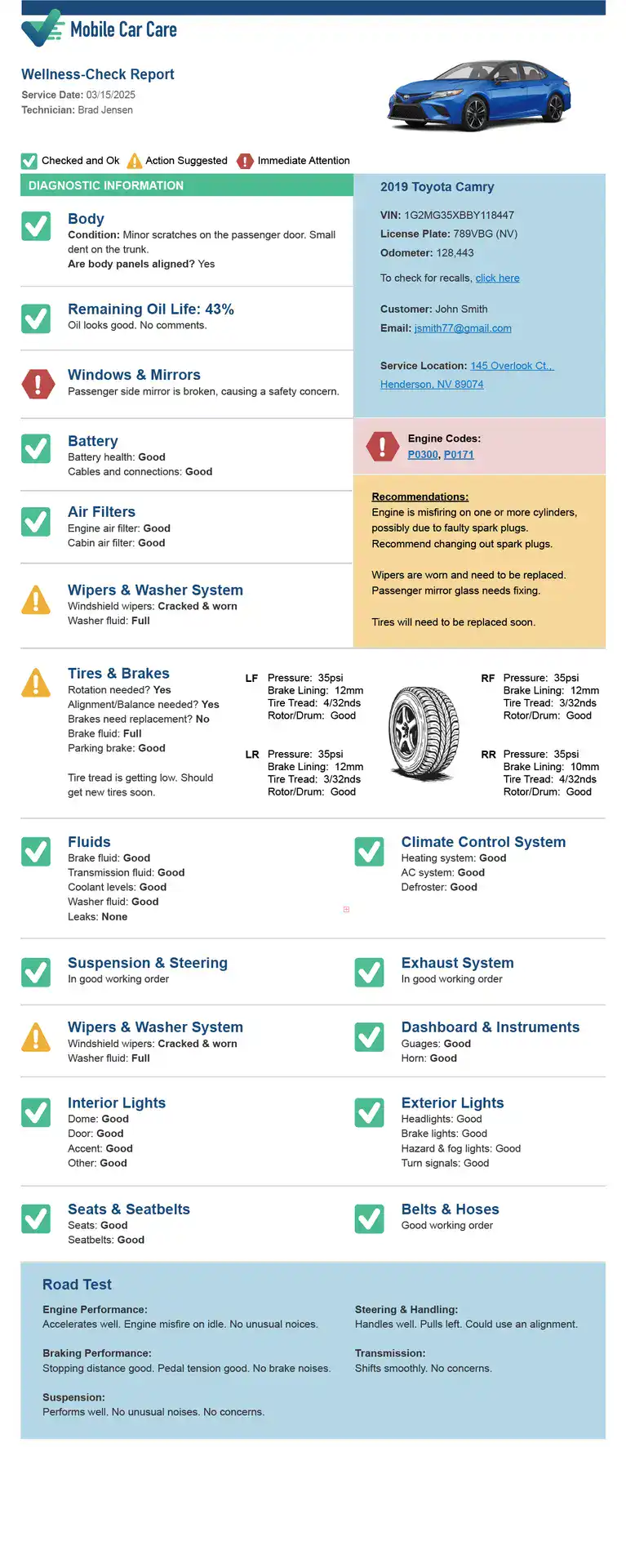
An engine misfire is exactly what it sounds like: one or more of your engine’s cylinders isn’t firing correctly. This can cause your car to shake or jerk, especially when it’s idling or accelerating. A misfire puts a lot of stress on your engine and can seriously damage other components, like the catalytic converter. The causes can range from simple fixes like bad spark plugs or ignition coils to more complex issues like faulty fuel injectors or even internal engine problems. A flashing check engine light often signals a misfire, which requires immediate attention.
Worn-Out Spark Plugs
Your spark plugs are small but mighty. They create the spark that ignites the air-fuel mixture in your engine’s cylinders, which is what powers your car. Over time, spark plugs and their wires wear down and become less effective. According to AAA Automotive, worn-out spark plugs are a common cause of engine trouble and can lead to misfires and reduced performance. Replacing them is a routine maintenance task that keeps your engine running smoothly and prevents that check engine light from making an unwelcome appearance.
Solid vs. Flashing: What’s the Difference?
Not all check engine lights are created equal. The way the light appears on your dashboard—whether it’s a steady glow or a frantic blink—is your car’s way of telling you how serious the problem is. Understanding the difference can save you from both unnecessary panic and costly repairs down the road. Think of it as learning your car’s language; one is a polite request for attention, while the other is a demand for immediate action. Paying attention to this detail is the first step in figuring out your next move and getting the right help for your vehicle.
The Solid Light: A Gentle Nudge
If your check engine light is on and holding steady, you can take a breath. This isn’t an emergency, but it is a signal you shouldn’t ignore. A solid light is a heads-up that your car’s diagnostic system has detected a problem that needs to be addressed soon. According to automotive experts, a steady light indicates a non-urgent issue, which could be anything from a loose gas cap to a sensor that needs replacing. While you can usually continue driving, it’s best to get it checked out as soon as you can to prevent a small issue from turning into a bigger, more expensive one.
The Flashing Light: A Serious Warning
A flashing check engine light is a different story entirely—it’s your car’s equivalent of a red alert. This signals a severe problem that requires your immediate attention. Most often, a flashing light means your engine is misfiring, which can quickly cause major damage to critical and expensive components like the catalytic converter. If you see this light start to blink, your best and safest move is to pull over as soon as you can, turn off the engine, and call for professional help. Continuing to drive could lead to irreversible damage and a much larger repair bill.
Your Action Plan When the Light Comes On
Seeing that little engine symbol light up on your dashboard can instantly ruin your day. But before you panic, take a breath. That light is just your car’s way of communicating, and figuring out what it’s saying is usually straightforward. Think of it less as a disaster and more as a puzzle. With a clear plan, you can get to the bottom of it without the stress of rearranging your entire schedule to sit in a repair shop waiting room. Here’s what to do, step by step.
First, Check the Simple Stuff
Before you assume the worst, start with the easiest and most common culprit: the gas cap. A loose or faulty gas cap can disrupt the pressure in your fuel system, which is enough to trigger the check engine light. It’s a simple fix that can save you a lot of worry. The next time you can safely pull over, turn off your car, and check your gas cap. Unscrew it completely, then screw it back on until you hear it click at least once. Sometimes it can take a few drives for the car’s computer to reset, so don’t be discouraged if the light doesn’t disappear immediately. This one small check is always worth a try.
Get the Diagnostic Codes Read
If tightening the gas cap doesn’t do the trick, the next step is to find out what your car’s computer has logged. When the system detects a problem, it generates a specific “trouble code” that points to the source of the issue. To read these codes, you need a special tool called an OBD-II scanner. You don’t have to buy one yourself; most auto parts stores will scan your codes for free. These diagnostic trouble codes act as a starting point, giving you or a technician a clear idea of where to begin looking, whether it’s an oxygen sensor or something else entirely.
Watch How Your Car Drives
As you continue to drive (if it feels safe), pay close attention to how your car is behaving. Are you noticing any new or unusual symptoms? Listen for strange sounds, feel for vibrations, or watch for a decrease in power or fuel efficiency. A solid check engine light paired with normal driving performance is very different from a flashing light accompanied by a rough, shaky ride. These observations are valuable clues. A flashing light often signals a serious problem like an engine misfire, which can quickly cause expensive damage. Noting these details will help you make an informed decision about whether it’s safe to keep driving.
Know When to Call a Professional
If the check engine light is flashing, treat it as an emergency. A flashing light indicates a severe issue that could be doing serious harm to your engine or catalytic converter. The safest move is to pull over as soon as you can and call for professional help. Don’t risk driving it any further. For a solid light, the situation is less dire, but you shouldn’t ignore it. Putting off a diagnosis can lead to bigger problems and more costly repairs. To avoid the hassle of a garage visit, you can have a technician come to you. A service like our Quick Check can diagnose the problem right in your driveway, giving you peace of mind without disrupting your life.
Is It Safe to Drive with the Check Engine Light On?
Seeing that little engine symbol light up on your dashboard can be unsettling, but it doesn’t always mean you need to pull over immediately. The real question is whether the light is solid or flashing, as each one signals a different level of urgency. Driving with the light on is a calculated risk, and understanding what your car is trying to tell you is the first step toward making a smart decision. Ignoring the warning, however, can turn a minor issue into a major, expensive headache.
Driving with a Solid Light
If your check engine light is on and holding steady, you can take a breath. This is your car’s way of saying, “Hey, something’s not quite right, and you should get it checked out soon.” It’s not a five-alarm fire, but it’s also not something to put on the back burner for weeks. A solid light often points to a problem with your engine or its pollution control system that could worsen over time. Continuing to drive is generally okay for a short period, but you should schedule a diagnostic check as soon as you can to prevent potential damage and keep your car running efficiently.
Why a Flashing Light Means Pull Over
A flashing check engine light is a completely different story—it’s your car’s emergency signal. This almost always indicates a serious problem, like an engine misfire, that could cause severe and immediate damage to expensive components like your catalytic converter. If you see that light blinking, don’t try to make it to your destination. Find a safe place to pull over, turn off the engine, and call for assistance. Continuing to drive with a flashing light is a gamble that can lead to costly repairs and leave you stranded on the side of the road.
The Risks of Ignoring the Warning
Putting off a diagnosis for a check engine light is like ignoring a toothache—it rarely gets better on its own. Even if your car seems to be driving perfectly fine, an underlying issue could be silently causing damage. Ignoring the light can lead to a domino effect of problems, resulting in worse fuel mileage, increased emissions, and eventually, much more expensive repairs. A simple fix like a loose gas cap is one thing, but a failing sensor could lead to catalytic converter failure. Getting a quick diagnosis with a Quick Check can save you a lot of money and stress down the road.
How to Find Out What’s Wrong
That little glowing light on your dashboard is frustratingly vague. It tells you something is up, but it doesn’t tell you what. The good news is you don’t have to stay in the dark. Figuring out the root cause is a process of elimination, and you have a few great options to get to the bottom of it. Your first step is to gather clues by reading the specific error code your car’s computer has stored. Once you have that code, you can start to understand the severity of the issue and decide on your next move.
Use an OBD-II Scanner
If you like to be more hands-on, an OBD-II scanner is a fantastic tool. This small device plugs into a port under your dashboard and communicates with your car’s computer. It reads the specific diagnostic trouble codes (DTCs) that triggered the light, with each code corresponding to a specific problem. You can buy a basic scanner at most auto parts stores or online. While it won’t fix the problem, it gives you the exact information you need to research the issue or have an informed conversation with a mechanic.
Visit an Auto Parts Store for a Free Scan
Don’t want to buy your own scanner? Many national auto parts stores, like AutoZone and O’Reilly Auto Parts, offer free diagnostic scans as a complimentary service. Just drive to the store, and an employee will plug in a scanner and read the code for you. They can tell you what the code means and often suggest potential parts you might need. This is a quick, easy, and cost-free way to get an initial diagnosis and decide if the issue is something you can ignore for a day or if it needs immediate attention.
Schedule a Professional Diagnosis
If a basic code reading leaves you with more questions, or if the problem seems complex, it’s time to call a professional. While a standard scanner is great for pulling codes, mechanics use advanced diagnostic tools for a much deeper analysis of your car’s systems. They can interpret the data, run further tests to pinpoint the exact cause, and rule out other potential issues. This is the most reliable way to get a definitive answer and a clear repair plan, saving you time and money in the long run.
How Mobile Car Care Solves Check Engine Light Stress
That little glowing engine symbol on your dashboard can instantly derail your day, sparking a wave of questions and stress. Do you need to pull over immediately? Can you make it to work? How much is this going to cost? Instead of rearranging your schedule to visit a mechanic or waiting in line at an auto parts store, you can have an expert come directly to you. At Mobile Car Care, we take the guesswork and hassle out of a check engine light warning. Our goal is to give you clear answers and peace of mind, right in your own driveway. We combine the convenience of on-site service with the thoroughness of a professional diagnosis, turning a stressful situation into a simple fix.
We Come Directly to You
Sure, you could drive to an auto parts store for a free code reading, but that’s only half the battle. You still have to find the time, wait for a technician, and then you’re left with a cryptic code and no clear next steps. We believe car care should fit into your life, not disrupt it. That’s why we bring the diagnostic tools and expertise to your home or office. With our Quick Check plan, you can skip the trip and get a professional assessment without ever leaving your chair. We’ll read the codes, inspect the issue, and give you a straightforward explanation of what’s going on with your vehicle.
Our 85-Point Check Finds the Root Cause
A trouble code from a scanner is a clue, not a conclusion. It points our technicians in the right direction, but a true diagnosis requires a deeper look. As experts note, a code often requires a mechanic to fully figure out and fix the issue. This is where our comprehensive approach makes all the difference. Our Essential and Total Care plans include an 85-point wellness check that examines your car’s overall health. We don’t just identify the code; we investigate the underlying cause to ensure we’re providing a lasting solution, not just a temporary fix that will have the light popping back on next week.
We Catch Small Issues Before They Grow
It’s tempting to ignore a solid check engine light, especially if your car seems to be running normally. But a small problem now can easily become a big, expensive one later. According to AAA, putting off a diagnosis can lead to more significant damage and costly repairs down the road. Our service is designed to be proactive. By addressing the issue right away, we can often catch minor problems—like a failing sensor or a loose hose—before they cascade into major engine trouble. This preventative approach not only keeps your car running safely but also saves you from the stress and expense of an unexpected breakdown.
Keep Your Check Engine Light Off for Good
The best way to deal with the check engine light is to never see it in the first place. While you can’t prevent every single issue, a little proactive care goes a long way in keeping your dashboard clear and your mind at ease. Adopting a couple of simple habits can make a huge difference in your car’s health and your peace of mind.
Follow a Simple Maintenance Schedule
Think of your car’s maintenance schedule as its wellness plan. Sticking to it is the single best thing you can do to prevent that little engine icon from lighting up. When you skip routine checks, you risk turning small, fixable issues into expensive repairs. Ignoring a warning light can also lead to worse fuel mileage and more pollution from your car. Following a consistent schedule not only keeps your car running smoothly but also saves you money in the long run. Our Essential Plan is designed to make this effortless, handling the routine checks so you don’t have to worry about them. Regular service helps you avoid the most common causes of a check engine light.
Perform Easy Checks at Home
You don’t always need a mechanic to solve a check engine light mystery. Sometimes, the fix is surprisingly simple and something you can handle in your own driveway. Before you panic, start with the basics. The most common culprit is a gas cap that wasn’t tightened properly after filling up. Just pop it open, screw it back on until it clicks, and see if the light turns off after a few drives. This simple check can save you a trip to the shop. If you’ve tried the easy fixes and the light is still on, that’s when it’s time to have a professional take a look. They have the right tools to diagnose the problem quickly and accurately.
Related Articles
- Guide to Keeping Student Cars Running Smoothly – Mobile Car Care
- Monthly Car Checkups for Parked Vehicles: A Quick Guide – Mobile Car Care
- Easy Car Maintenance at Home: Your DIY Guide – Mobile Car Care
- Monthly Car Inspection Checklist for Students – Mobile Car Care
- How to Teach Teens Car Upkeep: Safety and Confidence – Mobile Car Care
Frequently Asked Questions
My check engine light is on, but my car is driving perfectly. Can I just keep driving? It’s tempting to ignore the light when everything feels normal, but it’s never a good idea. A solid check engine light is your car’s early warning system. While you can likely continue driving for a short time, the underlying problem could be hurting your fuel economy or causing quiet damage to other components. Think of it as a request to get things checked out soon, before a small issue has the chance to become a big one.
I tightened my gas cap. Why is the light still on? This is a great first step, but the fix isn’t always instant. Your car’s computer needs to run through a series of self-checks, often called a “drive cycle,” to confirm the problem is resolved. This can sometimes take a day or two of normal driving. If you’ve driven for a couple of days and the light is still on, the gas cap probably wasn’t the culprit, and it’s time to investigate other causes.
Will a check engine light automatically cause me to fail an emissions test? In most places, the answer is yes. The check engine light is directly linked to your car’s onboard diagnostics system, which monitors engine performance and emissions. If the light is on, it signals that a fault has been detected in one of these systems, which typically results in an automatic failure during an emissions inspection. Getting the issue resolved is the only way to ensure you’ll pass.
Is it okay to reset the check engine light myself to see if it comes back on? While you can clear the light by disconnecting the car battery, it’s not the best approach. When you do this, you erase the diagnostic trouble codes that a technician needs to figure out what went wrong in the first place. You’re essentially deleting the evidence. The light will almost certainly return if the root problem isn’t fixed, so it’s always better to find out why it came on rather than just making it go away temporarily.
What’s the difference between getting the code read for free and paying for a professional diagnosis? Getting a free code reading from an auto parts store is a good starting point, but it only gives you a clue, not the full story. The code tells you which system has a problem, but it doesn’t pinpoint the exact cause. A professional diagnosis uses that code as a lead and involves further testing to confirm which part has failed and why. It’s the difference between knowing you have a fever and knowing what’s causing it.