
When it comes to car trouble, the big question is often: Is this a simple fix or a major repair? For electrical issues, the answer usually comes down to the battery versus the alternator. One is a straightforward replacement, while the other can be a more involved job. Instead of guessing, you can become your own detective. With a basic tool and a few minutes, a DIY charging system test can help you pinpoint the weak link. We’ll show you how to check the voltage, interpret the results, and confidently decide on your next steps to get back on the road.
Key Takeaways
- Listen to your car’s warning signs: A battery light on the dash, flickering headlights, or whining noises from the engine are clear indicators that your charging system needs attention before it leaves you stranded.
- Diagnose problems with a multimeter: A quick voltage test can tell you if the issue is your battery or alternator. A healthy battery reads 12.4-12.6 volts with the engine off, while a functioning alternator will push that to 14.0-14.5 volts when the car is running.
- Proactive care is the best prevention: You can avoid major issues by performing simple checks. Regularly cleaning battery terminals and inspecting the alternator belt for wear are easy ways to keep your charging system reliable.
How Your Car’s Charging System Works
Think of your car’s charging system as the unsung hero of your daily drive. It’s the power grid that keeps everything running, from your headlights on a dark road to the radio playing your favorite songs. Without it, your car is just a really big paperweight. The battery might get all the credit for starting the engine, but it’s the charging system that keeps it going long after you’ve left your driveway. Understanding how these parts work together is the first step in spotting trouble before it leaves you stranded. It’s a simple but brilliant system designed to generate, regulate, and store the electrical energy your vehicle needs to function.
Its Three Key Components
Your car’s charging system is a team of three key players: the battery, the alternator, and the voltage regulator. The battery provides the initial jolt of electricity to start your engine. Once the engine is running, the alternator takes over, acting like a mini power plant by converting the engine’s mechanical energy into electrical energy. Finally, the voltage regulator acts as the system’s brain. It controls how much power the alternator sends to the battery, preventing overcharging and ensuring a steady, reliable flow of electricity to all your car’s components. When this trio works in harmony, your car runs smoothly.
How It Powers Your Car
So, how does it all come together? When you turn the key, the battery provides the power to start the engine. As soon as the engine is humming, the alternator springs into action. It begins generating its own electricity, which does two crucial jobs at once. First, it powers all the electrical components in your car—the dashboard lights, the air conditioning, the power windows, you name it. Second, it sends a current back to the battery to recharge it, making sure it’s ready for your next start. This continuous cycle ensures your car has a constant supply of power, keeping everything running reliably while you’re on the road.
Signs Your Charging System Is Failing
Your car is pretty good at telling you when something’s not right, and the charging system is no exception. Long before you find yourself stranded with a dead battery, your vehicle will likely send out a few SOS signals. Paying attention to these clues can save you from a major headache down the road. These signs often fall into three categories: what you see, what you hear and smell, and how your car’s electronics behave. Let’s break down what you should be looking for.
Warning Lights on Your Dash
This is often the most direct signal your car can send. If you see a warning light shaped like a battery pop up on your dashboard, it’s time to pay attention. While many people assume this light means the battery is dead, it’s actually a warning about the charging system itself. It usually indicates that the alternator isn’t generating enough power to recharge the battery as you drive. The light might stay on constantly or flicker intermittently. Either way, don’t ignore it. It’s your car’s way of telling you that its power supply is unstable and needs to be checked out soon.
Odd Noises and Smells
Your senses of hearing and smell can be surprisingly effective diagnostic tools. If you start hearing a whining or grinding noise coming from under the hood, it could be a sign of a failing alternator. The whining often points to worn-out bearings inside the alternator, while a grinding sound can signal a more serious internal issue. You should also be alert for unusual smells. A scent of burning rubber could mean an alternator belt is slipping and creating friction, while an electrical burning smell often indicates the alternator itself is overheating. These are clear signs that a component of your charging system is in distress.
Flickering Lights and Other Electrical Issues
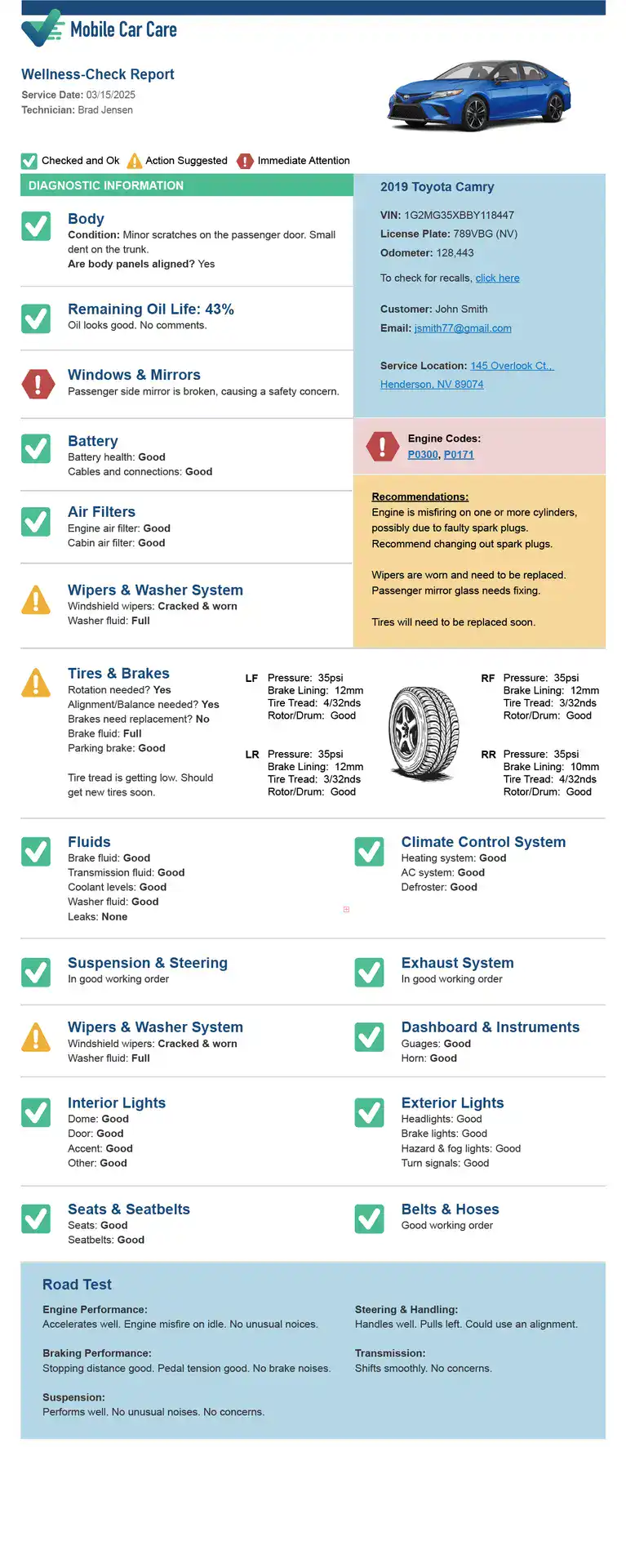
Have you noticed your headlights seem a little dim at a stoplight, then brighten up when you accelerate? Or maybe your dashboard lights and interior dome light are flickering. These are classic symptoms of a charging system problem. The alternator is responsible for providing a consistent electrical current, and when it starts to fail, that current becomes unstable. This can also affect your other electronics—your radio might cut out, your power windows could move more slowly, or your GPS might act erratically. If your car’s electrical components are acting up, it’s a strong hint that the power source is failing and needs a professional look. A comprehensive wellness check can quickly diagnose the issue.
How to Test Your Car’s Charging System
If you suspect a problem with your charging system, you don’t have to immediately rush to a mechanic. With a simple tool called a multimeter, you can run a quick diagnostic test right in your driveway. It’s a straightforward process that can give you a clearer picture of your car’s health and help you decide on the next steps. This test will check the two main players: your battery and your alternator.
Tools and Safety First
Before you pop the hood, let’s talk about safety. It only takes a moment to make sure you’re protected. First, grab your digital multimeter. If you don’t have one, they’re inexpensive and available at any auto parts or hardware store.
Now, let’s get your car ready. Park on a level surface, engage the parking brake, and put the car in Park (for automatics) or Neutral (for manuals). It’s also a good idea to wear safety glasses and avoid wearing any loose clothing or jewelry that could get caught in the engine components. Taking these simple safety precautions is the most important step.
Test Your Battery’s Voltage
First, we’ll check the battery’s baseline health with the engine turned completely off. Set your multimeter to the 20V DC setting. Now, connect the red probe to the positive (+) terminal on your battery and the black probe to the negative (-) terminal.
You’re looking for a reading between 12.4 and 12.6 volts. This range indicates that your battery is holding a proper charge. If the reading is below 12.4 volts, your battery might be undercharged or nearing the end of its life. A low reading doesn’t automatically mean the battery is bad, but it’s a sign that it needs a closer look.
Check the Alternator’s Output
Next, it’s time to see if the alternator is doing its job, which is to charge the battery while the engine is running. Keeping the multimeter probes connected to the battery terminals, have a friend start the car. Be sure to stay clear of any moving engine parts.
With the engine running, the voltage reading should jump up. A healthy charging system will show a reading between 14.0 and 14.5 volts. If your voltage stays down in the 12-volt range or doesn’t change at all, it’s a strong sign that your alternator is failing and isn’t recharging your battery.
Perform a Battery Load Test
A voltage test is a great start, but it doesn’t always tell the whole story. A battery can show a good voltage reading but still fail under a load (like when you’re starting the car). A battery load test puts stress on the battery to see how it performs under pressure.
While this requires a special tool, you don’t have to buy one. Most auto parts stores will perform a battery load test for free. It’s a quick and easy way to definitively rule out a bad battery. If your initial voltage tests were inconclusive, getting a load test is the best next step to pinpoint the exact cause of your charging system issues.
What Your Test Results Are Telling You
Okay, you’ve got your numbers. Now, let’s translate them into plain English. Think of these voltage readings as your car’s vital signs—they tell a story about the health of your battery and alternator. Understanding what they mean is the key to figuring out your next move and avoiding a surprise breakdown.
Good vs. Bad Voltage Readings
First, let’s look at the battery’s baseline health. With the engine completely off, a fully charged and healthy battery should read between 12.4 and 12.6 volts. If your reading is below 12.4 volts, your battery is low on juice and may be struggling to hold a charge.
Next, let’s check the alternator’s performance. When you start the engine (with lights and radio off), the voltage should jump to between 14.0 and 14.5 volts. This shows the alternator is doing its job and recharging the battery. If the voltage stays down in the 12-volt range while the engine is running, your alternator is likely not producing enough power, which is a clear red flag.
Is It the Battery or the Alternator?
This is the big question, and your two test readings hold the answer. If your engine-off reading was below 12.4 volts but jumped up nicely to the 14-volt range when the engine started, the problem is likely with the battery itself. It’s just not holding a charge anymore.
However, if the battery reading was fine when the engine was off, but the voltage didn’t climb (or climbed very little) when you started the car, the alternator is the probable culprit. A small jump, say to 12.8 volts, could also point to a problem with the wires connecting the two. A healthy charging system needs both components to work in harmony.
Spotting a Voltage Regulator Problem
Sometimes, the issue isn’t the whole alternator but a small part inside it called the voltage regulator. Its job is to prevent the alternator from overcharging the battery. If your engine-running reading was too high—creeping above 14.5 volts—the regulator is likely failing. This can be just as damaging as undercharging, as it can essentially “cook” your battery over time.
The good news is that in some cases, you only need to replace the regulator, not the entire alternator, which can save you some money. A professional charging system diagnosis can pinpoint the exact cause, ensuring you only fix what’s broken.
What to Do If You Find a Problem
So, your test results don’t look great. Don’t worry—identifying the problem is the first and most important step. Now you can figure out what to do next. Sometimes, the fix is surprisingly simple, but it’s also important to know when it’s time to pass the job to a professional. The goal is to get you back on the road safely without adding more stress to your plate. Let’s walk through your options.
Simple Fixes You Can Try
Before you assume the worst, take a look at a few common culprits that are easy to spot. Start with the battery terminals. Is there any fuzzy, crusty buildup? That’s corrosion, and it can interfere with the electrical connection. You can clean it off yourself with a wire brush. Next, inspect the alternator’s belt. It should be snug—not too tight or too loose—and free of any cracks or visible wear. Finally, check your car’s fusible links. A blown fuse is a simple fix that can stop the charging system in its tracks. These quick checks can sometimes save you a trip to the mechanic.
When to Call a Professional
If you’ve checked the basics and still can’t find the issue, it’s time to call for backup. Wrestling with a stubborn alternator or trying to diagnose complex electrical problems can quickly turn into a frustrating, all-day affair. If the job feels too big or you’re just not comfortable proceeding, getting professional help is the smartest move. A trained technician can diagnose the problem correctly and ensure the repair is done right. Our Quick Check plan is perfect for this—we come to you, run a full diagnostic, and pinpoint the exact cause of the issue, saving you time and guesswork.
How to Prevent Future Issues
The best way to deal with charging system problems is to avoid them in the first place. A little proactive care goes a long way. Be mindful of how many accessories you have plugged in, as things like powerful stereos or extra gadgets can overwork the alternator and cause it to fail early. It’s also a good idea to periodically check the wires and connections between your alternator and battery for any damage or corrosion. By catching these small things early, you can prevent a major headache down the road. Our recurring maintenance plans are designed to handle this for you, keeping your car in top shape so you don’t have to worry.
Avoid These Common Testing Mistakes
Testing your car’s charging system is pretty straightforward, but a few simple slip-ups can send you down the wrong rabbit hole. Getting an accurate reading depends on doing things in the right order and under the right conditions. Let’s walk through a few common mistakes so you can feel confident in your results.
Know When the Engine Should Be On (or Off)
This is probably the most common mix-up. To test your battery’s baseline voltage, the engine must be completely off. You want to know its resting charge without anything else running. However, when you’re ready to test the alternator, you absolutely need the engine on. A frequent mistake is trying to test the alternator voltage with the engine off, but the charging system only functions when the engine is running and turning the alternator’s pulley. So, remember: engine off for the battery test, engine on for the alternator test.
Secure Your Connections to Avoid Bad Readings
A shaky connection can give you a reading that’s all over the place. If your multimeter probes aren’t making solid, direct contact with the battery terminals, you might get an “Unstable Voltage” error or just a wildly inaccurate number. This happens when the voltage fluctuates too much for the tester to get a lock. Before you start, make sure your battery terminals are clean and free of corrosion. When you place the probes, press them firmly onto the metal terminals and hold them steady. A secure connection is key to getting a reliable result you can trust.
Test in the Right Place at the Right Time
For the most accurate results, always test directly on the battery’s lead posts, not the bolts or cables attached to them. It’s also a good idea to turn off all your car’s accessories—headlights, radio, air conditioning—before you begin. This ensures you’re getting a true baseline reading. When it comes to more complex procedures like a battery load test, the timing and rate of discharge are critical for accuracy. If you’re feeling unsure about the results or the process, it’s better to get a professional opinion than to guess. Our technicians can perform a full diagnostic check during a Quick Check service to pinpoint the exact issue.
Related Articles
- Alternator Replacement: Symptoms, Cost & Guide – Mobile Car Care
- 4 Car Battery Test Methods You Should Know – Mobile Car Care
- Battery Health Check: How to Test & Maintain Your Car Battery – Mobile Car Care
- A Beginner’s Guide to Car Electrical Diagnostics – Mobile Car Care
Frequently Asked Questions
How urgent is a charging system problem if my car still starts? Think of it as a ticking clock. If your alternator is failing, your car is running entirely on the battery’s stored power, which won’t last long. You might make it to your next destination, but you could easily get stranded after that. It’s best to address any warning signs, like a dashboard light or dimming headlights, right away to avoid a much bigger inconvenience later.
My battery light is on, but my battery is new. What does that mean? This is a very common point of confusion. The battery-shaped light on your dash is actually a charging system warning light, not just a battery light. It signals that the battery isn’t being recharged correctly while you drive. Since your battery is new, the light is most likely pointing to a problem with the alternator, the voltage regulator, or the connections between them.
Can a dead battery be a one-time thing, or is it always a sign of a bigger problem? Sometimes a dead battery is just a simple mistake, like leaving your headlights on overnight. In that case, a jump-start might be all you need. However, if your battery dies without an obvious cause, it’s usually a symptom of an underlying issue. The battery itself could be too old to hold a charge, or the alternator may not be recharging it properly. It’s always wise to investigate why it died to prevent it from happening again.
How long should a car battery and alternator typically last? While it varies depending on your car, climate, and driving habits, you can generally expect a car battery to last between three to five years. An alternator is a more durable component and often lasts for seven to ten years, or well over 100,000 miles. These are just benchmarks, so paying attention to your car’s performance is more important than just watching the calendar.
Is it better to just replace the battery or have the whole charging system checked? Getting the whole system checked is always the smarter move. A failing alternator can quickly drain a brand-new battery, meaning you’ll have wasted money on a replacement you didn’t need and will still have to fix the original problem. A quick diagnostic check confirms whether the issue is the battery, the alternator, or something else entirely, ensuring you only pay for the repair that’s actually necessary.