
Let’s be real: getting your car checked before a trip often feels like a huge hassle. Who has time to schedule an appointment, drive to a garage, and wait around, especially when you’re already busy packing and planning? But skipping this crucial step is a gamble you don’t want to take. A thorough road trip inspection is non-negotiable for safety and peace of mind, but it doesn’t have to disrupt your life. What if the inspection could come to you? This guide will not only show you what needs to be checked but also how you can get it done without ever leaving your home. It’s about making smart, proactive car care fit seamlessly into your busy schedule, so you can start your vacation feeling prepared, not stressed.
Key Takeaways
- Proactive Checks Prevent Problems: A simple 15-minute inspection about a week before your trip helps you find and fix small issues in your driveway, not on the side of the highway.
- Master the Five Key Areas: You don’t need to be an expert to check the essentials. Focus your attention on your tires, brakes, fluids, lights, and wipers to cover the most critical safety systems.
- Trust the Pros for Peace of Mind: While a self-check is great, don’t ignore serious warning signs like a check engine light or grinding brakes. A professional inspection offers a deeper look and ensures your car is truly ready for the road.
What is a Pre-Trip Inspection (and Why You Absolutely Need One)
Before you load up the snacks and finalize the playlist for your next road trip, there’s one crucial step that often gets overlooked: a pre-trip inspection. Think of it as a quick but thorough health check for your vehicle. It’s a systematic review to make sure all the essential systems—from your tires and brakes to your fluids and lights—are in good working order before you hit the road. The goal is simple: to catch any potential problems in the comfort of your driveway, not on the side of a busy highway. This isn’t about being a master mechanic; it’s about being a smart car owner who values safety and smooth travels. By taking a proactive look at your car’s condition, you’re setting yourself up for success. Taking just a little time for this check can be the difference between a smooth, memorable journey and a trip that’s cut short by preventable car trouble. It’s the foundation for a safe, stress-free adventure that lets you focus on the fun parts of your trip, not the what-ifs.
Enjoy Peace of Mind on the Road
Let’s be honest, a road trip is supposed to be fun. But it’s hard to relax and enjoy the scenery if you’re constantly worried about that weird noise the engine is making or if your tires are properly inflated. A pre-trip inspection gives you confidence that your car is in solid condition, which provides incredible peace of mind. Knowing your vehicle is safe and reliable allows you to focus on making memories, not on what could go wrong. Beyond just a single trip, this kind of proactive regular maintenance also helps your car last longer, protecting one of your biggest investments and keeping you and your passengers safe for all the adventures to come.
Avoid Surprise Breakdowns and Costly Repairs
We’ve all heard horror stories about vacations derailed by an unexpected breakdown. A pre-trip inspection is your best defense against becoming one of those stories. Catching a minor issue, like a soft brake pedal or a fraying belt, before you leave is far easier and cheaper to fix than dealing with a major failure hundreds of miles from home. Good brakes, for example, are non-negotiable for safe driving. Addressing a small problem early on can save you from some seriously costly repairs and the stress of finding a trustworthy mechanic in an unfamiliar town. It’s about turning a potential crisis into a manageable task.
Your Pre-Trip Inspection Checklist: What to Check
Getting ready for a road trip is exciting, but a little prep work for your car can make all the difference between a smooth ride and a stressful breakdown. You don’t need to be a mechanic to spot potential issues. Walking through this checklist will give you the confidence that your car is as ready for the adventure as you are. Think of it as a wellness check for your vehicle before it has to perform for miles on end.
Focus on these key areas to catch common problems before they start. Checking these five things will cover the most critical systems that work hard during a long drive. From your tires connecting you to the road to the fluids that keep your engine cool, each component plays a vital role in your safety and comfort. It’s all about being proactive so you can focus on the fun part: the journey itself, not worrying about what that strange noise is or whether you’ll make it to the next town. This simple walkthrough will help you feel prepared and in control.
Tires, Wheels, and the Spare
Your tires are your car’s only connection to the road, so they deserve top priority. First, check the air pressure in all four tires and your spare—yes, don’t forget the spare! You can find the correct pressure on a sticker inside the driver’s door jamb. Next, give each tire a visual inspection for nails, cuts, or bulges. Finally, you can easily check the tread depth using a penny. Just place it upside down in the tread; if you can see all of Lincoln’s head, your tires are too worn and it’s time for a new set.
Brakes and Brake Fluid
Your brakes are your most important safety feature. You can check them just by paying attention as you drive. Do you hear any grinding, squealing, or scraping sounds when you press the pedal? Does the car pull to one side, or does the brake pedal feel spongy or soft? These are all signs that your brakes need a professional look. Catching a brake issue before you’re navigating unfamiliar highways is crucial for a safe and worry-free trip. Don’t ignore any warning signs from your braking system.
Engine Fluids, Belts, and Battery
Your car relies on several fluids to run smoothly. Pop the hood and check your engine oil, coolant, and windshield washer fluid levels. Most have dipsticks or clear reservoirs with “min” and “max” lines to make it easy. If the engine oil looks dark and gritty, you’re likely due for an oil change. Also, look for any signs of leaks on the ground where you park. If your car battery is more than three years old, it’s a good idea to get it tested, as the strain of a long trip, especially in the heat, can cause an older battery to fail unexpectedly.
Lights and Electrical Systems
Properly working lights are essential for seeing and being seen. This is a quick and easy check you can do in your driveway. Have a friend or family member help you check that all your exterior lights are working, including your headlights (both high and low beams), brake lights, turn signals, and reverse lights. A burned-out bulb is a simple fix that can prevent a ticket or, worse, an accident. Don’t forget to check your interior lights and dashboard warning lights as well.
Wipers and Windshield
A clear view of the road is non-negotiable. Test your windshield wipers to make sure they clear the glass completely without leaving streaks or skipping. Take a close look at the rubber blades for any signs of cracking, splitting, or wear. If they aren’t working perfectly, it’s time for a new pair—it’s an inexpensive and easy replacement that makes a huge difference in a sudden downpour. While you’re at it, top off your windshield washer fluid so you’re ready for any bugs or road grime.
How to Perform Your Own Pre-Trip Inspection
You don’t have to be a car expert to spot potential issues before they become trip-ruining problems. Think of it as a quick wellness check for your vehicle. A simple walk-around in your driveway can give you valuable peace of mind by focusing on the essentials: tires, lights, fluids, and wipers. You’re just looking for anything that seems out of the ordinary—low tire pressure, a burnt-out bulb, or fluid levels below the minimum line. This isn’t about diagnosing complex engine trouble; it’s about proactive care. Taking a few minutes to look over your car is a huge step toward a safe, smooth journey.
A Step-by-Step Guide
Ready to give it a try? Here’s a simple walkthrough to guide your inspection.
- Tires and Brakes: Start by walking around your car. Check the air pressure in all four tires—and don’t forget the spare! Look for any signs of uneven wear or visible damage. While you’re down there, peek at your brake fluid level to make sure it’s sufficient.
- Lights and Battery: Have a friend or family member help you test all your lights: headlights (both high and low beams), brake lights, and turn signals. If your battery is more than three years old, pay close attention to how your car starts. Any hesitation could be a sign it’s time for a check.
- Fluids and Wipers: Pop the hood and check your essential fluids, including engine oil and coolant. Most have dipsticks or reservoirs with clear markings. Finally, test your windshield wipers and top off your washer fluid for a clear view of the road ahead.
When to Schedule Your Inspection
Timing is everything. Don’t leave your inspection for the morning you’re supposed to leave. The best time to check your car is about a week before any long trip, which gives you a buffer to address any little issues you might find, whether it’s topping off fluids or scheduling a minor repair. A thorough self-inspection should only take you about 15 minutes—a small investment of time that can save you hours of stress later. Set a reminder on your phone or mark it on your calendar. Making it a consistent part of your pre-travel routine helps ensure nothing gets overlooked while you’re busy packing.
Create Your Personal Checklist
To make your inspections quick and consistent, it helps to follow a list. You can create a simple note on your phone or use a printable template. Using a written checklist ensures you check every critical system each time, turning the process into an efficient habit rather than a guessing game. Your list should cover all the key points: tires, brakes, fluids, battery, lights, and wipers. Over time, you can even customize it to your specific vehicle. The goal is to create a repeatable process that gives you confidence before every trip, keeping your car safe and reliable for all your adventures.
Your Road Trip Toolkit: Essential Supplies
A successful road trip isn’t just about what you check before you go; it’s also about what you bring with you. Having a few key items on hand can turn a potential trip-ruining disaster into a minor inconvenience. Think of it as your on-the-go support system. Packing a simple toolkit gives you the confidence to handle small issues yourself and provides crucial aid while you wait for help with bigger problems. It’s a small step that offers huge peace of mind, letting you focus on the fun parts of your adventure.
Basic Inspection Tools
You don’t need a full mechanic’s setup to perform a quick check. A few simple tools are all it takes to follow your inspection checklist effectively. Start with a reliable tire pressure gauge to ensure your tires are properly inflated. Our tire pressure check guide walks you through the exact steps, a small ruler or tread depth gauge to check your tire treads, and a clean rag for checking fluid levels without making a mess. It’s also a great idea to keep a written or digital pre-trip checklist with your tools. This keeps your inspection consistent and ensures you don’t forget to check something important before you hit the road.
Your Roadside Emergency Kit
A well-stocked emergency kit is your best friend if you run into trouble. You can buy pre-made kits or build your own with a few essentials. Make sure you have jumper cables, a powerful flashlight (with extra batteries), and a basic tool kit with screwdrivers and wrenches. It’s also smart to include road flares or reflective triangles to keep you visible and safe on the side of the road. A first-aid kit, a portable tire inflator, and a can of tire sealant can handle minor issues and injuries, giving you the ability to get back on your way or safely wait for assistance. If you run out of gas during your trip, knowing how emergency fuel delivery works can save you hours of stress and get you back on the road fast.
Important Documents and Records
This one might seem obvious, but in the rush of packing, it’s easy to forget the paperwork. Always double-check that your driver’s license, vehicle registration, and proof of insurance are current and easily accessible—not buried in a suitcase in the trunk. It’s also helpful to have your vehicle’s manual and a record of recent maintenance. Knowing your car’s service history, like the detailed reports included in our Total Care Plan, can be incredibly valuable if you need to visit an unfamiliar mechanic far from home. It gives them a clear picture of your car’s health and the work that’s already been done.
Listen to Your Car: Common Road Trip Warning Signs
Your car is constantly communicating with you through sounds, smells, and sensations. Before a long road trip, it’s especially important to tune in and listen for any signs that something might be off. Ignoring a small issue now can lead to a major breakdown later, turning your vacation into a stressful ordeal on the side of the highway. You don’t have to be a master mechanic to spot these clues. Simply paying attention to how your car normally operates will help you notice when something changes. Let’s cover some of the most common warning signs that your car needs a little attention before you hit the road.
Red Flags You Can’t Ignore
When it comes to safety, your brakes are non-negotiable. If you hear a high-pitched squeal or a harsh grinding sound when you press the brake pedal, that’s your car’s way of screaming for help. These noises often mean your brake pads are worn out and need to be replaced immediately. Another major red flag is a brake pedal that feels soft, spongy, or sinks to the floor. This could signal a leak or air in the brake lines, which seriously compromises your ability to stop safely. Don’t put these repairs off—addressing brake issues is one of the most important things you can do for your safety.
Know Your Battery’s Health
A dead battery is one of the quickest ways to derail a road trip. If your car battery is more than three years old, it’s living on borrowed time. Long drives and extreme temperatures put a lot of strain on it, increasing the risk of failure when you least expect it. Pay attention to how your car starts. Does the engine sound slow or sluggish when you turn the key? Do your headlights or interior lights seem dimmer than usual? These are classic signs of a failing battery. Getting your battery tested is a quick and easy step that can give you incredible peace of mind before you leave.
Decoding Strange Noises
Beyond the obvious brake sounds, your car can make a whole symphony of other noises to signal a problem. It’s tempting to just turn up the music, but it’s much safer to investigate the cause. A persistent humming or roaring sound that gets louder as you speed up could point to a worn-out wheel bearing. Hearing a clunking or rattling noise when you go over bumps might mean an issue with your suspension. Don’t ignore these auditory clues. Identifying strange car noises early can help you fix a small problem before it becomes a major, expensive repair down the road.
DIY vs. Professional Inspection: What’s Right for You?
Deciding between checking your car yourself and calling a professional comes down to your comfort level, your schedule, and how much you know about what’s under the hood. A DIY inspection is great for catching the basics, and it’s a fantastic way to get more familiar with your vehicle. But let’s be honest, not everyone has the time or the expertise to do a deep dive.
Sometimes, the best thing you can do for your car—and your own peace of mind—is to let an expert take a look. A professional inspection goes beyond the surface-level checks, using specialized tools and a trained eye to catch potential issues before they turn into trip-ruining problems. Think of it as an investment in a smoother, safer, and more enjoyable journey. Let’s explore when it makes sense to hand the keys over to a pro.
The Perks of a Professional Mobile Inspection
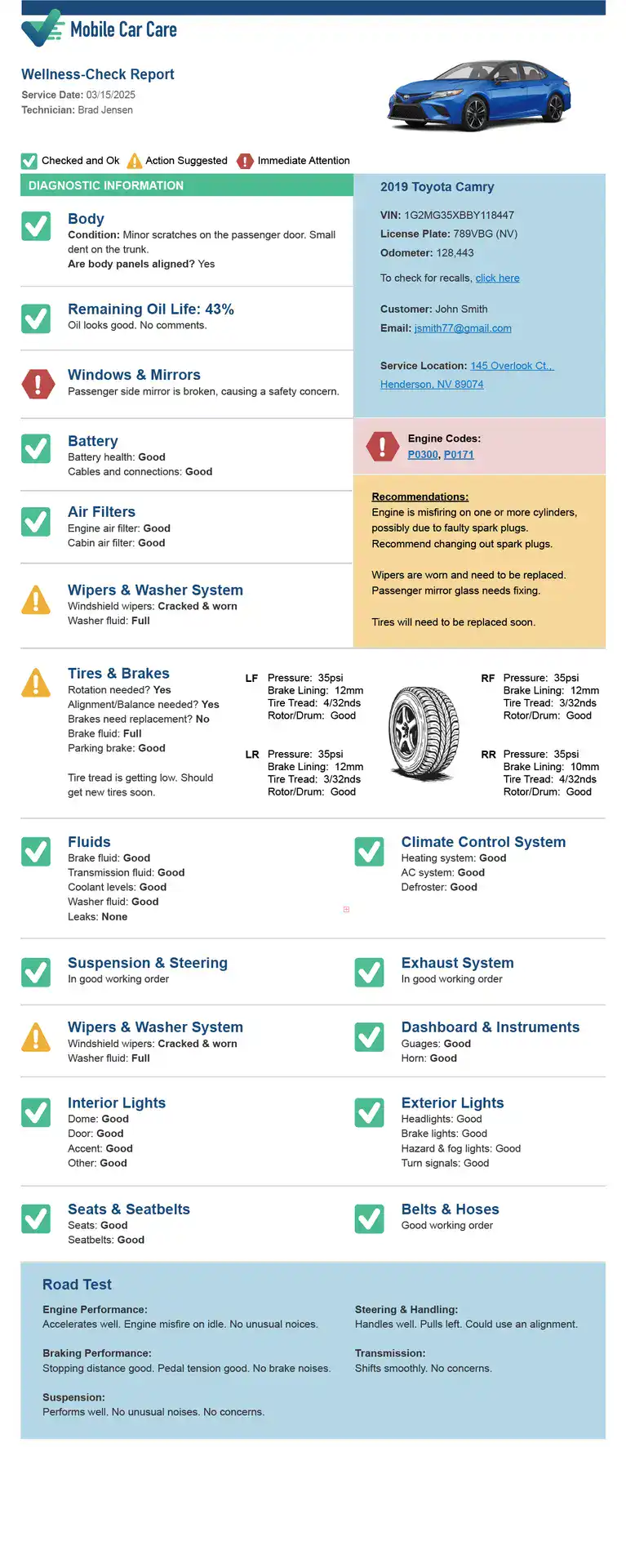
While you can check your fluids and tire pressure, a professional mechanic sees things differently. Their experience allows them to spot subtle signs of wear and tear that the average person might miss, from a fraying belt to the early signs of a leak. Getting a comprehensive vehicle health report before a long drive ensures every critical component is in optimal condition. This isn’t just about preventing breakdowns; it’s about giving you the confidence to hit the road without a single worry. A one-time Quick Check can provide exactly that, offering a detailed look at your car’s condition so you can travel with total peace of mind.
When to Call in the Experts
There are a few non-negotiable signs that your car needs a professional evaluation. If your “check engine” light is on, don’t ignore it and hope it goes away. That little light is your car’s way of telling you something is wrong, and driving with an unresolved issue can cause more significant damage. Other red flags include grinding or squealing noises, feeling a shake or shudder when you brake, or noticing anything that just feels off while you’re driving. These aren’t things to troubleshoot on your own right before a trip. Instead, consult a mechanic to diagnose the problem correctly and ensure your car is safe for the road.
Save Time and Reduce Stress
Let’s face it: the last thing you want on your vacation is to be stranded on the side of the road in an unfamiliar town, dealing with an unexpected and expensive repair. Scheduling a pre-trip inspection is one of the smartest ways to save yourself from that exact scenario. By having a professional catch a small issue at home, you avoid the stress and inflated costs of an emergency repair shop. It’s about being proactive. An on-site vehicle check handles the maintenance for you, saving you time and letting you focus on packing your bags and planning your route, not worrying about your car.
Get Road-Trip Ready with Mobile Car Care
If going through a long inspection checklist feels like one more thing on your already-full plate, we get it. Your time is better spent planning the fun parts of your trip, not trying to find an appointment at a busy garage. That’s why we bring the pre-trip check directly to you, making sure your car is road-trip ready without you ever having to leave your driveway. It’s the most convenient way to get total peace of mind before you hit the open road.
Our Comprehensive 85-Point Wellness Check
Think of our service as a complete physical for your car. Thorough pre-trip inspections are an essential part of being a responsible driver, ensuring your vehicle is safe for you, your passengers, and everyone else on the road. Our 85-point wellness check covers every critical system, from tire pressure and tread depth to all your essential fluid levels, brake performance, and battery health. We leave no stone unturned, giving you a detailed report so you know exactly what’s going on with your vehicle. This comprehensive approach helps catch small issues before they become major, trip-ending problems.
Convenient On-Site Service at Your Door
The biggest hurdle to getting a pre-trip inspection is often the hassle. Finding time to drive to a shop, wait around, and then pick up your car can disrupt your entire day. We eliminate that stress completely. Our professional technicians come to your home or office, so you can carry on with your day while we take care of your vehicle. This convenience of mobile services means you can focus on packing your bags and planning your route, confident that your car is in expert hands right outside your door.
Choose Your Plan: Quick Check, Essential, or Total Care
Every road trip is different, and your car care should be just as flexible. We offer several plans so you can choose the level of service that fits your needs and schedule. If you just want a final once-over before a short trip, our Quick Check is the perfect solution. For ongoing maintenance that keeps your car in top shape year-round, the Essential Plan provides proactive care. And for the ultimate peace of mind on a long journey, the Total Care Plan offers our most thorough inspection and services. Having options lets you tailor the service to your specific trip.
Related Articles
- Essential Car Check Before Your Next Road Trip – Mobile Car Care
- Mobile Vehicle Inspection: Your Complete Guide – Mobile Car Care
- Home Car Inspection 101: Your Complete Guide – Mobile Car Care
- Monthly Car Inspection Checklist for Students – Mobile Car Care
Frequently Asked Questions
How long does a pre-trip inspection actually take? A basic self-inspection should only take about 15 to 20 minutes. Think of it as a quick walk-around in your driveway. The key is to do this check about a week before your trip. That way, if you notice a tire is low or you need to replace your wiper blades, you have plenty of time to handle it without any last-minute stress.
I don’t know anything about cars. Can I really do this myself? Absolutely. You don’t need to be a mechanic to perform a basic check. The goal is simply to be an observant car owner. You’re looking for the obvious things—are the lights working, are the tires properly inflated, are the fluid levels where they should be? Following a simple checklist makes it easy. If anything seems off or you’re just not comfortable, that’s the perfect time to call a professional for a more thorough look.
Is a pre-trip check necessary for a newer car? Yes, it’s still a great habit to get into. A newer car isn’t immune to picking up a nail in a tire or having a battery issue, especially if it’s a few years old. A quick check confirms that all the basics are in good shape and helps you stay on top of your car’s condition. It’s a simple step that ensures your vehicle remains reliable for all the trips to come.
What’s the single most important thing to check if I’m short on time? If you only have five minutes, focus on your tires. They are your car’s only connection to the road, and they’re critical for your safety. Use a gauge to check the pressure in all four tires and your spare. Give each one a quick visual scan for any obvious damage, like bulges or cuts. Properly inflated and healthy tires are essential for a safe journey.
How is a professional check different from what I can do in my driveway? A professional inspection goes much deeper than a visual check. A trained technician has the experience to spot subtle issues you might miss, like the early signs of a belt wearing out, uneven brake pad wear, or a small fluid leak. They provide a comprehensive health report on your vehicle, giving you a level of confidence and peace of mind that’s hard to get from a DIY check alone.