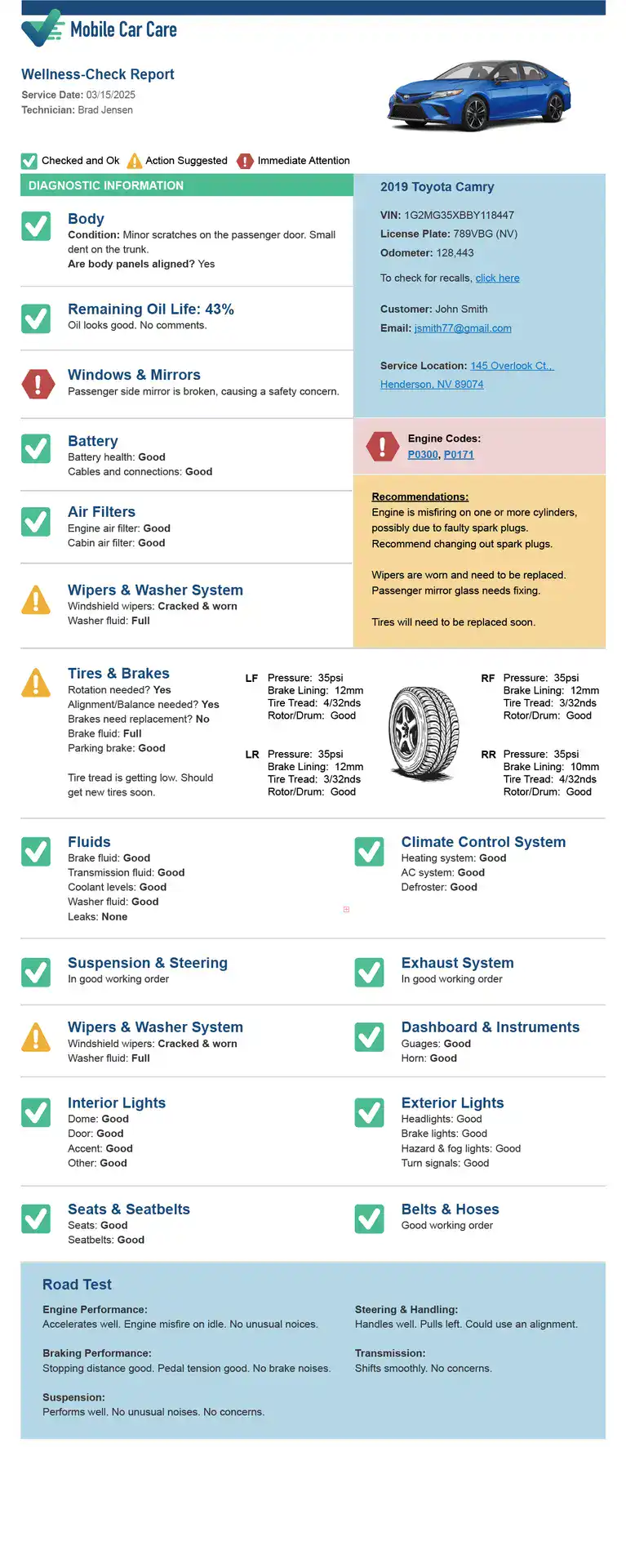
Your car communicates when something is wrong. The problem is that most drivers do not know what to look for — or they put off addressing the signs until a small problem becomes an expensive breakdown. In Las Vegas, where summer temperatures routinely top 115 degrees Fahrenheit and vehicles work harder than almost anywhere else in the country, ignoring car maintenance warning signs carries real consequences. This guide covers the 10 most important signals that your vehicle needs attention right now, what each sign means, and why waiting makes things worse.
Prefer to let a professional handle it? Mobile Car Care’s subscription inspection service comes to your home or office and catches problems before they become emergencies. Book your inspection today.
What Are Car Maintenance Warning Signs?
Car maintenance warning signs are physical cues — sounds, smells, visual indicators, or changes in vehicle behavior — that signal a mechanical or safety problem requiring professional attention. Some appear gradually; others show up without warning. Unlike a scheduled oil change or tire rotation, these signs demand attention on your timeline, not the manufacturer’s service interval.
Recognizing them early is the difference between a $50 fix and a $2,000 repair.
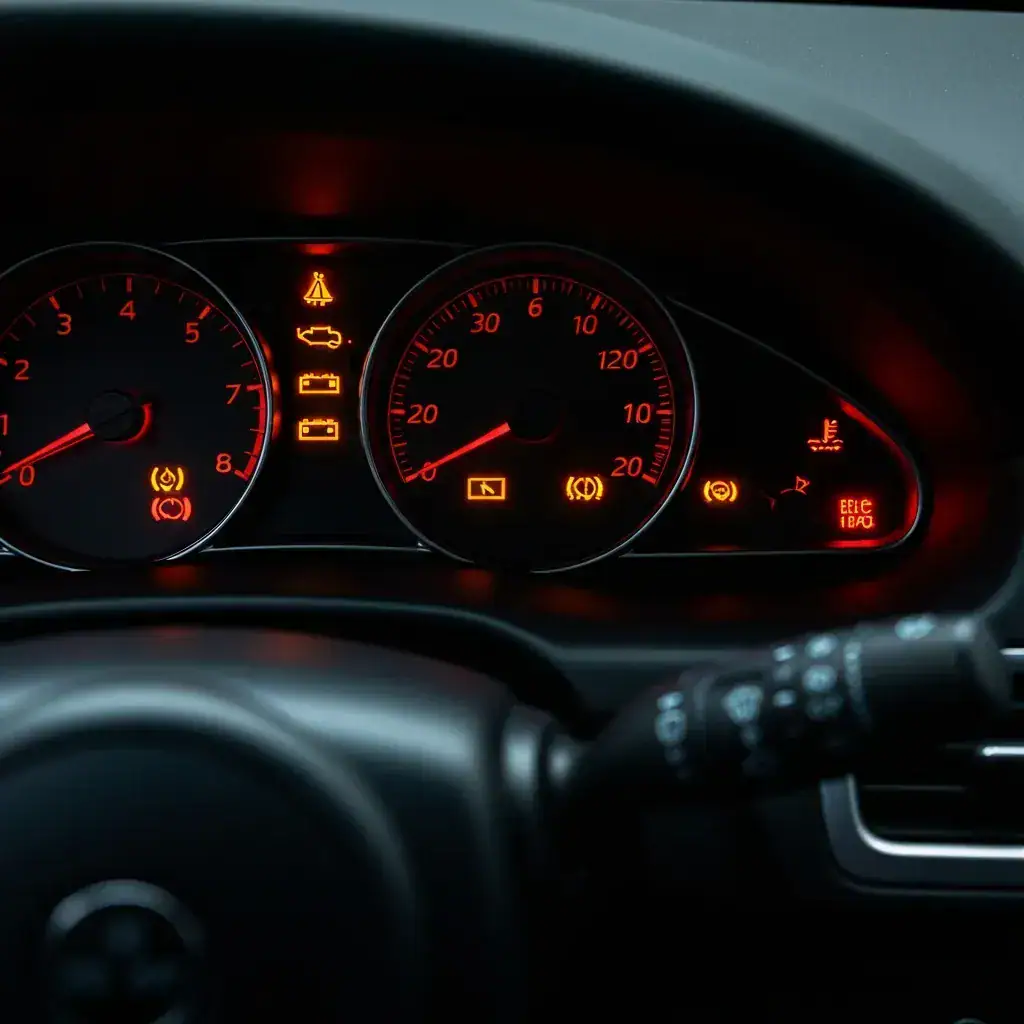
1. Dashboard Warning Lights Are On
Modern vehicles monitor dozens of systems simultaneously. When something falls outside safe operating parameters, the onboard computer triggers a warning light on your dashboard. The most common ones include the check engine light, oil pressure light, battery warning, tire pressure (TPMP) light, and temperature gauge.
A steady check engine light usually means something is wrong but not immediately dangerous — common causes include a loose gas cap, faulty oxygen sensor, or catalytic converter issue. A flashing check engine light is more serious and typically signals engine misfires that can damage the catalytic converter within minutes of driving.
Many drivers ignore warning lights because the car still drives. That is a costly mistake. The oil pressure light, for example, means your engine may be running without adequate lubrication. Driving even a few miles in that state can cause permanent engine damage. If any light appears, check your owner’s manual immediately and schedule an inspection the same day.
Mobile Car Care’s 85-point inspection covers every major warning system and gives you a full written report with photos, so you know exactly what the light means and what your options are.
2. Unusual Noises While Driving
A car in good condition runs quietly. When you hear something new — a squeal, grind, knock, rattle, or hissing — that sound is a symptom worth investigating.
- Squealing or grinding when braking: Worn brake pads. The squeal is a built-in wear indicator; once you hear grinding metal-on-metal, the pad is gone and you are damaging the rotor.
- Knocking or pinging from the engine: Can signal low oil, poor fuel quality, or pre-ignition (engine knock). Prolonged engine knock leads to rod bearing failure.
- Clicking when turning: Often a worn CV joint in front-wheel or all-wheel drive vehicles. Left untreated, the joint can fail completely, leaving you unable to steer.
- Rattling under the car: Loose exhaust components, heat shields, or suspension parts. Exhaust leaks release carbon monoxide into the cabin.
- Hissing from under the hood: Vacuum leak, coolant leak hitting a hot surface, or a failing hose. Any of these can cause overheating or poor engine performance.
New noises rarely resolve on their own. They almost always get louder and more expensive to fix the longer you wait.
3. Vibrations or Shaking While Driving
Vibration is not normal and should not be dismissed as “just the road.” Different types of vibration point to different problems:
- Steering wheel shakes at highway speeds: Unbalanced tires or worn wheel bearings. Unbalanced tires wear unevenly and can cause blowouts at speed.
- Whole car shakes when braking: Warped brake rotors. Warped rotors reduce stopping power, which is a direct safety hazard.
- Vibration that gets worse as you accelerate: Worn driveshaft, CV axle, or transmission issue.
- Shaking at low speeds or when idling: Misfiring engine, worn motor mounts, or clogged fuel injectors.
In Las Vegas heat, tire-related vibration problems are more common because extreme temperatures accelerate rubber degradation and cause pressure fluctuations. A simple tire check, rotation, and balance can prevent major issues — all part of Mobile Car Care’s routine inspection process. See our guide on preparing your car for a Las Vegas summer for more on how heat affects your vehicle.
4. Fluid Leaks Under Your Vehicle
A wet spot under your parked car is one of the clearest car maintenance warning signs you can get. The color and location of the leak help identify the source:
- Dark brown or black puddle (under the engine): Engine oil. Oil leaks can lead to low oil levels, engine damage, and fire risk if oil contacts a hot exhaust component.
- Bright green, orange, or pink fluid: Coolant. A coolant leak causes overheating, which can warp the cylinder head or blow the head gasket — one of the most expensive repairs a car can need.
- Clear or light brown near the wheels: Brake fluid. Any brake fluid leak is an immediate safety emergency. Low brake fluid means reduced or lost stopping power.
- Red fluid near the front or center of the car: Transmission fluid or power steering fluid. Transmission fluid leaks can cause slipping gears or complete transmission failure.
- Water under the car on a hot day: Usually condensation from the air conditioning system — this is normal and not a concern.
If you see anything other than water, stop driving and call for service. Mobile Car Care checks all fluid levels and looks for signs of leaks at every inspection. Learn more about what goes into a proper vehicle health check.
Las Vegas drivers: Don’t wait for a breakdown in 110-degree heat. Mobile Car Care’s Total Care Plan includes proactive fluid management, minor repairs, and emergency assistance — all at your location. Get started today.
5. Smoke or Steam From the Engine
Visible smoke or steam from under the hood is never something to ignore. Pull over safely and turn off the engine before trying to diagnose it.
White steam from under the hood almost always means coolant is boiling — your engine is overheating. If the temperature gauge is in the red, do not attempt to open the radiator cap. The pressure inside can cause severe burns.
Blue smoke from the exhaust means your engine is burning oil, which indicates worn piston rings or valve seals. Black smoke suggests the engine is running too rich (too much fuel), often due to a faulty sensor or injector. White smoke from the exhaust — especially with a sweet smell — points to a blown head gasket and coolant entering the combustion chamber.
Any smoke means something is wrong. A car producing smoke should not be driven until the source is identified.
6. Engine Overheating
Your temperature gauge sits in the normal range under typical conditions. If the needle climbs toward the red or you get an overheating warning, your engine is in danger. Las Vegas summers make overheating one of the most common breakdown causes in the region — the combination of stop-and-go traffic, high ambient temperatures, and a taxed cooling system creates the perfect conditions for it.
Common causes of overheating include a failing thermostat, low coolant, a blocked radiator, a broken water pump, or a blown head gasket. If your heater suddenly starts blowing cold air while the engine temperature is rising, that is a sign coolant levels are critically low.
Pull over safely, turn the engine off, and do not attempt to add water to a hot radiator. Call for assistance. Driving an overheating engine even a short distance can destroy it.
7. Brake Problems You Cannot Afford to Ignore
Brake issues are among the most urgent car maintenance warning signs because they directly affect your ability to stop. Common brake warning signs include:
- Squealing or squeaking: The brake pad wear indicator is telling you the pads are low. You typically have some time to act, but schedule service within the week.
- Grinding: The pad material is gone. Metal is contacting the rotor every time you brake. This requires immediate attention and will cost more than if you had addressed the squeal earlier.
- Soft or spongy brake pedal: Air or moisture in the brake lines, or a brake fluid leak. This reduces stopping power significantly.
- Car pulls to one side when braking: A stuck brake caliper, uneven pad wear, or a failing brake hose on one side.
- Brake pedal vibrates underfoot: Warped rotors. The brakes still work but stopping distances increase and control is reduced.
Regular brake fluid checks help catch moisture contamination before it becomes a safety issue. Our brake fluid flush guide explains how fluid degrades over time and why it matters. For a full look at brake hardware, see our brake line inspection guide.
8. Steering Problems and Pulling to One Side
Your car should track straight on a flat, level road with minimal input from you. If it pulls consistently to one side, that indicates uneven tire pressure, misaligned wheels, or uneven tire wear. While it may seem minor, a car that fights you for lane position is harder to control in an emergency stop or sudden maneuver.
If the steering wheel feels loose, slow to respond, or makes a groaning noise when you turn, those are signs of power steering system problems or worn steering components like tie rods and ball joints. A worn tie rod can fail suddenly, causing a complete loss of steering — a catastrophic outcome at any speed.
Steering symptoms are easy to miss because they develop gradually. You adapt to the car pulling slightly to the right without noticing it. A trained technician checking alignment and steering components during a regular inspection catches these problems before they get dangerous.
9. Electrical System Failures
Electrical problems show up in several ways: a car that is slow to start, lights that flicker or dim, accessories that stop working, or a battery warning light on the dashboard.
The most common cause is a battery that is past its service life — typically three to five years, though Las Vegas heat shortens battery life considerably. Extreme heat causes battery fluid to evaporate and degrades internal components faster than in cooler climates. A battery that struggles in summer heat often fails completely when temperatures drop.
A failing alternator is another culprit. The alternator charges the battery while the engine runs. If it fails, the battery drains even while driving. Signs include lights dimming while idling, a battery warning light, or a car that dies after starting.
Mobile Car Care includes battery voltage testing as part of every inspection, which is particularly useful for Las Vegas drivers whose batteries take a harder beating than most.
10. Unusual Exhaust or Burning Smells Inside the Cabin
Smells that enter the passenger cabin are a sign something is wrong. A burning smell while driving can come from overheating brakes (often happens after long downhill drives or if a caliper is stuck), a slipping drive belt, or an oil leak dripping onto the exhaust. Any burning smell should be investigated promptly.
If you smell exhaust inside the car — a faint chemical or metallic odor, especially with the windows up — that is a carbon monoxide risk. A cracked exhaust manifold or holes in the exhaust system can allow exhaust gases to enter the cabin. Carbon monoxide is odorless and colorless on its own, but exhaust contains other compounds you can sometimes detect. If you notice fatigue, headaches, or dizziness while driving, pull over and get fresh air immediately.
A sweet smell (like maple syrup or antifreeze) inside or around the car points to a coolant leak. A rotten egg or sulfur smell from the exhaust usually means the catalytic converter is failing or the engine is running too rich.
How Regular Inspections Catch These Warning Signs Early
Most of the 10 warning signs above develop gradually before they become obvious problems. A brake pad does not go from full to gone overnight. A battery does not fail without weeks of declining voltage. Coolant does not disappear from a leak without leaving traces first.
This is why scheduled inspections matter. Mobile Car Care’s 85-point inspection checks every fluid level, tests battery voltage, examines brake pad thickness, inspects tires for wear and pressure, reviews belts and hoses, looks for leaks, and checks all safety systems. The report is emailed to you immediately with photos and specific recommendations — not vague language, but actual measurements and clear next steps.
The Essential Plan includes quarterly inspections for $29.99 per month, which works out to less than $10 per inspection when you factor in fluid top-offs and the 10% multi-vehicle discount. For drivers who want added coverage, the Total Care Plan adds minor repairs, jump starts, and emergency fuel delivery. Both plans come to you — at your home, office, or anywhere in Las Vegas, Henderson, or North Las Vegas. For business owners managing multiple vehicles, fleet vehicle maintenance in Las Vegas is available with multi-vehicle discounts and the same 85-point inspection on every unit.
A good car maintenance checklist paired with regular professional inspections is the most reliable way to avoid expensive surprises.
Do not wait for a breakdown. Schedule your Mobile Car Care inspection today and get a full 85-point vehicle health report delivered to your inbox. We come to you — no shop visit required.
Frequently Asked Questions About Car Maintenance Warning Signs
What is the most serious car warning sign to watch for?
A brake failure warning or soft brake pedal is one of the most immediately dangerous warning signs because it directly affects your ability to stop. Engine overheating is also critical because it can cause irreversible engine damage within minutes of driving. Smoke from under the hood and a loss of steering control are equally urgent — pull over safely and stop driving until the problem is diagnosed.
Can I drive with the check engine light on?
A steady check engine light usually means you can drive cautiously to a service location, but you should not ignore it for weeks. A flashing check engine light means stop driving as soon as it is safe to do so — it typically signals engine misfires that can damage the catalytic converter within minutes. Any check engine light combined with other symptoms (overheating, loss of power, rough running) means pull over immediately.
How often should I have my car inspected in Las Vegas?
Las Vegas heat accelerates wear on batteries, tires, hoses, belts, and fluids faster than the manufacturer’s standard recommendations account for. A quarterly professional inspection is appropriate for most drivers in the valley. If you drive a vehicle more than five years old, have high mileage, or regularly drive in stop-and-go traffic, more frequent checks make sense. Mobile Car Care’s Essential Plan provides quarterly inspections on a subscription basis so nothing falls through the cracks.
What should I do if I see fluid leaking from my car?
Identify the color and approximate location. If the fluid is brake fluid (clear to light brown, near a wheel), stop driving immediately — this is a safety emergency. If the leak is coolant, oil, or transmission fluid, avoid driving until the source is found and addressed. Water under the car on a hot day is normal air conditioning condensation and not a concern. When in doubt, call a mobile mechanic to assess the leak at your location before putting more miles on the vehicle.
How can I tell if my battery is about to fail?
Signs of a weakening battery include slow cranking when you start the car, lights that dim when the engine is idling, electrical accessories that cut out intermittently, and a battery warning light on the dashboard. In Las Vegas, battery failure is more common in summer because heat degrades battery chemistry faster than cold weather. Most batteries last three to five years. If yours is approaching that age, a voltage test during your next inspection will tell you where it stands.
Is it normal for a car to shake at high speeds?
No. Vibration at highway speeds is not normal and should be checked. The most common cause is unbalanced or unevenly worn tires, which is straightforward to fix. Other causes include worn wheel bearings (which can fail completely if left untreated), a bent rim, or a driveshaft issue. Steering wheel vibration while braking points to warped rotors. Any new vibration warrants an inspection, especially if it gets worse over time.