Why Las Vegas Heat Destroys Car AC Systems Faster Than Anywhere Else
Car AC maintenance in Las Vegas is not optional. When summer temperatures regularly hit 115 degrees Fahrenheit, and have crept as high as 118, your vehicle’s air conditioning system is a survival system, not a comfort feature. The desert heat attacks it from every angle, every single day.
Ready to stop guessing whether your AC can handle another Vegas summer? Sign up for the Essential Plan and get a full 85-point inspection, including your AC system, delivered to your driveway.
Most drivers know Vegas summers are hot. What they don’t realize is that extreme heat accelerates AC system wear in ways that a mild climate never would. Refrigerant lines expand and contract under thermal stress. The compressor works harder and longer because the cabin never cools to a comfortable set point the way it would in Seattle or Denver. Condenser coils clogged with desert dust lose efficiency fast. Rubber seals dry out and crack, causing refrigerant leaks that rob your AC of its cooling power.
The result: a system that might last 7-10 years in a temperate city begins showing real wear in Las Vegas after 3-5 years, sometimes less. By the time your AC blows warm air in July, you’re already facing an expensive repair instead of a cheap fix.
How Extreme Desert Heat Accelerates AC System Wear
Understanding the mechanics helps you appreciate why proactive maintenance matters so much here. Your car’s AC system is a closed loop of refrigerant, pressurized components, and heat-exchange surfaces. In a normal climate, that loop operates within a reasonable range of stress. In Las Vegas, the stress is constant and severe.
Compressor Strain
The compressor is the heart of your AC system, a pump that pressurizes refrigerant and drives the entire cooling cycle. In extreme heat, your compressor runs almost continuously whenever the car is moving. It never gets the short rest cycles it would in a cooler climate. Over time, this continuous operation accelerates wear on internal seals, clutch plates, and bearings. A compressor that fails in summer means an expensive replacement, often $600 to $1,200 in parts and labor.
Condenser Clogging
The condenser sits at the front of your vehicle and releases heat from the refrigerant into the outside air. In Las Vegas, that outside air carries fine desert dust and sand that accumulates on condenser fins over time. A partially blocked condenser can’t dissipate heat efficiently, which causes system pressure to rise and makes the compressor work even harder. It’s a feedback loop that accelerates wear across the entire system.
Refrigerant Leaks from Heat-Stressed Seals
Every AC system uses rubber O-rings, hose fittings, and seals to keep refrigerant contained under pressure. Constant expansion and contraction from extreme heat cycles causes these components to harden, crack, and eventually fail. A slow refrigerant leak is hard to notice at first, your AC just seems slightly less cold than it used to be. By the time the system loses enough refrigerant to blow warm air, the damage may already be compounding.
Cabin Filter Overload
Your cabin air filter is the last line of defense between outside air and the air you breathe inside your car. In the desert, pollen, dust, and fine particulate matter clog cabin filters faster than in any other environment. A clogged filter reduces airflow across the evaporator coil, which reduces cooling efficiency and can eventually cause the evaporator to ice over, a condition that blocks airflow entirely until the system defrost-cycles.
Don’t wait for a breakdown. The Essential Plan at $29.99/month includes quarterly AC checks, fluid top-offs, and a full digital inspection report, all delivered to your home or office.
5 Warning Signs Your Car AC Is Failing in Las Vegas
Knowing what to look for can save you from a full system failure in 115-degree heat. These are the most common early warning signs that your AC system needs attention.
1. Weak Airflow from Vents
If your fan is set to maximum but the air coming out feels weak or sluggish, you likely have a clogged cabin filter, a failing blower motor, or restricted airflow somewhere in the system. In Las Vegas, a clogged cabin filter is the most common cause. This is an easy, inexpensive fix if you catch it early.
2. Warm Air Instead of Cold Air
The most obvious sign: your AC is blowing air that is not cold. This usually indicates low refrigerant from a leak, a failing compressor, or a blocked condenser. Low refrigerant is the single most common AC repair in the Las Vegas climate. The longer you drive with low refrigerant, the more strain you put on the compressor.
3. Strange Smells When the AC Runs
A musty, sour, or moldy smell when you turn on your AC is a sign of bacterial growth on your evaporator coil or inside your ductwork. This is more common in climates with high humidity, but it also happens in Las Vegas when moisture from the condensation process is not fully drained. A vinegar-like smell can indicate a different type of chemical buildup. Either way, strange smells mean your system needs an inspection.
4. Clicking, Rattling, or Grinding Noises
Any unusual noise when your AC compressor engages is a red flag. A clicking sound often points to a failing compressor clutch. A rattling noise can signal debris in the system or a loose component near the condenser. A grinding or squealing sound usually means the compressor internals are failing. Noises almost always get worse and more expensive if ignored.
5. AC That Cools Then Slowly Warms Up
If your AC blows cold for the first 10 minutes and then gradually loses effectiveness, you may have a refrigerant leak that allows the system to operate briefly before pressure drops too low, or an evaporator that is icing over due to restricted airflow. This intermittent behavior is one of the trickier symptoms to diagnose on your own, but a trained technician can identify it quickly with a pressure test.
For a broader look at warning signs across all your vehicle’s systems, see our guide on 10 warning signs your car needs immediate maintenance.
What the Mobile Car Care 85-Point Inspection Checks in Your AC System
Our quarterly 85-point wellness check covers your vehicle from front to back, and your AC system is a key part of that. During an Essential Plan visit, our ASE-certified technicians check the following AC-related items at your location, no shop trip required.
Refrigerant Level and Pressure Check
Low refrigerant is the most common cause of poor AC performance in Las Vegas. During your inspection, the technician checks system pressure to determine whether refrigerant levels are within spec. If levels are low, they can identify whether the loss is due to a detectable leak or normal seepage over time.
Compressor Operation Check
The technician observes compressor engagement when the AC is activated and listens for abnormal noises. Early compressor issues often make themselves known through sound or irregular clutch behavior before they become full failures.
Cabin Filter Inspection
The cabin filter is checked for condition and restriction. In Las Vegas, this filter often needs replacement more frequently than the manufacturer’s standard interval because of the dust and particulate load in the desert environment.
Belt and Hose Inspection
The serpentine belt drives the AC compressor. Cracked, glazed, or fraying belts are flagged during inspection. Refrigerant hoses are also checked for swelling, cracking, or signs of leakage.
Electrical Component Check
The technician checks that all AC-related electrical components, including the blower motor, condenser fan, and compressor clutch, are operating correctly. Electrical failures in these components are common in older vehicles operating in extreme heat.
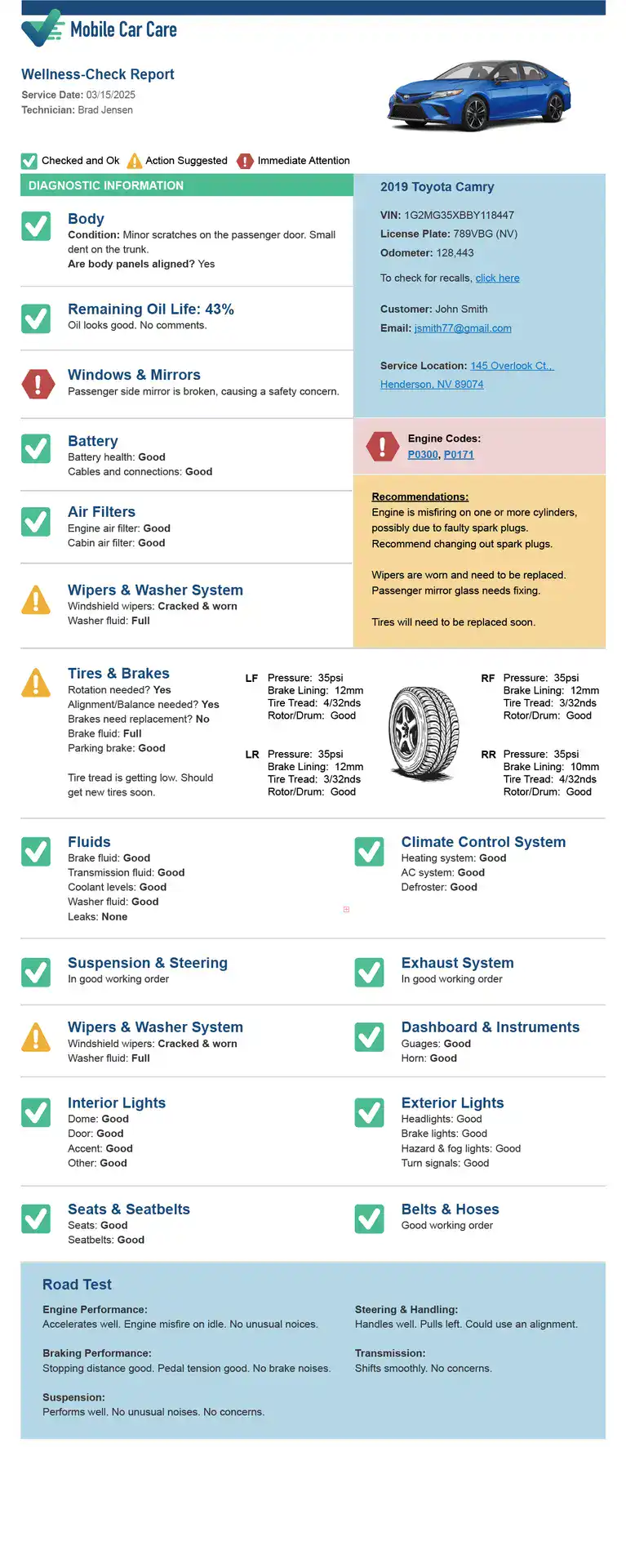
After every visit, you receive a complete digital inspection report with photos, observations, and recommendations. Nothing is vague. You know exactly what was checked, what was found, and what, if anything, needs attention.
The Las Vegas AC Maintenance Schedule You Should Actually Follow
Generic manufacturer maintenance schedules are written for average climates. Las Vegas is not an average climate. Here is a realistic, desert-specific AC maintenance schedule for Vegas drivers.
Every 3 Months (Quarterly)
- Visual AC system check (included in every Essential Plan quarterly visit)
- Cabin filter inspection (replace if restricted)
- Check blower operation at all fan speeds
Every 12 Months
- Full refrigerant pressure test
- Condenser and evaporator coil inspection
- Belt condition evaluation for the compressor drive belt
- Refrigerant hose and fitting inspection
Every 2-3 Years
- AC system flush and refrigerant recharge (if needed based on pressure readings)
- Compressor clutch inspection
- O-ring and seal replacement if leaks are detected
The biggest mistake Las Vegas drivers make is treating AC service as a reactive repair instead of a scheduled maintenance item. By the time your system fails in July, you’re dealing with a heat emergency, and the repair cost is 3 to 5 times what preventive maintenance would have cost.
Our guide on how regular vehicle inspections save money long-term breaks down exactly how proactive maintenance reduces your total cost of car ownership over time.
How Mobile Car Care Catches AC Problems Before They Become Emergencies
The fundamental advantage of a quarterly subscription inspection is that problems get caught at stage one, not stage four. With the Essential Plan, your vehicle is inspected every three months by a technician who knows what a Las Vegas climate does to AC systems.
Compare this to the typical Las Vegas driver’s approach: wait until the AC stops working, call a shop, get an appointment one week out, drop off the car for two days, and pay $800 for a compressor that could have been flagged six months earlier for a $150 refrigerant recharge and seal repair.
Mobile Car Care’s model flips this completely. Your technician comes to your home or office. The inspection takes less time than a coffee break. The digital report lands in your inbox with photos. If something needs attention, you know about it before it becomes an emergency, and you have time to address it on your terms.
Stop reacting to car problems and start preventing them. The Essential Plan is $29.99/month, less than the cost of a single oil change, and it includes quarterly 85-point inspections covering your AC system and 80+ other checkpoints.
Is the Essential Plan the Right Choice for Las Vegas AC Protection?
The Essential Plan at $29.99/month is designed specifically for the Las Vegas driver who wants to stay ahead of maintenance without the hassle of scheduling shop visits. Here is what you get that directly protects your AC system:
- Quarterly 85-point wellness inspections that include an AC system check
- Cabin filter inspection at every visit
- Belt and hose inspection covering the compressor drive system
- Free fluid top-offs at scheduled visits (including coolant, which works alongside your AC system to regulate engine and cabin temperature)
- Full digital inspection report with photos after every service
- 10% multi-vehicle discount if you add a second vehicle for another family member
For drivers whose vehicles are more than 5 years old, exactly the segment most vulnerable to AC system wear, the Essential Plan pays for itself with a single avoided repair.
If you’re already familiar with what a subscription maintenance model looks like, our cost breakdown of car maintenance subscriptions walks through the math in detail.
Frequently Asked Questions About Car AC Maintenance in Las Vegas
How often should I have my car AC serviced in Las Vegas?
In Las Vegas, an AC system check every three months is realistic given the extreme heat load. A full refrigerant pressure test and component inspection should happen at least once a year. The Essential Plan’s quarterly 85-point inspection keeps you covered on the inspection side; any flagged repairs can be addressed before they escalate.
Why does my car AC smell musty when I first turn it on?
Musty odors from your AC are usually caused by bacterial or mold growth on the evaporator coil or inside the duct system. This happens when moisture from the cooling process doesn’t drain completely and becomes a breeding ground for microorganisms. A cabin filter replacement and evaporator cleaning usually resolves the issue.
Can I just add refrigerant myself if my AC is blowing warm air?
DIY refrigerant recharge kits are available at auto parts stores, but they only address a symptom, not the cause. If your system is low on refrigerant, it means refrigerant leaked out, and the leak needs to be found and repaired. Adding refrigerant without fixing the leak means the system will be low again within weeks or months, and the continued low-pressure operation will damage the compressor.
How much does it typically cost to fix car AC in Las Vegas?
Common AC repairs in Las Vegas range widely. A refrigerant recharge typically costs $100 to $200. A compressor replacement ranges from $600 to $1,200 or more depending on the vehicle. Evaporator replacement, one of the most labor-intensive AC repairs, can run $1,000 to $2,000. Catching issues at the refrigerant or seal stage instead of the compressor replacement stage is where the real savings are.
Does the Mobile Car Care Essential Plan include refrigerant top-offs?
The 85-point inspection includes checking refrigerant pressure to determine system status. If a recharge is needed, that is discussed and quoted as an add-on service. The inspection itself, which catches the problem before it worsens, is included in every quarterly Essential Plan visit.
What makes Las Vegas harder on car AC systems than other cities?
Several factors combine to make Las Vegas uniquely tough on AC: sustained temperatures above 110 degrees for weeks at a time, intense UV exposure that degrades rubber seals and hoses, fine desert dust that clogs condenser fins, and the fact that the AC system runs at maximum load for more hours per year than in almost any other American city. The compressor and condenser take the worst of this stress.
For a complete overview of how the desert heat affects every major system in your vehicle, read our guide on how to prepare your car for a Las Vegas summer.