
Snowbird Vehicle Maintenance After Returning to Vegas
Snowbird vehicle maintenance in Las Vegas deserves a different checklist when you are coming back to a car that has been parked for weeks or months. A vehicle can look exactly as you left it and still have a weak battery, underinflated tires, low fluids, brittle wipers, or signs of pests under the hood. Before errands, appointments, airport pickups, or a drive across the valley, take a few focused steps to make sure the car is ready to return to daily use.
Want a stress-free first check at home? Explore Mobile Car Care’s on-site vehicle wellness options before you rely on a seasonal vehicle again.
This guide focuses on return-to-use inspection, not storage prep. Mobile Car Care already covers broader car storage tips for Las Vegas desert conditions and general snowbird maintenance planning. Here, the question is simpler: now that you are back in Las Vegas, what should you check before putting the vehicle back into normal service?
Why returning snowbirds should inspect a parked vehicle first
Time parked changes a vehicle in small ways that are easy to miss. The battery keeps losing charge. Tire pressure can fall even without a visible puncture. Rubber blades and trim sit through dry Las Vegas air. Fluid residue under the vehicle may only become obvious after it has remained in one spot. If rodents entered the engine bay or cabin while the car was quiet, their damage can create safety problems before the driver notices anything from the seat.
Las Vegas also adds a climate-specific layer. High desert heat is hard on batteries, tires, rubber, and cooling systems, so a returning seasonal resident may be dealing with both inactivity and the effects of hot-weather exposure. A short inspection does not replace needed repairs, but it helps you avoid starting the season with a preventable breakdown or an unsafe first drive.
The goal is not to turn every returning driver into a technician. It is to create a calm first decision point. If the simple checks look normal, you can plan a short shakedown drive. If several items look questionable at once, you can schedule help before the vehicle becomes the center of your first week back.
Start with a slow walkaround before opening the driver’s door
Begin outside the car while it is still parked. A calm walkaround catches issues that disappear once you move the vehicle or get distracted by unloading bags.
- Look under the vehicle: note fresh-looking puddles, damp spots, or crusty residue that could point to a leak.
- Check all four tires visually: one tire sitting lower than the others deserves pressure testing before driving.
- Inspect the windshield and exterior lights: desert dust, sun exposure, or storage location can leave visibility issues you do not want to discover after sunset.
- Notice odors near the grille or cabin: musty, nesting, or fuel-like smells deserve attention before starting the engine.
Take a quick photo of anything unusual if you may ask for help later. A stain under the front passenger side, a cracked tire shoulder, or nesting material near an air intake is easier to explain when you have a clear image from before the car moved.
If anything looks clearly unsafe, pause. A mobile inspection is more convenient than forcing a questionable vehicle onto busy Las Vegas roads.
Check the battery before assuming the car is ready
A weak battery is one of the most common frustrations after a car sits. Even if the vehicle starts, slow cranking, dim interior lights, or repeated clicking can signal a battery that has lost useful charge. Heat accelerates battery wear, and vehicles that sit are not getting the regular alternator recharge they receive during normal driving.
Before starting, look for loose terminals or visible corrosion around the battery posts if they are easy to access. After startup, pay attention to how quickly the engine turns over and whether warning lights remain on. If the car needed a jump, do not assume one successful start means the battery is healthy. It may fail again at the next stop.
Returning residents often discover battery trouble at the least convenient time, such as the first grocery run or a scheduled appointment. If a vehicle has already shown one slow-start symptom, treat that as useful information rather than a fluke. Testing the battery early gives you room to decide on the next step without being stranded away from home.
Mobile Car Care includes battery voltage testing in its vehicle checks, which is especially useful for seasonal residents who want a clearer answer than “it started today.” For a simple refresher on safe recovery steps, see the company’s guide on how to jump start a car safely.
Inspect tires for pressure, flat spotting, and sun damage
Tires support the full weight of the vehicle the entire time it is parked. After weeks or months, they may be lower on pressure, and a parked car can develop temporary flat spotting that feels like vibration during the first few miles. Las Vegas heat and sun can also age tire rubber faster, especially if the car sat outside.
What to check before driving
- Measure tire pressure against the vehicle placard, not the number printed as a maximum on the tire sidewall.
- Look for cracking, bulges, embedded objects, or a tire that remains visibly sagging after inflation.
- Confirm the spare tire is present if your vehicle uses one, especially before longer seasonal trips.
- Watch for steering pull, rhythmic thumping, or vibration during the first cautious drive.
It is also wise to look at the tire surfaces that are easy to see before driving. A parked car may hide an issue on the inner sidewall, so unusual noise, pull, or vibration during the first low-speed loop is worth taking seriously even when the visible outer side looks acceptable.
If the vehicle has been parked for a long period and the tires look aged, do not treat inflation as the entire solution. Tire condition matters just as much as tire pressure.
Review fluids, belts, hoses, and wipers before the first busy week
Seasonal drivers often return with a full calendar. That makes it tempting to start using the vehicle immediately and handle maintenance later. A few under-hood and visibility checks are faster than rearranging plans after a warning light or overheating concern appears.
Fluids worth checking
- Engine oil level and any obvious seepage beneath the vehicle.
- Coolant reservoir level, especially before warmer weather returns.
- Brake fluid level if the reservoir is easy to view.
- Windshield washer fluid, which can be surprisingly easy to forget after dusty storage.
Fluid checks are most helpful when they are paired with observation. A slightly low reservoir may be less concerning than a new wet area beneath the same corner of the vehicle. If you top off washer fluid, that is routine. If coolant, brake fluid, or oil appears unexpectedly low, consider that a reason to investigate further rather than merely refilling and moving on.
Also inspect visible belts and hoses for cracks, fraying, softness, or signs of chewing. Replace hardened or streaking wiper blades before the first rain, construction dust, or roadside debris makes visibility poor. Mobile Car Care’s broader seasonal car maintenance checklist for Las Vegas drivers explains how these items fit into year-round desert car care.
If you want a second set of eyes on fluids, tires, battery health, lights, and safety items, contact Mobile Car Care to ask about a visit at your home or preferred location.
Look for rodents, nests, and storage-related contamination
Quiet vehicles can attract pests. Before starting a car that sat for an extended stretch, look for shredded insulation, leaves, seeds, droppings, nesting material, or chewed wiring in accessible areas under the hood. Check cabin footwells, the trunk, and around air intake areas if anything smells unusual.
Rodent evidence matters even when the vehicle still starts. Chewed insulation can be cosmetic, but chewed wiring, hoses, or belts can affect warning lights, drivability, and safety systems. Returning seasonal residents do not need to diagnose the exact damage themselves. They only need to recognize that visible pest activity is a reason to stop and get the car checked.
Do not reach blindly into tight engine-bay spaces. If you see evidence of nests or damaged wiring, stop and get help before operating the vehicle. A chewed hose or wire may not announce itself until the engine is running or the vehicle is already on the road.
Confirm lights, brakes, steering feel, and warning indicators
Once the vehicle starts, keep the first minute purposeful. Look at the dashboard. Some warning lights turn on during the normal bulb check, then switch off. Lights that stay illuminated deserve review. Listen for unusual squeals, grinding, or rapid clicking. Test the horn, wipers, and defroster if you expect to rely on them soon.
Before pulling into traffic, press the brake pedal and notice if it feels unusually soft, hard, or slow to return. Turn the steering wheel gently while stationary if your vehicle allows it and note any new noise or resistance. Then take a short, low-speed first drive close to home before committing to freeway traffic or a long list of errands.
A parked vehicle may also develop surface rust on brake rotors, which can create light noise at first. Persistent grinding, vibration, pulling, or reduced braking confidence is different. Treat those symptoms as a reason to stop driving and schedule evaluation.
What about registration, insurance, and emissions readiness?
Vehicle readiness is not only mechanical. Seasonal residents returning to Las Vegas should check that registration and insurance are current before resuming regular driving. If the vehicle’s registration, insurance status, or emissions requirement is uncertain, confirm the current requirements through the Nevada DMV rather than relying on memory from last season.
For out-of-state or recently relocated vehicles, Nevada requirements can involve documentation beyond the physical condition of the car. For vehicles already registered locally, the practical takeaway is still simple: confirm paperwork is active before the car returns to routine use, and handle any required emissions or renewal steps promptly.
When should a returning snowbird schedule an on-site inspection?
A basic self-check is useful, but there are times when an on-site inspection is the easier and safer first move. Consider scheduling help before regular driving if:
- The vehicle sat for several months in Las Vegas heat.
- The battery needed a jump or the engine cranked slowly.
- One or more tires look low, cracked, or uneven.
- You see fluid residue beneath the parked vehicle.
- You notice pest evidence, unusual odors, or chewed material.
- You are helping an older parent or relative resume driving and want a documented check.
- You want the inspection handled at home instead of spending your first days back arranging shop visits.
This is where a return-to-use inspection differs from a generic tuneup reminder. The question is not only whether maintenance is due by mileage. It is whether the vehicle can safely and confidently re-enter daily life after a long inactive stretch in a demanding climate.
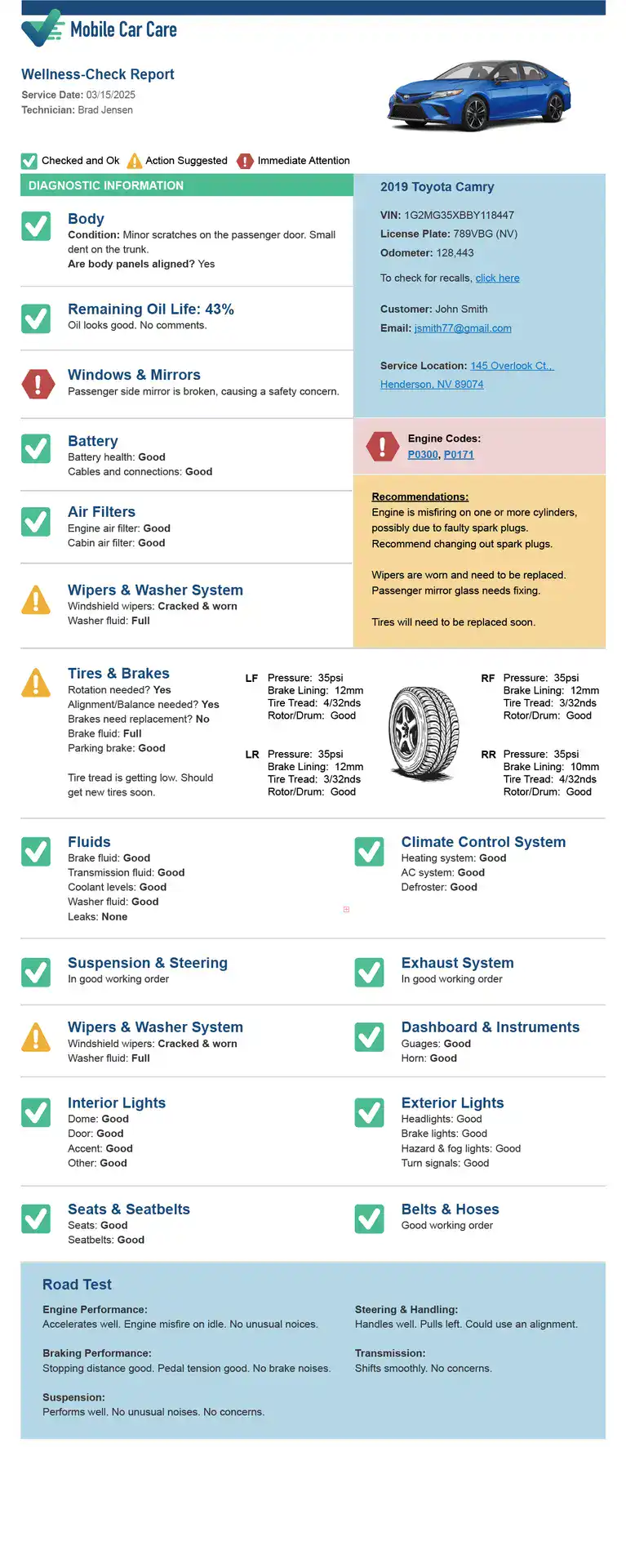
Mobile Car Care is positioned for exactly this convenience need. The company provides on-site vehicle wellness checks in the Las Vegas area, including a comprehensive inspection process and digital reporting. That can be especially helpful for seniors, adult children helping family members, and seasonal residents who value clarity before getting back on the road.
Returning to a parked car should feel organized, not uncertain. Review Mobile Car Care’s service options and schedule a convenient next step before small issues turn into stressful ones.
A practical return-to-use checklist for seasonal vehicles
Use this quick list before the car resumes normal Las Vegas driving:
- Walk around the vehicle and look for visible leaks, tire sag, glass damage, and unusual odors.
- Inspect battery condition visually where accessible, then note cranking speed during startup.
- Check tire pressure and visible tire condition before leaving the driveway.
- Review oil, coolant, washer fluid, and other accessible fluid levels.
- Look for nests, droppings, leaves, or chewed components under the hood and in storage areas.
- Test lights, horn, wipers, dashboard warnings, brake feel, and steering response.
- Confirm registration and insurance status before resuming regular driving.
- Take a short cautious first drive, or schedule an on-site inspection first if anything feels uncertain.
Final thought: treat the first drive like a restart, not a routine errand
Snowbird vehicle maintenance in Las Vegas is easiest when you separate two moments: preparing a car to sit, and verifying that same car is ready to return to service. This article covers the second moment. A battery that barely starts, a tire that lost pressure, a dry wiper blade, or evidence of rodents may be manageable when found in the driveway. They are far more frustrating after you have already merged into traffic or planned a full day around the car.
If you want a convenient inspection without building your return week around a repair shop, Mobile Car Care offers a practical way to review the vehicle where it is parked and help you make your next driving decision with more confidence.