
One moment you’re driving along, and the next, your steering becomes incredibly stiff, a warning light flashes on the dash, and you see steam rising from under the hood. This isn’t a random series of unfortunate events; it’s often the result of a single part failing: the serpentine belt. This crucial belt powers your power steering, alternator, and water pump. When it snaps, they all quit at once. To help you avoid this exact scenario, we’ve put together a complete guide on what to look for, listen for, and what a serpentine belt replacement entails before it leaves you stranded.
Key Takeaways
- Spot a Failing Belt Before It Fails: Your car will tell you when the serpentine belt is wearing out. Pay attention to high-pitched squealing noises, visible cracks or fraying on the belt itself, and dashboard warning lights for the battery or engine temperature.
- Understand the Cost and Effort: Replacing the belt yourself can save you over $100 in labor, but requires the right tools and confidence. A professional service offers peace of mind and is usually a quick job, making it a practical choice for a complex or time-sensitive repair.
- A Quick Inspection Saves You from a Breakdown: A broken serpentine belt isn’t just an inconvenience—it can shut down your car completely. Taking a minute to visually inspect the belt for wear is the single best way to prevent getting stranded and facing a much larger repair bill.
What’s a Serpentine Belt and Why Should You Care?
You’ve probably heard the term “serpentine belt” before, maybe from a mechanic or in your car’s manual. It sounds a bit mysterious, but it’s one of the hardest-working parts in your engine bay. Understanding what it does and why it matters is the first step in avoiding a surprise breakdown. This single, continuous belt snakes its way around multiple pulleys to power several of your car’s most critical accessories. Keeping it in good shape is key to keeping your car running smoothly and safely.
What Your Serpentine Belt Does
Think of the serpentine belt as the master coordinator under your hood. This long, winding rubber belt is responsible for powering a bunch of essential components all at once. It transfers power from the engine to vital systems like your alternator, which is what charges your battery while you drive. It also runs the power steering pump (making it easy to turn your wheel), the air conditioning compressor, and, in many cars, the water pump. The water pump is crucial because it circulates coolant to keep your engine from overheating. Without a healthy serpentine belt, these key parts of your car simply can’t do their jobs.
What Happens When It Breaks
So, what’s the big deal if this one belt fails? It’s a very big deal. If your serpentine belt snaps while you’re driving, all those systems it powers will shut down instantly. Your battery will stop charging, you’ll lose power steering, and your A/C will cut out. Most critically, if the belt runs your water pump, your engine will quickly start to overheat, which can cause serious and expensive damage. A broken belt isn’t just an inconvenience; it’s a breakdown waiting to happen. It can easily leave you stranded and turn your day upside down.
How to Know It’s Time for a New Serpentine Belt
Your car has its own way of telling you when something’s wrong, and the serpentine belt is pretty vocal. Long before it snaps and leaves you stranded, it will give you some clear warning signs. Learning to spot these clues is one of the best things you can do to prevent a roadside emergency and avoid a much bigger repair bill down the line. Think of it as a quick health checkup you can do yourself, right in your own driveway. The key is to pay attention to what your car is seeing, hearing, and telling you through the dashboard.
A failing belt can cause your power steering to go out, your engine to overheat, and your battery to die—sometimes all at once. That’s a situation nobody wants to be in, especially on a busy highway or a remote road. The good news is that these failures rarely happen without warning. Most belts are designed to last between 60,000 and 100,000 miles, but factors like climate and driving conditions can shorten that lifespan. That’s why periodic checks are so important. By taking a few minutes to look and listen, you can stay ahead of the problem. If you notice any of the following signs, it’s a signal to get your belt inspected sooner rather than later. Here are the three main indicators that your serpentine belt is on its way out.
Look for Cracks and Wear
One of the most straightforward ways to check your belt’s health is to simply look at it. With the engine off, pop the hood and locate the long, winding rubber belt at the front of the engine. You may need a flashlight to get a good view. Inspect it for any visible signs of damage, like cracks, fraying along the edges, splits, or glazing, which gives it a shiny, smooth appearance. The ribbed side is especially prone to showing wear. If you see multiple cracks close together or pieces of the belt missing, it’s a definite sign that the rubber has degraded and is ready to be replaced.
Listen for Squealing or Chirping
Your ears are one of your best tools for diagnosing a bad serpentine belt. If you hear a high-pitched squeal or a persistent chirp coming from under the hood, the belt is often the culprit. This squealing or chirping noise is most common when you first start your car, accelerate, or turn on the air conditioning. The sound is caused by the belt slipping on the pulleys because it has stretched out over time or has become worn and brittle. While a little chirp on a damp morning might not be an emergency, a consistent squeal is your car’s way of crying for help.
Check Your Dashboard Lights
Your car’s dashboard is its main communication hub, so don’t ignore it. If the serpentine belt is failing, it can trigger a couple of different warning lights. The most common are the battery light and the Check Engine light. Because the serpentine belt powers the alternator, a slipping or broken belt means the alternator can’t properly charge your battery, causing the battery light to pop on. You might also see a temperature warning if the belt can no longer turn the water pump, leading to overheating. Any of these lights is a clear signal to stop and investigate the cause immediately.
What Does Serpentine Belt Replacement Cost?
Let’s talk numbers. The cost of replacing a serpentine belt can vary quite a bit, and it really comes down to one main decision: will you pay a professional or tackle the job yourself? Understanding the breakdown of costs will help you figure out the best route for your car, your schedule, and your budget. Both options have their pros and cons, so it’s smart to know what you’re getting into before you start. We’ll walk through what you can expect to pay for professional service, the potential savings of a DIY approach, and the little things that can change the final price.
Cost for Professional Service
If you take your car to a shop or have a mobile mechanic come to you, you’re paying for both the part and the expertise. Generally, a professional serpentine belt replacement will cost between $150 and $300. The average serpentine belt replacement cost estimate often breaks down into two parts: labor, which usually runs from $85 to $125, and the belt itself, which can be anywhere from $50 to $65. This is a fairly quick job for an experienced mechanic, so you’re mostly paying for their time, tools, and the peace of mind that comes with knowing it’s done right.
Cost to Do It Yourself (DIY)
Feeling handy? If you decide to replace the belt yourself, you can save a good amount on labor. The main cost will be the new serpentine belt, which typically costs between $25 and $75 at an auto parts store. It’s a significant saving, but it comes with a trade-off. You’ll need to have the right tools on hand, including a specific serpentine belt tool or a breaker bar, and feel confident working in the tight space of your engine bay. If you’re up for the challenge, it can be a rewarding and budget-friendly project.
What Influences the Final Price?
The initial quote isn’t always the final number on the invoice. Several factors can influence the final price, starting with the make and model of your car. Some vehicles have engines that are harder to access, which increases labor time. More importantly, a mechanic might find that related components, like the belt tensioner or pulleys, are also worn out. Since they’re already working in that area, it’s often recommended to replace these parts at the same time, which will add to the total cost but can prevent another repair down the road.
Can You Replace It Yourself? A DIY Guide
So, you’re thinking about rolling up your sleeves and tackling this replacement yourself? I love that. For many cars, changing a serpentine belt is a totally achievable weekend project that can save you some money and give you that amazing “I fixed it!” feeling. It doesn’t usually require a garage full of specialized equipment, which is a huge plus.
However, it’s a job that requires precision. That belt snakes around a lot of important components, and getting it wrong can cause more problems than you started with. This guide will walk you through the essentials, from the tools you’ll need to the common mistakes to avoid, so you can decide if this DIY is right for you.
The Tools You’ll Need
The good news is you likely won’t need to buy a whole new toolbox for this job. Most serpentine belt replacements can be done with a set of common hand tools you might already own. You’ll typically need a good socket or wrench set to work the belt tensioner—the spring-loaded pulley that keeps the belt tight.
Some cars have tight spaces that make a special serpentine belt tensioner tool really helpful, but a long-handled ratchet or a breaker bar often does the trick. Before you start, I recommend looking up your specific car’s year, make, and model online to see if there are any special tool requirements.
Safety First: What to Know
Before you even think about touching the belt, let’s talk safety. This is the most important step, so please don’t skip it. First, make sure your car’s engine is completely cool. Engine components get incredibly hot, and you can get a serious burn if you start working too soon. Give it at least an hour after driving.
Next, think about what you’re wearing. Avoid any loose clothing, dangling drawstrings, or jewelry that could get snagged in the pulleys or other moving parts. Tying back long hair is also a must. Following these simple vehicle repair safety tips ensures your DIY project is a success, not a trip to the emergency room.
A Step-by-Step Guide to Replacement
Ready to get started? The key to a smooth replacement is knowing exactly how the belt is supposed to be routed. Before you remove anything, find the belt routing diagram—it’s often on a sticker under the hood. If you can’t find it, take a clear photo or sketch the belt’s path around all the pulleys. This little step will be your best friend during reinstallation.
Once you have your guide, use your wrench or tensioner tool to release the tension on the belt, then slip the old belt off. While it’s off, check the pulleys for wear. Then, carefully thread the new belt on, following your photo or diagram precisely. Double-check that it’s seated correctly in the grooves of each pulley before slowly reapplying the tension.
Avoid These Common DIY Mistakes
A couple of common missteps can turn this straightforward job into a headache. First, don’t forget to check the pulleys and the tensioner when the old belt is off. Give each pulley a quick spin by hand. They should feel smooth and solid, not wobbly or noisy. If a pulley spins freely like a top, its bearing is likely worn out and it needs to be replaced along with the belt.
Another mistake is using “belt dressing.” It might seem like a good idea to quiet a squeaky belt, but these sprays can actually make a serpentine belt slip and degrade the rubber over time. A new belt shouldn’t need any dressing. If your new belt is squealing, it’s a sign that something else is wrong, like a misaligned pulley or incorrect tension.
Know When to Call a Pro
There’s no shame in knowing when to call for backup. If you get everything apart and realize a pulley is seized or the tensioner arm is rusted tight, the job just got a lot more complicated. Or maybe you replaced the belt perfectly, but you’re still hearing that awful squealing sound. These are signs that there might be a deeper issue at play.
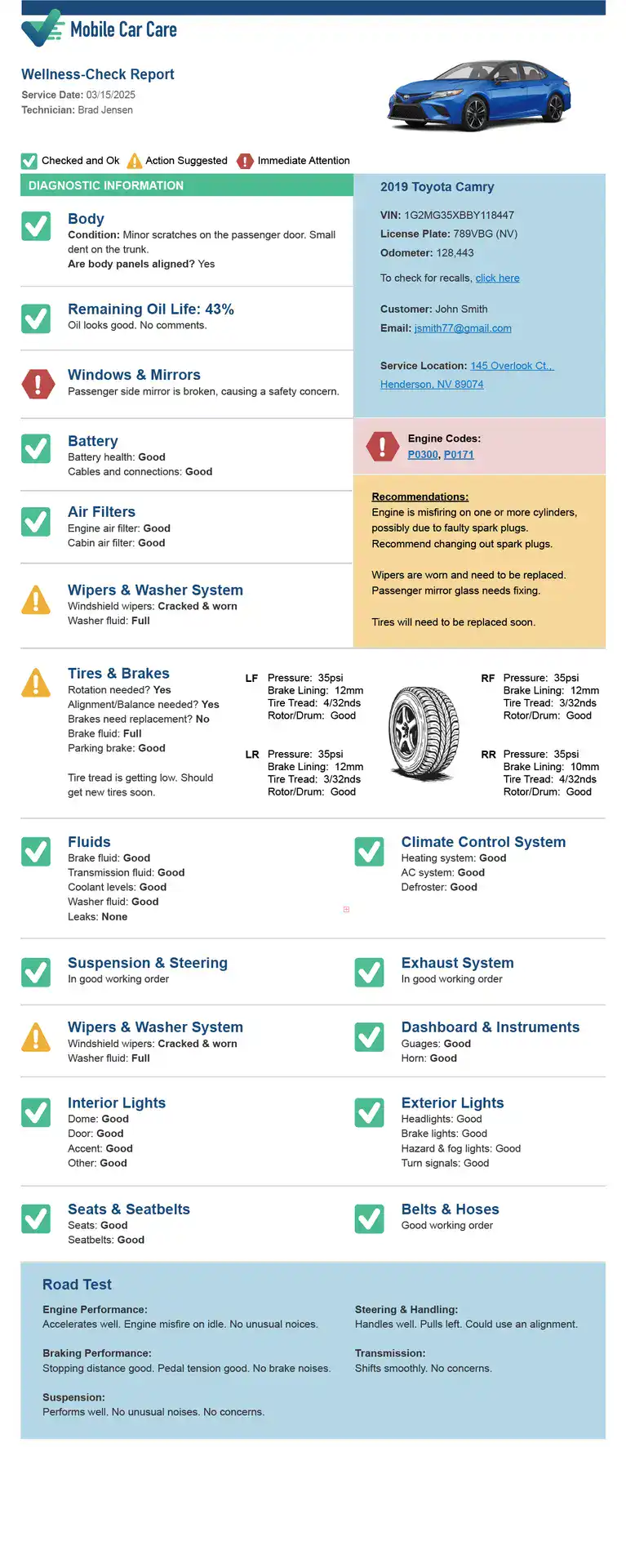
If you feel like you’re in over your head or just don’t have the time to deal with unexpected problems, that’s the perfect time to call a professional. Our technicians can come right to you, diagnose the root cause, and get it fixed without you having to stress. Our Essential Plan includes a comprehensive vehicle check that can catch these issues before they become a bigger problem.
Where to Get Your Serpentine Belt Replaced
Once you’ve decided to have your serpentine belt replaced, the next step is figuring out who should do the job. You have a few options, from traditional auto repair shops to dealerships and mobile mechanics. The right choice really depends on what works best for your schedule, budget, and comfort level. Finding a trustworthy and skilled professional is the most important part of the process, as a poorly installed belt can lead to even bigger problems down the road. Let’s walk through how to find the right person for the job and what to ask to ensure you’re getting great service.
How to Choose the Right Mechanic
Finding a mechanic you trust can feel like a big deal, but a little research goes a long way in making you feel confident about your choice. Start by looking for a shop or technician with a solid reputation and experience with your vehicle’s make and model. A quick search on Google or Yelp for local reviews can give you a great sense of other customers’ experiences. While you might only replace this belt once in your car’s lifetime, it’s a job best left to a professional mechanic to ensure everything is aligned perfectly and tensioned correctly. Don’t be afraid to ask friends or family for recommendations—a personal referral is often the best kind.
Key Questions to Ask Before You Book
Once you have a few potential mechanics in mind, it’s time to make a call. Being ready with a few key questions shows you’ve done your homework and helps you avoid any surprises with the final bill.
Here’s what you should ask:
- What’s your experience with my car’s make and model?
- Do you use OEM (Original Equipment Manufacturer) or aftermarket parts?
- What is the warranty on the new belt and your labor?
- How long do you expect the replacement to take?
- Can you provide a written estimate before you start the work?
Understanding the tools and parts needed for the job can also help you feel more confident in their answers and expertise.
The Easiest Option: We Come to You
What if you could skip the trip to the auto shop, the stale waiting room coffee, and the hassle of arranging a ride? That’s the beauty of a mobile mechanic. This option is perfect for busy people who can’t afford to lose half a day dealing with car maintenance. A certified technician comes directly to your home or office to perform the serpentine belt replacement on-site, fitting the service into your schedule, not the other way around.
That’s exactly why we started Mobile Car Care. We bring the expertise of a certified mechanic directly to you. Our technicians can handle your serpentine belt replacement while also performing one of our Essential Plan wellness checks, giving you total peace of mind without disrupting your day. You get transparent service from a qualified professional, all from the convenience of your own driveway.
Related Articles
- Mobile Serpentine Belt Replacement: What to Expect – Mobile Car Care
- Easy Car Maintenance at Home: Your DIY Guide – Mobile Car Care
- Proactive Vehicle Maintenance: Your Car’s Best Friend – Mobile Car Care
- Car Care & Inspections | Mobile Car Care LLC
Frequently Asked Questions
How long does a serpentine belt typically last? Most serpentine belts are built to last between 60,000 and 100,000 miles. However, this isn’t a hard and fast rule. Factors like extreme heat or cold, oil leaks, and your personal driving habits can cause the rubber to degrade faster. That’s why it’s more important to rely on regular visual inspections and listen for warning sounds rather than just sticking to a mileage number.
Is a squealing sound from my engine always a bad serpentine belt? A high-pitched squeal is a classic symptom of a worn or slipping serpentine belt, but it’s not the only possible cause. The noise could also point to a problem with the belt tensioner or a misaligned or failing pulley on one of the components it powers, like the alternator or water pump. Think of the squeal as an alarm bell telling you that something in that system needs a professional look.
What’s the difference between a serpentine belt and a timing belt? This is a great question because they sound similar but do very different jobs. The serpentine belt is on the outside of your engine and powers accessories like your A/C and power steering. The timing belt is inside the engine and synchronizes the rotation of the crankshaft and camshaft, which is critical for your engine to run at all. A broken timing belt can cause catastrophic engine damage, which is why it has a much stricter replacement schedule.
Can I just ignore the warning signs for a little while? I would strongly advise against it. A squealing or cracked belt might seem like a minor annoyance, but it’s a clear signal that a failure is coming. When the belt snaps, you’ll lose power steering and your battery will stop charging immediately. More importantly, if it runs your water pump, your engine will overheat very quickly, potentially turning a simple belt replacement into a major engine repair. It’s much safer and cheaper to address the issue early.
Why would I need to replace the tensioner or pulleys at the same time as the belt? The serpentine belt works as part of a system with its tensioner and pulleys. These parts wear out over time, too. A worn-out tensioner can’t keep the proper pressure on the belt, causing it to slip, while a bad pulley can shred a brand-new belt. A good mechanic will inspect these components during the replacement. If they recommend changing them, it’s a proactive step to ensure the whole system works correctly and to prevent you from having to do a similar repair again in the near future.