
Your schedule is already packed. The last thing you have time for is dropping your car at a repair shop and spending hours in a waiting room, all for a simple checkup. When a warning light appears, the hassle of getting it checked can feel as stressful as the problem itself. This is why understanding your options is so important. Professional engine diagnostics are the first step to solving any car problem, but you don’t have to rearrange your entire day to get it done. This article will explore how this essential service works and explain how modern, convenient solutions can bring the expertise directly to your driveway, giving you answers without the runaround.
Key Takeaways
- Treat Diagnostics as Preventative Care: An engine diagnostic test is the most direct way to understand your car’s warning lights and performance issues. Addressing the findings early prevents small problems from turning into stressful, expensive repairs.
- Look Beyond the Trouble Code: A basic code reader only points to a symptom, but a professional diagnosis uses advanced tools and expertise to identify the root cause. This accuracy saves you from paying for unnecessary parts and ensures the right fix is made.
- Choose Your Service Provider Wisely: The quality of your diagnosis depends on the technician’s skill and tools. Ask about their process and equipment, and consider a mobile service to get expert answers conveniently at your home or office.
What is an Engine Diagnostic Test?
Think of an engine diagnostic test as a comprehensive health check for your car. It’s a simple, non-invasive way for a technician to understand exactly what’s happening under the hood without taking anything apart. Using specialized equipment, they can tap into your vehicle’s onboard computer system to get a detailed report card on its performance. This process translates the complex language of your car into plain English, pinpointing issues with the engine, transmission, exhaust system, and more. It’s the fastest and most accurate way to find out why your check engine light is on or why your car is acting up, saving you from guessing games and unnecessary repairs.
How Diagnostic Technology Works
Your car is smarter than you might think. It’s equipped with an onboard computer system and a network of sensors that constantly monitor everything from engine temperature to fuel mixture. When a sensor detects a problem that falls outside of the normal operating range, it sends an alert to the computer. The computer then stores this information as a “trouble code” and often triggers a warning light on your dashboard, like the check engine light. A diagnostic tool plugs into your car’s port and reads these specific codes, giving a technician a clear starting point to identify the root cause of the issue.
Why Diagnostics Matter for Safety and Performance
Running a diagnostic test is about more than just turning off an annoying light on your dash. It’s a crucial step for your safety and your car’s long-term health. Catching a small issue, like a faulty oxygen sensor, can prevent it from spiraling into a much bigger and more expensive problem, like a damaged catalytic converter. A properly running engine is also an efficient one, meaning regular checks can help you maintain good fuel economy. Ultimately, diagnostics give you the peace of mind that your vehicle is running safely and reliably, protecting you and your family on the road.
Catch Problems Early to Avoid Major Repairs
That little check engine light is your car’s way of asking for help. Ignoring it is like ignoring a toothache—it rarely goes away on its own and usually gets worse. A diagnostic test can identify the exact problem, allowing you to address it before it causes a chain reaction of other failures. A minor fix today can save you from a major repair bill tomorrow. Being proactive is always the smartest approach to car care. A simple service like a Quick Check can catch these issues early, saving you time, money, and the stress of a breakdown.
How Does an Engine Diagnostic Test Work?
It might sound technical, but an engine diagnostic test is really just a conversation with your car. Think of it as a high-tech health checkup for your vehicle. Your car’s internal computer is constantly monitoring dozens of systems, from engine performance and transmission function to your emissions system. When it senses something is off—even something as minor as a loose gas cap—it logs the issue and often triggers your check engine light. A diagnostic test uses specialized tools to plug directly into this computer, accessing that log and translating your car’s complex data into a clear, actionable report for a technician.
This process allows a professional to see beyond what’s visible under the hood. Instead of guessing based on symptoms, they can use precise data to understand the root cause of a problem. It’s a fast, accurate, and non-invasive way to figure out exactly what your car needs to get back to running smoothly and safely. It takes the mystery out of that dreaded warning light and gives you a solid plan for what to do next. The best part? With a service like Mobile Car Care, this entire checkup can happen right in your driveway while you go about your day.
The Tools: OBD-II Scanners vs. Professional Equipment
The key to this whole process is a tool that plugs into your car’s On-Board Diagnostics (OBD-II) port, which is standard on all vehicles made since 1996. You can find basic code readers online or at auto parts stores, and they’re great for satisfying your curiosity. However, these consumer-grade scanners only scratch the surface. Professional technicians use advanced diagnostic equipment that provides a much deeper and more comprehensive look at your vehicle’s systems. These tools don’t just pull a generic code; they can access manufacturer-specific data, view live information from sensors, and test individual components. This level of detail is crucial for an accurate diagnosis, ensuring you’re not replacing parts you don’t need.
Decoding Your Car’s Trouble Codes
When your check engine light pops on, it’s your car’s way of saying, “Hey, I’ve found a problem!” The onboard computer generates and stores a specific Diagnostic Trouble Code (DTC) that corresponds to the issue it detected. Each code points to a particular system or component, like the ignition system, fuel injectors, or exhaust sensors. But a trouble code is just the starting point—it tells you where the symptom is, not necessarily what the cause is. For example, a code might indicate a problem with an oxygen sensor, but the real issue could be a vacuum leak or a wiring problem. A skilled technician uses these OBD-II codes as clues to guide their investigation, combining the data with a hands-on inspection to find the true source of the problem.
The Diagnostic Process, Step-by-Step
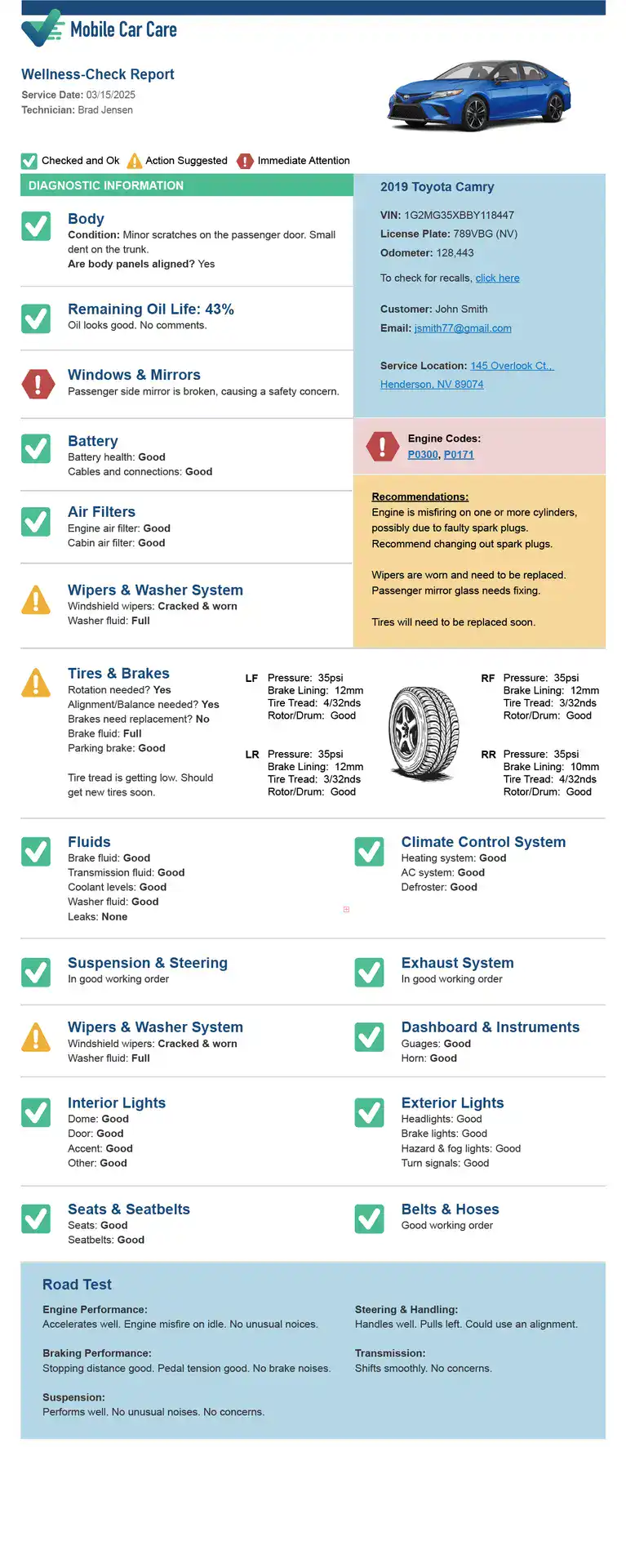
So, what does a diagnostic test actually look like? It’s a straightforward process. First, a technician connects their professional scanning tool to your car’s OBD-II port. The scanner then communicates with your car’s computer systems to retrieve any stored trouble codes and access a stream of live performance data. Next, the technician analyzes this information. They’ll look at the specific codes, check sensor readings, and review your car’s performance history to build a complete picture of its health. This data, combined with their expertise, allows them to pinpoint the exact issue. From there, they can create a clear report explaining the problem and recommend the right repairs, which is exactly what we do in our Quick Check service.
What Problems Can an Engine Diagnostic Find?
Think of an engine diagnostic test as a conversation with your car. It goes far beyond that little check engine light on your dashboard to translate what your vehicle’s internal computer is trying to tell you. This powerful process uses specialized tools to scan your car’s systems and pinpoint specific issues, taking the guesswork out of repairs. From subtle performance dips to serious mechanical faults, a diagnostic test can uncover a wide range of problems that might otherwise go unnoticed until they become expensive headaches. It’s the most efficient way to get a clear, accurate picture of your car’s health.
Engine, Performance, and Mechanical Issues
If you’ve noticed your car isn’t running as smoothly as it used to, a diagnostic test can get to the root of the problem. It analyzes the core components of your engine and transmission to identify issues that affect your car’s overall performance. This could be anything from a misfiring cylinder or a problem with the ignition timing to an issue with the fuel injector. These aren’t just abstract problems; they show up as real-world annoyances like poor acceleration, rough idling, or a sudden drop in fuel economy. Catching these mechanical issues early can prevent them from causing a chain reaction of damage, saving you from much larger repair bills down the road.
Emission System Problems
That pesky check engine light is often your car’s way of telling you there’s an issue with the emission control system. This system is responsible for minimizing the pollutants your car releases, and when something goes wrong, your car’s onboard computer will flag it. A diagnostic scan can quickly identify the culprit, which is often something simple like a loose gas cap that’s disrupting the pressure in the fuel system. Other times, it might point to a more significant part, like a failing oxygen sensor or a worn-out catalytic converter. Addressing these problems is not only important for the environment but is often necessary to pass state vehicle inspections.
Electrical Glitches and Sensor Failures
Modern cars rely on a complex network of sensors to monitor everything from engine temperature to the air-fuel mixture. These sensors constantly send data to your car’s main computer, but when one of them fails, it can send incorrect information and cause a host of problems. For example, a faulty oxygen sensor can lead to poor fuel economy and engine misfires. A diagnostic test reads the specific trouble codes generated by the computer, allowing a technician to identify exactly which sensor is malfunctioning without having to manually test every component. This precision saves time and ensures you’re only replacing the parts that are actually broken.
What Your Warning Lights Really Mean
Think of your car’s diagnostic system as a health check for your vehicle. When a warning light pops up on your dashboard, it’s your car’s way of telling you that its onboard computer has detected a problem. While it’s easy to panic (or worse, ignore it), that light is actually a helpful early warning. It’s designed to alert you to small issues before they have a chance to become major, costly repairs. A diagnostic test is the key to understanding what that light really means. Instead of a vague warning, you get a specific, actionable report. If a light comes on, a service like our Quick Check Plan can give you the clarity and peace of mind you need.
When Should You Get a Diagnostic Test?
Knowing when to get a diagnostic test is just as important as understanding what it is. While it’s easy to ignore a small dashboard light or a minor change in performance, your car is often giving you early clues that something needs attention. Listening to these signs can be the difference between a quick, simple fix and a major, expensive repair down the road. Think of a diagnostic check as a conversation with your car—it’s the best way to find out exactly what it needs before a small issue becomes a serious problem.
Warning Signs You Can’t Ignore
Your car has its own way of communicating, and dashboard warning lights are its most direct method. If your check engine light pops on, it’s a clear signal to get a diagnostic test. Don’t ignore it, even if the car seems to be driving fine. Other tell-tale signs include a rough idle where the car shakes or sputters while stopped, frequent stalling, or a noticeable hesitation when you accelerate. Any of these symptoms mean your car’s computer has detected a problem that needs to be investigated. Getting it checked promptly helps you understand what your warning lights mean and address the root cause.
How Often Should You Get a Diagnostic Check?
Beyond waiting for a warning light, proactive diagnostic checks are a smart move for any car owner. A great rule of thumb is to have a diagnostic test performed at least once a year or alongside your regular oil changes. This preventative approach allows a technician to catch potential issues that haven’t triggered a warning light yet. Our Essential Plan includes comprehensive wellness checks to keep you ahead of problems. Staying on top of your car’s health this way not only ensures it runs smoothly but can also save you a significant amount of money by avoiding more complex repairs in the future.
The Truth About Your Check Engine Light
That little amber engine icon can cause a lot of anxiety, but it’s not a mystery. The check engine light is directly connected to your car’s onboard diagnostic (OBD) system. When it illuminates, it means the system has detected a fault and stored a corresponding “trouble code.” The light itself doesn’t tell you the specific problem—it could be anything from a loose gas cap to a failing sensor. A diagnostic scanner reads this code, which a skilled technician can then use to pinpoint the exact issue. Understanding these codes is the first step to ensuring your engine performs well and has a long, healthy life.
How Much Does an Engine Diagnostic Cost?
Let’s talk numbers. When that check engine light comes on, one of the first questions that pops into your head is probably, “How much is this going to set me back?” The cost of an engine diagnostic test isn’t one-size-fits-all, but understanding the typical price range and the factors that affect it can help you feel more in control. It’s easy to worry about a huge, unexpected bill, but a diagnostic test is actually a smart, proactive investment in your car’s health and your own peace of mind.
The price for a diagnostic service covers more than just plugging a scanner into your car. You’re paying for a trained technician’s time, their expertise in interpreting complex trouble codes, and the use of specialized, professional-grade equipment that goes far beyond a simple handheld reader. Think of it as paying for a clear diagnosis before you commit to a treatment plan. It’s the essential first step to getting your car back on the road safely and avoiding the risk of a small issue turning into a major, expensive repair. Without an accurate diagnosis, you could end up paying for parts and labor that don’t even fix the underlying problem. This initial fee ensures you’re on the right track from the very beginning.
Average Price for a Diagnostic Service
Generally, you can expect a professional car diagnostic test to cost between $20 and $400. That’s a wide range, but most people find the price lands somewhere in the middle. The average car diagnostic test cost is about $210. This fee pays for the service of identifying the root cause of the issue. It’s important to remember that this price is just for the diagnosis itself—the “what’s wrong”—and doesn’t include the cost of any parts or labor needed for the actual repair. It’s the price for clarity and a solid action plan.
What Factors Influence the Cost?
So, why the big price range? Several things can affect the final bill. The make and model of your car play a big role; diagnosing a common sedan is often less complex and therefore cheaper than troubleshooting a luxury vehicle or a high-performance car that requires special tools and knowledge. Your location matters, too, as labor rates can vary between busy cities and more rural areas. Finally, a technician’s level of experience can influence the price. A more skilled mechanic might charge more, but their expertise often leads to a faster, more accurate diagnosis, saving you from paying for unnecessary repairs.
“Free” vs. Paid Diagnostic Checks
You’ve probably seen ads for “free” diagnostic checks, and it’s tempting to go for what seems like a great deal. However, it’s wise to be cautious. These offers are often a way to get you in the door. If you decide to have the shop perform the repairs, the cost of the “free” diagnostic is typically rolled into your final bill. A paid diagnostic service, on the other hand, provides you with a straightforward, detailed report of the issue. This gives you the freedom to get a second opinion or have the repairs done wherever you choose, putting you in the driver’s seat of your car care decisions.
Where Can You Get an Engine Diagnostic Test?
When that dreaded check engine light pops up on your dashboard, your first thought is probably, “Where do I even take this thing?” You have a few solid options, and the best one for you really depends on your schedule, budget, and the specific needs of your car. The main choices boil down to having a technician come to you or taking your car to a traditional shop. Let’s break down what each experience looks like so you can make a decision that feels right.
Convenient, On-Site Service with Mobile Car Care
If the idea of rearranging your day to sit in a waiting room sounds like a nightmare, a mobile diagnostic service is a game-changer. Instead of you going to the shop, the shop comes to you—whether you’re at home or the office. A service like our Quick Check Plan brings a professional technician and their diagnostic tools right to your driveway. This approach saves you a ton of time and stress. You can carry on with your day while an expert figures out what’s going on with your car, giving you peace of mind without the hassle. It’s the perfect solution for busy people who need answers without the runaround.
Traditional Auto Repair Shops
The most common option is your local auto repair shop. These are the brick-and-mortar businesses you see in town, and they’re equipped to handle a wide range of vehicle issues. To get a diagnostic test here, you’ll need to schedule an appointment, drive your car over, and likely leave it with them for a few hours or even the day. While they have the necessary tools and expertise, this route requires you to work around their schedule. It’s a reliable choice, but it definitely asks for more of your time and flexibility compared to an on-site service.
Dealerships vs. Independent Mechanics
Within the traditional shop category, you have two main players: dealerships and independent mechanics. A dealership service center specializes in your car’s specific make and uses manufacturer-approved tools and parts. This specialized knowledge can be invaluable for tricky, brand-specific issues, but it often comes with a higher price tag. On the other hand, an independent mechanic works on all sorts of makes and models. They can be more affordable and offer a more personal touch. The choice often comes down to whether you prefer the specialized expertise of a dealership or the value and versatility of a local independent shop.
How to Choose the Right Service Provider
When a warning light pops up on your dash, your first instinct might be to find the nearest or cheapest option. But choosing the right service provider for an engine diagnostic is about more than just getting a code read—it’s about finding a trusted partner who can accurately identify the root of the problem and help you make an informed decision. The right technician can save you from unnecessary repairs, future breakdowns, and a lot of stress.
Think of it this way: you wouldn’t go to just anyone for a medical diagnosis, and the same care should apply to your vehicle. A skilled professional with the right equipment will look at the complete picture of your car’s health, not just the symptom that triggered the light. Taking a few minutes to vet your options ensures you’re putting your car, and your safety, in capable hands.
What to Look For in a Quality Technician
A great technician is part detective, part translator. They don’t just pull a trouble code; they use it as a starting point for a deeper investigation. Look for a provider who emphasizes that their professional diagnostics give a full picture of your car’s health, not just a simple error reading. Experience and certifications (like ASE) are great indicators of expertise.
Equally important is clear communication. A quality technician should be able to explain the problem and the proposed solution in a way that makes sense to you, without relying on confusing jargon. They should be transparent about the process, the potential costs, and the priority of any needed repairs. You want someone who empowers you to make the right choice for your vehicle.
Why the Right Diagnostic Tools Matter
Not all diagnostic tools are created equal. While a basic handheld scanner can pull a generic code, professional-grade equipment goes much deeper. Quality service providers use specialized diagnostic tools to analyze the performance of your engine, transmission, and other critical systems in real-time. This advanced technology allows them to see the full story behind a trouble code.
These tools can access manufacturer-specific data, pinpointing everything from subtle engine misfires to faulty sensors that a basic reader would miss. This accuracy is key to avoiding guesswork and preventing you from paying for repairs you don’t actually need. The right equipment in the hands of a skilled technician is the fastest route to a reliable diagnosis.
Key Questions to Ask Before You Book
Before you commit to a service, take a moment to ask a few questions. This simple step can tell you a lot about the provider and the quality of care you can expect.
Start with the basics:
- What does your diagnostic service include? Does the fee just cover pulling the code, or does it include time for further investigation?
- What kind of diagnostic equipment do you use?
- How will you share the results with me? Will I receive a detailed report?
- If repairs are needed, will you provide a clear, itemized estimate beforehand?
A reputable provider will be happy to answer these questions. Their goal is to build trust and ensure you feel confident in their process, whether you’re booking a one-time Quick Check or seeking a more comprehensive analysis.
What to Expect From Your Diagnostic Service
So, the technician has plugged their scanner into your car. What happens next? A diagnostic service is more than just pulling a code; it’s about getting a clear, complete picture of your vehicle’s health and a practical plan to address any issues. It’s your chance to ask questions and understand what’s really going on under the hood, without having to decipher confusing technical jargon on your own.
A professional service should leave you with three key things: a detailed report explaining the findings, a clear set of next steps with repair options, and the confidence that you’ve gotten a far more thorough analysis than a simple DIY code reader could ever provide. At Mobile Car Care, our goal is to make this process transparent and stress-free. We bring the expertise directly to you, perform a comprehensive check, and walk you through the results so you can make informed decisions about your car’s maintenance. This means no waiting rooms, no upselling pressure, and no confusion—just straightforward answers and a plan tailored to your car and your budget. We believe that understanding your car’s needs shouldn’t be complicated, and our on-site service is designed to give you peace of mind right in your own driveway.
Understanding Your Diagnostic Report
Think of the diagnostic report as a health summary for your car. Our technicians use special OBD scanner technology to communicate directly with your car’s onboard computer systems. This tool connects to your vehicle’s diagnostic port, allowing us to see real-time data from its sensors and retrieve any fault codes that have been stored. These codes point us toward specific problems, from engine misfires to faulty sensors. The final report translates this data into a clear, easy-to-understand overview of your car’s condition, which we’ll review with you on the spot. Our Quick Check Plan is a perfect starting point for getting this detailed insight.
Next Steps: Repair Options and Priorities
Once we’ve identified the issue, the next step is creating a plan. A good technician won’t just hand you a list of problems; they’ll help you prioritize. We’ll explain which repairs are urgent for safety and which can be scheduled for later. This approach helps you manage your budget and address the most critical needs first. Catching issues early with a diagnostic test is one of the best ways to save money on more expensive repairs down the road. Our goal is to provide you with clear options, whether it’s a minor fix we can handle on-site or a recommendation for a larger repair.
DIY Code Readers vs. a Professional Diagnosis
You might see basic code readers for sale online and wonder if you can just diagnose the problem yourself. While these tools can pull a generic trouble code, they don’t tell the whole story. A code simply tells you what system is reporting a fault, not why. A professional diagnosis, on the other hand, gives you a full picture of your car’s health. Our technicians combine advanced equipment with years of hands-on experience to interpret the data, perform further tests, and pinpoint the root cause. This expertise is what turns a simple code into an accurate, actionable solution, and it’s a core part of our Essential Plan.
Related Articles
- Mobile Diagnostic Test Cost: What to Expect – Mobile Car Care
- Pre-Purchase Car Inspection: A Smart Buyer’s Guide – Mobile Car Care
- Your Guide to Mobile Vehicle Inspections | Mobile Car Care
- Mobile Vehicle Inspection: Your Complete Guide – Mobile Car Care
Frequently Asked Questions
My check engine light turned off on its own. Do I still need a diagnostic test? It’s a good idea to get it checked out anyway. When a warning light comes on, your car’s computer stores a trouble code, even if the light turns off later. The issue might be intermittent, like a sensor that only fails under certain conditions. A diagnostic test can retrieve that stored code and help a technician find the root of the problem before it becomes more consistent or causes other issues.
How long does a diagnostic test usually take? The test itself is fairly quick, often taking less than an hour. The real value is in the technician’s time to analyze the data and perform any necessary hands-on checks to confirm the issue. With a mobile service, the process is designed around your schedule. We can run the test in your driveway while you continue with your day, so you’re not stuck in a waiting room.
Will the test tell you the exact part that needs to be replaced? Not always, and that’s where a skilled technician makes all the difference. A diagnostic test provides a trouble code that points to the problem area, like an oxygen sensor circuit. However, the code doesn’t specify if the issue is the sensor itself, the wiring, or something else entirely. A professional uses that code as a starting point for their investigation to accurately pinpoint the cause, saving you from paying for parts you don’t need.
Is a diagnostic test the same thing as a state vehicle inspection? They are two different services. A state inspection is a required check-up that ensures your car meets specific safety and emissions standards. An engine diagnostic test is a troubleshooting process used to figure out why a warning light is on or why your car isn’t performing correctly. However, getting a diagnostic test can certainly help you resolve issues that might cause you to fail a state inspection.
If I get a diagnostic test, do I have to get the repairs done with you? Absolutely not. A paid diagnostic service provides you with a clear, detailed report about your car’s health. You are paying for the information and the technician’s expertise. This report is yours to keep, giving you the freedom to get a second opinion or have the repairs completed wherever you feel most comfortable. Our goal is to give you the clarity you need to make the best decision for your vehicle.