
Your daily schedule is already a masterclass in logistics. The last thing you have time for is sitting in a dealership waiting room, trying to juggle work calls while your car gets a simple check-up. Traditional car care just doesn’t fit into modern life. That’s why a mobile car wellness check is such a game-changer. Think of a quarterly vehicle inspection as a regular check-up for your car; it’s a chance to catch small issues before they become major headaches. It’s a comprehensive inspection that happens on your terms—at your home while you work, or in your office parking lot. This article breaks down how convenient, on-site service works, what a detailed inspection covers, and how you can finally make car maintenance a seamless part of your routine instead of a day-disrupting chore.
Key Takeaways
- Think Preventatively, Not Reactively: A regular wellness check is your best defense against unexpected breakdowns and costly repairs, allowing you to address minor wear and tear before it becomes a major problem.
- Not All Inspections Are Created Equal: A true wellness check is a detailed, multi-point review of your car’s most important systems—from the engine to the brakes—that gives you a clear and complete picture of your vehicle’s health.
- Prioritize Convenience Without Compromise: Modern car care should work for you, not against you. On-site services bring certified technicians and comprehensive checks directly to your home or office, saving you time and eliminating the stress of traditional shop visits.
What’s a Car Wellness Check?
Think of a car wellness check as a yearly physical for your vehicle. Just like you visit a doctor for a check-up to catch potential health issues early, a wellness check is a proactive way to monitor your car’s overall condition. It’s not about waiting for a strange noise or a warning light to appear on your dashboard; it’s about preventing those problems from happening in the first place. This regular inspection gives a trained technician a chance to look over your car’s most important systems, from the engine to the brakes, ensuring everything is working as it should.
The main goal is to identify small signs of wear and tear before they turn into major, expensive repairs that leave you stranded on the side of the road. A thorough check gives you a clear picture of your car’s health, so you know what needs attention now and what you should keep an eye on for the future. Ultimately, it’s about safety and confidence. Knowing your car is in good shape provides incredible peace of mind, whether you’re running daily errands, commuting to work, or heading out on a long family road trip. It’s a simple step that keeps your car reliable and safe for you and your passengers.
What’s Included in a Comprehensive Check
A comprehensive check is a deep dive into your car’s key systems. It goes far beyond just kicking the tires. A technician will perform a full inspection of all the critical components that keep you safe and your car running smoothly. This includes safety items like your lights, horn, and windshield wipers. They’ll carefully examine your brakes, steering, and suspension systems, which are essential for vehicle control. Under the hood, the inspection covers the battery, engine belts, and hoses. They’ll also check all your car’s vital fluids and filters to make sure everything is clean and topped off. It’s a complete, nose-to-tail review designed to give you a full report on your vehicle’s condition.
How Our 85-Point Inspection Works
We’ve designed our 85-point inspection to be as thorough and convenient as possible. You don’t have to rearrange your day or sit in a waiting room—we come directly to your home or office. A certified technician will systematically go through our detailed checklist, covering everything from engine performance to tire tread depth. This process allows us to spot subtle issues that might otherwise go unnoticed during routine driving. Our Essential Plan is a great example of how we make proactive care easy. By catching things early, we help you handle small maintenance tasks before they become stressful and costly breakdowns, keeping your car in its best possible shape.
Your Digital Report, Explained
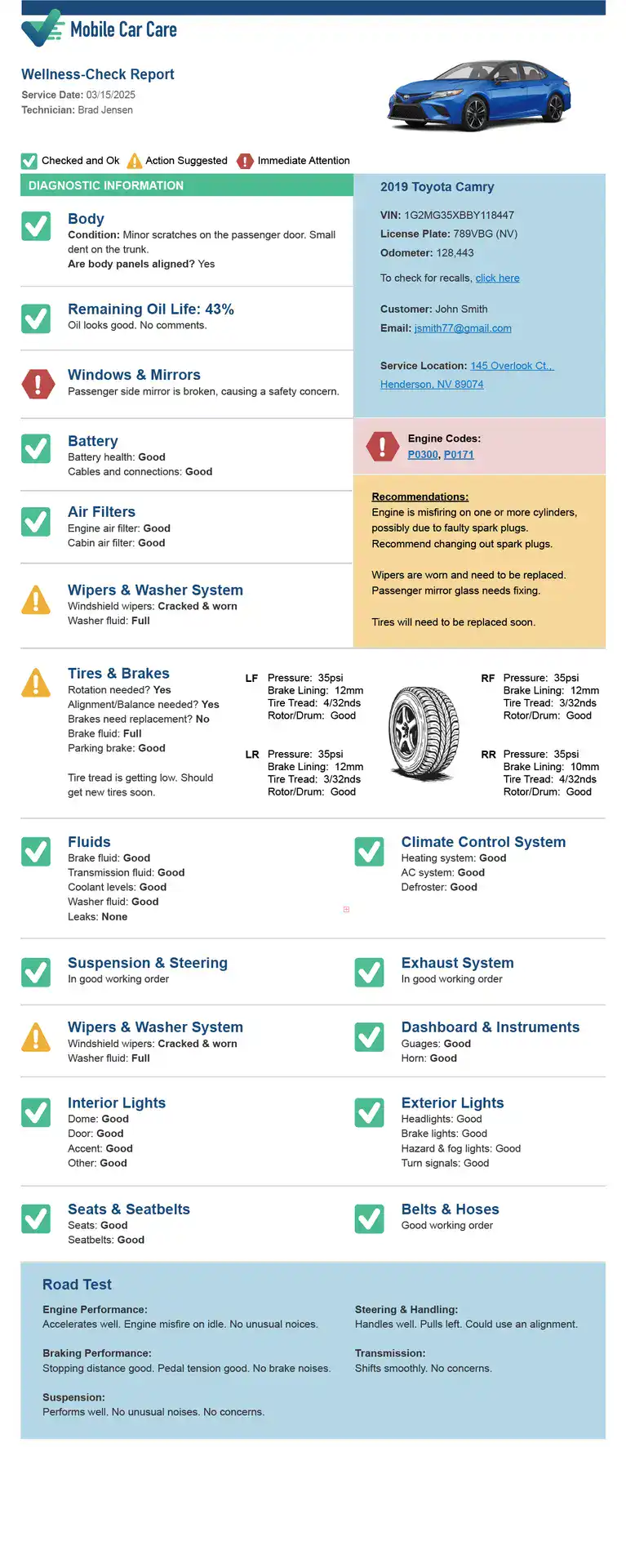
After your inspection is complete, we don’t just hand you a clipboard with confusing notes. We provide a clear, easy-to-understand digital report sent right to your phone or email. This report breaks down our findings using a simple color-coded system: green for components that are in great shape, yellow for items that will need attention soon, and red for issues that require immediate action. Each point includes notes and sometimes photos from the technician, so you can see exactly what we see. This empowers you with the knowledge to make informed decisions about your car’s maintenance without any pressure. Regular inspections help you avoid bigger problems and keep your car running reliably.
Car Wellness Myths, Busted
Let’s be honest, car maintenance can feel like a mystery. There’s a lot of advice out there, and it’s tough to know what’s true and what’s just an old habit passed down through generations. Believing the wrong thing can cost you time, money, and peace of mind. That’s why it’s so important to separate fact from fiction. Getting clear on what your car actually needs helps you make confident decisions and keep your vehicle running safely and smoothly. Let’s tackle some of the most common myths we hear from car owners.
“My new car doesn’t need a check.”
It’s exciting to drive a brand-new car off the lot, and it’s easy to assume it won’t need any attention for a long time. While modern cars are incredibly reliable, they aren’t invincible. They are complex machines that still require routine care to perform their best. Think of it like a wellness visit for a perfectly healthy person—it’s all about prevention. Following the manufacturer’s recommended maintenance schedule for things like oil changes, tire rotations, and fluid checks is crucial, even in the first couple of years. This ensures everything is working as it should and protects your warranty.
“If it’s not broken, don’t fix it.”
This is a classic saying, but it’s risky advice when it comes to your car. Waiting for a strange noise or a warning light to appear often means a small, preventable issue has already become a bigger, more expensive problem. Proactive maintenance is about catching things before they break. A regular wellness check can spot thinning brake pads before they damage your rotors or identify a slow fluid leak before it causes engine damage. Taking care of these minor things early saves you from the stress and cost of a major breakdown down the road.
“All maintenance checks are the same.”
This is a big one. A quick, complimentary “check” at a lube shop is not the same as a comprehensive inspection. A basic once-over might only cover a few visible items, while a detailed multi-point inspection dives deep into your car’s critical systems. For example, our Essential Plan includes an 85-point check that examines everything from engine and transmission health to the electrical system and safety features. Understanding the difference helps you ensure your vehicle is getting the thorough attention it needs to stay safe and reliable.
“It’s just an upsell.”
Many of us have felt that pressure at a repair shop, wondering if a recommended service is truly necessary. It’s why so many people dread car maintenance. But a proper wellness check isn’t a sales tactic; it’s an information tool. Its purpose is to give you a clear, complete picture of your vehicle’s health so you can make informed decisions. Ignoring a professional recommendation to save a little money now can lead to much higher repair costs later. A trustworthy service will explain what they find, prioritize what’s urgent, and help you plan for future needs.
What Gets Checked During an Inspection?
A true car wellness check is like a comprehensive physical for your vehicle. It goes far beyond a quick look under the hood to give you a complete picture of your car’s health. At Mobile Car Care, our 85-point inspection is designed to be incredibly thorough, covering all the critical systems that keep you and your family safe on the road. Think of it as a proactive conversation with your car, where we find and translate what it needs before a small issue becomes a major headache. Here’s a closer look at what we examine.
Engine and Transmission
The engine and transmission are the heart of your vehicle, responsible for creating power and delivering it to the wheels. Our inspection dives deep into this core system. We check for any signs of leaks, listen for unusual noises, and assess the overall performance. A full diagnostic test also examines the surrounding components, including the fuel system, exhaust, and ignition. By evaluating everything from fluid quality to sensor readings, we can spot early signs of wear and tear. Catching a minor transmission fluid leak or a faulty sensor today can save you from a breakdown and a costly repair tomorrow.
Brakes and Suspension
Your ability to stop safely and maintain control of your car depends entirely on your brakes and suspension. This part of the inspection is all about your safety. We meticulously examine the brake pads, rotors, and brake lines for wear. We also inspect the suspension system—including shocks, struts, and springs—which absorbs bumps in the road and keeps your tires planted firmly on the ground. A complete vehicle inspection ensures these critical parts are in top condition, giving you the confidence that your car will respond exactly as you need it to, whether you’re navigating city traffic or cruising on the highway.
Fluids
Think of your car’s fluids as its lifeblood. They lubricate, cool, and power essential systems. During a wellness check, we don’t just top things off; we assess the level and condition of all vital fluids, including engine oil, coolant, and brake and transmission fluids. Low or dirty fluid can signal problems like a hidden leak or internal wear. For example, dark, gritty transmission fluid might indicate that it’s time for a change before serious damage occurs. Regular fluid checks are one of the simplest and most effective ways to extend the life of your vehicle and prevent expensive component failures.
Electrical System
From starting the engine to powering your headlights and charging your phone, your car’s electrical system is always at work. Our inspection includes a thorough check of the battery, alternator, and starter. We test the battery to see how much life it has left and ensure the connections are clean and secure, as corrosion can prevent your car from starting. We also verify that the alternator is properly charging the battery while you drive. A healthy electrical system is key to reliability, ensuring your car starts every time and all your electronic safety features function correctly.
Tires
Your tires are the only part of your car that actually touches the road, making their condition essential for safety, handling, and even fuel economy. We check your tire pressure to make sure it’s at the manufacturer’s recommended level, as improper inflation can cause uneven wear and poor performance. We also measure the tread depth to ensure you have enough grip for wet or slippery conditions. As a rule of thumb, you should consider replacing tires when the tread is 4/32nds of an inch deep. A simple check can prevent a dangerous blowout and keep you rolling safely.
Safety Features
Finally, we inspect all the safety features you rely on every day. This includes making sure your headlights, brake lights, and turn signals are all shining brightly so other drivers can see you. We also check the condition of your windshield wipers to ensure you have a clear view in the rain and test your horn to make sure it’s loud and clear. While these components may seem small, they are absolutely critical for safe driving. Ensuring these basic safety items are functioning properly is a simple but vital part of any comprehensive car wellness check, giving you total peace of mind.
How Much Does a Wellness Check Cost?
When it comes to car maintenance, the price tag is often the first thing on our minds. The cost of a wellness check can vary quite a bit, depending on how deep you want to go. A basic, state-mandated inspection is one thing, but a truly comprehensive check that gives you a full picture of your car’s health is another. Think of it as the difference between a quick check-in and a full physical. Let’s break down the typical costs so you know what to expect and can decide what level of care is right for your vehicle and your budget.
Basic Safety Inspections
A basic safety inspection is the most fundamental type of check-up for your car. These are often required by the state to ensure your vehicle meets minimum safety standards for being on the road. They typically cover essentials like your lights, wipers, horn, and brakes. You can expect to pay anywhere from $15 to $50 for this kind of service. While it’s great for meeting legal requirements, it doesn’t give you a deep dive into the overall health of your engine or other critical systems. It’s a pass/fail test, not a proactive wellness assessment.
Comprehensive Multi-Point Checks
For a more thorough look under the hood, you’ll want a comprehensive multi-point inspection. These checks are designed to give you a complete overview of your car’s condition. Technicians examine everything from fluid levels and tire tread to battery health and suspension components. Repair shops usually charge between $80 and $150 for this service. At Mobile Car Care, our one-time Quick Check offers an 85-point inspection that comes right to your door, giving you a detailed report without the hassle of a shop visit. This is where you start getting real peace of mind.
Potential Service Costs
It’s important to remember that the price of the inspection itself is separate from any repairs that might be needed. If the check-up uncovers an issue, like worn brake pads or a leaky hose, the cost to fix it will be an additional expense. A good service provider will give you a clear, itemized report of their findings and a transparent quote for any recommended repairs. This way, you can make informed decisions about what to address immediately and what can wait, without any pressure or surprises.
The Value of Prevention
Spending a little on regular wellness checks can save you a lot down the road. Catching a small issue, like a fraying belt or low coolant, before it becomes a major problem is the smartest way to manage your car care budget. As experts at AAA explain, routine inspections are key to avoiding bigger, more expensive failures. Think of it as an investment in your car’s longevity and your own safety. A clean bill of health for your vehicle means fewer unexpected breakdowns and more confidence on the road.
How Subscription Plans Save You Money
If you want to make proactive car care a simple, predictable part of your routine, a subscription plan is the way to go. Instead of paying for individual inspections and services ad-hoc, a plan bundles them together at a lower overall cost. Our Essential Plan includes regular wellness checks to keep your car in top shape, while our Total Care Plan adds runner services for things like state inspections and tire changes. By having us come to you, you save time and the stress of scheduling shop appointments, making consistent car care easier than ever.
Signs Your Car Needs a Wellness Check
Your car is a lot like your body—it gives you little hints when something isn’t quite right. A strange noise here, a new vibration there. It’s easy to turn up the radio and hope it goes away, but these are often early warnings of bigger problems. Paying attention to these signals is the key to proactive car care, helping you avoid stressful breakdowns and expensive, last-minute repairs. Think of a wellness check as a visit to the doctor for your car; it’s a chance to catch small issues before they become major headaches.
You know your car better than anyone. If you notice something feels off, it probably is. From the way it sounds when you start it in the morning to how it handles on the highway, any change is worth investigating. Ignoring these signs can lead to a domino effect where one small problem puts stress on other parts, causing more damage. Instead of waiting for a dashboard light to force you into a repair shop, a routine inspection gives you peace of mind and a clear picture of your vehicle’s health. Our Essential Plan is designed for exactly this kind of proactive maintenance, keeping you ahead of any potential issues.
Strange Noises or Vibrations
If your car has started making a new sound, it’s trying to tell you something. Squealing or grinding when you brake, clunking when you go over bumps, or a whining from under the hood are all red flags. Similarly, if you feel new vibrations through the steering wheel, your seat, or the brake pedal, don’t ignore them. These unusual noises and vibrations are often the first signs of wear and tear on critical parts like your brakes, suspension, or engine components. A wellness check can pinpoint the source of the sound and prevent a minor annoyance from becoming a safety hazard.
Dashboard Warning Lights
Your car’s dashboard is its primary communication tool. While the check engine light is the most notorious, other icons for your brakes, oil pressure, or battery are just as important. These lights are direct warnings that your car needs maintenance and shouldn’t be dismissed. It might be something as simple as a loose gas cap, or it could indicate a more serious engine or sensor issue. Instead of guessing, let a professional technician diagnose the problem. Our comprehensive check includes scanning for diagnostic trouble codes to get to the root of the issue quickly and accurately.
Changes in Performance
Has your car started feeling sluggish when you accelerate? Are you having trouble starting it, or have you noticed you’re filling up the gas tank more often? These shifts in performance are clear indicators that your vehicle needs attention. A decline in fuel efficiency, rough idling, or a delay in response when you press the gas pedal can all point to underlying problems with the engine, fuel system, or exhaust. Addressing these performance issues early not only improves your driving experience but can also prevent more extensive damage.
Preparing for a New Season
Just like you pull out your winter coat or summer clothes, your car needs to prepare for seasonal shifts. Extreme temperatures, whether hot or cold, put extra stress on your vehicle’s battery, tires, fluids, and cooling system. Scheduling a wellness check before summer heatwaves or winter freezes is a smart, proactive step. It ensures your AC is ready for road trips and your battery won’t leave you stranded on a cold morning. For busy families, seasonal checkups are an easy way to ensure your vehicle is safe and reliable for the months ahead.
Hitting Mileage Milestones
Your car’s manufacturer provides a recommended maintenance schedule for a reason. Key services are due at certain mileage milestones—typically every 30,000, 60,000, and 90,000 miles. These aren’t just suggestions; they are crucial for your car’s longevity. A regular wellness check helps you stay on top of this schedule. Catching small problems during these inspections is the best way to save money in the long run by avoiding major repairs. A one-time Quick Check is perfect for making sure you’re on track before hitting your next big milestone.
What to Look for in a Car Care Service
Finding a car care service you trust can feel like a huge weight off your shoulders. You want someone who is knowledgeable, transparent, and respects your time. But with so many options out there, how do you choose the right one? It comes down to looking for a few key things: solid credentials, positive feedback from other customers, flexible service options, and convenience that actually fits your life. Taking a little time to vet your options upfront will save you headaches and give you confidence that your car is in great hands.
Certifications to Trust
When you’re handing over your keys, you want to know the person working on your car is a true professional. That’s where certifications come in. Look for technicians who are ASE (Automotive Service Excellence) certified. This isn’t just a fancy acronym; it means the technician has passed rigorous testing and has proven experience in the field. It’s a reliable indicator of their skill and commitment to quality. A reputable service will be proud to share their team’s credentials, so don’t be afraid to ask. It’s your car, and you deserve to know it’s being cared for by a qualified expert.
Reviews and Recommendations
Word-of-mouth is still one of the most powerful tools for finding a great service. Start by asking friends, family, or coworkers where they take their cars and what their experiences have been like. Beyond your inner circle, check online reviews on sites like Google or Yelp. Look for consistent themes in the feedback. Are customers happy with the communication? Do they feel the pricing is fair? A few negative reviews aren’t always a dealbreaker, but a pattern of poor service or unresolved issues is a definite red flag. Reading about others’ experiences gives you a clearer picture of what you can expect.
Service and Plan Options
Your car care needs can change over time, so it’s smart to choose a provider that offers a variety of services. A great service should handle everything from routine wellness checks to diagnostics and minor repairs. Some also offer subscription-based plans that make proactive maintenance incredibly simple. These plans are perfect if you prefer to set it and forget it, knowing your car is getting regular attention. For example, a comprehensive care plan can bundle regular inspections and maintenance, helping you stay on top of your vehicle’s health without having to schedule every single visit.
On-Site Convenience
Let’s be honest—taking your car to the shop is a hassle. It can disrupt your entire day, forcing you to arrange rides or wait around in a lobby. This is why mobile car care has become such a game-changer. A service that comes to you, whether you’re at home or at the office, saves you valuable time and eliminates stress. Imagine getting a complete vehicle check-up done while you’re in a meeting or making dinner. This level of on-site convenience means you don’t have to choose between your schedule and your car’s health. It’s the modern solution for busy lives.
Questions You Should Ask
Once you’ve narrowed down your options, it’s time to have a conversation. Asking the right questions can tell you a lot about a service provider’s expertise and customer care philosophy.
Here are a few to get you started:
- Do you specialize in my vehicle’s make and model?
- Can you explain your inspection process and what’s included?
- How do you communicate your findings and recommendations?
- What are your pricing and payment options?
A trustworthy provider will be happy to answer your questions clearly and patiently. Their goal should be to make you feel informed and comfortable, not pressured.
Car Care That Fits Your Schedule
Let’s be real: your calendar is already packed. Between work, family, and trying to have a social life, finding a few hours to take your car to a shop, wait around, and then pick it up feels like a huge hassle. The good news is that car care has evolved. You no longer have to rearrange your entire day for a simple wellness check. Modern services are designed to work around your life, bringing professional maintenance right to your doorstep and giving you back your most valuable resource: time.
This approach puts you in control. Instead of blocking off a whole morning for an oil change or inspection, you can have it done while you’re in a meeting at your home office or making dinner for your family. It’s about making vehicle maintenance a seamless part of your routine, not a disruptive event.
Flexible Booking
Remember the days of playing phone tag with a mechanic or being told the only available slot is three weeks from now on a Tuesday? That’s no longer the only option. With on-site car care, you can find and book appointments online in just a few minutes. You get to see the available times and choose one that genuinely works for you. Whether you need a technician to come to your home while the kids are napping or to your office parking lot during the workday, you pick the time and place. This flexibility makes it so much easier to stay on top of your car’s health without sacrificing your productivity or personal time.
The Benefits of At-Home Service
The biggest advantage of a mobile wellness check is pure convenience. There’s no need to arrange for a second driver, pay for a rideshare, or sit in a stale waiting room for hours. A technician comes directly to you with everything they need to perform a comprehensive inspection. You can continue with your day uninterrupted, knowing your car is getting the attention it needs right outside. This at-home service transforms car maintenance from a time-consuming chore into a simple, background task that you can check off your list without ever leaving your property. It’s a stress-free way to handle essential vehicle care.
Digital Scheduling and Reports
Modern car care services use technology to make your life easier. After you book your appointment online, the communication continues to be just as simple. Once the wellness check is complete, you don’t get a greasy, hard-to-read piece of paper. Instead, you receive a detailed digital report sent straight to your email. This report clearly explains the condition of your vehicle with photos and easy-to-understand notes. You can review it on your own time, from anywhere, and have a clear record of your car’s health. This transparency helps you feel confident and informed about what’s going on with your vehicle.
Track Your Maintenance History
Keeping a detailed record of your car’s service history is one of the smartest things you can do as a car owner. It helps you stay on top of what’s been done and what’s coming up, ensuring you don’t miss an important service that could lead to bigger issues. When you use a service that provides digital reports, tracking this history becomes automatic. Every check and service is logged in your account, creating a complete timeline of your car’s care. This is not only great for your peace of mind but also incredibly valuable if you ever decide to sell your car. Our Total Care Plan makes this effortless.
What to Do With Your Results
A wellness check report is your roadmap to a healthier car. It gives you a clear picture of what needs immediate attention and what you should keep an eye on for the future. This allows you to proactively address small issues before they become major, expensive problems. Knowing your car is in good shape provides incredible peace of mind, especially before a long road trip or as you drive your family around town. If you’re just looking for a baseline, a one-time Quick Check Plan can give you the clarity you need to make informed decisions about your vehicle’s maintenance.
Related Articles
- Home Car Inspection: The Complete Guide – Mobile Car Care
- Vehicle Inspection Service: Your Complete Guide – Mobile Car Care
- Subscription Car Safety Checks: Your Ultimate Guide – Mobile Car Care
- Car Health Check Programs: The Ultimate Guide – Mobile Car Care
- Car Care Subscription Services: A Complete Guide – Mobile Car Care
Frequently Asked Questions
How is a wellness check different from the free inspection I get with an oil change? Think of it as the difference between a quick glance and a thorough physical. The complimentary checks at a quick-lube shop are often a brief visual scan of a few accessible items. A comprehensive wellness check, like our 85-point inspection, is a much deeper examination of your car’s most important systems, including the engine, brakes, suspension, and electrical components. We provide you with a detailed digital report so you get a complete picture of your car’s health, not just a simple pass/fail on a few basics.
My car seems to be running perfectly fine. Do I still need a check? Yes, and that’s actually the best time to get one. A wellness check is all about proactive care, not just reacting to problems. Its purpose is to spot small signs of wear and tear before they become noticeable issues that could leave you stranded. Catching a fraying belt or thinning brake pads when your car is still running well saves you from the stress and higher cost of an emergency repair down the road.
How long does an on-site wellness check take? Our comprehensive 85-point inspection typically takes about 60 to 90 minutes to complete. The best part is that you don’t have to wait around while we work. Since we come to your home or office, you can continue with your day, whether that’s taking a work call or playing with your kids. We’ll send you the detailed digital report as soon as we’re finished.
What happens if you find a problem during the inspection? If we find something that needs attention, we document it clearly in your digital report using a simple color-coded system. Red items need immediate action, yellow items will need care soon, and green items are in great shape. The report is an informational tool to help you understand your car’s condition and plan for future maintenance. We give you the knowledge to make informed decisions without any pressure or obligation.
How often should I schedule a car wellness check? For most vehicles, getting a comprehensive wellness check once a year is a great rule of thumb. This allows you to stay ahead of seasonal wear and tear and catch potential issues early. It’s also a smart idea to schedule one before a long family road trip or if you’re approaching a major mileage milestone recommended by your car’s manufacturer. Regular checks are the key to keeping your car reliable and safe.