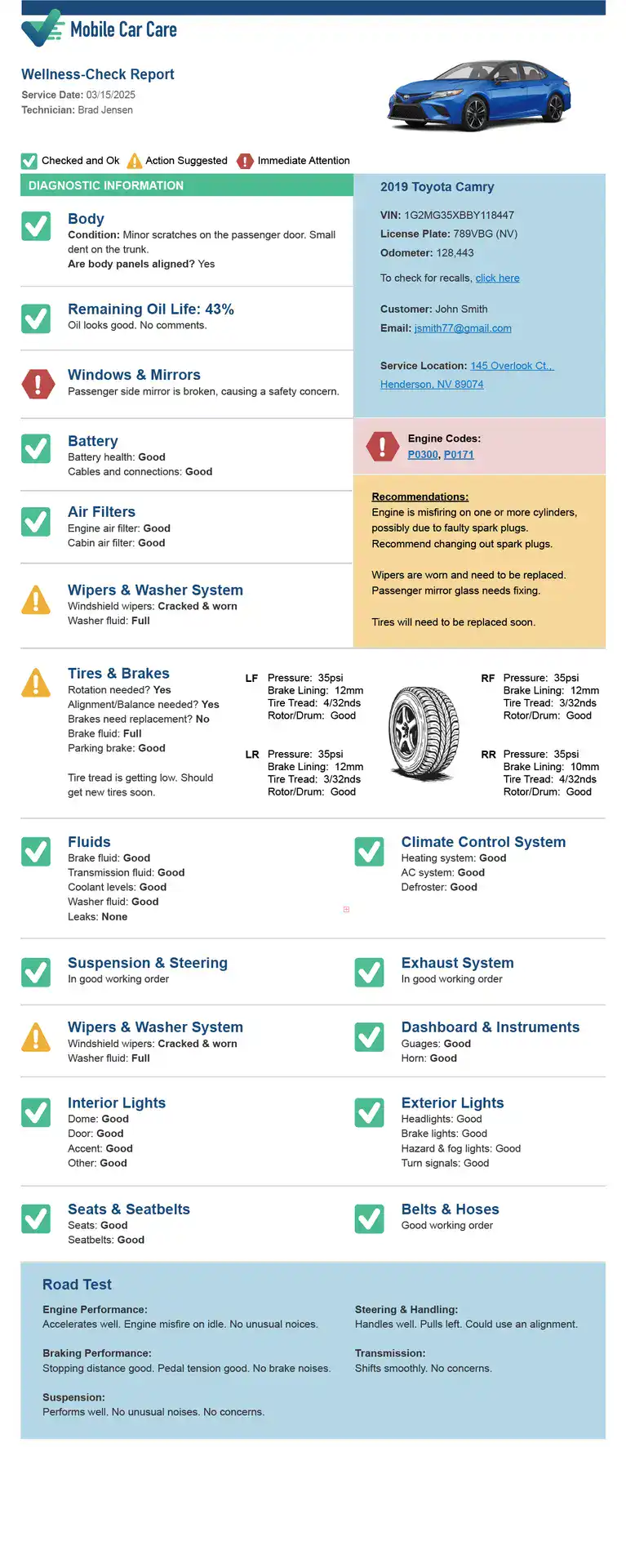

Driving should be a source of freedom, not a source of anxiety. Yet, we’ve all felt that little knot of uncertainty when a strange noise starts, a warning light flickers on, or a long road trip is on the horizon. It’s easy to ignore these signs, hoping they’ll just go away, mostly because dealing with a garage is a major hassle. A comprehensive 85-point inspection is the perfect antidote to this worry. It’s a proactive wellness check designed to give you a clear, honest assessment of your vehicle’s health. The final 85 point inspection report provides a detailed roadmap, showing you what’s working perfectly and what needs attention, putting you back in control and giving you total peace of mind on the road. For drivers who want consistent protection, a quarterly inspection schedule ensures these checks happen regularly throughout the year. Mobile Car Care’s Total Care plan includes this comprehensive inspection along with priority scheduling and advanced diagnostics.
Key Takeaways
- An inspection is preventative care that saves you money: A detailed 85-point check catches small problems like worn belts or low fluids before they lead to major breakdowns, helping you avoid expensive, unexpected repairs down the road.
- Use the report to gain confidence and control: The inspection report provides objective proof of your car’s health. This information empowers you to negotiate a fair price on a used car or make informed maintenance decisions for your current vehicle.
- Focus on quality, not just the number of points: A practical 85-point inspection that covers critical safety and mechanical systems is more useful than a 100-point check filled with cosmetic items. The goal is to get a clear, actionable report on what truly matters for your car’s health.
What Is an 85-Point Inspection?
Think of an 85-point inspection as a comprehensive wellness check for your car. It’s a thorough evaluation designed to give you a complete picture of your vehicle’s health, from bumper to bumper. Instead of just focusing on one problem area, a technician systematically examines dozens of individual components to catch small issues before they turn into major, expensive headaches.
This type of inspection involves a detailed physical and electronic analysis of your car’s most critical systems. It’s the best way to get a clear, unbiased report on its overall condition. Whether you’re buying a used car, preparing for a long road trip, or just want to stay on top of routine maintenance, an 85-point inspection provides the confidence and peace of mind that your vehicle is safe and reliable. It’s about being proactive, not reactive, with your car care.
What We Check in Your Car
During an 85-point inspection, a technician meticulously examines your vehicle’s key systems. This isn’t just a quick look under the hood; it’s a deep dive into the components that keep you safe on the road. We check all your exterior lights and signals, from headlights to brake lights, to ensure you can see and be seen.
Inside, the inspection covers everything from your seat controls and steering wheel functions to the audio and entertainment systems. We’ll also assess the condition of your tires, brakes, suspension, and exhaust system. This multipoint inspection process ensures every accessible part of your car is evaluated, giving you a complete and transparent overview of its current state.
How the Inspection Process Works
The inspection process is systematic and designed for accuracy. It typically starts with the most critical systems, like the engine and transmission. A technician will evaluate essential fluid levels—including oil, coolant, and brake fluid—and check the condition of the associated filters and belts. This foundational check helps identify any immediate red flags that could signal a larger problem.
From there, the process moves through the vehicle point by point, following a detailed checklist to ensure nothing is missed. Each component is graded based on its condition: whether it’s in good shape, needs attention soon, or requires immediate repair. This methodical approach is key to catching potential issues early, saving you from unexpected breakdowns and costly future repairs.
Why an 85-Point Inspection Matters
An 85-point inspection is much more than a simple once-over. Think of it as a comprehensive health physical for your vehicle. It’s a systematic process designed to give you a complete and honest picture of your car’s condition, from the engine performance to the tread on your tires. This detailed check provides three major benefits that every car owner should care about: it gives you confidence on the road, saves you money in the long run, and protects your car’s value. It’s an investment in your safety and your wallet.
Gain Confidence and Peace of Mind
Driving should be stress-free, but it’s hard to feel at ease when you’re worried about your car’s reliability. A thorough 85-point inspection removes that uncertainty. By examining every major system from bumper to bumper, our technicians can spot underlying issues you might not see or hear. You receive a detailed report that clearly explains what’s working perfectly and what needs attention. This knowledge gives you the power to make informed decisions and provides the peace of mind that comes from knowing your vehicle is safe for you and your family.
Save Money on Future Repairs
We’ve all been there: a small, ignored issue suddenly becomes a massive, expensive repair. An 85-point inspection is the best form of preventative maintenance. Catching a minor oil leak, a worn-out belt, or thinning brake pads early can save you from catastrophic failures and wallet-draining fixes down the road. Addressing these small problems proactively is always more affordable than reacting to a breakdown. Regular inspections are a smart financial habit that helps you manage your car maintenance costs and avoid unexpected expenses that can throw your budget off track.
Increase Your Car’s Resale Value
When it’s time to sell or trade in your car, proving it’s been well-maintained is key to getting the best price. A history of regular 85-point inspections with detailed reports serves as concrete evidence of responsible ownership. This documentation builds trust with potential buyers and gives them the confidence to pay your asking price. It shows you have nothing to hide and have invested in the vehicle’s longevity. A clean bill of health can significantly increase your car’s resale value and make the entire selling process smoother and faster.
How Does an 85-Point Inspection Compare?
When you’re trying to take care of your car, it’s easy to get lost in the numbers. You might see a 27-point courtesy check, a 100-point dealer inspection, or our 85-point wellness check. So, what’s the real difference, and which one do you actually need? The secret isn’t in the number itself, but in what’s actually being checked. A quality inspection focuses on the systems critical to your car’s safety, performance, and long-term health.
Our 85-point inspection was designed with this in mind. It’s far more detailed than the free check-up you might get with an oil change, but it’s also streamlined to focus on the components that truly matter for your daily drive. We skip the fluff and get straight to the heart of your vehicle’s condition, giving you a clear, actionable report you can actually use. It’s all about providing a detailed picture of your car’s health without overwhelming you with technical jargon.
85-Point vs. 100-Point Inspections
You’ve probably seen dealerships advertise a “100-point inspection” for their certified pre-owned cars. While it sounds impressive, a higher number doesn’t automatically mean a better or more thorough check. Often, those extra points cover minor, non-critical items like the condition of the owner’s manual or the vanity mirror light. More importantly, an inspection simply identifies issues; it’s not a guarantee that any of the identified problems will be fixed. Our 85-point inspection is built to be practical, concentrating on the mechanical and safety components that keep you and your family safe on the road. While some used car inspections boast more points, we prioritize depth over breadth, ensuring every item on our list is meaningful.
How It Stacks Up Against Basic Checks
Many service shops offer a free “multi-point” or “courtesy” check with an oil change. These are great for catching obvious issues, like low fluid levels or worn-out wiper blades. However, they are typically a quick visual scan rather than a deep dive into your vehicle’s condition. They’ll check major systems, but they aren’t designed to uncover underlying problems that could lead to bigger headaches down the road. Our Essential Plan, which includes the 85-point wellness check, goes far beyond a basic look-over. We methodically examine your car’s engine, brakes, suspension, and electrical systems to give you a complete health report. It’s the difference between a quick glance and a thorough physical.
How to Read Your Inspection Report
Getting your 85-point inspection report can feel like you’re being handed a complex medical chart for your car. But don’t worry—it’s designed to be a clear, straightforward guide to your vehicle’s health. Think of it as a detailed story about your car, with each section revealing a different part of its condition. Understanding this report helps you see exactly what’s working well, what needs attention soon, and what requires immediate action. This knowledge puts you in the driver’s seat, allowing you to make informed decisions about maintenance and repairs, whether you’re keeping the car or considering a sale.
Break Down the Inspection Categories
Your inspection report is organized into categories to make it easier to digest. You’ll typically see sections for the engine, transmission, brakes, tires, fluids, lights, and electrical systems. Our technicians perform both a physical check and an electronic analysis of all accessible areas, so you get a complete picture. A comprehensive multipoint inspection checklist will cover everything from the tread depth on your tires to the brightness of your headlights. By looking at the report section by section, you can focus on one area at a time instead of feeling overwhelmed by all the information at once.
Know the Red Flags to Look For
As you review the report, pay close attention to items marked as “fair” or “poor.” These are your red flags. While a green checkmark is great, the yellow and red marks tell you where potential problems lie. An inspection checks your vehicle’s major systems, including critical fluid levels and filters, so a low fluid level or a dirty filter is an early warning. Other significant red flags include worn brake pads, corroded battery terminals, or cracks in belts and hoses. These are the issues that can lead to bigger, more expensive problems if left unaddressed.
Use the Report to Negotiate a Better Price
If you’re buying a used car, the inspection report is your best negotiation tool. A seller might say the car is in “great condition,” but the report provides objective proof of its actual state. More thorough used car inspections give you more data to work with. You can use any identified issues—like worn tires or a recommendation for a fluid flush—to ask for a lower price or request that the seller fix the problems before you buy. It’s a fair way to ensure the price reflects the car’s true value and the maintenance it will need in the near future.
Common Problems an Inspection Uncovers
Think of an 85-point inspection as a comprehensive health screening for your car. On the surface, a vehicle might look pristine, but underneath the hood and behind the wheels, small issues can be hiding. These are the kinds of problems that don’t always trigger a warning light on your dashboard until they’ve become much more serious—and expensive. A thorough inspection is your best tool for catching them early.
Our technicians methodically check the key systems that are essential for your car’s performance and your safety on the road. We often find that the most common issues fall into three main categories: the engine and transmission, the brake system, and the electrical and safety components. Uncovering a small fluid leak, a worn-out brake pad, or a corroding battery terminal now can save you from a major breakdown later. It’s all about proactive care that gives you confidence and control over your vehicle’s health. With a detailed vehicle wellness check, you get a clear, honest picture of what’s going on with your car.
Engine and Transmission Issues
The engine and transmission are the heart and soul of your car, and issues here can be some of the most intimidating. During an inspection, a technician will look for red flags that you might not notice in your daily commute. Things like rough idling, stalling when you come to a stop, or a slight hesitation when the car shifts gears can all point to developing problems. These symptoms could indicate anything from old spark plugs to more significant transmission trouble. Catching these signs early is crucial, as it can be the difference between a minor adjustment and a complete engine or transmission rebuild, saving you thousands of dollars and a lot of stress.
Brake System Wear and Tear
Your car’s ability to stop safely is non-negotiable, which is why the brake system is a major focus of any inspection. Brake components are designed to wear down over time, and an inspection will tell you exactly how much life they have left. The most common problems we find are worn brake pads and rotors. If you’ve ever heard a high-pitched squeal or a low grinding noise when you press the brake pedal, you’re hearing the warning signs that your brake pads are worn thin. An inspection measures their thickness and checks for any damage, ensuring your car has the stopping power you rely on for your safety and the safety of others.
Electrical and Safety System Faults
Modern cars are packed with complex electrical systems and safety features, and an inspection ensures they’re all working as they should. A common finding is a battery that’s nearing the end of its life or has corroded terminals, which could leave you stranded without warning. We also check all your lights, from headlights to brake lights, to make sure you can see and be seen. Beyond that, the inspection verifies that critical safety features like your airbags and seatbelts are in perfect working order. You hope you never need them, but an inspection provides the peace of mind that they’ll be there to protect you if you do.
Where to Get an 85-Point Inspection
When you need a comprehensive vehicle check, you have a few great options. The right choice often comes down to what works best for your schedule and specific needs. Whether you prefer the convenience of an at-home service or are looking at a car from a dealership, here’s a breakdown of where you can get a reliable 85-point inspection.
Get Your On-Site Check with Mobile Car Care
If your schedule is packed, the idea of dropping your car off at a garage can feel like a huge hassle. This is where mobile car care really shines. We bring the 85-point inspection directly to your home or office, saving you time and taking the stress out of car maintenance. Our technicians perform a thorough physical and electronic analysis of your vehicle’s accessible areas, making sure every critical component is checked for safety and performance.
With an on-site check, you can go about your day while we handle the work. It’s the easiest way to get the peace of mind you need without disrupting your life. Our Essential Plan includes this detailed wellness check, giving you a clear picture of your car’s health on your terms.
Other Options to Consider
While we’re partial to the convenience of on-site service, it’s helpful to know the other places you might encounter an 85-point inspection. You’ll often see them offered by dealerships as a sales tool or by independent shops as part of their standard services.
Certified Pre-Owned Programs
If you’re in the market for a used car, you’ll likely come across Certified Pre-Owned programs. Many dealerships use a rigorous 85-point inspection to verify that a vehicle meets high standards for quality and reliability before putting it on the lot. This inspection is a key part of the certification process and is designed to give you confidence in your purchase. It’s less of a service you seek out and more of a quality guarantee offered by the seller.
Independent Inspection Services
Your local auto shop is another place to get a detailed vehicle check. Many independent mechanics offer multipoint inspections with checklists that are very similar to an 85-point inspection. These services typically cover a wide range of components, including your car’s lights, signals, fluids, and other essential systems. If you already have a mechanic you trust, this can be a solid option for getting a comprehensive overview of your vehicle’s condition in a traditional garage setting.
Get the Most from Your Inspection
An inspection is more than just a service; it’s a conversation about your car’s health. To get the most out of it, you should come prepared to participate. By asking the right questions and knowing how to interpret the results, you can turn a technical checklist into a clear, actionable plan for your vehicle. This proactive approach ensures you’re not just a passenger in the process but an informed driver who understands what your car needs to stay safe and reliable on the road. It’s about moving from uncertainty to clarity.
Think of your inspector as your partner in car care. Their job is to identify potential issues, but your job is to understand those findings and what they mean for you. Whether you’re evaluating a potential new car or checking up on your current one, being engaged is key. It helps you prioritize repairs, budget for future maintenance, and drive with genuine confidence, knowing you’ve done your homework. Taking an active role transforms the inspection from a simple check-up into a valuable learning experience that puts you in control of your vehicle’s long-term well-being.
Questions You Should Ask the Inspector
Walking into an inspection, your most powerful tool is curiosity. Start with the most fundamental question: “What does this inspection cover?” A thorough check should be comprehensive, covering the vehicle from bumper to bumper. Our Essential Plan, for example, examines 85 different points to give you a complete picture of the car’s condition. You can also ask about the process itself. Good questions include, “How will you share the results with me?” and “Can you walk me through the most critical findings afterward?” This sets the expectation that you want to understand the details, not just receive a pass/fail grade.
Tips for Understanding the Results
A detailed report can feel overwhelming, but it doesn’t have to be. A well-designed vehicle inspection report will present information clearly, often using a simple checklist or a color-coded system (like green, yellow, and red) to indicate the urgency of any issues. When you review the results, don’t hesitate to ask for clarification. If a component is marked as “needing attention,” ask your inspector to explain what that means in practical terms. For example, “How does this affect my car’s safety?” or “Is this a repair I need to handle immediately, or can it wait a few months?” This helps you translate technical jargon into a practical to-do list.
The Future of Vehicle Inspections
Just as cars have evolved from simple machines to complex computers on wheels, the way we inspect them is also getting a major upgrade. The days of relying solely on a visual check and a mechanic’s ear are blending with high-tech solutions that provide a deeper, more accurate picture of your vehicle’s health. This shift isn’t just about fancy gadgets; it’s about making inspections faster, more thorough, and better at catching small issues before they become big, expensive headaches. For busy car owners, this means more confidence and less time spent worrying about what’s happening under the hood. The future of car care is proactive, not reactive, giving you the power to stay ahead of maintenance instead of falling behind it. As vehicles become more integrated with software and advanced electronics, inspections must also become smarter to ensure every component, from the engine to the infotainment system, is working as it should. This comprehensive approach is the new standard for ensuring safety and reliability on the road, transforming a once-dreaded task into a seamless part of responsible car ownership.
New Technologies in Car Inspections
Modern vehicles are packed with sophisticated systems, from driver-assistance features to over-the-air software updates. As a result, a comprehensive inspection has to go beyond the mechanical. The future of vehicle checks involves testing these advanced electronic systems to ensure they’re functioning correctly. Think of it as a health check for your car’s brain, not just its body. Experts are now integrating tests for everything from autonomous driving components to the communication systems that let your car talk to other vehicles and infrastructure. This evolution ensures that inspections keep pace with the very technology that makes modern cars safer and smarter.
The Role of AI in Vehicle Health Checks
Artificial intelligence (AI) is playing a huge part in this transformation, making vehicle inspections more consistent and precise. AI-powered tools can analyze thousands of data points from your car’s onboard computer or even use video and image analysis to spot wear and tear that the human eye might miss. This use of AI in vehicle inspections leads to faster and more accurate diagnostics, pinpointing potential problems with incredible reliability. Instead of just reacting to a check engine light, AI helps us proactively understand the complete health of a vehicle, giving you a clearer, data-backed report you can trust. It’s a smarter approach to maintenance that offers incredible peace of mind.
Make a Smarter Car-Buying Decision
Buying a car is a huge decision, and while it’s exciting, it can also be nerve-wracking, especially when you’re looking at a used vehicle. You want to feel confident that you’re making a great investment, not inheriting someone else’s problems. This is where a pre-purchase inspection becomes your most powerful tool. It shifts the power back into your hands, replacing uncertainty with clear, actionable information. Instead of just trusting a seller’s word or a vehicle’s shiny exterior, you get an objective, in-depth look at what’s happening under the hood and beyond. An 85-point inspection gives you the data you need to either walk away from a bad deal or negotiate a fair price with total confidence. It’s about turning a potentially stressful purchase into a smart, informed choice for you and your family.
When an 85-Point Inspection Is a Must-Have
If you’re buying a used car, a pre-purchase 85-point inspection is non-negotiable. Think of it as a complete health checkup for your potential new vehicle. This “bumper-to-bumper” review provides a comprehensive assessment of its true condition, from the engine and brakes to the electrical systems. You’ll receive a detailed report that highlights any existing issues or parts that show significant wear. This isn’t just about avoiding lemons; it’s about gaining peace of mind. The report gives you concrete evidence to negotiate a better price or request that the seller make repairs before you sign on the dotted line. It’s the smartest way to protect your investment from the start.
Pair Your Inspection with Other Buying Tools
While a hands-on inspection is critical, you can strengthen your position even more by pairing it with other resources. The inspection itself generates a detailed document, often called a Vehicle Inspection Report (VIR). This report is your official record of the car’s condition at the time of the check, and it’s incredibly useful for tracking the vehicle’s health over time. You should also consider getting a vehicle history report from a service like CARFAX or AutoCheck. This report reveals the car’s past, including accident history, title issues, and maintenance records. Combining a physical 85-point inspection with a vehicle history report gives you a complete, 360-degree view, ensuring there are no hidden surprises down the road.
Related Articles
- Essential At-Home Car Maintenance Checklist – Mobile Car Care
- Mobile Car Inspections: Why You Need One & What to Expect – Mobile Car Care
- Classic Car Inspection: Your Complete Guide – Mobile Car Care
- Independent Car Inspections: What Every Car Buyer Must Know – Mobile Car Care
- The Complete Guide to Used Car Inspections – Mobile Car Care
Frequently Asked Questions
How often should I get an 85-point inspection? For the car you currently own, getting a comprehensive inspection once a year is a great rule of thumb. It serves as an annual physical, helping you catch small issues before they grow. You should also consider one before any long road trips to ensure your vehicle is safe for the journey. And, of course, it’s an absolute must before you buy any used car.
Is this type of inspection only useful when buying a used car? While it’s an essential tool for any used car purchase, an 85-point inspection is just as valuable for the car you drive every day. Think of it as proactive maintenance. It gives you a clear, unbiased report on your vehicle’s health, helping you budget for future needs and preventing you from being blindsided by a sudden, expensive repair.
What happens if the inspection finds a problem? The main goal of the inspection is to give you a complete picture of your car’s condition. You’ll receive a detailed report that explains what we found, what’s in great shape, and what needs attention. If we uncover issues, we’ll walk you through the findings and discuss your options. For many common maintenance items or minor repairs, we can schedule a follow-up service to handle them for you.
How long does an 85-point inspection usually take? A thorough inspection requires a bit of time to be done right, but we know your schedule is busy. You can typically expect the entire process to take about 60 to 90 minutes. Since we come to you, you can use that time to focus on work or family instead of sitting in a waiting room.
Is an 85-point inspection the same no matter where I get it? Not necessarily. While the name is common, the specific items on the checklist can differ from one shop to another. A quality inspection, like ours, focuses on the components most critical to your car’s safety and performance, such as the engine, brakes, tires, and electrical systems. It’s always a good idea to ask what a specific inspection covers to ensure it’s truly comprehensive.