Nothing disrupts a busy week quite like unexpected car trouble. And when that trouble involves your brakes, it adds a layer of stress that no one has time for. The key to avoiding that last-minute panic is staying one step ahead. Knowing the early warning signs of wear can turn a potential emergency into a manageable task on your to-do list. This article will give you the knowledge to spot issues before they become serious problems. We’ll cover everything from identifying the tell-tale squeal of worn pads to understanding the process of a brake pad replacement, helping you handle maintenance on your schedule, not on the side of the road.
Key Takeaways
- Learn your car’s language: High-pitched squealing, grinding noises, and changes in how the brake pedal feels are clear signals that your brake pads need attention.
- Match your pads to your driving style: For daily commuting, quiet and clean ceramic pads are a great fit, while semi-metallic pads offer the necessary stopping power for heavier vehicles or more demanding conditions.
- Prioritize proactive inspections: Don’t wait for a problem to arise. Regular brake checks catch wear early, preventing more expensive damage to rotors and ensuring your car is always safe to drive.
Why You Can’t Ignore Your Brake Pads
It’s easy to overlook the small parts of your car that do the heaviest lifting. Brake pads are a perfect example. You press the brake pedal every day without a second thought, trusting your car to slow down and stop exactly when you need it to. But behind that simple action, your brake pads are working hard to keep you safe. Ignoring them isn’t just risky; it’s a gamble with the single most important safety system in your vehicle. Whether you’re running errands, commuting to work, or driving your family around town, healthy brake pads are non-negotiable for peace of mind on the road. Understanding their role and knowing when they need attention is one of the most empowering things you can do as a car owner.
How Brake Pads Keep You Safe
So, what do brake pads actually do? In simple terms, they create the friction needed to stop your car. When you press the brake pedal, the pads clamp down on the rotors (the metal discs inside your wheels), converting the car’s kinetic energy into heat and slowing it down. Your brakes are arguably the most important safety feature on your car, and the pads are at the heart of that system. Keeping them in good shape is essential for safe driving, as worn-out pads can dramatically increase your stopping distance. Proactive checks ensure they’re always ready to perform when you need them most, giving you confidence every time you get behind the wheel.
When to Replace Your Brake Pads
Brake pads are designed to wear down over time, but they give clear signs that they’re nearing the end of their life. One of the most common indicators is noise. If you apply the brakes and hear a high-pitched squealing, grinding, or clicking sound, it’s a built-in warning that your pads are worn and need to be replaced. Another key indicator is thickness. A visual inspection can tell you a lot; the general rule for brake pad replacement is to do it when the friction material is down to about 1/8 of an inch thick. Don’t wait for these signs to become severe—addressing them early keeps you safe and prevents more costly damage to other parts of your braking system.
Signs You Need New Brake Pads
Your car has its own way of communicating, and learning its language is key to staying safe on the road. When it comes to your brakes, these signals are especially important. Ignoring them can lead to more expensive repairs down the line and, more importantly, compromise your ability to stop safely.
Fortunately, the signs of worn brake pads are usually pretty clear if you know what to look (and listen) for. Paying attention to new sounds, changes in how the brake pedal feels, and dashboard warnings will help you catch issues early. Let’s walk through the three main signs that your brake pads are ready for a change.
Listen for Squealing and Grinding
One of the most common signs of worn brake pads is a high-pitched squealing or screeching sound when you press the pedal. This isn’t just a random noise; it’s a built-in safety feature. Most brake pads have a small metal tab called a wear indicator. When your pads wear down to a certain point, this tab makes contact with the rotor, creating that unmistakable squeal. Think of it as your car’s polite way of saying, “Hey, time for a check-up!”
If you let it go too long, that squeal can turn into a harsh grinding or growling sound. This is a more urgent warning. It usually means your brake pads have worn away completely, and now the metal backing plate is grinding against the rotor. This metal-on-metal contact can quickly damage your rotors, turning a simple pad replacement into a much more involved and costly repair.
Watch for Warning Lights and Pedal Changes
Your car’s dashboard is your command center, and its warning lights are there for a reason. If you see the brake warning light illuminate, get it checked out right away. It could signal that your brake pads are low, but it can also point to issues with your brake fluid or the hydraulic system.
You should also pay close attention to how the brake pedal feels under your foot. Does it feel like it’s vibrating or pulsing when you press it? This can be a sign that your rotors have warped from heat and need to be resurfaced or replaced. Another red flag is a “mushy” or soft pedal that sinks closer to the floor than usual. This indicates a potential problem in the brake system that needs immediate attention from a professional. Any change from the firm, responsive feel you’re used to is worth investigating.
How to Check Brake Pad Thickness
If you’re comfortable, you can sometimes do a quick visual inspection of your brake pads yourself. Look through the spokes of your wheel at the brake caliper—the clamp-like assembly that houses the pads. You should be able to see the outer brake pad pressed against the metal rotor. A new brake pad has a good amount of friction material, but as a rule of thumb, you should plan to change them if the material is 1/8 of an inch thick or less. For reference, that’s about the thickness of two pennies stacked together.
It can be tough to get a clear view, especially on the inner pad. If you’re not sure what you’re looking at or just want a professional opinion, it’s always best to have a technician take a look. A simple inspection, like our Quick Check Plan, can give you total peace of mind without you ever having to leave your driveway.
A Quick Guide to Brake Pad Types
When it’s time to replace your brake pads, you’ll find a few different options on the market. It’s not just about picking the cheapest or most expensive one; the right choice depends on your car, your driving habits, and even where you live. Think of it like choosing the right running shoes—what works for a marathoner isn’t necessarily best for someone taking a casual walk in the park. Understanding the main types of brake pads will help you make a smart, safe decision for your vehicle without the guesswork. Let’s walk through the most common options so you know exactly what you’re looking for.
Organic Brake Pads
Organic brake pads are the most common and affordable type you’ll find. They’re made from a mix of non-metallic materials like rubber, glass, and carbon, all held together by a resin. These pads are a great fit for everyday commuting and city driving under normal conditions. One of their biggest perks is that they’re quiet and relatively gentle on your brake rotors. The trade-off is that they tend to wear out faster than other types and don’t handle high heat very well, so they aren’t ideal for aggressive driving or hauling heavy loads.
Ceramic Brake Pads
If you’re looking for a step up in performance and durability, ceramic brake pads are an excellent choice. Made from dense ceramic material and embedded with copper fibers, they are built to last longer than organic pads. They are also very quiet and produce a fine, light-colored dust that’s less noticeable on your wheels. Ceramic pads manage heat well, providing reliable stopping power for most driving styles, including highway cruising. Their main downside is the price—they are typically the most expensive option. They also may not perform as effectively in extremely cold climates.
Metallic and Semi-Metallic Brake Pads
For high-performance vehicles or heavy-duty trucks, metallic or semi-metallic brake pads are often the way to go. As the name suggests, they contain a high percentage of metal, like copper, iron, and steel. This composition gives them fantastic stopping power and makes them extremely resistant to heat. However, that performance comes at a cost. Metallic pads can be noisy and produce more brake dust, which can lead to faster wear on your brake rotors. Semi-metallic pads offer a nice balance, blending metallic and organic materials for strong performance with a bit less noise and dust.
Comparing Performance and Cost
Choosing the right brake pad is all about balancing your needs and budget. Organic pads are easy on the wallet but wear out faster. Ceramic pads are quiet, clean, and durable but come with a higher price tag. Metallic pads offer superior stopping power but can be noisy and tough on your rotors. When it comes to cost, you can expect to pay anywhere from $115 to $300 to replace the pads on one axle. Making the right choice is crucial for your safety, and our technicians can help you select the perfect fit during a Total Care Plan inspection.
What Are the Best Brake Pad Brands?
Walking into an auto parts store or browsing online can feel overwhelming with all the different brake pad brands on display. While it’s tempting to just grab the cheapest option, the brand you choose really does matter for your car’s safety and performance. The “best” brand isn’t a one-size-fits-all answer; it’s about finding the right match for your vehicle, your driving style, and your budget. Think of it like buying running shoes: a marathon runner needs something different than someone who just walks around the neighborhood. Top brands understand this and offer a range of products designed for specific needs.
Top Brands to Consider
You’ll come across many names, but a few consistently stand out for their quality and reliability. Brands like Brembo, Akebono, Bosch, and Wagner are well-respected in the industry for their engineering and performance. Major retailers carry a huge selection of brake pads from these and other trusted manufacturers, offering options for nearly every car, truck, and SUV. These brands typically provide a variety of materials, from quiet and clean ceramic pads to durable semi-metallic ones, so you can find a product that fits your specific requirements.
How to Evaluate Performance
When we talk about brake pad performance, we’re looking at a few key things. The most obvious is stopping power—how quickly and effectively the pads can bring your car to a halt. You should also consider their lifespan. High-quality pads are made from durable materials that last longer, saving you money over time. Don’t forget about noise and dust. A good set of pads will operate quietly without that awful squealing sound and produce minimal brake dust, keeping your wheels cleaner. If your car isn’t stopping as quickly as it used to, it’s a clear sign your current pads are underperforming.
What Makes Each Brand Different
The main difference between brands often comes down to the materials they use and their specific formulations. There are four main types of brake pads: organic, ceramic, metallic, and semi-metallic. One brand might specialize in ceramic pads that are prized for being quiet and low-dust, making them great for daily drivers. Another might focus on semi-metallic pads that offer superior performance in extreme temperatures, which is ideal for trucks or performance cars. Other factors like warranty and included hardware also set brands apart.
How to Choose the Right Brake Pads for Your Car
Picking the right brake pads isn’t about finding the most expensive set on the shelf. It’s about finding the perfect match for your car, your driving style, and your budget. The wrong pads can lead to noisy stops, poor performance, and even faster wear on other parts of your braking system. Think of it like buying running shoes—you wouldn’t buy marathon shoes for a casual walk in the park. The same logic applies here, and getting it right is crucial for your safety.
Making the right choice ensures your car stops safely and smoothly every time you hit the pedal. It also means you won’t have to replace them again prematurely, saving you hassle and money down the line. The key is to balance performance, longevity, and cost. Factors like whether you’re navigating city traffic or cruising on the highway, the climate you live in, and what your car’s manufacturer recommends all play a significant role. A little bit of knowledge goes a long way in making a confident decision that keeps you safe on the road. If you’re feeling unsure, our Essential Plan includes a full brake inspection to help you make an informed choice without the guesswork.
Consider Your Car and Driving Habits
The best way to start is by thinking about how you drive. Are you a conservative driver who mostly sticks to city streets and gently coasts to a stop? Or do you have a heavier foot, frequently braking hard on the highway or navigating hilly terrain? Your answer will point you toward the right material. For most daily commuters, ceramic pads are a fantastic choice because they’re quiet, produce less dust, and last a long time.
However, if your driving is more demanding, you might want to match them to your driving style with semi-metallic pads. These are better at handling high heat and provide the strong stopping power needed for more aggressive driving or for heavier vehicles like trucks and SUVs.
Factor in Your Climate and Budget
Where you live also makes a difference. If you’re in an area with harsh winters or lots of rain, you’ll want a brake pad that performs reliably in wet and cold conditions. Always check your car’s manual for the manufacturer’s recommendations, as they’ve specified what works best for your vehicle’s design.
Of course, budget is always a consideration. Brake pad replacement costs can range from around $115 to over $300 per axle. While it’s tempting to grab the cheapest option, investing in a quality set of pads often means better performance and a longer lifespan, which can save you money in the long run. If you’re unsure, getting a professional opinion can help you find the best-value option for your specific needs.
How Much Does Brake Pad Replacement Cost?
Let’s talk numbers. Understanding the cost of replacing your brake pads helps you budget and avoid surprises at the shop. The final price tag can shift based on a few key factors, from the parts you choose to who does the work. Here’s a straightforward breakdown of what you can expect to pay for this essential service.
The Average Cost of Brake Pads
On average, you can expect to pay around $150 per axle, which covers the two wheels on either the front or back of your car. However, this is just a ballpark figure. The actual cost can range anywhere from $100 to $300 per axle. Why the big difference? It comes down to your specific vehicle and the type of brake pads you choose. A high-performance sports car will require more expensive pads than a standard family sedan. Similarly, premium ceramic pads will cost more upfront than basic organic ones.
Factoring in Labor Costs
The price of the brake pads themselves is only part of the equation. Labor costs make up a significant portion of the final bill. If you’re comfortable with tools and have some mechanical experience, changing your own brake pads is one way to save money. However, for most of us, this is a job best left to a professional. Brakes are a critical safety system, and paying for expert installation provides peace of mind that the job is done correctly. When you get a quote, make sure it clearly separates the cost of parts from the cost of labor.
Potential Added Costs: Rotors and More
Sometimes, a brake job involves more than just the pads. Your technician will also inspect the brake rotors—the discs that the pads press against. If your rotors are warped, grooved, or worn too thin, they’ll need to be resurfaced or replaced entirely. This is a common add-on that can increase the total cost. The material of the pads also plays a role; tougher, metallic pads might cost more but often last longer. Always ask for a full inspection so you know exactly what needs to be done before the work begins.
DIY or Hire a Pro for Brake Pad Replacement?
So, your brake pads are worn out. The big question now is whether to roll up your sleeves and tackle the job yourself or call in a professional. Honestly, there’s no single right answer—it really comes down to your comfort level with tools, how much time you have, and what gives you the most peace of mind. Let’s walk through what each path looks like so you can make the best choice for you and your car.
The DIY Approach: Tools and Steps
If you’re comfortable around cars and have a decent set of tools, changing your own brake pads is a totally manageable weekend project. It can save you money on labor and give you a great sense of accomplishment. You’ll need a few key items like a jack, jack stands (this is a must for safety!), a lug wrench, and a C-clamp to retract the brake caliper piston. The basic process involves safely lifting the car, removing the wheel, unbolting the caliper, swapping out the old pads for the new ones, and putting everything back together. It requires patience and attention to detail, but it’s a great skill to have.
The Pro Advantage: Safety and Convenience
On the other hand, there’s a lot to be said for leaving this job to a professional. Your brakes are arguably the most important safety feature on your vehicle, and having an expert handle the replacement provides serious peace of mind. A technician will ensure everything is installed correctly, check for other potential issues like worn rotors or leaking fluid, and get the job done right. Plus, let’s be honest, the convenience is a huge win. Instead of spending your Saturday covered in brake dust, you can have a service like our Total Care Plan handle it for you, saving you time and stress.
How to Properly Break In New Pads
Whether you did the job yourself or hired a pro, your new brake pads need a little time to get acquainted with the rotors. This is called “bedding in,” and it’s a crucial step for smooth, quiet performance. You might notice a slight burning smell or some squeaking at first—this is usually normal as the resins in the pads cure and a friction layer is established. To properly bed in your new brakes, you’ll typically need to perform a series of moderate stops from different speeds. This helps the pads and rotors mate perfectly, ensuring you get the best stopping power down the road.
Where to Find Reliable Brake Service
When your brakes start acting up, finding a trustworthy and convenient service can feel like a job in itself. You need someone who knows what they’re doing, won’t overcharge you, and respects your time. The good news is you have more options than ever. Your main choices come down to traditional local auto shops and modern mobile mechanic services.
Local repair shops have been the go-to for decades. They have a physical location, a team of mechanics, and all the heavy-duty equipment on-site. You can often find shops with long-standing reputations in your community. On the other hand, mobile services are designed for our busy lives. A certified technician comes directly to your home or office, saving you the hassle of dropping off your car, waiting around, or arranging for a ride. The right choice really depends on what you value most: the familiarity of a traditional garage or the convenience of at-your-door service.
Comparing Local Shops and Mobile Services
Local auto shops are a solid choice if you need extensive repairs that require specialized lifts and equipment. Shops like Jiffy Lube offer comprehensive brake replacement services that cover everything from pads and rotors to drums. However, this option requires you to schedule an appointment, drive to the shop, and often leave your car for several hours, which can disrupt your day.
Mobile services, like Mobile Car Care, flip the script by bringing the shop to you. This is a game-changer for routine maintenance like brake pad replacements. You can have the work done in your driveway while you’re at home or in the parking lot while you’re at work. It eliminates travel and wait time, giving you back a huge chunk of your day.
Finding a Quality Technician You Can Trust
No matter which route you choose, the most important factor is finding a technician you can rely on. Your safety is literally in their hands. Most car manufacturers recommend having your brakes inspected once or twice a year, usually when you get your tires rotated. This proactive approach helps catch wear and tear before it becomes a dangerous problem. A good rule of thumb is to have a professional check your brakes if you’ve driven around 40,000 miles since your last brake pad change.
Building a relationship with a technician makes this process much easier. When the same person regularly services your vehicle, they get to know its history and can spot potential issues early. This is a key benefit of our recurring plans, where our technicians perform routine wellness checks to ensure everything, especially your brakes, is in top condition.
Stay Ahead of Brake Problems with Proactive Care
When it comes to your car’s brakes, the old saying “an ounce of prevention is worth a pound of cure” couldn’t be more true. Waiting until you hear a terrifying grinding sound or feel your brake pedal sink to the floor is a recipe for stress and potentially dangerous situations. Proactive care is all about catching small issues before they become major problems. Instead of reacting to a failure, you stay in control of your vehicle’s health and your own safety.
Regular maintenance not only gives you peace of mind on the road but also saves you money in the long run by avoiding more extensive and costly repairs. By scheduling routine checks, you can plan for maintenance on your terms, fitting it into your life instead of letting a breakdown dictate your day. It’s the simplest way to ensure your car’s most critical safety system is always ready to perform when you need it most.
Why Regular Inspections Are Key
Keeping your brakes in top condition is essential for safe driving. Most car manufacturers recommend a professional brake inspection at least once a year, which is easy to remember if you time it with your annual tire rotation. During an inspection, a technician checks your brake pads, rotors, fluid, and lines for any signs of wear or potential failure. This simple check-up allows you to catch thinning brake pads before they start damaging other components.
Ignoring worn-out brake pads doesn’t just compromise your stopping power; it can lead to more expensive damage to your rotors and calipers. A routine vehicle inspection is the best way to stay ahead of these issues. It’s a small investment of time that pays off big in safety and savings.
How Mobile Car Care Keeps You Safe on the Road
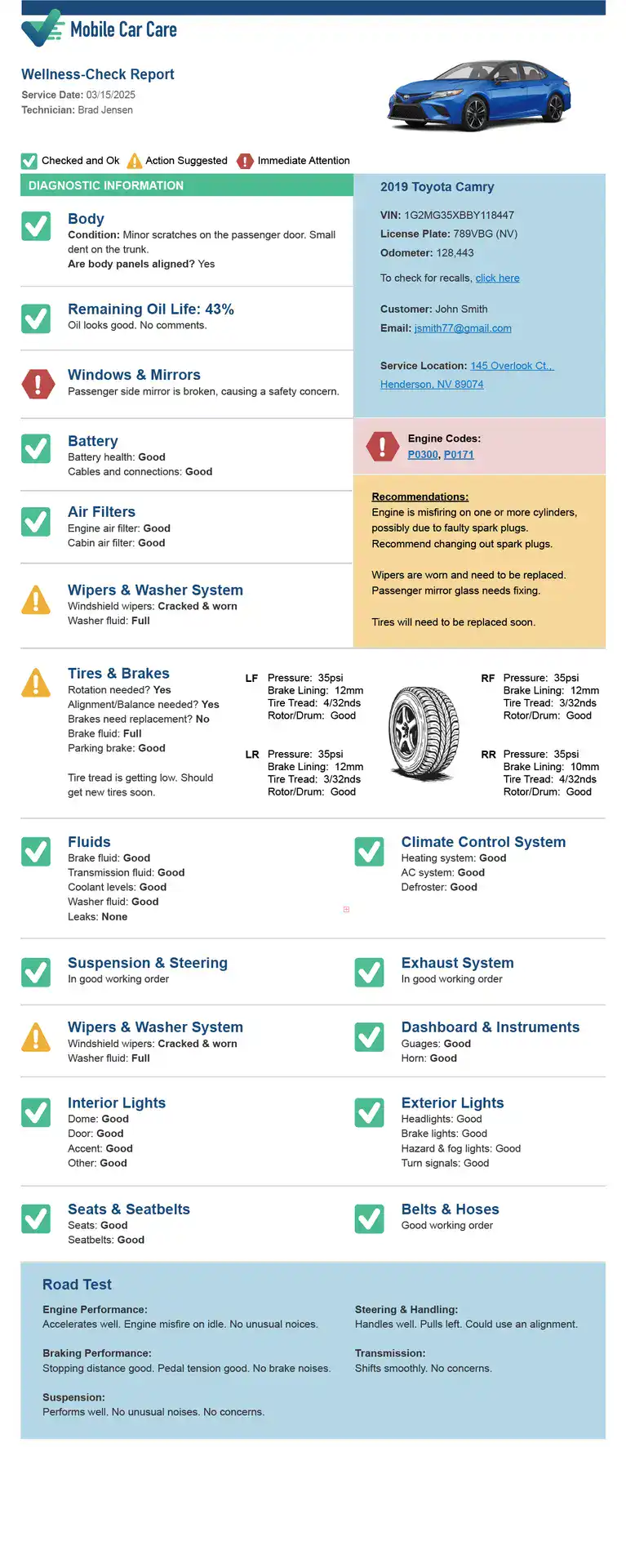
We know that finding time to visit a repair shop for inspections can be a challenge. That’s why we bring the expertise directly to you. With our on-site service, you don’t have to disrupt your day or sit in a waiting room. Our technicians perform comprehensive wellness checks at your home or office, giving you a clear picture of your vehicle’s health without the hassle.
Our Essential and Total Care plans are designed for proactive maintenance, including a detailed 85-point inspection that always covers your entire brake system. We check everything from pad thickness to fluid levels, ensuring your car is safe for the road. This approach lets you handle maintenance on your schedule, giving you the confidence that your vehicle is in great shape.
Related Articles
- Mobile Brake Check Price Breakdown: Costs & Savings – Mobile Car Care
- Easy Car Maintenance at Home: Your DIY Guide – Mobile Car Care
Frequently Asked Questions
How often do I actually need to replace my brake pads? There isn’t a single magic number for mileage or time because it really depends on your driving habits, the type of pads you have, and your car. As a general guide, brake pads can last anywhere from 30,000 to 70,000 miles. If you do a lot of stop-and-go city driving, you’ll likely be on the lower end of that range. The best way to know for sure is to have them inspected regularly, about once a year, so you can replace them based on their actual condition, not just a guess.
My brakes just started squeaking. Do I need to stop driving immediately? A high-pitched squeal is usually the first sign that your brake pads are getting low, thanks to a small metal indicator built right into the pad. While it’s not a red alert to pull over immediately, you should treat it as a clear signal to schedule an inspection soon. It’s your car’s way of giving you a heads-up. However, if that squeal turns into a harsh, metallic grinding sound, the situation is much more urgent and you should have your brakes checked right away to prevent more serious damage.
What’s the difference between replacing brake pads and replacing rotors? Think of the brake pads as the wearable part and the rotors as the smooth surface they press against to stop your car. The pads are designed to wear down over time. If you replace them when you’re supposed to, your rotors often remain in good shape. But if you wait too long, the worn-down pads can cause the metal backing plate to scrape against and damage the rotors, meaning they will need to be replaced as well, which adds to the overall cost of the repair.
Do I have to replace all four brake pads at the same time? Not usually. Brake pads are always replaced in pairs on the same axle, meaning you’ll either replace the two front pads or the two rear pads together. It’s very common for the front brakes to wear out faster than the rear ones because they handle most of the force when you stop. A technician will be able to tell you which set needs attention during an inspection.
Why would I use a mobile service for a brake job instead of a traditional shop? The main reason is convenience that fits into your life. Instead of blocking out several hours to drive to a shop, wait, and arrange for a ride, a mobile technician comes to your home or office. This saves you a significant amount of time and hassle. It also offers a level of transparency, as you can easily see the work being done on your vehicle, giving you complete confidence that the job is done right without disrupting your day.