
A dead battery is one of the most common and frustrating car problems, but it’s often just a symptom of a deeper issue. The real star of your car’s electrical show is the alternator, which is responsible for generating power and recharging the battery as you drive. If it’s not working correctly, you could replace your battery over and over without ever solving the root cause. Ignoring the warning signs of a failing alternator can lead to unexpected and costly repairs. In this guide, we’ll explain what this vital component does and how a straightforward alternator output test can help you pinpoint the problem before you’re left stranded on the side of the road.
Key Takeaways
- The alternator keeps your car running, not the battery: Once your car is started, the alternator takes over to recharge the battery and power all your electronics. A recurring dead battery is a classic sign that your alternator is the real problem.
- Your car gives you clear warning signs: Pay attention to clues like flickering headlights, a lit-up battery icon on your dash, or new squealing sounds from the engine. These are your car’s ways of telling you the charging system needs a look.
- A simple voltage test provides clear answers: You can check your alternator’s health in minutes with a multimeter. Comparing the voltage with the engine off versus on is a straightforward way to see if it’s doing its job correctly.
What Is an Alternator (and Why Should You Care)?
We’ve all felt that sinking feeling when a car won’t start. While we’re quick to blame the battery, another crucial component is often the real culprit: the alternator. Think of it as the unsung hero of your car’s electrical system. It works tirelessly behind the scenes, and understanding its job is key to preventing a major headache down the road.
A healthy alternator is the difference between a car that runs smoothly and one that leaves you stranded. Ignoring the warning signs can lead to a dead battery and unexpected, costly repairs. Taking a moment to learn what it does and how to spot trouble is one of the smartest things you can do for your vehicle and your peace of mind.
Your car’s personal power plant
So, what exactly does an alternator do? In simple terms, it’s your car’s personal power plant. While the battery provides the initial jolt of electricity to start the engine, the alternator takes over once you’re up and running. It acts like a small generator, converting mechanical energy from the engine’s rotating crankshaft into electrical energy.
This electricity does two critical jobs simultaneously. First, it powers all of your car’s electrical components—from the headlights and radio to the power windows and air conditioning. Second, and just as importantly, it constantly recharges your battery, making sure it’s ready for the next time you need to start your car. Without it, your battery would drain quickly, and your car would grind to a halt.
How it keeps your battery charged and ready to go
The relationship between your alternator and battery is a true partnership. The battery gets things started, and the alternator keeps them going. A healthy alternator should produce a steady electrical current, typically between 13.5 and 14.5 volts, to keep the battery at full charge and run everything else. If its output drops, the battery has to step in to pick up the slack, but it can’t do that for long.
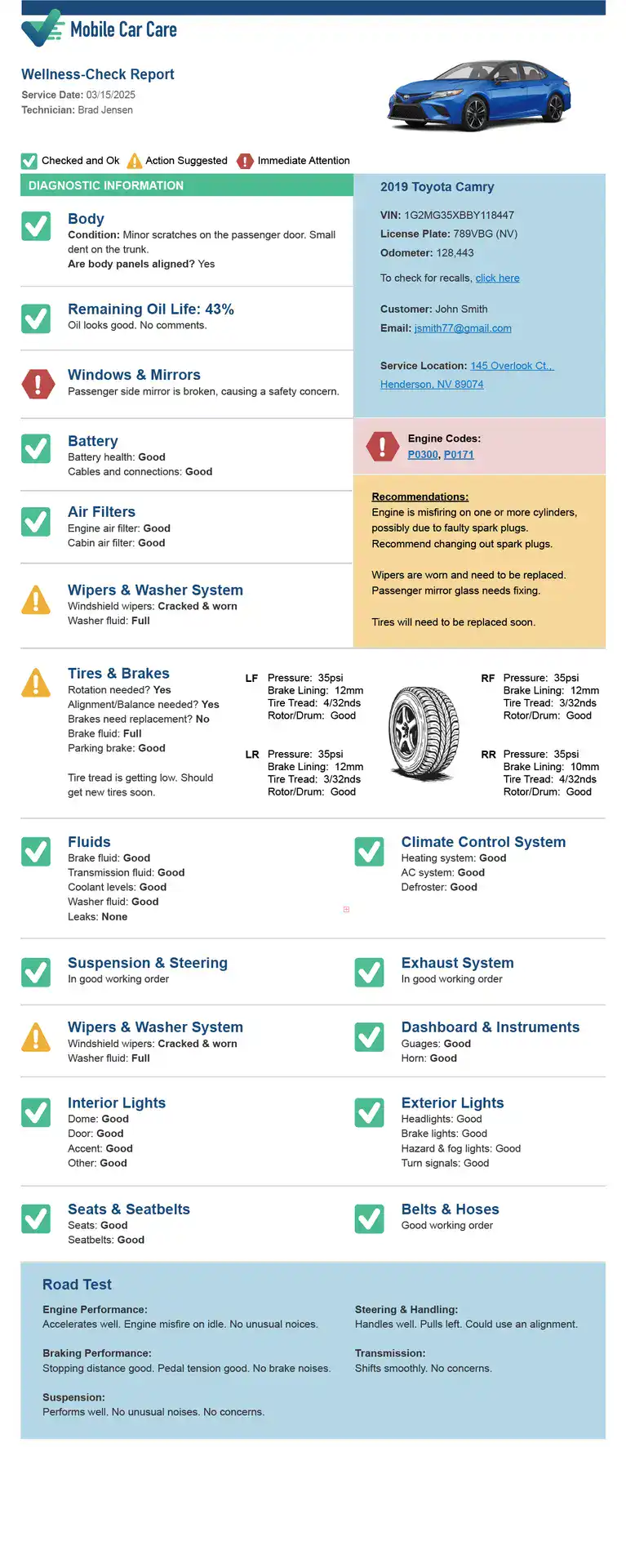
When an alternator starts to fail, it can no longer effectively recharge the battery. This is why a failing alternator often looks like a battery problem at first. You might be able to jump-start the car, but it will die again shortly after because the battery isn’t getting the power it needs. Catching this issue early is exactly why routine wellness checks, like those included in our Essential Plan, are so important for preventing a surprise breakdown.
Signs Your Alternator Might Be Failing
Your car often gives you hints when something’s not right, and the alternator is a great example. It rarely fails without warning, and learning to spot the early signs can save you from being stranded. Think of it as your car trying to tell you something important. From flickering lights to strange sounds, these symptoms are your cue to investigate before a small issue becomes a major headache. Let’s walk through the most common red flags.
Flickering lights and dashboard warnings
That little red battery icon on your dashboard is a key warning. If you see the red battery light turn on or flicker, your car is signaling a problem with its charging system. You might also notice your headlights seem dimmer than usual or that your power windows move slowly. This happens because the alternator is struggling to supply a steady stream of electricity to all your car’s electrical parts. These are clear signs that your components aren’t getting the consistent power they need to function properly.
A weak battery that isn’t the battery’s fault
It’s a frustrating scenario: you have a new battery, but your car still struggles to start. Before you blame the battery, consider the alternator. A key sign of a failing alternator is when the battery doesn’t stay charged, no matter how new it is. The alternator’s job is to recharge the battery as you drive. If it’s not working correctly, the battery will quickly drain while powering your car’s electronics. This is why a recurring dead battery often points to a deeper issue within your charging system, not the battery itself.
Strange noises or trouble starting your engine
Sometimes, your ears are the first to detect a problem. If you hear new or unusual sounds from under the hood, pay attention. A failing alternator can cause distinct “rumbling or squeaking noises,” which often point to a worn-out internal part. Another tell-tale sign is when the engine cranks slowly when you try to start the car. This sluggish start happens because the alternator hasn’t fully charged the battery, leaving it too weak to turn the engine over with its usual speed. When you notice these strange car noises or starting issues, it’s a strong signal that your alternator needs attention.
How to Test Your Alternator: A Step-by-Step Guide
Think your alternator might be on the fritz? The good news is you don’t have to be a master mechanic to find out. With a simple tool and a few minutes, you can run a quick test that will give you a clear idea of what’s going on under the hood. Let’s walk through it together.
Gather your tools and prioritize safety
First things first, let’s get you set up. You’ll only need one key tool for this job: a digital multimeter. It’s a handy device for measuring electrical voltage, and you can find one at any auto parts or hardware store.
Before you begin, safety is everything. Make sure your car is parked on a flat, stable surface, preferably in a well-ventilated area. Put it in Park or Neutral and engage the parking brake. For the first part of the test, the engine will be off. When you do start the engine later, be mindful of moving parts like belts and the fan.
Test voltage with the engine off vs. running
Ready to play detective? This two-part test compares your battery’s voltage when the car is off to when it’s running, which tells you if the alternator is doing its job.
Engine Off Test: Pop the hood and connect your multimeter to the battery. Place the red probe on the positive (+) terminal and the black probe on the negative (-) terminal. With the engine completely off, a healthy, fully charged battery should have a reading of around 12.4 to 12.7 volts. If it’s much lower, you may want to charge your battery before testing the alternator.
Engine Running Test: Now, start your car and let it run for a minute. Keep the multimeter connected to the battery terminals. With the engine running, the alternator should be charging the battery. You’re looking for a higher voltage reading, typically between 13.5 and 14.5 volts. If the voltage is in this range, your alternator is working correctly. If it hasn’t increased or is well above this range, you likely have an alternator problem.
Perform a load test using your car’s accessories
Your alternator doesn’t just have to keep the battery charged—it also has to power all your car’s electronics. This next step puts it under a little pressure to see how it holds up.
With the engine still running and the multimeter attached, turn on as many electrical accessories as you can. Switch on the headlights (high beams), turn the radio up, and blast the interior fan. This creates a heavy electrical load. Now, look at your multimeter. The voltage might dip slightly, but a healthy alternator should maintain a charge of around 13 volts or higher. If the voltage drops significantly below that, it’s a strong sign your alternator is struggling to keep up with the demand.
A quick look at amperage testing
While a voltage test is a fantastic and easy DIY diagnostic, it doesn’t tell the whole story. For a truly complete picture, professionals often perform an amperage test. This measures the actual electrical current the alternator is producing and requires a special tool called an amp clamp. It’s a more advanced check that confirms if the alternator can deliver enough power under a full load.
This isn’t a typical DIY task, but it’s good to know about. If your voltage test results are borderline or you just want total certainty, a professional amperage test is the final word. It’s exactly the kind of deep-dive diagnostic we include in our comprehensive Total Care Plan, ensuring we catch any issue before it leaves you stranded.
Making Sense of Your Alternator Test Results
Okay, you’ve run the test and have some numbers staring back at you from the multimeter screen. Now for the important part: what do they actually mean? Interpreting these results is the key to figuring out if your alternator is doing its job or getting ready to retire. It might seem a little technical, but once you know the target numbers, it’s pretty straightforward. A healthy charging system operates within a specific voltage range, and any deviation is a clear signal that something needs attention.
Think of it like taking your car’s temperature. A normal reading means everything is fine, but a number that’s too high or too low tells you it’s time to act. We’ll walk through what a good reading looks like, how to spot the warning signs in low or high numbers, and a few common mistakes to avoid so you can trust your results. This will help you pinpoint whether the issue is your alternator, your battery, or something else entirely.
What good voltage readings look like
First, let’s look at the signs of a healthy system. With the engine off, your multimeter should show a reading of around 12.6 volts. This is your baseline, telling you that you have a fully charged battery ready to go. Once you start the engine, the alternator takes over. You should see the voltage jump up to somewhere between 13.5 and 14.5 volts. This increase is exactly what you want to see—it means the alternator is successfully charging the battery and powering your car’s electrical systems. If your reading falls anywhere in the 13.2 to 14.6-volt range while the car is running, you can feel confident your alternator is performing well.
Decoding low or high readings
If your numbers fall outside that healthy range, it’s a red flag. A voltage reading below 13.2 volts while the engine is running suggests your alternator is struggling to keep up. It isn’t generating enough power, which can lead to a dead battery and a car that won’t start. On the flip side, a reading that climbs above 14.6 volts indicates the alternator is overcharging the battery. This can essentially “cook” the battery, shortening its life and potentially damaging other sensitive electronics. If you’re seeing confusing numbers, a professional diagnosis from a service like our Quick Check can give you a definitive answer without the guesswork.
Avoid these common testing mistakes
To make sure your results are accurate, it’s important to sidestep a couple of common testing pitfalls. First, always ensure your multimeter probes have a solid, clean connection to the battery terminals. A loose or corroded contact can give you a faulty reading that sends you down the wrong path. Second, you may have heard of an old trick that involves disconnecting the negative battery cable while the engine is running. Do not do this. While it might have worked on vintage cars, this can cause a voltage surge that fries the complex onboard computers and electronics in modern vehicles, leading to a very expensive repair.
Your Alternator Failed the Test. Now What?
Okay, so your alternator test didn’t go as planned. Don’t panic. A failed test is just a signal that your car’s charging system needs attention, and catching it now is much better than getting stranded later. Think of it as your car giving you a heads-up. The good news is that you have a clear path forward, whether you’re comfortable with a little DIY inspection or ready to hand the keys to a professional.
Before you assume the worst (like a costly replacement), there are a few simple things you can check yourself. Sometimes, the fix is surprisingly straightforward. We’ll walk through what to look for first. Then, we’ll cover how to know when it’s time to call for backup. A professional diagnosis can save you time and prevent a small issue from turning into a major headache. At Mobile Car Care, our goal is to find the root cause of the problem with our comprehensive wellness checks, so you can get back on the road with confidence.
First steps: Check the belt and connections
Before you do anything else, pop the hood and take a look. You don’t need to be a mechanic to spot some of the most common culprits behind a failing alternator. First, find the alternator belt. It should be tight and in good shape. A loose, cracked, or worn-out belt can’t spin the alternator properly, which means it can’t generate power for your car.
Next, inspect the wires connected to the back of the alternator. Make sure they’re all plugged in securely. Wires can sometimes wiggle loose over time. Follow the main wire from the alternator to the battery, looking for any signs of damage, like fraying or corrosion. A clear, hands-on walkthrough can show you exactly what to look for. If everything looks snug and clean, you’ve ruled out the easy fixes.
Know when to call for a professional diagnosis
If you’ve checked the belt and connections and everything seems fine, or if you’re just not comfortable poking around under the hood, it’s time to call a professional. There’s no shame in knowing your limits. In fact, it’s the smartest move you can make. Trying to fix a complex electrical issue without the right tools or experience can lead to more significant problems.
When the issue isn’t a simple fix, a professional mechanic has the diagnostic equipment to pinpoint the exact cause. It could be an internal component of the alternator or another part of the charging system entirely. Getting an expert opinion ensures the problem is fixed correctly the first time, giving you peace of mind that your car is safe and reliable.
How we spot alternator issues before they leave you stranded
When we perform a wellness check, we look at the whole picture. We start by asking about what led up to the problem—for instance, charging system issues are often caused by something as simple as accidentally leaving the lights on. From there, we conduct a thorough visual inspection. We check for worn or frayed wires running between the alternator and the battery, ensuring all connections are solid and free of corrosion.
This detailed approach is a core part of our Total Care Plan. By regularly inspecting your vehicle’s key systems, we can spot the subtle signs of wear and tear on parts like the alternator belt or wiring before they fail. Proactive care is the best way to prevent inconvenient breakdowns and keep your car running smoothly.
Related Articles
- Alternator Replacement: Symptoms, Cost & Guide – Mobile Car Care
- A Beginner’s Guide to Car Electrical Diagnostics – Mobile Car Care
- 4 Car Battery Test Methods You Should Know – Mobile Car Care
- How to Test a Battery: A Quick & Easy Guide – Mobile Car Care
Frequently Asked Questions
What’s the difference between a bad battery and a bad alternator? This is a common point of confusion because the symptoms can look almost identical. The easiest way to think about it is that the battery starts the car, and the alternator keeps it running. If you have a bad battery, your car likely won’t start at all, but it might run fine after a jump-start. If you have a bad alternator, your car might start with a jump, but it will die again soon after because the alternator isn’t recharging the battery as you drive.
Can I drive my car if I think the alternator is failing? It’s not a good idea. A failing alternator can’t reliably power your car’s electrical systems or keep the battery charged. This means your car could shut down at any moment, which is a serious safety risk, especially if you’re in traffic. If you notice any warning signs, the safest thing to do is get it checked out as soon as possible instead of trying to make it to your destination.
Why would my alternator fail in the first place? Alternators don’t last forever, and failure is often due to simple wear and tear over time. The internal parts can wear out after thousands of miles of spinning. Other common causes include a worn or broken drive belt that can no longer turn the alternator’s pulley, or fluid leaks from other parts of the engine that drip onto the alternator and damage its internal components.
If my car starts with a jump, does that mean the alternator is okay? Not necessarily. A jump-start gives your battery just enough power to get the engine running, but it’s the alternator’s job to take over from there. If the alternator is failing, it won’t be able to recharge the battery, and your car will likely die again a short while after you disconnect the jumper cables. A successful jump-start that is followed by the car stalling is a classic sign of an alternator problem.
Is replacing an alternator a DIY job? While it’s possible for someone with the right tools and mechanical experience, it’s generally a job best left to a professional. The process can be complex, often requiring the removal of other parts to access the alternator, and ensuring the new one is installed with the correct belt tension is critical. An incorrect installation can cause more damage, so if you’re not completely confident, calling for a professional diagnosis is the smartest and safest path forward.