
We’ve all felt that sinking feeling when a strange noise starts or a warning light flashes on the dashboard. These moments often happen at the worst possible time, leading to stressful calls for a tow truck and unexpected repair bills. The good news is that many of these major problems start as small, preventable issues. A regular underhood inspection is your first line of defense. By taking just a few minutes each month to check fluids, belts, and hoses, you can catch problems early. This proactive approach is the key to saving money, avoiding breakdowns, and ensuring your car is safe and reliable for every drive.
Key Takeaways
- Make prevention a habit: Spending just a few minutes each month looking under the hood helps you spot minor issues, like low fluids or worn belts, saving you from expensive repairs and unexpected breakdowns.
- Focus on the four fundamentals: A successful DIY inspection covers four key areas: checking essential fluids for level and quality, looking for battery corrosion, examining belts and hoses for wear, and performing a quick visual scan for leaks.
- Recognize serious warning signs: While DIY checks are great, issues like milky oil, a burnt fluid smell, or a sudden drop in brake fluid are clear signals that it’s time to call a professional for a proper diagnosis to keep your car safe.
What Is an Underhood Inspection and Why Does It Matter?
Popping the hood of your car can feel like looking at a complex puzzle, but you don’t need to be a mechanic to understand the basics. An underhood inspection is simply a visual check-up of the essential parts of your engine. It’s the first thing a professional does to get a sense of your car’s health because it’s a fast and effective way to spot potential trouble. Think of it as a wellness check for your vehicle.
Regularly looking under the hood helps you catch small issues before they turn into major, expensive repairs. A frayed belt, a low fluid level, or a corroded battery terminal are all simple things to spot, but if left ignored, they can lead to a breakdown. These quick checks are a fundamental part of proactive car care. By getting familiar with what’s normal for your car, you’ll be able to identify problems early, which keeps your vehicle running smoothly and ensures it’s safe for you and your family to drive.
The Real Cost of Skipping Inspections
Putting off underhood checks might seem harmless, but it can lead to serious consequences. The most significant cost is your safety. A worn-out hose or a leaky fluid line can fail at the worst possible moment, potentially causing a breakdown or a dangerous situation on the road. These inspections are crucial for finding problems that could compromise your car’s reliability.
Beyond safety, skipping these checks can hit your wallet hard. A simple, inexpensive fix like topping off your coolant can prevent your engine from overheating, saving you from a repair bill that could run into the thousands. Taking a few minutes to perform simple checks can save you a lot of money and time by preventing major car problems down the line.
How Often Should You Pop the Hood?
A good habit is to peek under the hood about once a month. This quick, five-minute check is often enough to spot any developing issues. However, the best source of truth is always your car’s owner’s manual. It will provide specific recommendations for your vehicle’s make and model.
While your monthly DIY checks are great for catching obvious problems, they don’t replace a professional inspection. It’s a good idea to have an expert look at your vehicle at least once a year or every 12,000 to 15,000 miles. A comprehensive service like our Total Care Plan ensures a trained eye examines every detail, giving you complete peace of mind.
Safety First: How to Prep for Your Inspection
Before you dive under the hood, let’s talk about setting yourself up for success. A few simple prep steps can make the difference between a quick, effective check and a frustrating, or even dangerous, experience. Think of it like prepping your ingredients before you start cooking; it makes the whole process smoother. Taking a moment to get organized and prioritize safety ensures you can focus on what’s important: understanding your car’s health. These aren’t just suggestions, they’re the essential first steps to any DIY inspection.
Let Your Engine Cool Down
First things first: patience is key. Your car’s engine gets extremely hot after a drive, and touching the wrong part can lead to a nasty burn. It’s best to let your car sit for at least 30 minutes to an hour before you start your inspection. This allows all the components to cool down to a safe temperature. The only common exception is checking the transmission fluid, which sometimes requires the engine to be warm for an accurate reading. Not sure about your car? Your owner’s manual is your best friend here; it will have the specific instructions for your vehicle.
Essential Protective Gear
You don’t need a full mechanic’s uniform, but a little protection goes a long way. A good pair of work gloves will keep your hands clean and protect them from hot or sharp surfaces. Safety glasses are also a smart idea to shield your eyes from any unexpected fluid splashes or debris. It’s also important to wear clothes you don’t mind getting a little dirty. And remember, if you ever feel uncomfortable or unsure about a particular check, it’s always better to pause. You can always ask for help or schedule a professional to handle it for you. Your safety is always the top priority.
Prepare Your Workspace
Where you do your inspection matters. Always park your car on a flat, level surface to ensure you get accurate fluid readings and prevent it from rolling. Make sure you have plenty of light, whether that means working during the day or having a good flashlight or work light handy. Clear the area around the car of any clutter to avoid tripping. Before you begin, grab a few rags or paper towels for wiping dipsticks and cleaning up small spills. This simple setup creates a safe and efficient environment, letting you focus completely on your car without any distractions.
Your Underhood Inspection Checklist
Alright, let’s get to the heart of it. Popping the hood can feel like looking at a puzzle with a million pieces, but you don’t need to be a mechanic to spot the basics. This simple checklist breaks down exactly what to look for. Think of it as a quick health checkup for your car. Going through these steps regularly helps you catch small issues before they turn into stressful, expensive repairs. It’s all about getting familiar with what’s normal for your car so you can easily spot when something is off.
Check Your Fluids
Your car relies on several fluids to run smoothly, and checking them is one of the easiest things you can do. Start with the engine oil. Pull out the dipstick, wipe it clean, reinsert it, and pull it out again to check the level. It should be between the ‘Full’ and ‘Add’ marks. Next, look at your brake fluid; the reservoir is usually transparent, so you can see if the level is between the ‘minimum’ and ‘maximum’ lines. A sudden drop here could mean your brake pads are worn. Finally, check your coolant to make sure it’s clean and at the proper level. For specifics on any fluid, especially transmission fluid, your owner’s manual is your best friend.
Inspect the Battery and Wires
Your car’s battery is its electrical heart. First, make sure it’s held down securely and isn’t wiggling around. The top should be clean and dry. Look closely at the terminals (the metal posts where the cables connect) for any corrosion, which often looks like white or greenish fuzzy buildup. This can interfere with the electrical connection and prevent your car from starting. While you’re there, give the surrounding wires and cables a quick scan. You’re looking for any signs of rubbing, cracking, or damage that could cause problems down the road.
Examine Belts, Hoses, and Filters
The belts and hoses under your hood are like your car’s arteries and tendons. They work hard and wear out over time. Gently press on the belts to check their tension; they shouldn’t feel too loose. Look along their length for any cracks, frayed edges, or shiny, glazed spots. Next, inspect the rubber hoses for any bulges, soft spots, or cracks, paying special attention to where they connect. These are signs that a hose might be ready to fail. Don’t forget to check your engine air filter, too. A dirty filter can affect your car’s performance and fuel economy.
Look Over Engine Components
For this last step, you’re just doing a general visual sweep. You don’t need to know what every single part does. Instead, look for anything that seems out of place. Do you see any fluid leaks or drips on the engine block or on the ground beneath it? Are there any loose or disconnected parts? Listen for any unusual sounds. This quick scan helps you get a baseline for what your engine normally looks and sounds like. If you spot something that concerns you, our Total Care Plan includes a detailed 85-point wellness check to give you complete peace of mind.
A Step-by-Step Guide to Your Inspection
Okay, you’ve popped the hood. Now what? Don’t feel intimidated. A basic inspection is simpler than it looks and is one of the best things you can do for your car’s health. Following a few steps can help you spot potential issues before they turn into major headaches. Let’s walk through what to look for.
Start with a Visual Sweep
The first thing a professional mechanic does is a quick visual scan, and you can too. Before touching anything, just look around the engine bay for anything that seems out of place. Are there visible leaks or puddles forming underneath? Do you see frayed wires, loose connections, or corrosion on the battery terminals? Take note of any leaves or debris clogging things up. This initial under-hood inspection helps you spot obvious problems right away, giving you a clear starting point for a more detailed check.
How to Test Fluid Levels and Quality
Your car relies on several fluids to run smoothly, and checking them is straightforward. Start with the engine oil. With the engine cool, pull out the dipstick, wipe it clean, reinsert it, and pull it out again. The oil level should be between the “Full” and “Add” marks. Healthy oil is typically amber-colored; if it’s dark or gritty, it’s time for a change. Next, check your coolant in the see-through reservoir; it should be at the “Full” line and brightly colored. Also, locate your brake and power steering fluid reservoirs to ensure they are full. This simple underhood check can prevent small issues from becoming expensive repairs.
How to Check Belts and Hoses for Wear
The rubber belts and hoses in your engine bay work hard and wear out over time. Gently press on the belts; they should feel firm with very little give. Look closely at their surfaces for any cracks, fraying, or glossy spots, which indicate wear. Next, inspect the hoses. Squeeze them (once the engine is completely cool) to check for soft or spongy spots. Look for any bulges, cracks, or leaks, especially near the clamps where they connect to the engine. Catching a worn belt or hose early can save you from a breakdown.
Keep a Simple Log of Your Findings
You don’t have to rely on memory. Keep a small notebook in your glove compartment or use a notes app to track your inspections. For each check, jot down the date, mileage, and anything you noticed, like “Oil level is halfway between marks.” This log helps you monitor your car’s health over time and provides valuable information for your mechanic. If you spot something that concerns you, your log gives you a concrete starting point for a professional opinion. It’s the perfect companion to a professional service like our Quick Check Plan.
Tools to Make Inspections Easier
Performing your own underhood inspection doesn’t require a wall of complicated tools. In fact, having just a few simple items on hand can make the entire process faster, cleaner, and much less intimidating. When you’re prepared, what might seem like a chore becomes a quick, empowering routine. Let’s walk through the basic gear, digital aids, and simple guides that will help you check on your car with confidence.
Your Basic Inspection Toolkit
You don’t need a professional-grade toolbox to get started; a few basics will do the trick. I recommend keeping a small kit with a flashlight (a headlamp is even better for hands-free work), a clean, lint-free rag for wiping dipsticks, and a pair of disposable gloves to keep your hands clean. A small funnel can also be a lifesaver for topping off fluids without making a mess. It only takes a few minutes to conduct a thorough underhood inspection, and having these items ready means you can get it done quickly and efficiently without any fuss.
Helpful Apps and Digital Checklists
If you’re juggling a busy schedule, a little digital help can go a long way. Instead of relying on memory, use your phone to keep track of your inspections. You can use a simple notes app to log your findings or download one of the many car maintenance apps available. These tools let you create custom checklists and set automated reminders for your next check-up, so you never miss one. This creates a simple, ongoing record of your vehicle’s health, which is incredibly useful for spotting patterns or sharing information with a mechanic. It’s a great way to stay organized and proactive about your car’s needs.
Quick Reference Guides
Sometimes the biggest hurdle is just remembering what to look for. That’s where a quick reference guide comes in handy. You can create your own by jotting down the key checks on a notecard and stashing it in your glove compartment. Include reminders for the most important things, like checking your engine oil, coolant, and transmission fluid levels. If you’re more of a digital person, a screenshot saved to your phone’s favorites works just as well. Having a simple list of the essential underhood checks at your fingertips removes the guesswork and helps you build a consistent, effective routine every time you pop the hood.
Common DIY Mistakes to Avoid
Getting hands-on with your car is empowering, but a few common slip-ups can lead to bigger headaches. Even with the best intentions, it’s easy to overlook a key step or misinterpret what you’re seeing under the hood. Let’s walk through the most frequent mistakes so you can inspect your vehicle with confidence and avoid turning a small issue into a major repair.
Skipping Critical Safety Steps
This is the most important rule of any DIY inspection: always put your safety first. Before you touch anything, let your engine cool down completely. Components can get incredibly hot and cause serious burns. The only exception is checking certain fluids like transmission fluid, which sometimes requires a warm engine, so always check your owner’s manual first. For everything else, turn the car off. Never put your hands near moving belts or fans while the engine is running. It only takes a split second for an accident to happen, so take your time and create a safe workspace before you begin.
Ignoring Early Warning Signs
Your car often gives you subtle clues that something is wrong, and learning to spot them is key. Don’t dismiss things like needing to add oil often, as it could signal a leak or another issue. If you check your oil and it looks foamy, smells like gasoline, or you see moisture inside the oil cap, it’s time to pay attention. An experienced mechanic can spot issues at a glance, from tiny leaks and worn parts to loose wiring. If you notice any of these red flags, a professional Quick Check can give you a clear picture of what’s going on before it becomes a serious problem.
Misreading Your Fluids
Checking your fluids is about more than just seeing if they’re full. You also need to assess their condition. When you pull out a dipstick, the fluid level should be between the “Full” and “Add” marks. But don’t stop there. Look at the color and consistency. Is the fluid darker than it should be? Does it smell burnt? Dirty or discolored fluid isn’t protecting your engine or transmission properly and could be a sign of a larger problem. Topping off bad fluid won’t fix the underlying issue, so paying attention to its quality is just as important as its quantity.
When to Call a Professional
Doing your own underhood checks is a fantastic way to stay connected with your car’s health. But it’s just as important to know when a situation calls for a professional eye. Some issues are more than just a simple top-off or a quick fix; they’re signals that your car needs an expert diagnosis to prevent a small problem from turning into a major, expensive repair. Think of a professional mechanic as your partner in car care. They have the training and tools to spot subtle signs of trouble you might miss and ensure your vehicle is safe for you and your family. A quarterly vehicle inspection provides that same expert attention on a regular schedule so small issues never become big problems.
Red Flags That Need Immediate Attention
Certain fluid issues are clear signals that you need a mechanic to take a look. If you notice any of these warning signs during your inspection, it’s time to call for help. For example, if you find yourself adding oil often, or if the oil looks milky or smells like gasoline, it could point to a serious engine problem. The same goes for your other fluids. Transmission fluid that is dark or has a burnt smell, or coolant that looks muddy, requires a professional diagnosis. A sudden drop in brake fluid is another major red flag, as it could mean your brake pads are gone or you have a leak. Don’t wait on these issues; getting your car checked right away is crucial for your safety.
Issues Beyond a DIY Fix
Sometimes, the problem isn’t obvious. This is where the value of a trained professional really shines. Experienced mechanics perform under-hood inspections every day, and they know exactly what a healthy engine bay should look and sound like. They can quickly spot things that seem out of place, like a faint leak, a worn-out belt that’s about to snap, or wiring that’s starting to fray. These are the kinds of problems that can easily go unnoticed during a routine DIY check but could lead to a breakdown if left unaddressed. A professional inspection is a critical safety measure that helps catch potential dangers before they become serious threats on the road.
When You Need an Expert to Come to You
We all lead busy lives, and finding the time to take your car to a shop can be a challenge, especially when you’re just noticing a potential issue. But putting off an inspection isn’t worth the risk. Regular maintenance is one of the most important things you can do to ensure your vehicle remains safe and reliable. The great news is that you don’t have to rearrange your entire schedule to get professional care. Mobile mechanics bring the expertise and equipment directly to your home or office, saving you time and hassle. It’s the perfect solution for busy families and professionals who want peace of mind without the inconvenience of a traditional garage.
Let Us Handle It: How Mobile Car Care Simplifies Maintenance
Let’s be honest, dealing with car maintenance can be a huge pain. Finding the time to drive to a garage, waiting around for a simple check, and then trying to decipher a long list of recommended services is enough to make anyone put it off. But ignoring those little check-engine lights or strange noises can lead to much bigger, more expensive problems down the line. That’s where we come in. We believe car care should be simple, transparent, and convenient.
Mobile Car Care brings expert vehicle maintenance directly to your home or office, completely transforming the way you look after your car. No more rearranging your day or losing hours at a repair shop. Our experienced mechanics come to you, equipped to handle everything from routine wellness checks to minor repairs. We focus on proactive care, catching small issues before they become major breakdowns. This approach not only saves you time and money but also gives you the confidence that your vehicle is safe and reliable for you and your family. It’s car care that finally fits into your life, not the other way around.
Our Comprehensive 85-Point Wellness Check
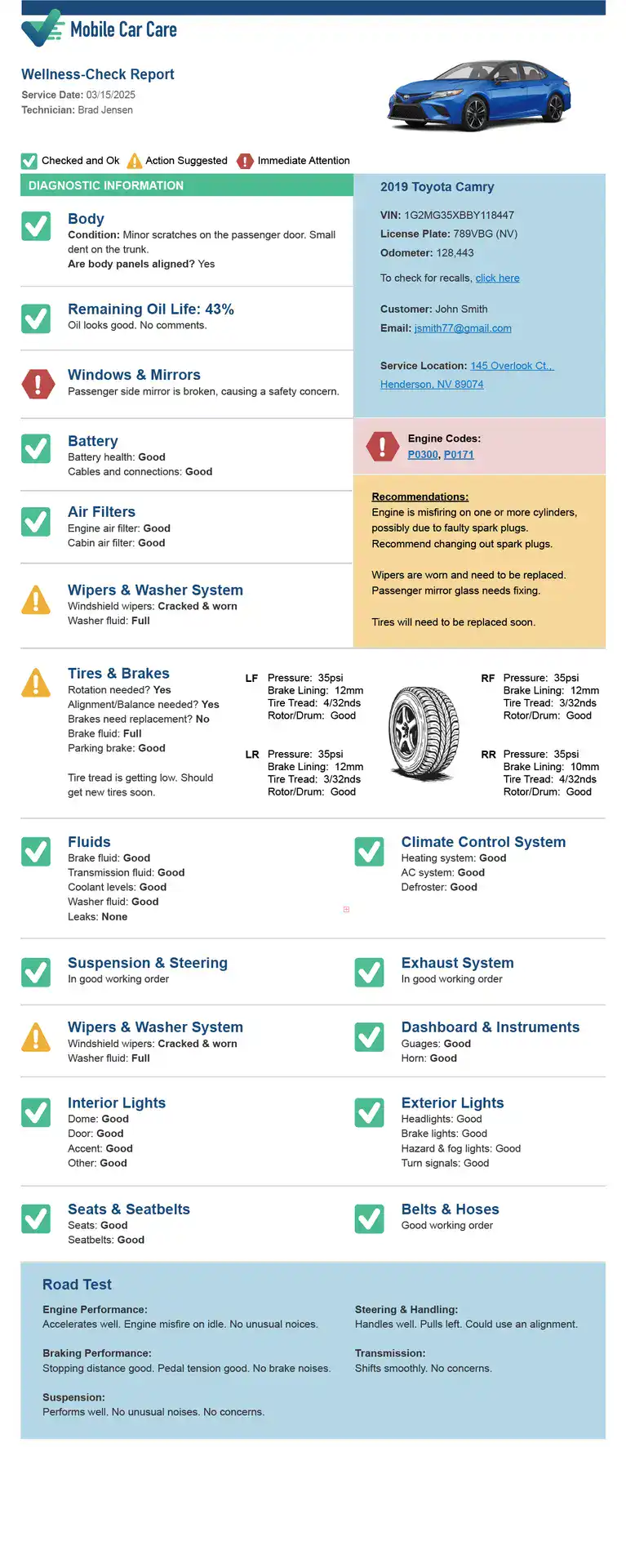
Think of our service as a health checkup for your car. Our signature 85-point wellness check is a thorough, top-to-bottom inspection designed to give you a complete picture of your vehicle’s condition. We examine all the critical systems under the hood, checking everything from fluid levels and battery health to belts and hoses. Regular inspections like these are key to preventing small problems from turning into costly repairs. Our Essential Plan includes these recurring checks, providing you with detailed reports and total peace of mind, so you always know your car is ready for the road.
Expert Care, Right in Your Driveway
Having an expert look over your vehicle is invaluable, and getting that expertise without leaving your home is even better. Our mechanics are seasoned professionals who can spot potential issues that might go unnoticed. They know exactly what to look for, from subtle leaks and worn components to loose connections that could cause trouble later. A one-time Quick Check Plan is a great way to see our team in action. We perform a thorough inspection right in your driveway, giving you a clear, straightforward assessment of your car’s health so you can make informed decisions without any pressure.
Flexible Plans for Your Schedule
We know that everyone’s needs are different, which is why we offer flexible plans that work for your life and your vehicle. Whether you just want a one-time inspection or prefer the set-it-and-forget-it convenience of a subscription, we have an option for you. Our plans are designed to take the mental load of car maintenance off your plate. For complete coverage and confidence, our Total Care Plan offers recurring wellness checks and additional services to keep your car in peak condition year-round. You choose the plan that fits, and we’ll handle the rest, ensuring your car gets the attention it needs without disrupting your busy schedule.
Related Articles
- Home Car Inspection 101: Your Complete Guide – Mobile Car Care
- Essential At-Home Car Maintenance Checklist – Mobile Car Care
- The No-Stress Road Trip Inspection Checklist – Mobile Car Care
- Mobile Auto Inspections: What You Need to Know – Mobile Car Care
- Mobile Car Inspection Near Me: What You Need to Know – Mobile Car Care
Frequently Asked Questions
What if I’m not a “car person” and feel intimidated looking under the hood? That’s completely normal. The goal of a monthly check isn’t to diagnose complex problems but simply to get familiar with what your engine bay looks like. Think of it as spotting what’s different, not what’s broken. Over time, you’ll start to notice if a fluid level has dropped, if a new stain has appeared, or if a belt looks more worn than last time. This familiarity is your best tool for catching issues early, long before you need to know the name of every part.
How much time does a basic underhood check really take? Honestly, once you’ve done it a couple of times, a basic inspection takes about five minutes. It’s a quick routine you can easily fit into your schedule, perhaps on a Saturday morning before you run errands. The small investment of time each month can save you hours, and a lot of stress, by preventing a surprise breakdown.
If I do my own checks, do I still need a professional inspection? Yes, it’s a good idea to have both. Your monthly DIY checks are perfect for catching obvious, fast-developing issues like a low fluid level or a loose connection. A professional inspection, however, is much more thorough. A trained mechanic can spot subtle signs of wear on parts you might overlook and use specialized tools to assess your car’s health, giving you a complete and expert opinion at least once a year.
What should I do if I find something that looks wrong during my check? First, don’t panic. If you see something concerning, like a low fluid level, a frayed belt, or a spot of corrosion, the best first step is to make a note of it. You can even take a quick photo with your phone. This gives you a clear record to share with a professional. The next step is to schedule an inspection so an expert can diagnose the issue properly and let you know if it’s a simple fix or something that needs more attention.
Why is a mobile service a good option for these kinds of inspections? A mobile service is ideal because it removes all the friction from getting your car checked. Instead of finding time to drive to a garage and wait, an expert comes directly to your home or office. This is especially helpful when you’ve spotted a potential issue and want a professional opinion without rearranging your entire day. It’s a convenient way to get peace of mind and ensure your car is safe and reliable.