Quick answer: The fastest way to test a car battery is with a digital multimeter. Set it to 20V DC, connect red to positive and black to negative. A healthy battery reads 12.4V to 12.7V with the engine off. Below 12.2V means it needs charging; below 12.0V means it is likely failing and should be replaced. No multimeter? Try the headlight test: dim headlights at idle signal a weak battery.
Key Takeaways
- Treat Battery Checks Like a Health Screening: A simple, regular test is the best way to prevent a surprise breakdown. It gives you a clear picture of your battery’s condition so you can address small issues before they leave you stranded.
- A Load Test Reveals the True Story: A basic voltage reading doesn’t tell you everything. A load test is the most reliable way to see if your battery can handle the strain of starting your car, giving you a definitive answer on its health.
- Turn Test Results into a Clear Action Plan: Don’t guess what to do next. Your test results will clearly indicate whether your battery needs a simple recharge or if it’s time for a replacement, putting you in control of your car’s maintenance.
Why Your Car Battery Needs a Regular Check-Up
Let’s be honest, there are few things more stressful than turning the key in your ignition and hearing nothing but a sad click. A dead battery never happens at a convenient time. It’s always when you’re running late for a meeting, trying to pick up the kids, or heading out on a much-needed vacation. While it might seem like batteries fail without warning, they often show signs of weakness long before they give out completely. That’s where a regular check-up comes in. Think of a battery test as a preventative health screening for your car. It’s a quick, simple step that gives you a clear picture of your battery’s condition, so you can address a small issue before it leaves you stranded. Instead of reacting to a dead battery, you can proactively manage its health. This simple habit saves you from the hassle of emergency jump-starts, unexpected towing fees, and the sinking feeling of being stuck. It’s all about gaining peace of mind and keeping your schedule running smoothly.The Basics of a Battery Test
So, what exactly happens during a battery test? It’s a straightforward diagnostic that measures your battery’s vital signs to see if it’s healthy or on its last legs. You can’t tell a battery’s condition just by looking at it; you need a specific test to get the full story. A technician will typically check a few key things: its voltage (the amount of electrical power it holds), its cold cranking amps (its ability to start your engine in cold weather), and its overall physical condition. The results tell you whether your battery is holding a proper charge, if it’s getting weak, or if it needs to be replaced soon. It’s a fast and effective way to understand exactly what’s going on under the hood.How Testing Prevents Costly Surprises
Regular battery testing is one of the easiest ways to avoid a roadside emergency. In fact, battery problems are behind a huge number of car breakdowns, with nearly 46% in 2022. A quick test can catch a weakening battery before it fails, saving you from the stress and expense of being stranded. Catching issues early also prevents long-term damage. When a battery stays at a low charge for too long, a process called sulfation can occur, which permanently reduces its ability to hold a charge. By identifying a charging problem early, you can often save the battery and extend its life. A simple Quick Check can make all the difference, turning a potential crisis into a manageable fix.How to Test Your Car Battery: 4 Common Methods
Wondering if your car battery is on its last legs? You don’t have to wait for that dreaded clicking sound to find out. Testing your battery at home can give you a clear picture of its health and help you avoid getting stranded. While it might sound technical, there are a few straightforward ways to check its performance, ranging from simple DIY checks to more thorough professional diagnostics. Understanding these methods empowers you to take a proactive role in your car’s maintenance. You can catch a weak battery before it fails, saving you time, money, and a whole lot of stress. We’ll walk through four common ways to test your car battery: using a multimeter for a quick voltage check, performing a load test to see how it handles pressure, using a hydrometer to inspect the battery fluid, and finally, calling in a professional for a comprehensive diagnostic. Each method offers a different level of insight, so you can choose the one that fits your comfort level and toolset.Car Battery Test Methods: Comparison at a Glance
| Test Method | Tools Needed | Accuracy | DIY Friendly | Best For |
|---|---|---|---|---|
| Multimeter (Voltage) | Digital multimeter | Good (charge level) | Yes | Quick daily check |
| Load Test | Load tester ($20-60) | Excellent (true health) | Intermediate | Definitive pass/fail |
| Hydrometer | Hydrometer | Good (fluid-based cells only) | Intermediate | Serviceable batteries |
| Professional Diagnostic | Professional tools | Best (CCA + health) | No (call a pro) | Definitive diagnosis |
Check Voltage with a Multimeter
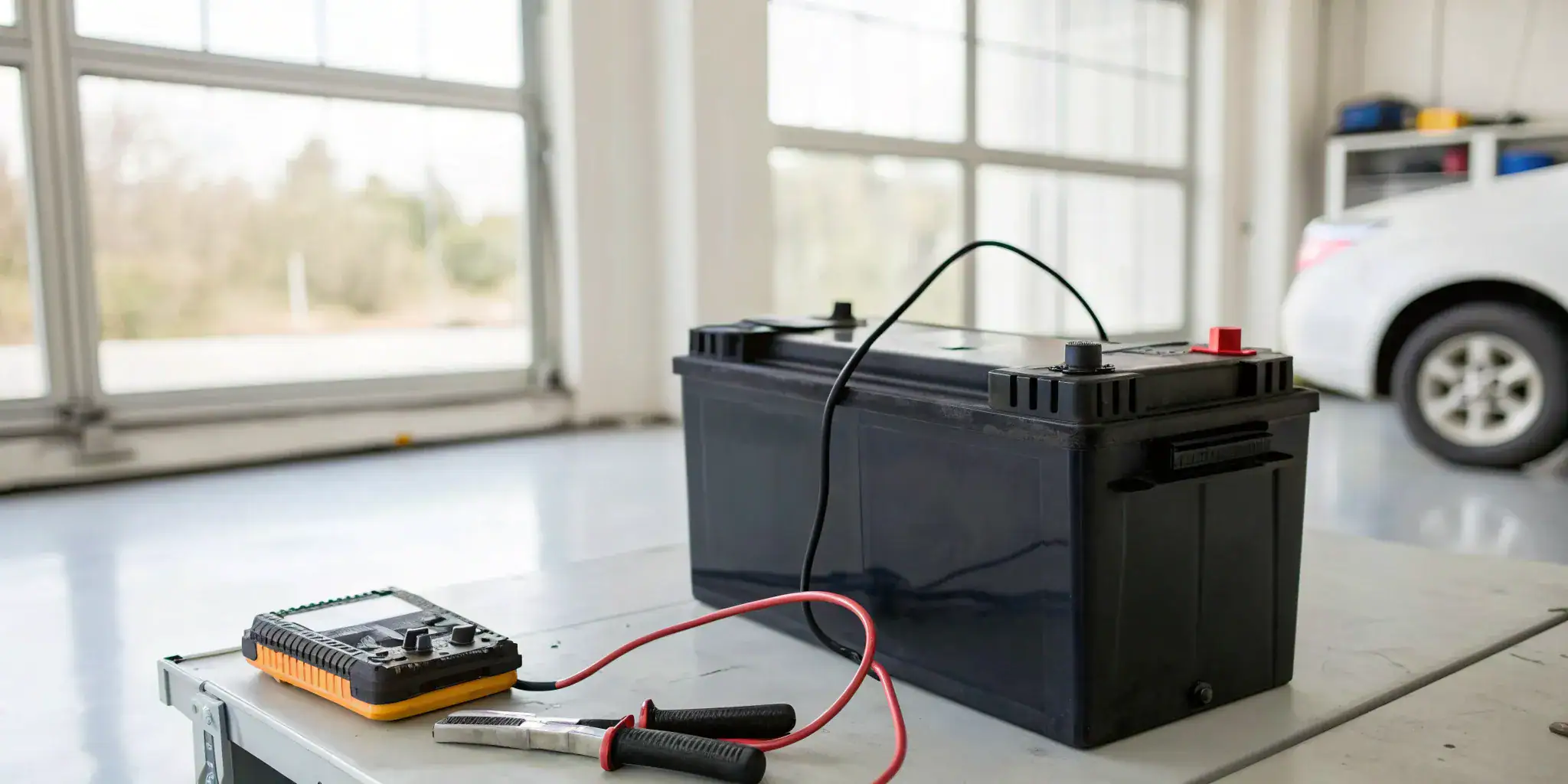
The multimeter is the fastest way to do a car battery test at home. It measures DC voltage to show whether your battery holds a proper charge.
- Turn the car off and wait 2 minutes for any surface charge to dissipate.
- Set multimeter to DC volts (20V range).
- Connect red probe to positive (+) terminal, black to negative (-).
- Read the voltage:
- 12.6V or higher: fully charged, healthy battery
- 12.4V to 12.6V: 75% charged, recharge recommended
- 12.2V to 12.4V: 50% charged, recharge soon
- Below 12.0V: likely failing, consider replacement
According to AutoZone, a fully charged battery reads 12.6V or higher. Note: voltage alone does not reveal cranking ability. Follow up with a load test if you suspect weakness.
Evaluate Performance with a Load Test
A voltage test tells you the battery’s charge at rest, but a load test shows you how it performs under pressure, like when it’s starting your car. This is a more telling indicator of a battery’s true condition. A load tester applies a specific electrical load to the battery to simulate the strain of cranking an engine. During the test, the voltage will drop, but a healthy battery should maintain its power. As noted by the specialists at Discover Battery, the voltage shouldn’t dip below 9.6 volts during the test. If it does, the battery is likely failing and won’t be reliable for much longer, especially in cold weather. This test gives you a much clearer picture of whether your battery can deliver when you need it most.Test Specific Gravity with a Hydrometer
If you have a non-sealed, or serviceable, car battery, you can test its health by checking the electrolyte fluid inside. This is done with a tool called a hydrometer, which measures the specific gravity of the fluid in each battery cell. A higher specific gravity indicates a higher state of charge. To do this, you’ll carefully draw a sample of the battery fluid from each cell into the hydrometer. A fully charged cell will have a reading of around 1.265, while a reading below 1.225 suggests it’s time to recharge. The key here is consistency: if one cell reads significantly lower than the others, it could point to an internal problem with the battery.Get a Professional Diagnostic Test
While DIY tests are great for a quick check-up, nothing beats a professional diagnostic. Technicians use advanced equipment that can assess your battery’s overall health, including its cranking amps and reserve capacity, giving you a complete and accurate picture. As the team at VARTA Batteries points out, regular checks by a specialist can catch issues before they lead to a breakdown. This is the most stress-free way to know exactly where your battery stands. With our Total Care Plan, we bring this professional-grade testing right to your driveway, so you can get peace of mind without ever leaving home.Which Car Battery Test Is Most Accurate?
The load test is the most accurate car battery test for determining whether your battery can actually start your car. A multimeter only measures charge level (voltage at rest), which can look normal even when a battery is internally failing. A load test applies simulated cranking stress and reveals the battery’s true output capacity. For the definitive answer, a professional diagnostic measures Cold Cranking Amps (CCA) and internal resistance. These are the two factors that predict real-world starting performance in cold weather. Here is how the methods compare by accuracy:
- Most accurate: Professional diagnostic (measures CCA + internal resistance)
- Highly accurate: Load test (simulates cranking stress)
- Good for charge check: Multimeter (voltage reading)
- Limited to non-sealed batteries: Hydrometer (electrolyte specific gravity)
Your Step-by-Step Guide to Load Testing
While a multimeter gives you a quick snapshot of your battery’s voltage, a load test is like a stress test that shows how your battery performs under pressure. It’s the most reliable way to see if your battery can still deliver the power your car needs to start and run everything smoothly. Think of it as asking your battery to do some heavy lifting to prove it’s still up for the job. This test simulates the energy draw required to start your engine, giving you a clear picture of its true health. If you’re comfortable working on your car, you can perform a load test yourself. Here’s a straightforward guide to get it done right.Gather Your Gear and Prep for Safety
First things first, let’s talk about safety and tools. You’ll need an adjustable load tester for this job. Before you connect anything, put on safety glasses and gloves. Car batteries contain corrosive acid, and it’s always better to be safe. Make sure you’re working in a well-ventilated area. Once you’re prepped, you’ll need to set the load tester correctly. A good rule of thumb for accurate battery testing is to set the load to about half of your battery’s Cold Cranking Amps (CCA) rating, which you can find on the battery’s label. This ensures you’re applying the right amount of pressure without overdoing it.The Step-by-Step Process
With your gear ready, you can start the test. It’s a simple process, but the details matter.- Check the Initial Voltage: Before applying a load, check the battery’s open-circuit voltage with a multimeter. If it’s below 12.4 volts (about 75% charged), give it a full charge before you proceed. Testing a partially charged battery won’t give you an accurate result.
- Connect and Apply the Load: Connect the load tester to the battery terminals, positive to positive, negative to negative. Apply the load for 15 seconds, keeping a close eye on the voltage reading. The voltage shouldn’t drop below 9.6 volts during this time.
- Let it Rest: Disconnect the load and let the battery rest for a couple of minutes. This allows it to recover before you make a final assessment.
How to Read Your Results
Interpreting the results is the final piece of the puzzle. If the voltage stayed above 9.6 volts during the test, your battery is in good shape. If it dropped below 9.6 volts, that’s a strong indicator that it’s losing its ability to hold a charge and will likely need to be replaced soon. If it fails, you can try recharging the battery completely and running the test again. Sometimes a low initial charge can skew the results. However, if it fails a second time, it’s time for a new battery. If you’re not sure about the results or just want a second opinion, our Quick Check plan includes a comprehensive battery and charging system test right at your home or office.Is Your Battery Failing? Watch for These Warning Signs
Your car battery rarely dies without a little bit of drama first. If you know what to look for, you can catch the problem before you’re left stranded. Paying attention to these subtle (and not-so-subtle) clues is the key to avoiding that dreaded moment when you turn the key and get nothing but silence. Think of these signs as your car’s way of asking for help before a minor issue becomes a major headache.Slow Starts and Electrical Glitches
One of the most common signs of a dying battery is a slow engine crank. You know the sound. Instead of your car starting right up, it makes a sluggish, drawn-out “rur-rur-rur” sound. This often means the battery is struggling to provide enough power to turn the engine over. With modern cars relying on complex electrical systems, you might also notice other odd behaviors. Are your headlights dim when you start the car? Does your radio or infotainment system flicker or reset? These aren’t just random quirks; they’re signals that your battery is losing its strength and can’t keep up with the demand.What to Look For: Corrosion and Damage
Sometimes, your battery will give you visual clues that something is wrong. Pop the hood and take a look at the battery terminals, the metal posts where the cables connect. If you see a white, blue, or greenish powdery substance, that’s corrosion. This buildup can interfere with the flow of electricity and weaken your battery’s performance. Also, check the battery case itself. If it looks swollen, bloated, or has any cracks, it could be a sign of internal damage from overcharging or extreme temperatures. If you spot any of these issues, it’s a good idea to have a specialist take a look and assess the damage.Considering Your Battery’s Age and Climate
Most car batteries have a lifespan of about three to five years. As they get older, their ability to hold a full charge diminishes. Over time, a process called “sulfation” can occur, where lead sulfate crystals build up on the battery plates, reducing its effectiveness. Where you live also plays a big role. Extreme heat can cause battery fluid to evaporate and damage its internal structure, while freezing cold can sap its starting power. If your battery is more than three years old or you live in a climate with harsh temperatures, proactive care is key. Regular wellness checks can help you keep tabs on your battery’s health and replace it before it fails.How Regular Tests Can Make Your Battery Last Longer
Think of battery tests as a wellness check for your car. Just like a regular doctor’s visit can catch health issues before they become serious, routine battery checks can prevent you from getting stranded with a dead car. Consistent testing helps you understand your battery’s health, identify small problems early, and ultimately extend its life. It’s a simple, proactive step that saves you from the stress and expense of a sudden breakdown. By keeping an eye on its performance, you ensure your battery is always ready to go when you are, giving you peace of mind on every drive.Stop Damage Before It Starts
It’s a startling fact: nearly half of all car breakdowns are due to battery failure. With modern cars packed with more electronics and start-stop technology, batteries are working harder than ever. A regular test can spot a weakening battery long before it leaves you stranded. Catching a drop in performance early allows you to address the issue, whether it’s a simple recharge or a replacement, on your own terms. This proactive approach is much better than discovering the problem when your car won’t start on a cold morning.How Temperature Affects Your Battery
Extreme temperatures, both hot and cold, are tough on your car’s battery. Heat can speed up the chemical reactions inside, causing it to wear out faster, while cold weather can reduce its starting power. If a battery stays at a low charge for too long, a process called sulfation can occur, which permanently damages its ability to hold a charge. As batteries age, they naturally lose some of their power. Regular testing monitors your battery’s charge level and overall health, helping you prevent the kind of damage that shortens its lifespan.Maintain a Healthy Charge
A key part of battery health is keeping it properly charged. For a standard car battery, the voltage should not drop below 12.4 volts. If it does, it needs to be recharged as soon as possible to avoid damage. This is especially important if you take a lot of short trips, park your car for extended periods, or during the winter when batteries have to work harder. Including a battery check in your regular vehicle maintenance ensures its voltage is always where it needs to be, keeping it strong and reliable for the long haul.Common Battery Testing Mistakes to Avoid
Testing your car battery seems straightforward, but a few common slip-ups can give you a false sense of security or send you shopping for a new battery you don’t actually need. Knowing what to watch out for helps you get a clear and accurate picture of your battery’s health, so you can make the right call without the guesswork. Getting an accurate result is about more than just connecting a tool; it’s about understanding the full context of your battery’s condition. Let’s walk through some of the most frequent mistakes people make when testing their car battery at home and how you can steer clear of them.Why Voltage Isn’t the Whole Story
One of the biggest misconceptions is that a simple voltage reading tells you everything. While voltage is a key vital sign, it doesn’t provide a complete picture of a battery’s condition. A battery can show a healthy voltage level but still lack the power to start your car on a cold morning. That’s because other factors, like Cold Cranking Amps (CCA) and internal resistance, are just as important. CCA measures the battery’s ability to start an engine in cold temperatures, which is a much better indicator of its true starting power. Relying only on voltage is like judging a book by its cover. You’re missing the most important parts of the story.Getting an Accurate Reading
Even if you’re using the right tools, several factors can lead to misleading results. For example, a “surface charge” can build up after driving or using a charger, making the voltage appear higher than it really is. To get rid of it, turn on your headlights for a minute or two before testing. Temperature also plays a big role. A battery’s performance drops in the cold, so testing on a freezing day will yield different results than on a warm one. Testing a battery that is already partially or fully discharged won’t give you an accurate sense of its overall health, either. For a reliable reading, you need to make sure the conditions are just right.Know When to Call a Pro
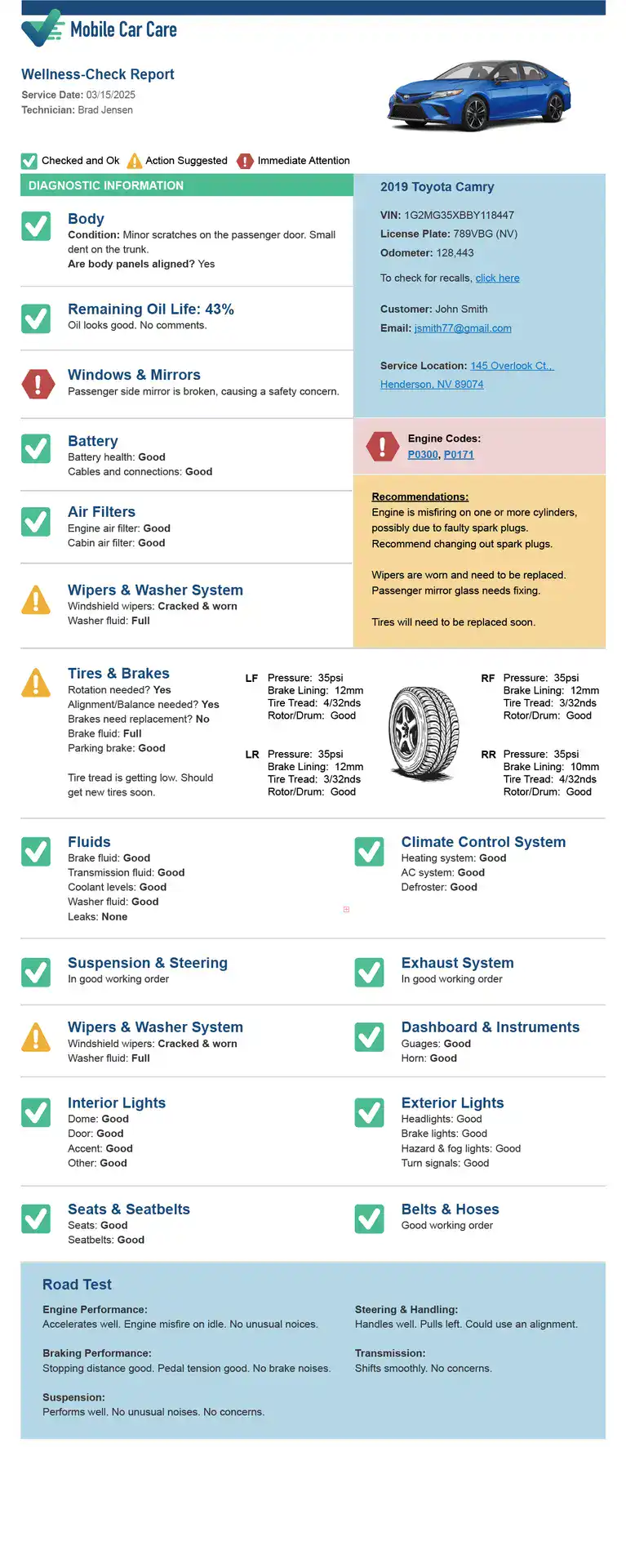
Let’s be honest: sometimes the results just aren’t clear. Evaluating a battery’s performance can be especially tricky when it’s still functioning but starting to weaken. If you’ve run a test and you’re still not sure if your battery is on its way out, it’s always best to get a professional opinion. A trained technician can perform a comprehensive diagnostic test that looks beyond basic voltage to assess the battery’s true condition. If you want a definitive answer without the stress, a service like our Quick Check can give you peace of mind. We come to you and use professional-grade tools to give you a clear, accurate assessment, so you know exactly where you stand. If you’re in the Las Vegas area, our in-home car battery check service makes it easy to get your battery tested without leaving your driveway.What to Do After Your Battery Test
So, you’ve run the tests and have the results in hand. Now comes the important part: turning that information into action. Understanding what your battery needs next will not only prevent you from getting stranded but can also save you from buying a new battery when a simple charge would do the trick. Think of it as a check-up for your car’s heart. Addressing the small stuff now keeps it running strong for the long haul. It’s easy to feel a little uncertain when looking at voltage numbers and load test results, but don’t worry. The process is simpler than it sounds. Your car is giving you clues about its health, and learning to read them puts you back in the driver’s seat, literally. This proactive approach is key to avoiding those stressful mornings with a car that won’t start. Whether your results point to a quick fix or a necessary replacement, the next steps are straightforward. We’ll walk through how to make the right call and then cover a few simple habits that will keep your battery in top shape moving forward, giving you one less thing to worry about in your busy schedule. A healthy battery is the foundation of a reliable car, and a few minutes of attention now pays off with miles of peace of mind.Deciphering the Results: Repair or Replace?
Your test results will point you toward one of two paths: charging or replacing. If your battery is simply low on power (testing between 0% and 75% charge), the first step is to give it a full charge. However, if the voltage is still low after charging, it could mean the battery was left discharged for too long or that an internal cell has failed. A load test gives an even clearer answer. If the voltage drops below 9.6 volts during the test, charge the battery and run the test again. If it fails a second time, it’s a reliable sign that the battery can no longer hold a charge and needs to be replaced. Making this call proactively saves you the headache of a car that won’t start when you’re already running late.Simple Steps for a Healthier Battery
Once you’ve sorted out your battery’s immediate needs, you can focus on extending its life with a few good habits. First, keep it charged. If you don’t drive your car daily or tend to take short trips, the battery doesn’t have enough time to fully recharge. Consider charging it every couple of months to maintain its health. Next, keep the battery terminals clean. A bit of corrosion looks harmless, but it can prevent the flow of power and interfere with charging. Finally, pay attention to your car’s behavior. If your headlights seem dim at startup, it’s an early warning of a low charge. Including battery care in a routine maintenance schedule, like our Essential Plan, ensures these details are never overlooked.Related Articles
- On-Site Car Battery Checks: Costs & Providers – Mobile Car Care
- Mobile Battery Replacement: What You Need to Know – Mobile Car Care
Frequently Asked Questions
How often should I test my car battery? A good rule of thumb is to test your battery twice a year, ideally in the spring and fall. This helps you see how it has handled the stress of summer heat or winter cold. If your battery is more than three years old, it’s smart to check it annually, as that’s when its performance can start to decline more noticeably. Can I just wait for the battery light on my dashboard to come on? That’s a common misconception. The battery warning light on your dashboard typically signals a problem with your car’s charging system, like the alternator, not the battery itself. A battery can lose its ability to hold a charge and fail without ever triggering that light, which is why a direct test is the only way to truly know its condition. My car starts fine. Do I really need to test the battery? Yes, it’s still a great idea. A battery can often seem perfectly fine right up until the day it fails, leaving you stranded without warning. A test can detect a weakening battery long before it gets to that point. Think of it as a preventative check-up that helps you replace the battery on your own schedule, not on the side of the road. What’s the real difference between a quick voltage test and a load test? A voltage test with a multimeter tells you the battery’s charge level while it’s at rest, which is a useful snapshot. A load test, however, shows you how the battery performs under pressure, similar to when it’s starting your car. This stress test is a much more accurate way to determine if the battery is truly healthy or just holding a surface charge. Is it worth getting a professional test if I can check the voltage myself? While checking the voltage at home is a great first step, a professional diagnostic gives you a much more complete picture. Technicians use advanced tools that measure not just voltage but also the battery’s cold cranking amps and overall health. For Las Vegas residents, mobile car care in Las Vegas brings this service to your door. This detailed analysis can catch subtle issues a simple multimeter would miss, giving you a definitive answer and true peace of mind.Car Battery Testing FAQs
What is the most accurate way to test a car battery? The most accurate battery test combines a resting voltage check with a load test or conductance test. A simple multimeter can show whether the battery is charged, but it does not always prove the battery can hold up under starter load. For the clearest result, test after the car has been off for several hours and confirm the battery under load.
What voltage means a car battery is bad? A fully charged 12-volt car battery usually reads about 12.6 volts at rest. Readings near 12.4 volts suggest partial charge, and readings around 12.0 volts or lower usually mean the battery is deeply discharged or failing. Voltage alone is not enough if the battery drops sharply during cranking.
Can a battery test good and still fail in Las Vegas heat? Yes. Las Vegas heat can accelerate internal battery wear, fluid loss, and plate damage. A battery may show acceptable voltage one day and still fail when high temperatures and accessory load stress it. Older batteries, weak cranking, corrosion, and repeated jump starts are signs to schedule a more complete test.
How often should I test my car battery? In Las Vegas, test the battery at least twice per year, ideally before peak summer heat and before colder winter mornings. Vehicles more than three years old, cars that sit often, and vehicles with short-trip driving patterns should be checked more frequently.
Should I replace or recharge a weak battery? Recharge a weak battery if it is newer, was drained by lights or accessories, and passes a load test after charging. Replace it if it is older, fails under load, repeatedly needs jump starts, or shows corrosion, swelling, or slow cranking. Mobile Car Care can document battery voltage during an 85-point inspection.