Fluid Top-Off Service at Home in Las Vegas: What to Check Quarterly
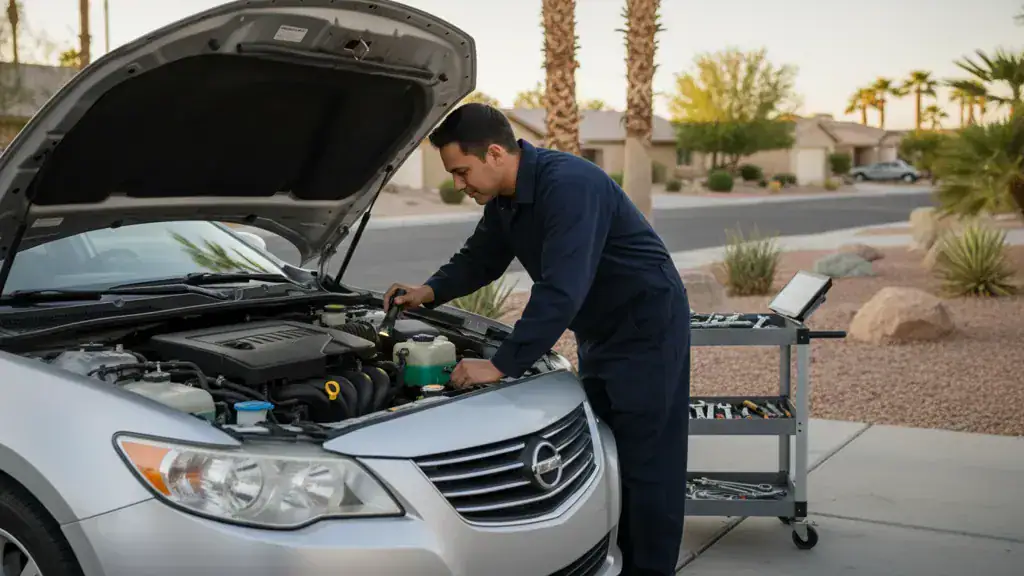
A fluid top-off service at home gives Las Vegas drivers a practical way to keep routine vehicle care from slipping through the cracks. Oil, coolant, brake fluid, power steering fluid, washer fluid, and transmission fluid all support everyday drivability, but desert heat, stop-and-go traffic, and long summer commutes can make small fluid issues show up faster. A quarterly vehicle inspection helps you spot low levels, leaks, or signs of wear before they become a roadside surprise.
Want routine fluid checks handled where your car is parked? Review the Essential Plan to see how Mobile Car Care brings recurring vehicle wellness visits to Las Vegas drivers.
This guide explains which fluids deserve a closer look every quarter, what Las Vegas conditions change, what you can safely check yourself, and when an on-site service visit is the easier choice.
Why quarterly fluid checks matter in Las Vegas
Las Vegas driving is hard on vehicles in a very specific way. High ambient temperatures raise under-hood heat. Dense commuter traffic adds long periods of idling and repeated braking. Dust and dry air can make a neglected maintenance routine feel worse once a reservoir is already low or a hose begins to seep.
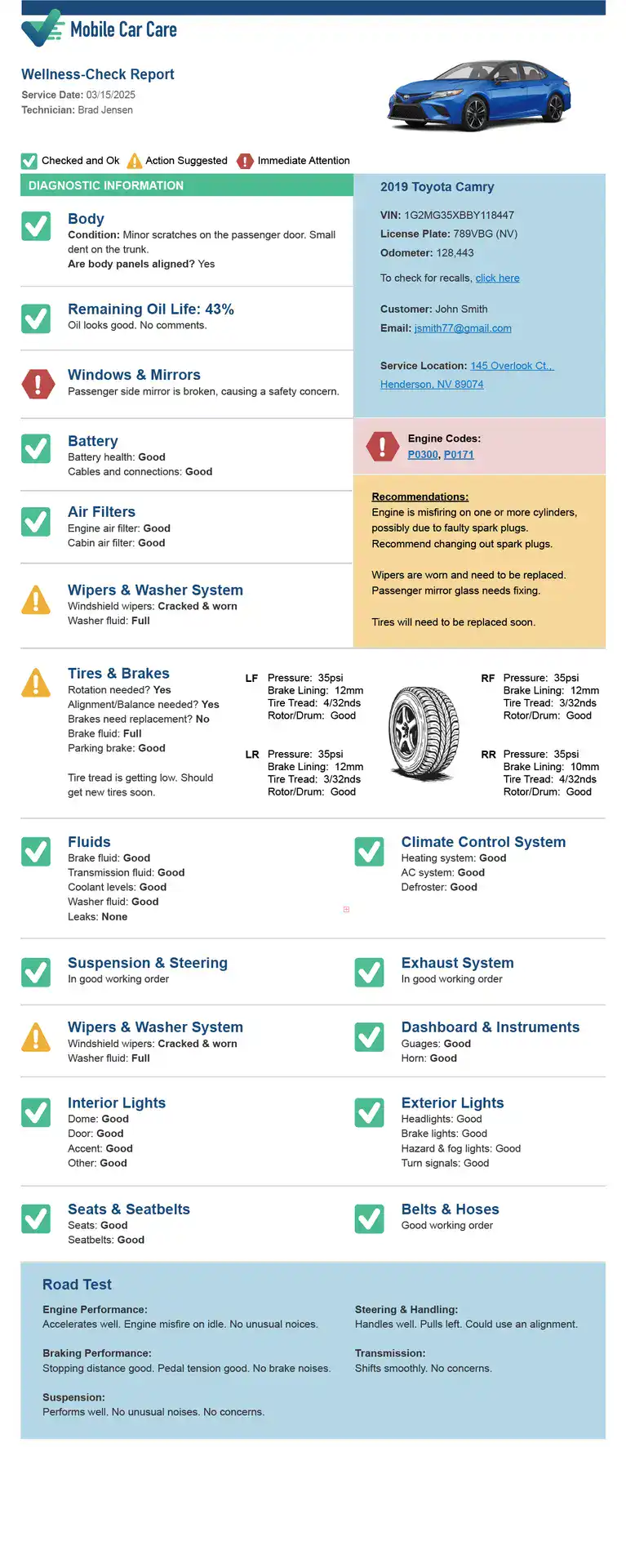
A quarterly rhythm is useful because it is frequent enough to catch gradual changes, but not so frequent that it becomes unrealistic for busy households. Mobile Car Care’s subscription model is built around recurring wellness checks, and its 85-point inspections help drivers connect fluid levels with broader vehicle health instead of looking at each reservoir in isolation.
Quarterly checks are especially helpful for:
- Daily commuters who spend time in hot traffic corridors.
- Families managing teen, older, or shared household vehicles.
- Drivers with 5+ year old cars that may develop small leaks or faster wear.
- Anyone preparing for Las Vegas summer or a longer road trip.
For a broader maintenance schedule beyond fluids, Mobile Car Care’s car maintenance checklist breaks down what to review monthly, quarterly, and annually.
What fluids should drivers check each quarter?
A proper vehicle fluid review is not just about filling whatever looks low. The better approach is to confirm the correct fluid, inspect the reservoir or dipstick where applicable, notice the condition of the fluid, and look for evidence that the level dropped for a reason.
Engine oil
Engine oil lubricates moving parts, helps control heat, and supports long-term engine life. A quarterly oil check can reveal a low level, very dark oil, or a pattern of needing repeated additions. In Las Vegas heat, a driver who already puts on plenty of miles may notice that a small issue becomes more obvious during summer commuting.
If your vehicle has a dipstick, check the owner’s manual for the correct process and use a level surface. If oil is low, do not guess at viscosity or overfill. Using the wrong oil or adding too much can create a new problem while trying to solve an old one.
Engine coolant
Coolant deserves special attention in the desert. It helps the engine regulate temperature, and a low coolant level may become most obvious when the car is working hardest. If your temperature gauge rises, you see a dashboard warning, or you notice coolant odor or residue, treat that as a reason to investigate rather than a cue to keep driving normally.
Never open a hot pressurized cooling system. A quarterly review should happen when the vehicle is cool and parked safely. If coolant keeps dropping, topping it off is not a long-term fix. The next step is identifying why.
Brake fluid
Brake fluid supports hydraulic braking performance. A lower level can sometimes relate to pad wear, but it can also point to a leak or another issue that needs professional review. If the brake pedal feels soft, stopping behavior changes, or the brake warning light appears, do not treat a top-off as the whole answer.
During a quarterly inspection, the goal is to notice the fluid level and pair that observation with brake condition, warning lights, and any customer-reported symptoms. That context matters more than simply adding fluid and moving on.
Power steering or hydraulic fluid
Some vehicles use hydraulic power steering fluid, while newer vehicles may use electric steering and have no reservoir to top off. When a vehicle does use steering fluid, low levels may show up as whining sounds, heavier steering, or visible seepage near hoses and components.
If you want a closer breakdown of what to look for, Mobile Car Care’s guide to a power steering fluid check walks through the basics in plain language.
Windshield washer fluid
Washer fluid is the easiest fluid for many drivers to understand, but it still matters. Dust, road film, and seasonal grime can reduce visibility quickly. A reservoir that is empty right when you need it is a preventable inconvenience.
Quarterly visits are a good moment to top off washer fluid and make sure wipers, spray nozzles, and overall windshield visibility are not being overlooked.
Transmission fluid when a dipstick is present
Transmission fluid supports shifting and internal lubrication, but access varies by vehicle. Some vehicles have a traditional dipstick. Others are sealed systems that should not be treated as a casual do-it-yourself top-off. Mobile Car Care’s plan language correctly limits top-up service to transmission fluid checks where a dipstick is present.
If you notice delayed shifting, harsh engagement, leaks beneath the vehicle, or burnt-smelling fluid on a serviceable dipstick, the right move is careful review, not guesswork.
Fluid top-off service at home vs a DIY check
Many drivers can handle simple observations. Looking at washer fluid, checking an accessible oil dipstick, or noticing a low coolant reservoir while the engine is cool are reasonable starting points. The challenge is that fluid levels only tell part of the story.
| Approach | Works well for | Common limitation |
|---|---|---|
| DIY quarterly check | Basic awareness, visible reservoir checks, documenting a change | Easy to use the wrong fluid, miss a leak, or overlook a related symptom |
| On-site wellness visit | Busy drivers, households with multiple cars, recurring preventive care | Still not a substitute for major diagnostics or specialty repair when a problem is found |
The difference is not that one option cares and the other does not. It is that a trained on-site inspection connects a low fluid level to the rest of the vehicle. A technician can review visible leaks, belts, hoses, warning lights, tires, brakes, and other high-priority items during the same visit. That makes the top-off part of preventive care rather than a rushed reaction.
If you want a more complete mobile maintenance option, compare the Total Care Plan with Essential to see which level of recurring support fits your household.
Which Mobile Car Care plans include fluid top-offs?
Mobile Car Care’s plan details matter here. The one-time vehicle review focuses on inspection and reporting, not free fluid top-offs. The subscription plans are where included top-up service appears.
- Essential Plan: includes free top-up service for oil, brake fluid, engine coolant, hydraulic fluid, windshield washer fluid, and transmission fluid where a dipstick is present. The top-up is provided during the regularly scheduled wellness check.
- Total Care Plan: includes that same free fluid top-up service during the regularly scheduled wellness check, along with a broader subscription experience.
- Quick Check or one-time review: includes fluid level checks, but not fluid top-offs.
These distinctions help drivers choose the right option. If you only need a snapshot of a used car, a pre-trip concern, or a one-time family vehicle review, an inspection-focused service may make sense. If you want routine fluid stabilization and repeat visibility into your vehicle’s condition, a subscription plan is the better fit.
The most precise source for plan inclusions is Mobile Car Care’s terms and conditions, which outlines what is checked and when top-up service is available.
How quarterly fluid inspections help prevent overheating and avoidable wear
Fluids are not glamorous, but they are connected to some of the most expensive and stressful avoidable situations drivers face. Coolant supports temperature control. Oil helps manage friction. Brake fluid supports responsive stopping. Steering fluid, when equipped, helps preserve normal steering feel. Washer fluid supports visibility, which matters every time dust or road spray hits the windshield.
A quarterly inspection helps in three practical ways:
- It creates a baseline. If a reservoir looked normal last quarter and is noticeably lower now, that change is useful information.
- It connects symptoms. A low fluid level plus a warning light, a smell, a noise, or visible residue tells a fuller story than a reservoir alone.
- It supports earlier decisions. Drivers can schedule follow-up service, adjust maintenance timing, or stop ignoring a small issue before summer heat adds pressure.
That is the real value of preventive maintenance. It does not promise that every breakdown disappears. It improves the odds that you learn about a concern while your car is still safely parked at home or work, not after the issue has interrupted your day.
When should you request professional help instead of topping off fluid yourself?
A top-off is useful when the vehicle simply needs routine replenishment during a proper service visit. It is not a cure for a recurring loss of fluid. Get a closer review if you notice:
- Coolant temperature warnings or overheating symptoms.
- Brake warning lights, a soft brake pedal, or new stopping concerns.
- Fresh spots or puddles beneath the vehicle.
- Repeatedly low oil, coolant, steering fluid, or transmission fluid.
- Burnt smells, unusual fluid color, or steering and shifting changes.
- A vehicle owner’s manual that specifies a sealed system or specialized filling process.
Mobile Car Care is built around routine maintenance, inspections, and practical on-site support. If a visit reveals a concern that needs deeper diagnostics or major repair, the important win is that you know about it sooner and can plan the next step.
Simple quarterly checklist for Las Vegas drivers
Use this list before the hottest part of summer, before a long drive, or whenever your household maintenance rhythm needs a reset:
- Check engine oil level and note whether it has changed since the last review.
- Look at coolant level only when the vehicle is cool.
- Review brake fluid reservoir level and pay attention to pedal feel or warning lights.
- Confirm whether your vehicle has hydraulic steering fluid or electric steering.
- Refill windshield washer fluid so visibility is not left to chance.
- Check transmission fluid only where the manufacturer provides a serviceable dipstick process.
- Look around the parking area for new stains, drips, or residue.
- Write down anything that changed so the next service visit has context.
Ready to make quarterly maintenance easier? Visit the Essential Plan or Total Care Plan pages to compare recurring at-home support in the Las Vegas Valley.
FAQ: Fluid top-off service at home
How often should car fluids be checked in Las Vegas?
Quarterly fluid checks are a practical rhythm for many Las Vegas drivers, especially when paired with routine wellness inspections. Drivers with higher mileage, older vehicles, or visible leaks may need closer attention.
Does a low fluid level always mean there is a leak?
No. Some levels can change gradually with normal use or maintenance timing. Still, a repeated drop, visible residue, a warning light, or a new driving symptom deserves professional review.
Does Mobile Car Care top off every fluid during a one-time inspection?
No. Mobile Car Care’s one-time review includes fluid level checks, while free fluid top-up service is included with Essential and Total Care subscription visits according to the plan terms.
Can transmission fluid always be topped off at home?
No. Mobile Car Care’s plan language specifies transmission fluid top-up where a dipstick is present. Many modern vehicles use sealed or specialized systems, so the correct process depends on the vehicle.
Final takeaway
A fluid top-off service at home is most valuable when it is part of a consistent preventive maintenance routine. Las Vegas heat and everyday traffic make quarterly checks especially worthwhile because they help drivers notice low levels, visible leaks, and early warning signs before they turn into larger headaches. Whether you start with a DIY checklist or choose recurring on-site support, the goal is the same: keep your car safer, more predictable, and easier to own.