
Your schedule is already packed. The last thing you have time for is spending half a day at a repair shop, waiting for an inspection to be done. The traditional model of car care simply wasn’t built for modern life. That’s why mobile inspections are such a game-changer. The service comes to you, whether you’re at home or the office, fitting seamlessly into your day instead of disrupting it. This isn’t just about saving a few hours; it’s about reclaiming your time for what truly matters. When you consider the value of that convenience, the car inspection total care price becomes an investment in a smoother, less stressful life.
Key Takeaways
- Understand what a real inspection covers: A complete wellness check examines everything from your engine and brakes to fluids and electrical systems, helping you catch small problems before they turn into major repairs.
- Embrace at-home service to save time and money: Mobile inspections eliminate the hassle of a shop visit, and subscription plans offer a predictable, budget-friendly way to stay on top of preventive care.
- Look for expertise and transparency, not just a low price: The best value comes from ASE-certified technicians who provide clear, detailed reports. Match the service level to your car’s specific needs to ensure you’re paying for what truly matters.
What Does a Car Inspection Actually Cover?
When you hear “car inspection,” you might picture someone just kicking the tires and looking under the hood. But a thorough wellness check is much more detailed. Think of it as a comprehensive physical for your vehicle, designed to catch small issues before they turn into major headaches. Understanding what a technician is looking for helps you see the real value in the service and gives you confidence that your car is safe and reliable. A proper inspection covers everything from the engine’s core components to the fluids that keep it running smoothly, ensuring every part works together just as it should.
Your Engine and Mechanical Parts
The engine is the heart of your car, and a good inspection starts there. A technician will perform a visual check for any fluid leaks, worn-out belts, or cracked hoses that could lead to a breakdown. They’ll also listen for any unusual noises that might signal an internal problem. This part of the inspection also covers other critical mechanical systems, like the transmission and exhaust. The goal is to get a complete picture of your car’s mechanical health. Our comprehensive 85-point wellness check is designed to spot these potential issues early, saving you from more expensive repairs down the road.
Brakes and Safety Features
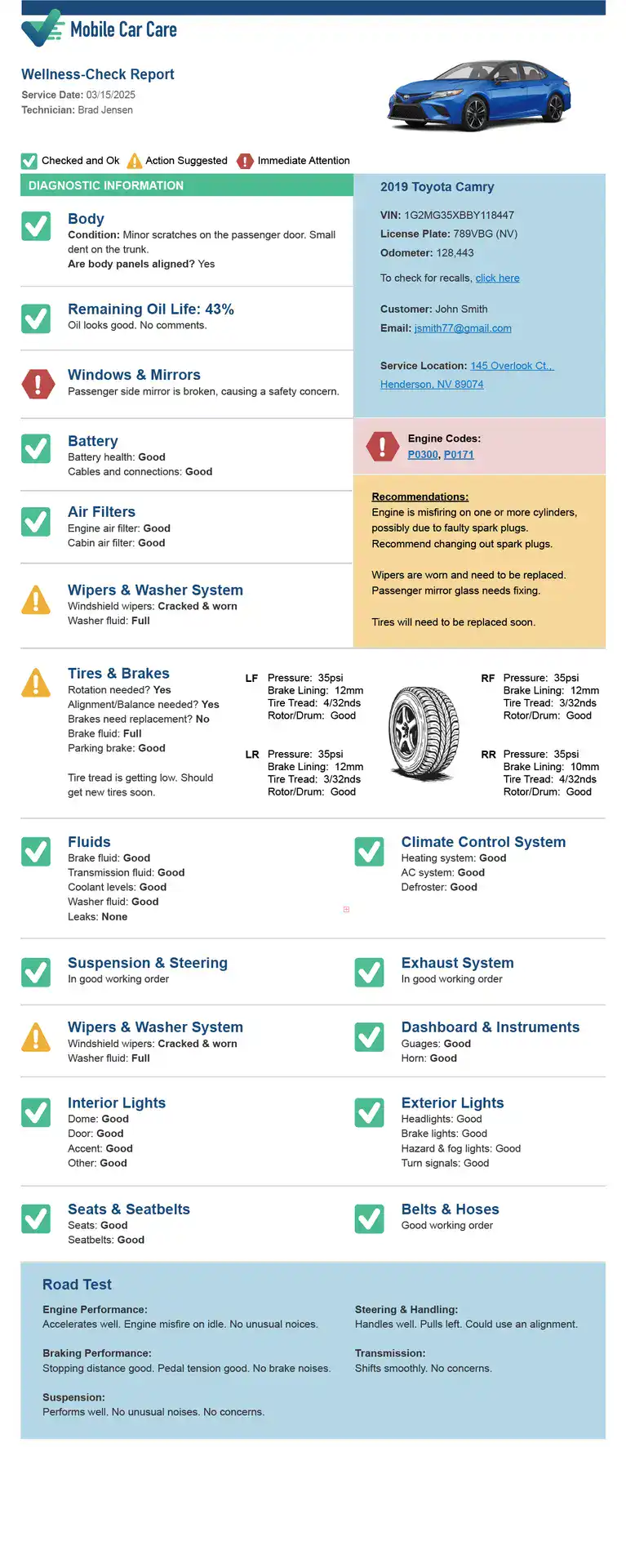
Nothing is more important than your ability to stop safely. That’s why a huge part of any inspection focuses on your braking system. The technician will check the thickness of your brake pads, the condition of the rotors, and the level and quality of your brake fluid. But safety doesn’t stop there. The inspection also includes a review of other essential features like your headlights, taillights, turn signals, and horn to make sure you can see and be seen. It’s a top-to-bottom safety check that gives you peace of mind every time you get behind the wheel.
Battery and Electrical Systems
A dead battery can leave you stranded at the worst possible moment. During an inspection, a technician will test your battery’s health and check the terminals for any corrosion that could weaken the connection. They’ll also examine the alternator to ensure it’s properly charging the battery while you drive. Beyond the battery, the inspection covers the car’s broader electrical systems. This includes making sure your power windows, wipers, and interior lights are all functioning correctly. It’s a simple but vital step to ensure your car’s electrical components are reliable.
Tires, Steering, and Suspension
Your tires are your car’s only point of contact with the road, so their condition is critical. An inspection includes checking the tire pressure, measuring tread depth, and looking for any signs of uneven wear, which could point to an alignment problem. The technician will also examine the steering and suspension systems. They’ll check for worn parts that could affect your car’s handling and ride comfort. A healthy suspension doesn’t just make for a smoother drive—it ensures you have maximum control and stability on the road.
Essential Fluids and Filters
Your car relies on a variety of fluids to operate correctly, and an inspection ensures they are all clean and at the right levels. This includes engine oil, coolant, transmission fluid, brake fluid, and even windshield washer fluid. Low or dirty fluids can cause significant damage over time. The technician will also check your engine and cabin air filters. A clean engine air filter improves performance and fuel efficiency, while a fresh cabin air filter keeps the air you breathe inside the car clean. Our detailed reports, included with every Total Care plan, outline the status of every fluid and filter.
How Much Should a Car Inspection Cost?
Trying to budget for a car inspection can feel like a guessing game. The truth is, there’s no single price tag because the final cost depends on a few key factors, including how thorough the inspection is and who’s doing the work. A basic check-up will cost less than a detailed, multi-point inspection before you buy a used car.
Understanding what goes into the pricing will help you find a service that fits your needs and your budget without any surprises. Let’s break down the typical costs and what influences them, so you can make a confident choice for your vehicle.
The National Average Price
If you’re looking at a comprehensive pre-purchase inspection, you can generally expect the cost to fall somewhere between $183 and $322. This is a great benchmark to keep in mind, but remember it’s just an average. A standard wellness check on a car you already own will likely be on the lower end of that spectrum. The price reflects the time and expertise needed for a technician to go through a detailed checklist covering everything from the engine and transmission to the brakes and electrical systems.
Mobile Service vs. a Traditional Shop
Choosing between a mobile inspection and a traditional garage often comes down to more than just the price tag. While costs can be competitive, the real difference is convenience. A mobile service comes directly to your home or office, saving you the hassle of dropping your car off and figuring out a ride. This on-the-spot service means you can ask questions and see what the technician sees in real-time. A simple Quick Check at your location can save you hours of waiting around at a shop.
How Your Location Plays a Role
Where you live has a direct impact on your car inspection cost. Labor rates vary significantly from one city to another, and different states have their own specific requirements. For example, some states mandate emissions tests or specific safety checks, which add to the overall price. A car inspection cost in a dense urban area will often be different from one in a more rural town due to these local economic factors and regulations.
The Impact of Your Car’s Age and Condition
The type of car you drive, along with its age and condition, also helps determine the price. A standard inspection on a newer, well-maintained sedan will usually be straightforward and affordable. However, an older vehicle, a luxury car, or an exotic model often requires more specialized knowledge and time, which increases the cost. If you’re looking for a bumper-to-bumper review to ensure an older car is safe and reliable, a more detailed inspection like a Total Care plan is a worthwhile investment.
Mobile vs. Shop Inspections: What’s the Difference?
Choosing between a mobile inspection and a traditional auto shop often comes down to one thing: your time. The classic approach involves scheduling an appointment, driving to the shop, waiting for the service, and then heading back. It’s a familiar routine, but it can easily eat up a significant chunk of your day. Mobile inspections flip the script entirely by bringing a certified technician and all the necessary tools directly to your home or office.
This isn’t just about convenience; it’s about integrating car care seamlessly into your life. Instead of rearranging your schedule around a garage’s availability, the service fits into your day. Whether you’re in a work meeting or helping your kids with homework, your car gets the attention it needs without you having to step away. The core difference lies in who does the traveling—you or the technician. Let’s break down what this means for different levels of service and how it impacts your wallet.
The Convenience of a Quick Check
Imagine getting your car’s vitals checked without ever leaving your driveway. That’s the simple beauty of a mobile quick check. This type of service is designed for busy people who need a fast, straightforward assessment of their vehicle’s health. A technician comes to you and performs a targeted inspection of essential components, giving you a clear snapshot of your car’s condition. It’s the perfect solution for routine check-ups between major services or when you just want a little reassurance before a weekend trip. Our Quick Check Plan is built to fit into the busiest of schedules, offering a professional once-over that saves you a trip to the shop.
The Value of the Essential Plan
For those who prefer a more proactive approach to car care, an essential plan offers a deeper dive into your vehicle’s systems. This goes beyond the basics to provide a more thorough, multi-point wellness check on a recurring basis. Think of it as your car’s regular physical. A technician will inspect key areas like your brakes, tires, fluids, and battery to catch small issues before they become big, expensive problems. This consistent oversight is invaluable for maintaining your car’s health and reliability over the long term. An Essential Plan provides the structure and consistency needed to keep your vehicle in top shape, all from the comfort of your home.
The Peace of Mind of Total Care
When you need the most comprehensive inspection possible, a total care service delivers ultimate peace of mind. This is the equivalent of a detailed pre-purchase car inspection, where a technician meticulously examines every major system. After the inspection, you receive a detailed report outlining the car’s condition, which can help you make informed decisions about a potential purchase or necessary repairs. This level of scrutiny is ideal when you’re buying a used car, selling your own, or simply want to know everything about your vehicle’s health. With our Total Care Plan, you get a complete, bumper-to-bumper assessment without the hassle of a shop visit.
Subscription Savings vs. One-Time Fees
Traditional auto shops typically charge a one-time fee for inspections, which can range from $183 to over $322, depending on the vehicle and the depth of the service. While this might seem straightforward, these costs can add up, especially if you’re diligent about regular check-ups. A subscription model offers a different approach by bundling regular inspections into a predictable, affordable payment. This not only helps with budgeting but also encourages consistent, preventive care that can save you money on major repairs down the road. By catching issues early and often, you invest in your car’s longevity and avoid the sticker shock of unexpected breakdowns.
What Influences Your Car Inspection Price?
When you start looking into car inspections, you’ll quickly notice that prices can be all over the map. It’s not just about finding the cheapest option; it’s about understanding what you’re actually paying for. The final cost isn’t arbitrary—it’s shaped by a few key factors, from the depth of the check-up to the expertise of the person performing it. Knowing what goes into the price helps you choose a service that gives you real value and confidence in your car’s health, rather than just a number on an invoice. Let’s break down what really moves the needle on your car inspection price.
When You Need Extra Diagnostics
A standard inspection covers the usual suspects, but sometimes your car needs a more specialized look. For instance, a pre-purchase car inspection (PPI) is a must-have before buying a used vehicle. It’s a deeper dive designed to uncover any hidden issues before you commit. Similarly, if a routine check flags a potential problem—like a strange noise from the engine or a warning light that won’t quit—you’ll need extra diagnostic work to pinpoint the exact cause. These specialized services go beyond a general wellness check and will naturally add to the overall cost, but they’re crucial for making informed decisions and preventing bigger headaches down the road.
The Quality of the Service
The experience and qualifications of the technician performing your inspection play a huge role in the price. You’re not just paying for someone to look at your car; you’re paying for their expertise. It’s always best to have an inspection done by an ASE-certified technician, which means they’ve met industry standards for skill and knowledge. A seasoned professional can spot subtle issues that a less experienced person might miss, giving you a more accurate picture of your car’s condition. While a service with highly trained experts might cost a bit more, that investment buys you peace of mind and trust in the results.
Common Cost Misconceptions
If you search online, you’ll see car inspection costs ranging from $50 to over $300. This huge gap can be confusing, but it usually comes down to one thing: thoroughness. A lower-priced inspection might only cover the absolute basics, while a higher price often reflects a comprehensive, multi-point check that examines everything from engine performance to the electrical system. A basic check is better than nothing, but a detailed inspection, like our Total Care plan, provides a complete health report for your vehicle. The price should match the level of detail you’re getting.
Hidden Fees to Look Out For
The price you’re first quoted for an inspection often isn’t the final price you’ll pay. Many initial estimates only cover the labor for the inspection itself and don’t include taxes, shop fees, or any additional work that might be needed. If a technician finds a problem, the time it takes to investigate it further usually isn’t part of the flat inspection rate. Before you agree to any service, it’s smart to ask for a clear breakdown of what the fee includes. This way, you can avoid surprises and have a much better understanding of the total cost from the start.
How to Save Money on Your Next Car Inspection
Getting your car inspected doesn’t have to be a financial guessing game. While it’s tempting to search for the absolute cheapest option, true savings come from being proactive and smart about your approach. A thorough inspection is an investment in your safety and your car’s longevity, helping you avoid surprise breakdowns and costly, complex repairs down the road. The key is to find a service that offers real value, not just a low price tag.
By understanding what goes into an inspection and how different service models work, you can make choices that save you money in the long run. It’s about more than just the initial cost; it’s about preventing future expenses, saving your valuable time, and gaining peace of mind. From embracing the convenience of at-home service to keeping up with routine maintenance, here are a few practical ways to keep your inspection costs reasonable without sacrificing quality.
The Value of At-Home Convenience
One of the most overlooked ways to save money is by saving time. When you schedule a mobile inspection, you skip the hassle of driving to a shop, waiting around, and arranging for a ride back. That’s hours of your day you get back. Mobile services like our Quick Check bring the technician directly to your driveway, offering a level of convenience that traditional shops can’t match. This approach also protects your car from unnecessary wear and tear. You get a focused, one-on-one consultation without the pressure of a busy service bay, allowing you to ask questions and understand the results clearly. It’s a stress-free process that puts you in control.
How Preventive Care Lowers Costs
The best way to pass an inspection with flying colors—and a low bill—is to take care of your car consistently. Small issues like a worn belt or low fluid can spiral into major mechanical failures if ignored. Regular, preventive maintenance is your first line of defense. By signing up for a recurring service like our Essential Plan, you can catch these minor problems early. Keeping a simple log of each service helps you stay on track and shows a potential buyer that your car has been well-maintained. This proactive approach not only keeps your car running smoothly but also prevents the kind of expensive, last-minute repairs that often pop up during an inspection.
Finding Available Discounts
Who doesn’t love a good deal? Many car care services offer discounts, but the best savings often come from loyalty and package deals. Instead of paying for one-off services, look into subscription plans. A comprehensive option like our Total Care Plan bundles multiple services for a lower overall price, giving you consistent care without the fluctuating costs. It’s also a good idea to check company websites for seasonal promotions or first-time customer offers. Some services even provide a price estimate based on your car’s model and location, so you can budget accordingly and avoid any surprises.
Getting Your Car Ready for Inspection
A little preparation before your inspection can go a long way. Start with the basics: clear out any clutter from the interior and trunk to give the technician easy access. Do a quick walk-around to check that all your lights—headlights, brake lights, and turn signals—are working. You can also check your essential fluid levels, like oil and windshield washer fluid. It’s also smart to do a bit of research on your car’s specific make and model. A quick search for common issues or owner reviews can help you know what to look out for and what questions to ask the technician. This simple prep work shows you’re an engaged owner and helps the inspection go smoothly.
How to Choose the Right Inspection Service for You
Picking a car inspection service can feel like a shot in the dark. You’re not just paying for a checklist; you’re investing in trust and peace of mind. The right service doesn’t just tell you what’s wrong—it gives you the confidence to make smart decisions about your vehicle, whether you’re buying a used car or just trying to keep your family safe on the road. It’s about finding a partner who is not only an expert under the hood but also respects your time and your intelligence. A great inspection helps you understand your car’s health, catching small issues before they become major, expensive problems. It’s a proactive step that saves you stress and money down the line. So, how do you find the right fit? It comes down to a few key things: making sure the technicians are qualified, the scheduling works for your life, the reports are crystal clear, and the service itself matches what your car actually needs. Thinking through these points will help you move past the price tag and find a service that delivers real value and keeps you in control.
What Certifications to Look For
When someone is inspecting the vehicle that carries your most precious cargo, you want to know they’re a true professional. That’s where certifications come in. The gold standard in the auto industry is the ASE certification. Think of it like a board certification for a doctor—it means the technician has passed rigorous testing and has proven their expertise. It’s best to have an ASE certified technician handle your inspection, and an ASE Master Technician is even better. This isn’t just a fancy title; it’s your assurance that the person evaluating your car’s safety and performance truly knows what they’re looking for, from complex engine diagnostics to subtle brake issues.
Finding a Flexible Schedule
Let’s be honest, nobody has time to sit in a dealership waiting room for hours. Your car care shouldn’t disrupt your entire day. The best inspection services understand this and offer flexible options that work around your life. While many traditional shops let you schedule an appointment online, mobile services take convenience to the next level by coming directly to your home or office. This means you can go about your day while a certified technician takes care of your car right in your driveway. It eliminates the hassle of arranging rides and turns a time-consuming chore into a simple, stress-free task.
Why Transparent Reporting Matters
An inspection is only as good as the report you get afterward. A vague, jargon-filled summary doesn’t help you at all. You need a clear, detailed report that breaks down the vehicle’s condition in plain English. This report is your roadmap—it can help you decide if you want to buy a car, ask the seller to fix things, or negotiate a better price. Look for a service that provides comprehensive, easy-to-understand reports with photos and clear recommendations. Our Total Care Plan, for example, includes an 85-point wellness check with a detailed report so you know exactly what’s going on with your vehicle.
Matching the Service to Your Car’s Needs
Not every car needs the same level of scrutiny. A brand-new car might just need a quick once-over, while a used car you’re considering buying requires a much deeper look. A great service provider will offer different levels of inspection to match your specific situation. The inspection should check all the important parts of the car, like the engine, brakes, tires, and battery. Whether you need a simple Quick Check for routine maintenance or a more comprehensive inspection from an Essential Plan before a long road trip, choosing the right service ensures you’re only paying for what you truly need and not for extras that don’t apply to your situation.
Related Articles
- 85-Point Inspection: What’s Included & Why It Matters – Mobile Car Care
- Used Car Pre-Purchase Inspection Guide: Everything You Need to Know – Mobile Car Care
- Your Complete Guide to Mobile Vehicle Inspection – Mobile Car Care
Frequently Asked Questions
How does a mobile inspection actually work? Do I need to be there the whole time? It’s designed to be incredibly simple and fit into your day. You schedule a time, and a certified technician comes to your home or office with all the necessary tools. You can be as involved as you like—feel free to watch and ask questions, or you can carry on with your day while they work. Once the inspection is complete, you’ll receive a detailed report explaining everything they found.
Is a regular inspection really necessary if my car seems to be running fine? Think of it like a routine physical. You go to the doctor even when you feel healthy to catch potential issues early, and the same principle applies to your car. A thorough wellness check can spot things like a worn belt, a corroding battery terminal, or uneven tire wear long before they become serious enough to leave you stranded. This proactive approach is the best way to ensure your car remains safe and reliable, saving you from surprise breakdowns and much more expensive repairs.
How do I know which inspection plan is right for me? The right plan really depends on your specific needs. A Quick Check is perfect if you want a fast, professional once-over for peace of mind before a road trip or between regular services. The Essential Plan is ideal for consistent, proactive care to keep your car in top shape year-round. If you’re buying a used car or want the most detailed understanding of your vehicle’s health, the Total Care Plan provides a comprehensive, bumper-to-bumper assessment.
What makes a pre-purchase inspection different from a regular check-up? While a regular check-up focuses on maintaining the health of a car you already own, a pre-purchase inspection is a much deeper investigation. Its goal is to protect you from buying a vehicle with hidden problems. The technician will look for signs of previous accidents, potential engine or transmission issues, and other costly flaws that might not be obvious during a test drive. It’s a crucial step to ensure you’re making a smart investment.
If the inspection finds a problem, what happens next? The main goal of an inspection is to give you clear, actionable information. If an issue is found, it will be documented in your detailed report, often with photos and an explanation of its severity. This empowers you to make an informed decision. For minor things, you might choose to handle them yourself. For more significant repairs, you’ll have the professional diagnosis you need to get an accurate quote from a trusted mechanic.