
Teen Driver Car Safety Checklist for Las Vegas Parents
A teen driver car safety checklist gives Las Vegas parents a practical way to answer one stressful question: is this vehicle ready for a new driver, daily school traffic, work commutes, and desert heat? A car can look fine from the driveway while worn tires, weak lights, an aging battery, or low fluids quietly add risk. The goal is not to turn parents into mechanics. It is to create a repeatable safety habit, spot concerns early, and know when a professional 85-point inspection can provide clearer answers.
Want a second set of eyes before your teen starts driving more often? Book Mobile Car Care’s one-time vehicle review for an 85-point inspection and digital report.
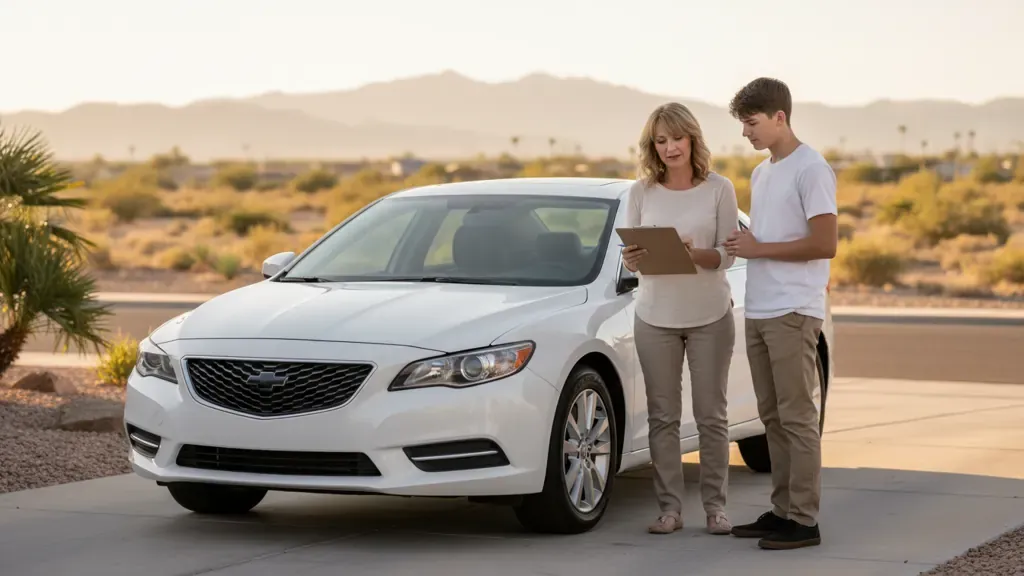
Las Vegas driving adds its own pressure. Summer heat works against batteries and tires. Dust can make visibility and filters harder to ignore. Teen drivers may also be learning how a vehicle feels when everything is normal, which makes a simple checklist even more useful. This guide focuses on the vehicle readiness items parents can review at home, plus the points worth confirming with a trained technician.
Quick answer: what should parents check first?
If you only have 15 minutes, start with the systems that affect control, visibility, and roadside reliability. Use this short teen driver car safety checklist before the first solo commute, then return to it monthly:
- Tire pressure, tread depth, sidewall damage, and spare tire readiness
- Brake pedal feel, stopping noises, and parking brake function
- Headlights, brake lights, turn signals, reverse lights, and hazards
- Battery age clues, corrosion, and slow-start symptoms
- Engine oil, coolant, windshield washer fluid, and visible leaks
- Wiper condition, windshield clarity, mirrors, and horn operation
- Emergency kit, phone charger, water, and current insurance/registration documents
This quick scan will not diagnose every issue. It does help parents identify when a vehicle needs more attention before a teen depends on it every day.
1. Check tires before teen driving becomes routine
Tires are a strong place to begin because they affect steering, braking distance, and stability in every lane change. Las Vegas heat can accelerate pressure changes, and long stretches of hot pavement make underinflation more concerning. Check all four tires when they are cool, using the pressure listed on the placard inside the driver’s door, not the maximum number molded into the tire sidewall.
What to look for
- Pressure: Add air if a tire is below the vehicle recommendation.
- Tread: Look for visibly shallow tread or uneven wear across the tire.
- Damage: Scan for bulges, cuts, exposed cords, or repeated low-pressure warnings.
- Spare tire: Confirm the spare, jack, and tools are present if the vehicle uses them.
Parents should also ask whether the teen knows what a tire pressure warning means and what to do next. A dashboard light matters more when the driver is still learning how to separate an urgent warning from background noise.
2. Listen for brake problems, not just warning lights
A teen may notice that brakes feel different without having the words to explain it. Parents can help by reviewing a few clear questions after a calm test drive in a safe area. Does the car stop smoothly? Does the pedal feel firm instead of spongy? Are there squealing, grinding, or scraping sounds? Does the vehicle pull to one side while braking?
Brakes are not a wait-and-see item for a new driver. If any of those symptoms appear, schedule an evaluation before school drop-offs, freeway commutes, or late shifts become part of the routine. Mobile Car Care explains the broader prevention mindset in its preventive car maintenance guide, which is useful for parents building a longer-term care plan.
Parent note
Teach the teen to mention changes early. “The car stops, but it feels different” is enough reason to bring it up. Waiting for a warning light can mean waiting too long.
3. Confirm every exterior light works
Teen drivers need to be seen clearly in early morning school traffic, evening shifts, and busy Las Vegas intersections. Lighting checks are simple, but they are easy to skip. Have one person sit in the vehicle and operate the controls while another walks around it.
- Low-beam and high-beam headlights
- Front and rear turn signals
- Brake lights
- Reverse lights
- Hazard lights
- License plate and running lights, if applicable
Also check that headlight lenses are not so cloudy that nighttime visibility is reduced. A bulb that works is not the same as lighting that performs well enough for a newer driver.
If this checklist is revealing more than one concern, schedule a Quick Check style one-time vehicle review instead of trying to rank the issues from memory.
4. Treat battery health as a desert driving issue
A weak battery can turn a normal school morning into a stranded teen and a rearranged parent schedule. Heat is hard on batteries, so Las Vegas families should pay attention to slow cranking, intermittent starting, dashboard flicker during startup, or visible corrosion around the terminals.
Battery checklist
- Look for white, blue, or greenish corrosion near the terminals.
- Ask whether starts have become slower than usual.
- Check whether the battery is securely mounted.
- Keep a working phone charger in the vehicle so a dead accessory battery in the phone does not compound a roadside problem.
Parents do not need to guess at battery condition. Mobile Car Care includes battery-related checks as part of its broader vehicle wellness approach, and its Total Care plan is designed for families who want recurring oversight rather than one isolated look.
5. Review fluids and leaks before summer magnifies them
Fluids help a vehicle cool, clean, lubricate, and respond. For teen drivers, the at-home goal is not advanced diagnosis. It is spotting low levels or visible warning signs early enough to ask for help. Check the owner’s manual for the correct process on a specific vehicle, and never open a hot cooling system.
- Engine oil: Review level according to the vehicle procedure and note visible contamination or repeated low readings.
- Coolant: Look at the reservoir only when appropriate and note whether it stays in the indicated range.
- Windshield washer fluid: Keep it filled so dust and road film do not reduce visibility.
- Brake fluid: If it appears low or a warning light is present, have it assessed rather than topping off blindly.
- Leaks: Look under the parking spot for fresh drips that keep returning.
A one-time puddle can be harmless condensation from the air conditioner. Repeated colored, oily, or strong-smelling drips deserve a closer look.
6. Make visibility a checklist item, not an afterthought
New drivers are processing mirrors, traffic signals, lane position, and unexpected moves from other cars. Poor visibility adds avoidable strain. Inspect both wiper blades, test windshield washers, clean interior glass haze, and make sure side mirrors adjust correctly.
- Replace wipers that streak, chatter, or leave wide untouched bands.
- Check for windshield cracks that interfere with the driver’s line of sight.
- Confirm the rearview mirror is stable and positioned correctly.
- Remove clutter that blocks rear or side visibility.
This is also a good time to ask the teen to set the seat, mirrors, and steering wheel before shifting into gear. A car can be mechanically sound and still be poorly prepared for the person driving it.
7. Pack emergency supplies a teen can actually use
An emergency kit should be practical, not theatrical. Parents should choose supplies their teen understands and can access safely. Keep the kit compact and review it before hotter months or longer drives.
- Phone charging cable and power source if appropriate
- Flashlight
- Reflective triangle or other visibility aid
- Bottled water for delay situations
- Basic first-aid supplies
- Tire pressure gauge
- Insurance, registration, and roadside contact information
Then rehearse a short plan: pull over somewhere safe, turn on hazards if needed, call a parent or emergency service as appropriate, and avoid trying unfamiliar roadside repairs in unsafe conditions.
8. How often should parents repeat this checklist?
A good cadence is easier to follow than a perfect one. For many Las Vegas families, this schedule works well:
| Timing | What to review | Why it matters |
|---|---|---|
| Before regular solo driving | Full teen driver car safety checklist | Creates a safety baseline before routines begin |
| Monthly | Tires, lights, fluids, wipers, battery clues, emergency kit | Catches visible changes early |
| Before summer heat or longer trips | Battery, coolant concerns, tires, AC-related comfort concerns, inspection needs | Desert conditions increase stress on key systems |
| After a new warning light or driving symptom | Professional follow-up as appropriate | Prevents normalization of problems |
Families who want a broader model can compare this approach with Mobile Car Care’s general car maintenance checklist. The difference here is the audience: teen drivers need safety confidence, parent oversight, and a routine that is easy to repeat.
Where does an 85-point inspection fit?
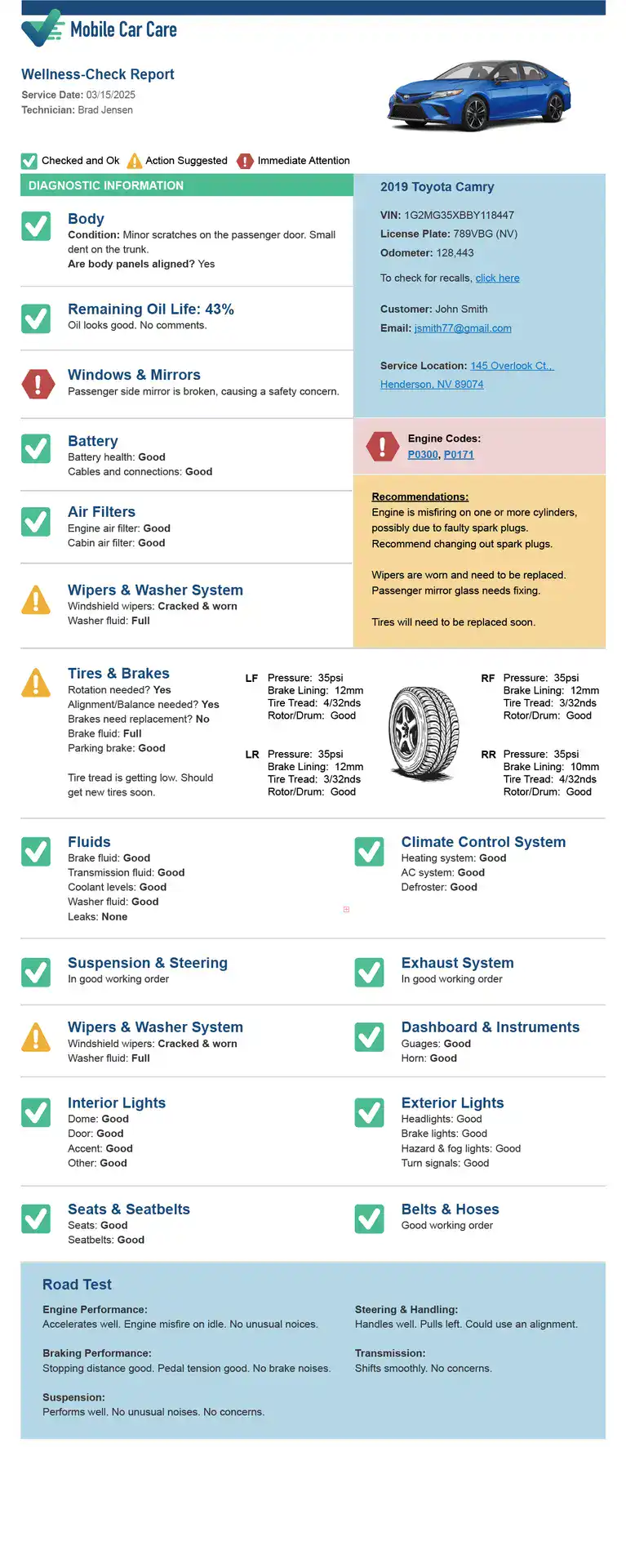
A parent checklist is excellent for daily awareness. An 85-point inspection is better for a documented vehicle baseline. Mobile Car Care’s one-time review is designed to assess major vehicle wellness areas on site and provide a digital report with photos and prioritized observations. That can be especially helpful when:
- A teen is about to inherit or start regularly using a family vehicle.
- A used car has recently been purchased for a young driver.
- The vehicle has multiple small concerns and the parent wants a clearer picture.
- The family wants documented guidance before school, work, or a new commute pattern begins.
Prefer recurring preventive oversight for a child’s vehicle? Explore Mobile Car Care’s preventive plan options and choose the level of support that fits your household.
FAQ: teen driver vehicle safety in Las Vegas
What is the most important part of a teen driver car safety checklist?
Start with tires, brakes, and lights because they directly affect control, stopping, and visibility. Then move to battery clues, fluids, and emergency readiness.
Should a parent inspect a used car before giving it to a teen?
Yes. A parent should complete a basic checklist and consider a professional vehicle review if the car is new to the household, has limited maintenance history, or will become a teen’s daily transportation.
How often should a teen’s vehicle be checked?
A short monthly review works well for tires, lights, fluids, wipers, and visible battery concerns. Add a deeper review before extreme summer heat, longer trips, or any change in driving behavior.
Why does Las Vegas heat matter for teen driver vehicle safety?
High heat can be tough on batteries, tires, and cooling-related concerns. It also raises the stakes of a roadside delay, so preventive checks matter before minor issues become bigger disruptions.
Build a safer first year behind the wheel
Teen driving independence should feel exciting, not uncertain. A clear vehicle checklist helps parents replace vague worry with a simple process: review the basics, talk through warning signs, and get professional help when the vehicle needs a more complete assessment. For Las Vegas families, that means paying extra attention to tires, battery readiness, visibility, fluids, and the effect of desert heat on daily reliability.
Use this teen driver car safety checklist before school commutes, first jobs, and expanding solo driving privileges. Then keep it visible enough to repeat. Consistency is what turns a one-time conversation into a safer car care habit.