
Your to-do list is already a mile long, and the last thing you have time for is sitting in a garage waiting room. The hassle of a traditional car inspection often feels like more trouble than it’s worth. That’s where the value of convenience comes in. A mobile service brings the expertise to you, but how does that factor into the price? Knowing the average vehicle inspection package cost helps you weigh your options, but it’s also important to consider the value of your own time. This article will break down the costs of different inspections, from basic safety checks to comprehensive wellness reports, so you can find a service that fits your busy life and gives you total peace of mind.
Key Takeaways
- Know which inspection you need: A state-required safety check just covers the basics for legal compliance, while a comprehensive multi-point inspection gives you a full picture of your car’s health to prevent future surprises.
- Think of inspections as preventative care: The small, upfront cost of a thorough check-up is a smart investment that helps you avoid major, budget-breaking repair bills down the road by catching issues early.
- Value convenience and expertise: A trustworthy service offers transparent pricing and certified technicians. Opting for a mobile inspection saves you valuable time by bringing professional car care directly to your driveway.
What’s Actually in a Vehicle Inspection?
When you hear the term “vehicle inspection,” you might picture a single, standard process. But it actually covers a few different types of check-ups, each with a unique purpose. Understanding the difference helps you know exactly what you’re paying for and what your car really needs. Let’s break down the three most common types: safety checks, emissions tests, and multi-point inspections.
Safety Checks
Think of a safety inspection as the essential check-up your car needs to be considered road-worthy. Often required by the state, this is a government check to confirm your vehicle won’t pose a danger to you or other drivers. An inspector will look at the core systems that keep you safe, like your brakes, lights, steering, and horn. They’ll also pay close attention to your tires, checking for worn-out treads and damage like cracks or bubbles. The goal here isn’t to find every little issue, but to ensure your car meets the basic requirements for safe operation.
Emissions Tests
An emissions test, sometimes called a smog check, is all about what’s coming out of your tailpipe. Many states require this test to measure how much pollution your car produces and ensure it meets clean air standards. It’s a way to help reduce harmful pollutants in the environment. If your car fails, you’ll need to get repairs done before you can pass and renew your registration. This test is separate from a safety inspection and focuses solely on your car’s exhaust system and its impact on air quality.
Multi-Point Inspections
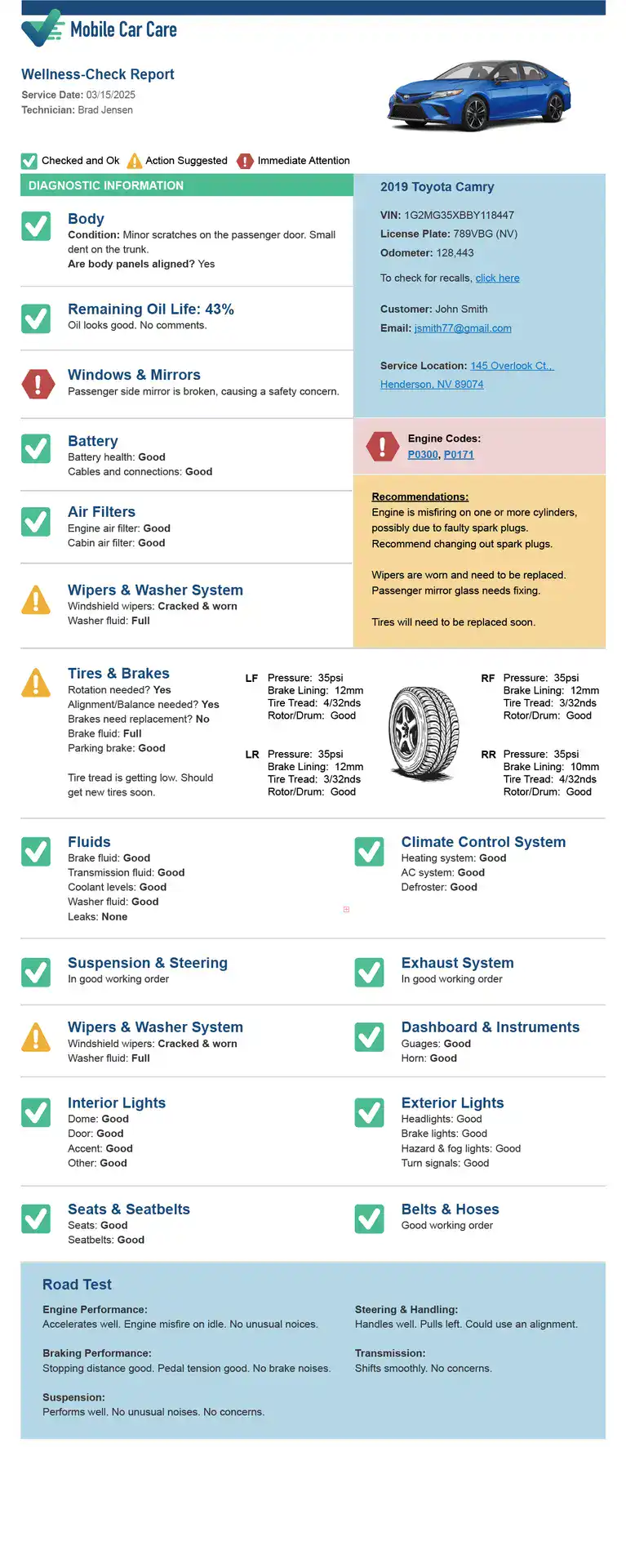
A multi-point inspection is like a comprehensive wellness check for your car. Unlike a state-mandated test, this is a proactive measure to catch small issues before they become big, expensive problems. A technician will thoroughly examine dozens of components, looking at everything from your engine and transmission to your battery, fluids, belts, and hoses. This is the kind of detailed report you get with a service like our Essential Plan. It gives you a complete picture of your vehicle’s health, so you can plan for future maintenance and drive with total peace of mind.
How Much Does a Vehicle Inspection Cost?
Figuring out the cost of a vehicle inspection can feel a bit like asking, “How much does a bag of groceries cost?” The final price depends entirely on what you put in your cart. The same goes for your car. A quick, state-mandated safety check will cost you less than a detailed, bumper-to-bumper inspection before buying a used vehicle. The price tag is tied directly to the depth and detail of the service.
Generally, you can expect to pay anywhere from $35 for a very basic check-up to several hundred dollars for a highly detailed, pre-purchase inspection. The key is to match the type of inspection to your specific needs. Are you just trying to satisfy a state requirement, or are you looking for long-term peace of mind with a proactive wellness check? Understanding what you need will help you find the right service without overpaying. We’ll break down the most common types of inspections and their typical costs so you know exactly what to expect.
Basic Safety Inspection Prices
A basic safety inspection is the most straightforward and affordable option. Think of it as a quick health screening for your car. These checks are often required by the state to ensure your vehicle is safe for the road, covering essentials like your brakes, lights, horn, and tires. Because they focus only on critical safety items, they are quick and relatively inexpensive.
Safety inspections usually cost between $15 and $50. This is a great choice if you simply need to meet legal requirements or want a fast, professional opinion on your car’s most vital components. It’s not designed to diagnose underlying mechanical issues, but it provides a fundamental layer of assurance that your car is safe to drive.
Comprehensive Multi-Point Inspection Rates
If you’re looking for a more thorough check-up, a comprehensive multi-point inspection is the way to go. This goes far beyond a basic safety check to give you a complete picture of your vehicle’s health. Technicians will examine everything from fluid levels and battery life to the suspension and exhaust systems. It’s the automotive equivalent of an annual physical.
These general check-ups often cost between $80 and $150. This type of proactive care is exactly what our Essential Plan is designed for, helping you catch small issues before they turn into major, expensive repairs. It’s an investment that provides true peace of mind.
Pre-Purchase Inspection Costs
Buying a used car is a big decision, and a pre-purchase inspection (PPI) is your best tool for making a smart one. This is the most detailed inspection available, designed to uncover any hidden problems, past accident damage, or potential mechanical failures the seller might not have mentioned. It’s an unbiased, expert assessment of the car’s true condition.
Because it’s so thorough, a detailed check for a used car can cost $100 to $250. While that might seem like an extra expense, it can save you thousands in the long run by helping you avoid a bad purchase or negotiate a fairer price.
Mobile vs. Traditional Shop Prices
When you factor in convenience, the value of a mobile inspection becomes clear. While the sticker price for an inspection at a traditional shop might seem comparable, you also have to account for your time—driving there, waiting around, and arranging a ride. A mobile service like Mobile Car Care brings the expertise directly to your driveway or office.
Our Quick Check Plan offers a convenient and affordable way to get a professional assessment without disrupting your day. The real savings come from eliminating the hassle and downtime associated with a typical garage visit, giving you back valuable time while ensuring your car is in great shape.
What Affects the Price of a Vehicle Inspection?
When you’re trying to budget for car maintenance, you’ll find that vehicle inspection costs aren’t one-size-fits-all. The final price tag can shift based on a few key factors, and knowing what they are can help you understand exactly what you’re paying for. Think of it less as a fixed fee and more as a customized service tailored to your specific situation.
The price of an inspection really comes down to four things: the car you drive, where you live, who you hire for the job, and how detailed you need the check-up to be. A quick safety check on a standard sedan will naturally cost less than a bumper-to-bumper pre-purchase inspection on a luxury SUV. By understanding how these elements work together, you can find a service that fits both your needs and your budget, ensuring you get the peace of mind you’re looking for without any surprises on the bill.
Your Vehicle’s Type and Age
The car you drive plays a big role in determining the inspection cost. Newer cars packed with advanced electronics and computer systems often require specialized diagnostic tools to properly assess, which can influence the price. On the other hand, an older vehicle might need a more thorough, hands-on examination to check for wear and tear on its mechanical parts. The size and type of your vehicle matter, too. Larger vehicles like trucks and SUVs can cost more to inspect simply because there’s more to look over. Similarly, luxury or imported cars may have higher costs due to their specialized components and systems.
Where You Live
Your location can have a surprising impact on what you pay for a vehicle inspection. This is because different states have different laws. Some states require annual or biennial safety inspections to keep your registration current, making it a regular expense. Others, like California, mandate specific emissions tests or “smog checks” to control air pollution, which adds another layer to the process and cost. Meanwhile, if you live in a state with no mandated inspection requirements, you’ll only pay for one when you choose to, like before a long road trip or when buying a used car.
Who You Hire
The professional you choose for the inspection will also affect the price. Costs can vary between dealerships, independent auto shops, and mobile mechanics. A mobile vehicle inspection brings the service directly to your home or office, offering a level of convenience that many busy people find invaluable. Generally, you can expect to pay anywhere from around $35 for a very basic check-up to several hundred dollars for a highly detailed, pre-purchase inspection. It’s all about finding a trusted provider whose services align with your needs and expectations for quality and convenience.
How Thorough the Inspection Is
Not all inspections are created equal. The depth of the examination is one of the biggest factors in its cost. A basic multi-point inspection that covers essential safety items is going to be more affordable than a comprehensive pre-purchase inspection. If you’re buying a used car, a detailed check that examines everything from the engine and transmission to the frame and electronics can cost between $100 and $250. For a general check-up, a comprehensive multi-point inspection might run from $80 to $150. You’re paying for the technician’s time and expertise, so a more detailed report will naturally come with a higher price.
Is a Vehicle Inspection Really Worth It?
Let’s be honest, when your car seems to be running fine, scheduling an inspection can feel like an unnecessary expense. It’s easy to push it to the bottom of your to-do list. But thinking of an inspection as a cost is looking at it the wrong way. It’s actually an investment—in your safety, your wallet, and your peace of mind. A thorough check-up is one of the smartest things you can do to prevent a small, hidden issue from turning into a massive, budget-breaking headache down the road. It’s about being proactive, not reactive.
Common Misconceptions About Cost
One of the biggest myths holding people back is that vehicle inspections are just too expensive. Some even see it as a way for shops to find problems that aren’t there. The reality is that a routine inspection is a minor expense compared to the major repairs it helps you avoid. Think of it this way: ignoring a set of worn brake pads might save you a hundred dollars today, but it can easily damage your rotors, leading to a repair bill of $500 or more. A small, upfront cost for an inspection gives you a clear picture of your car’s health and saves you from these costly surprises.
How Early Detection Can Save You Money
The real value of a vehicle inspection lies in catching problems early. A trained technician can spot things you wouldn’t notice, like a fraying belt, a slow fluid leak, or uneven tire wear that signals an alignment issue. Finding these things early is the key. The average repair cost for a used car can run anywhere from $500 to $3,000, turning a great deal into a financial burden. A comprehensive wellness check, like our Essential Plan, is designed to identify these potential issues, giving you the power to fix them before they become serious and expensive emergencies.
Comparing Inspection Fees to Future Repair Bills
When you put the numbers side-by-side, the choice becomes clear. A detailed, multi-point inspection might cost between $100 and $250. Now, compare that to the thousands you could spend on a new transmission or fixing major engine trouble. That inspection fee doesn’t seem so high anymore, does it? Paying a small, predictable amount for a professional opinion gives you leverage, whether you’re buying a used car or just maintaining your current one. It’s a tiny fraction of what you stand to lose if a major component fails unexpectedly. A simple Quick Check can be all it takes to confirm your car is safe and sound.
How to Choose the Right Vehicle Inspection Service
Finding the right person to inspect your car can feel like a big decision, but it doesn’t have to be complicated. The key is knowing what to look for so you can feel confident you’re getting a thorough check from a trustworthy professional. A little homework upfront can save you from headaches and unexpected repair bills down the road. Think about what matters most to you—convenience, cost, or the level of detail—and use that to guide your choice.
Compare Package Value and Features
When you start looking at different services, you’ll notice that inspection packages can vary a lot. Instead of just picking the cheapest option, take a moment to compare the value and features of each package. A basic check might be inexpensive, but a more comprehensive inspection could identify underlying issues that save you money in the long run. Always look at what’s included, from the number of points checked to whether a road test is part of the deal. Some services even offer different road tests with varying distances, so be sure to check the details to find a plan that fits your needs.
Check Service Provider Credentials
You wouldn’t let an unlicensed doctor check your health, so why let an uncertified technician inspect your car? Before you book an appointment, make sure the service provider employs qualified and certified professionals. Reputable companies are usually upfront about their team’s credentials because it’s a mark of quality and expertise. Understanding the car inspection certification process helps you know what to look for and gives you peace of mind that your vehicle is in capable hands. A certified technician has the training to perform a reliable and thorough inspection, ensuring nothing important gets missed.
Look for Clear, Upfront Pricing
No one likes surprise fees. A trustworthy inspection service will be transparent about its costs from the start. While prices can range from a simple check-up to a detailed pre-purchase inspection, the company should provide clear and upfront pricing so you know exactly what you’re paying for. If a price seems too vague or you can’t get a straight answer, consider it a red flag. A clear cost breakdown shows that the company is honest and respects your budget. This transparency is a key part of a stress-free vehicle inspection experience.
Ask About Discounts and Loyalty Programs
It never hurts to ask about ways to save. Some auto shops offer free inspections with other services, like an oil change, or have promotional deals for new customers. It’s also smart to look for services that reward you for being a repeat customer. Instead of one-off appointments, a subscription model can offer great value and simplify your maintenance schedule. For example, our Essential Plan provides recurring wellness checks that keep your car in top shape while saving you money over time. These kinds of programs are perfect for busy people who want to make car care a seamless part of their routine.
Find the Right Mobile Car Care Plan for You
Choosing the right maintenance plan shouldn’t feel like another chore on your to-do list. Every car has a different history, and every driver has different needs. That’s why we’ve designed our services to be straightforward and flexible, so you can get exactly the care your vehicle requires without ever leaving your driveway. Whether you need a quick look-over for peace of mind, a consistent maintenance schedule to prevent future headaches, or a deep-dive inspection before a big purchase, there’s a plan that fits.
Think of it like a health check-up for your car. Sometimes you just need a routine visit, and other times you need a more thorough examination. Our goal is to make that process as simple and transparent as possible. A mobile vehicle inspection brings the expertise directly to you, saving you the time and stress of a traditional garage visit. Below, we’ll walk through our different plans to help you find the perfect match for your car and your lifestyle, ensuring you feel confident and safe on the road.
The Quick Check Plan
If you’re looking for a straightforward, professional once-over, the Quick Check Plan is your perfect starting point. This plan is designed for when you want a basic wellness check on your vehicle’s core components without the time commitment of a full diagnostic. It’s an ideal choice between regular service appointments or if you’ve noticed a small change and want an expert opinion before it becomes a bigger issue. Our technician will come to you and perform a targeted inspection, giving you a clear snapshot of your car’s health and immediate needs. It’s a simple, affordable way to gain peace of mind and stay proactive about your car’s condition.
The Essential Plan
For drivers who want to stay ahead of maintenance and catch small issues before they become costly repairs, the Essential Plan offers the perfect balance of thoroughness and convenience. This is our most popular option for ongoing vehicle care, providing a comprehensive 85-point inspection that covers all your car’s critical systems. From engine performance and brake health to fluid levels and tire condition, we check it all. This plan is designed to be your go-to for regular, proactive maintenance, giving you the detailed insights you need to keep your car running smoothly and safely year-round. It’s the smart choice for busy individuals and families who value reliability.
The Total Care Plan
When you need the highest level of assurance, the Total Care Plan delivers the most detailed and exhaustive assessment of your vehicle. This plan is the ultimate investment in your car’s health and your peace of mind. It’s especially valuable if you’re considering buying a used car and want to know its exact condition before you commit. It’s also perfect for preparing for a long road trip or for anyone who simply wants to ensure their vehicle is in peak form. Our technicians leave no stone unturned, providing you with a comprehensive report that empowers you to make the most informed decisions about your vehicle’s care.
Related Articles
- Pre-Purchase Car Inspection: A Smart Buyer’s Guide – Mobile Car Care
- Mobile Auto Inspections: What You Need to Know – Mobile Car Care
- Your Complete Guide to Mobile Vehicle Inspection – Mobile Car Care
Frequently Asked Questions
What’s the difference between a state inspection and a multi-point inspection? Think of a state-mandated inspection as a pass/fail test for the bare essentials, like making sure your brakes work and your car isn’t polluting too much. A multi-point inspection, like the ones we offer, is more like a complete physical for your car. It’s a proactive check-up designed to give you a full picture of your vehicle’s health, catching small issues before they turn into expensive, unexpected problems.
How often should I get my car inspected if it’s not required by my state? A great rule of thumb is to have a comprehensive wellness check done once a year. This helps you stay on top of routine maintenance and identify any wear and tear before it becomes serious. You might also consider an inspection before a long road trip or, most importantly, before you buy a used car to make sure you know exactly what you’re getting.
My car seems to be running perfectly fine. Why should I pay for an inspection? That’s the best time to get one! An inspection isn’t just for when something goes wrong; it’s to prevent things from going wrong in the first place. Many serious car problems start out as small, silent issues. Investing a small amount in a professional check-up can help you avoid a surprise four-figure repair bill down the road by catching a worn belt or a slow leak early.
I’m not sure which Mobile Car Care plan is right for me. How do I choose? It really depends on your goal. Our Quick Check is perfect if you want a professional opinion on a specific concern or just need a basic once-over for peace of mind. The Essential Plan is our most popular choice for annual, proactive care to keep your car in great shape. If you’re buying a used car or want the most detailed report possible, the Total Care Plan is your best bet.
Do I need to be home for a mobile vehicle inspection? Not at all. That’s the beauty of a mobile service. As long as our technician can safely access your vehicle at your home or office, you can go about your day. We’ll perform the inspection and send you a complete, easy-to-read digital report afterward, so you get all the information without having to wait around.