
The Las Vegas market is filled with used cars, but our intense desert heat can be incredibly tough on vehicles, causing premature wear on everything from rubber hoses to interior plastics. A car that looks pristine on the surface could be hiding a host of heat-related issues. That’s why a thorough used car inspection in Las Vegas is not just a good idea—it’s an essential part of the buying process. It’s a small, upfront investment that provides a detailed report on the car’s true condition, protecting you from costly surprises and ensuring the vehicle you choose is ready to handle our demanding environment.
Key Takeaways
- An Inspection is an Investment, Not an Expense: The small upfront cost of a pre-purchase inspection can save you thousands by uncovering hidden mechanical issues, frame damage, or other costly problems before you buy.
- Know the Common Red Flags in Las Vegas: The desert climate is tough on vehicles, causing unique wear on plastic, rubber, and cooling systems. A professional check is essential for spotting this heat damage, along with unreported accident history.
- Use the Report as a Powerful Negotiation Tool: A detailed inspection report gives you the factual evidence needed to either negotiate a fairer price with the seller or confidently walk away from a vehicle that could become a financial burden.
Buying a Used Car in Vegas? Why You Need an Inspection First
Finding the right used car can feel like a huge win, but that initial excitement can quickly fade if you end up with a vehicle full of hidden problems. Before you commit, investing in a pre-purchase inspection (PPI) is one of the smartest moves you can make. It’s about trading a small, upfront cost for long-term peace of mind. Think of it as a health check-up for your potential new car, giving you a clear picture of its condition so you can buy with total confidence and avoid any unwelcome surprises down the road.
What to Know About the Las Vegas Used Car Market
The Las Vegas market is unique. Our intense desert climate and specific driving conditions can take a toll on vehicles in ways you might not see elsewhere. The relentless sun can cause premature wear on everything from paint and dashboards to tires and belts. The extreme heat puts extra strain on cooling systems, batteries, and air conditioning units—all things you definitely don’t want failing in July. Because of these factors, a car that looks great on the surface could be hiding heat-related issues. Understanding these local challenges is the first step in making a savvy purchase and ensuring the car you choose is ready to handle the Vegas environment.
What a Pre-Purchase Inspection Actually Covers
So, what exactly happens during a PPI? A qualified mechanic performs a full check of a used car to uncover any existing or potential issues. It’s a comprehensive review that goes far beyond a simple test drive. The inspection typically covers the car’s exterior, looking for signs of rust, previous accidents, or flood damage. Inside, the technician will check the electronics, A/C, and safety features like seat belts. Most importantly, they’ll examine the engine, transmission, brakes, and suspension for leaks, wear, or damage. You’ll get a detailed report on the car’s true condition, from bumper to bumper, giving you the full story.
How an Inspection Protects You and Your Wallet
An inspection is your best defense against a bad investment. That small fee for a service like our Quick Check plan can save you thousands in future repairs by catching problems before you buy. When you know a car’s real condition, you have the power to make a smart decision. If the inspection uncovers issues, you can use that information to negotiate a lower price with the seller or simply walk away from a deal that could turn into a financial headache. It’s about removing the guesswork from the process so you can avoid unexpected, costly repair bills later on and drive away with confidence.
The Inspection Process: What to Expect
So, you’ve found a car that looks promising. What actually happens during a pre-purchase inspection? Think of it as a comprehensive health check-up for the vehicle. A qualified technician will systematically examine the car from top to bottom to uncover any existing problems or issues that could pop up down the road. This isn’t just a quick glance; it’s a detailed evaluation designed to give you a clear picture of the car’s true condition before you commit.
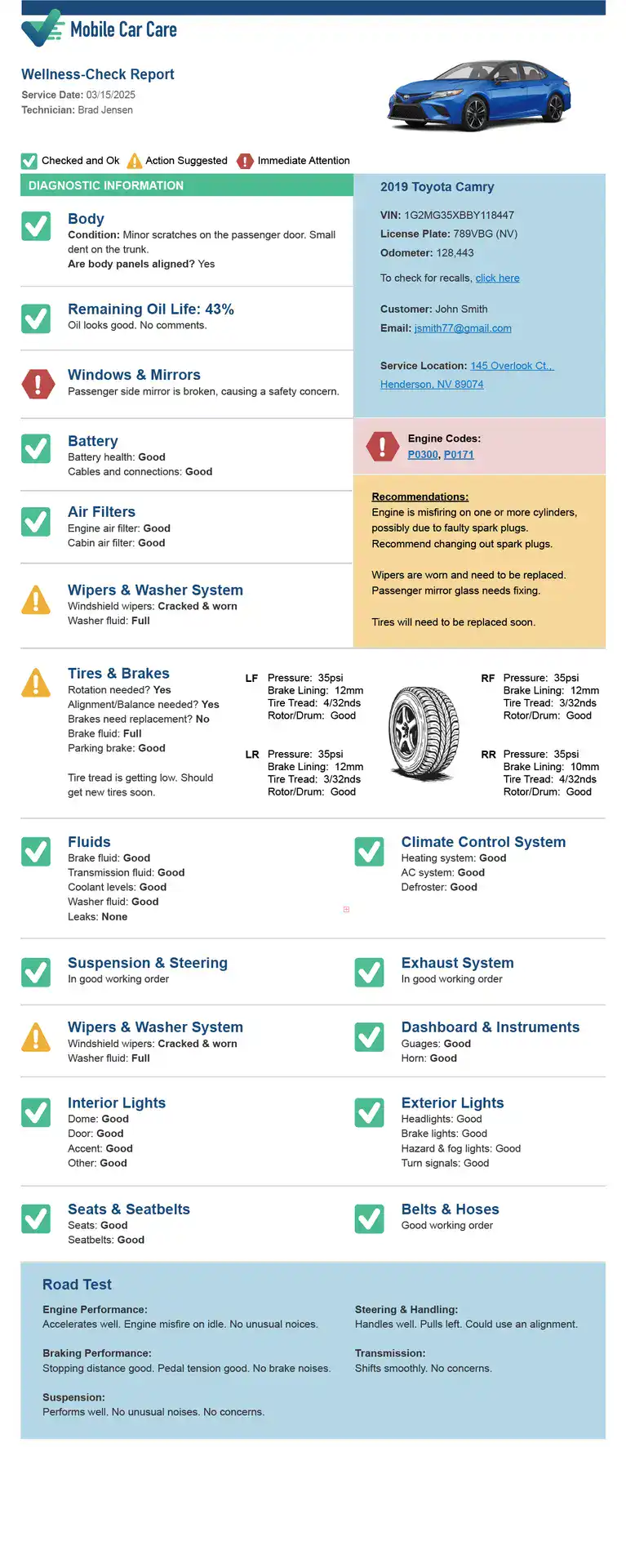
At Mobile Car Care, our 85-point wellness check covers every critical system. We believe a thorough inspection is the foundation of a smart purchase. The process involves looking at the engine’s performance, the integrity of the body and frame, the functionality of all electronics, and the condition of safety systems. We also take the car for a road test to see how it handles in real-world driving conditions. This multi-step approach ensures we catch everything, from worn-out brake pads to subtle signs of a past accident, giving you the information you need to make a confident decision.
Checking Under the Hood: Engine and Transmission
The engine and transmission are the heart and soul of any vehicle, and they’re the first place a technician will look. This part of the inspection involves checking for any fluid leaks, listening for unusual noises, and examining belts and hoses for cracks or wear. We’ll also check the condition and levels of essential fluids like oil, coolant, and transmission fluid, as their color and consistency can reveal a lot about the car’s maintenance history. A comprehensive evaluation by a qualified mechanic is essential to assess the health of these core components and avoid costly future repairs.
From Bumper to Bumper: Exterior and Interior Review
Next, we move to a full-body examination. On the outside, we’re looking for signs of previous accidents, like mismatched paint, uneven panel gaps, or signs of body filler. We’ll also inspect the tires for tread depth and uneven wear, which can indicate alignment issues. Inside the car, the focus is on function and condition. We test the air conditioning (a non-negotiable in Vegas!), check all lights and electronics, and inspect the upholstery and carpets for excessive wear or signs of water damage, like musty smells or rust under the mats.
Testing the Tech and Safety Features
Modern cars are packed with technology, and it’s crucial to ensure it all works correctly. This step involves testing everything from the infotainment system and power windows to critical safety features. A technician will verify that the airbags are operational, the seat belts function properly, and the anti-lock braking system (ABS) is in good working order. Making sure all safety features are working correctly is one of the most important parts of an inspection, as it directly impacts your security on the road. We’ll also test any driver-assist features like backup cameras or blind-spot monitors.
Spotting Vegas-Specific Heat Damage
Las Vegas presents a unique set of challenges for vehicles, and the relentless sun is enemy number one. The intense heat and UV exposure can wreak havoc on a car, causing plastic on the dashboard and door panels to become brittle and crack. Rubber seals around windows and doors can dry out, leading to leaks, and paint can fade and peel prematurely. An inspector familiar with the Las Vegas climate knows to look for these specific signs of desert wear, which might be missed by someone from a milder climate.
How Much Does a Used Car Inspection Cost in Vegas?
When you find a used car that seems perfect, it’s easy to get caught up in the excitement. But before you commit, it’s crucial to factor in the cost of a pre-purchase inspection (PPI). Think of this not as an extra expense, but as an investment in your financial security and peace of mind. A professional inspection can uncover hidden issues that the seller might not know about—or might not want you to know about. Spending a little money upfront can save you from a world of headaches and wallet-draining repairs later on. It’s one of the smartest moves you can make when buying a used vehicle in Las Vegas.
What You Can Expect to Pay
Generally, you can expect to pay between $100 and $300 for a quality used car inspection in Las Vegas. While the exact price depends on the vehicle’s make and model and how detailed the inspection is, this range is a solid benchmark for your budget. A more complex luxury or European car might land on the higher end of that scale, while a standard sedan will likely be on the lower end. It might feel like just another fee, but a professional pre-purchase inspection is your best defense against buying a lemon. It’s a small price to pay for the confidence of knowing you’re making a sound investment.
Mobile vs. Shop Inspections: A Price Comparison
You have two main routes for your inspection: taking the car to a traditional auto shop or booking a mobile service that comes to you. While shop inspections are a classic choice, mobile services are designed for convenience, saving you the hassle of coordinating logistics between the seller and a mechanic. Pricing is often competitive. For example, some mobile inspection services offer standard inspections for around $220, with specialized options for classic, exotic, or commercial vehicles at different price points. This allows you to get a professional opinion without disrupting your day or navigating Vegas traffic to get to a garage.
How to Get the Most for Your Money
Getting the best value from your inspection isn’t just about finding the lowest price; it’s about getting the most comprehensive information to make a smart decision. A detailed report from a meticulous inspector is a powerful tool. If the inspection uncovers issues, you can use that report as leverage to negotiate a lower price or ask the seller to handle the repairs before you finalize the deal. In many cases, the money you save through negotiation far exceeds the cost of the inspection itself. Investing in a thorough check empowers you to buy with confidence, knowing exactly what you’re getting.
How to Choose the Right Inspection Service
Finding the right person to inspect a used car is just as important as getting the inspection itself. You need a service that is thorough, unbiased, and convenient. The goal is to get a clear, complete picture of the vehicle’s health so you can make a smart purchase. Think of it as hiring a detective for your potential new car—you want someone with the right tools, experience, and a keen eye for detail. This choice can be the difference between driving away with a great deal and inheriting someone else’s expensive problems. A great inspection gives you leverage in negotiations and, more importantly, the confidence that you’re making a safe investment for you and your family.
Our Approach: The Mobile Car Care Difference
We believe car care should be stress-free, especially when you’re making a big purchase. That’s why we bring the inspection to you. Whether the car is at a dealership, a private seller’s home, or your office, our mobile service eliminates the hassle of coordinating shop appointments. We perform a comprehensive 85-point wellness check on-site, looking for those hidden issues that might not be obvious during a test drive. Our goal is to give you a detailed report and the peace of mind you need to either negotiate confidently or walk away from a bad deal. A one-time check is the perfect way to get a professional opinion before you buy.
Finding a Reputable Inspector in Las Vegas
With so many options out there, how do you find someone you can trust? Start by looking for established local businesses with a solid track record. Check online reviews on platforms like Google and Yelp, but also ask for recommendations from friends, family, or colleagues who have recently bought a used car. A reputable inspector will have a professional website and be transparent about their process and pricing. They should be focused on providing you with information, not on upselling you on repairs. Remember, even if you know a lot about cars yourself, an expert, impartial inspection is a must.
Key Qualifications to Look For
Not all mechanics specialize in pre-purchase inspections. Look for an inspector who is an ASE (Automotive Service Excellence) certified technician, as this certification is the industry standard for professional competence. It’s also a good idea to find someone with experience inspecting the specific make and model you’re considering. A qualified professional will perform a full check of the car to find any current or potential future problems. They should provide a detailed, easy-to-understand written report with photos, outlining their findings. This document is your proof and your power when it comes to negotiating.
Questions to Ask Before You Book
Before you commit to an inspection service, have a few key questions ready. Ask what’s included in their inspection checklist, how long the process takes, and what kind of report you’ll receive. A great service will offer a detailed report that you can use as a tool. Also, ask about their availability and how the process works with the seller. On that note, if a seller refuses to let you get a pre-purchase inspection, consider it a major red flag. Transparency is key, and a seller who is hiding something is not someone you want to buy a car from. It’s almost always best to walk away and find another vehicle.
Common Red Flags Found in Vegas Used Cars
The Las Vegas used car market is huge, offering a ton of options. But our unique desert climate and city driving conditions create specific issues you need to watch for. A shiny exterior can easily hide problems that are expensive to fix and, more importantly, could put your safety at risk. Knowing what to look for is the first step, but having a professional pair of eyes is the best way to protect yourself. Let’s walk through some of the most common red flags we see in used cars around here, so you can shop smarter and with more confidence.
Desert Wear: Sun and Heat Damage
The relentless Las Vegas sun is tough on cars. While you might expect faded paint, the damage often goes deeper than the surface. The intense heat can bake plastic dashboards until they crack and turn rubber seals and hoses brittle. This isn’t just a cosmetic issue—a cracked hose under the hood can lead to fluid leaks and serious engine trouble. During an inspection, we pay close attention to the condition of all rubber and plastic components, both inside and out, to see how the car has weathered the unique climate. It’s a key indicator of how well the vehicle was maintained.
Hidden Accident and Frame Damage
A clean vehicle history report doesn’t always tell the whole story. Not all accidents are reported, and shoddy repair work can be hard to spot if you don’t know what you’re looking for. Things like mismatched paint, uneven gaps between body panels, or paint overspray on the trim are all warning signs. The biggest concern is frame damage, which can compromise the car’s structural integrity and make it unsafe in a future collision. A thorough pre-purchase car inspection is essential to uncover this kind of hidden damage and ensure the car’s foundation is solid.
Spotting Signs of Flood Damage
It might seem odd in the desert, but flood-damaged cars are a real problem in Las Vegas. Flash floods can catch vehicles, and cars are often transported from other states after major storms. The signs can be subtle, but they’re there if you look. A persistent musty smell, damp carpets, silt in the glove box, or rust on bolts under the seats are major red flags. Flood damage can wreak havoc on a car’s electrical system, leading to a constant stream of frustrating and expensive problems. An inspector will know exactly where to look for this kind of water intrusion.
Major Mechanical Issues to Watch For
This is where a pre-purchase inspection really pays for itself. A test drive might not reveal a slow oil leak, worn-out suspension parts, or a transmission that’s on its last leg. These are the kinds of problems that can turn a great deal into a financial nightmare. A comprehensive pre-purchase inspection examines the car’s core components—the engine, transmission, brakes, and steering—for wear, damage, or potential failure. Catching these issues before you buy gives you the power to walk away or negotiate a price that accounts for the needed repairs, saving you from a world of stress later on.
The Payoff: Saving Money and Gaining Peace of Mind
Buying a used car can feel like a gamble, but a pre-purchase inspection is your ace in the hole. Think of it less as an expense and more as an investment in your financial well-being and future peace of mind. For a relatively small upfront cost, you get a comprehensive report that details the car’s true condition, from the engine performance to the state of the brake pads. This information is powerful. It puts you in the driver’s seat during the negotiation process and protects you from sinking your hard-earned money into a vehicle with costly hidden problems. It’s the difference between hoping you bought a good car and knowing you did.
This detailed assessment gives you a complete picture, so you’re not just relying on the seller’s word or a quick spin around the block. It’s an objective, expert opinion that can save you from headaches and major expenses. Ultimately, an inspection transforms a stressful, uncertain process into a clear and confident decision. Whether the report confirms you’ve found a great deal or helps you walk away from a bad one, you’ll know you made the smartest choice possible. It’s about removing the guesswork so you can focus on the excitement of getting your new-to-you car on the road.
Negotiate a Better Price
One of the most immediate benefits of a pre-purchase inspection is gaining leverage at the negotiating table. Your inspection report is a factual, third-party assessment of the car’s health. If our technicians find issues—like worn-out tires or a soon-to-fail water pump—you can use that detailed report to make a case for a lower price. Instead of just saying you think the car needs work, you can show the seller exactly what needs to be fixed and what it will likely cost. This data-driven approach often convinces sellers to reduce their asking price or agree to make the repairs before the sale, ensuring you get a fair deal.
Dodge Expensive, Unexpected Repairs
A test drive and a visual once-over can only tell you so much. Serious issues like transmission problems, subtle frame damage from a past accident, or developing engine trouble are often invisible to the untrained eye. A professional inspection is designed to uncover these exact problems. Spending a little on a thorough vehicle check now can literally save you thousands of dollars in unexpected repairs down the line. It’s the single best way to protect yourself from buying a “lemon” and facing a mountain of mechanic bills right after you’ve made a major purchase. It’s about preventing buyer’s remorse before it even has a chance to start.
Buy with Confidence
There’s nothing worse than driving off the lot and immediately worrying if you made the right decision. An inspection report gives you the clarity you need to buy with total confidence. If the car gets a clean bill of health, you can finalize the purchase knowing you’ve secured a reliable vehicle. And if the report uncovers major red flags? You can walk away without a second thought, knowing you just dodged a bullet. Knowing the car’s true condition helps you make a smart choice and removes the anxiety from the equation. It’s the final piece of the puzzle that lets you feel genuinely good about your new car.
Related Articles
- Pre-Purchase Car Inspection: A Smart Buyer’s Guide – Mobile Car Care
- Used Car Pre-Purchase Inspection Guide: Everything You Need to Know – Mobile Car Care
- How to Book a Vehicle Inspection in Henderson, NV – Mobile Car Care
- The Complete Guide to Used Car Inspections – Mobile Car Care
- Independent Car Inspections: What Every Car Buyer Must Know – Mobile Car Care
Frequently Asked Questions
What if the seller says I can’t get the car inspected? Honestly, this is one of the biggest red flags you can encounter. A seller who is confident in their vehicle should have absolutely no problem with you getting a second opinion from a professional. If they refuse, it’s often because they know something is wrong and don’t want you to find out. While it can be disappointing, your best move is almost always to thank them for their time and walk away. There are plenty of other cars out there from sellers who are transparent.
Is a clean vehicle history report, like a CarFax, good enough? Vehicle history reports are a great starting point, but they don’t tell the whole story. They only show what’s been officially reported, so they can miss unreported accidents or shoddy repair work. More importantly, they can’t tell you about the current condition of wear-and-tear items like brakes, tires, or belts. Think of the report as the car’s resume and the inspection as the in-person interview where you find out what’s really going on.
How long does a mobile inspection take, and do I need to be there? A thorough inspection typically takes about 60 to 90 minutes to complete. You are absolutely welcome to be there to see the process and ask the technician questions in real-time. However, we know you’re busy, so you don’t have to be present. We can perform the full inspection and send you a comprehensive digital report with photos and notes, which you can review from anywhere.
What should I do with the information in the inspection report? The report is your most powerful tool. If it comes back with a clean bill of health, you can buy with confidence. If it uncovers minor issues, you can use the estimated repair costs as leverage to negotiate a lower price with the seller. If the report reveals major problems, it gives you the clear evidence you need to walk away from a bad investment without any second-guessing.
Is an inspection worth the cost for a less expensive car? Yes, absolutely. In fact, it can be even more critical for a budget-friendly vehicle. A car with a lower price tag might have a higher chance of needing significant repairs that could quickly double your initial investment. The cost of an inspection is a small fraction of what you might pay for a new transmission or major engine work. It protects your investment, no matter the size.