
Let’s be honest: dealing with car maintenance is a hassle. It means finding a trustworthy mechanic, taking time off work, and sitting in a waiting room. A car service plan is designed to cut through all that noise by providing a direct line to expert help without the endless searching. It’s more than just a simple repair warranty; it’s a comprehensive approach to vehicle care that simplifies everything. With a service like ours, that expert help comes right to your driveway, saving you time and eliminating disruption. This guide explains how these plans work to make car ownership easier, more convenient, and far less stressful for busy people.
Key Takeaways
- Manage Your Budget Proactively: A service plan turns the threat of a large, unexpected repair bill into a predictable, fixed payment. It’s a smart way to cover major mechanical failures without draining your savings, especially after the manufacturer’s warranty is gone.
- Know Your Responsibilities: A service plan isn’t a substitute for regular car care. You’re still responsible for routine maintenance like oil changes and replacing wear-and-tear items like tires and brakes. Keeping up with these tasks is essential to ensure your coverage remains valid.
- Find the Right Fit for Your Needs: Not every plan is right for every car. To choose wisely, consider your vehicle’s age and your budget, carefully review what is and isn’t covered, and check the provider’s reputation. This ensures you select a plan that offers real value and security.
What Is a Car Repair Warranty?
Think of a car repair warranty as a safety net for your vehicle and your wallet. It’s a promise from a manufacturer or a service provider that if something specific goes wrong with your car within a certain timeframe, they’ll cover the cost of the repair. This protection is designed to give you peace of mind, so a sudden mechanical or electrical failure doesn’t turn into a major financial headache.
Warranties aren’t all the same, though. The most common one is the manufacturer’s warranty that comes with a new car. But you can also get a car service plan, sometimes called an extended warranty, which you purchase separately to cover repairs after the original warranty expires. Understanding the difference is key to making sure you have the right coverage for your car and your driving habits. Both options aim to shield you from surprise repair bills, but they work in slightly different ways.
How Car Service Plans Work
A car service plan is a contract you buy to cover the cost of certain vehicle repairs. The main goal is to give you a predictable way to handle unexpected issues, like a faulty alternator or a transmission problem. Instead of facing a huge, one-time bill, you have a plan in place to manage the expense.
When a covered part fails, you’ll start a claims process with the provider. They’ll verify that the issue is included in your agreement and then authorize the repair. These automotive service plans are designed to instill confidence, ensuring you’re not left on your own when a major component breaks down. It’s all about creating a more streamlined and less stressful approach to vehicle maintenance.
Service Plan vs. Manufacturer’s Warranty
It’s easy to mix these two up, but they are quite different. A manufacturer’s warranty comes standard with a new vehicle and covers defects in materials or workmanship for a specific period, like three years or 36,000 miles. You don’t pay extra for it; its cost is built into the car’s price.
On the other hand, an auto service contract, often called an “extended warranty,” is an optional plan you purchase. It can be sold by the carmaker, a dealership, or an independent company like Mobile Car Care. These plans kick in to cover repairs after the manufacturer’s warranty ends. Coverage and costs can vary widely, so it’s important to read the details to know exactly what repairs and services are included.
What Does a Car Service Plan Typically Cover?
Think of a car service plan as a financial safety net for your vehicle. While every plan is different, most are designed to cover the cost of repairing major mechanical and electrical components that can fail unexpectedly. The goal is to give you peace of mind by protecting your budget from sudden, expensive repair bills. It’s a way to manage the “what ifs” of car ownership without having to dip into your emergency fund every time something goes wrong.
Unlike your car insurance, which covers damage from accidents or theft, a service plan focuses on the mechanical breakdowns that happen during normal use. It’s there for when your transmission suddenly acts up or your air conditioning gives out on the hottest day of the year. The specifics of what’s included will depend on the level of coverage you choose, which is why it’s so important to read the details before signing up. Some plans are basic, covering only the most critical parts like the engine, while others are more comprehensive, including everything from the fuel system to high-tech sensors.
Key Vehicle Systems and Components
Most service plans focus on the big-ticket items—the parts that are most essential to your car’s operation and the most expensive to fix. While the exact list varies, you can generally expect coverage for major systems like the engine, transmission, and drivetrain. These are the core components that make your car go, and a major failure in any of them can easily lead to a four-figure repair bill. Beyond the basics, many plans also include coverage for the electrical system, steering, suspension, and air conditioning. Some of the more comprehensive auto service contracts will even extend to cover things like your car’s cooling system and fuel delivery components.
Common Exclusions to Know
It’s just as important to understand what a service plan doesn’t cover. These plans are designed for unexpected mechanical breakdowns, not routine upkeep or wear and tear. That means items that wear out over time—like brake pads, tires, windshield wipers, and batteries—are typically not included. Regular maintenance services such as oil changes, tire rotations, and fluid top-offs are also your responsibility. Additionally, service plans generally won’t cover problems that existed before you bought the plan or issues caused by misuse or accidents. If a part fails because it was installed incorrectly or you neglected to perform required upkeep, the repair likely won’t be covered. Always read the fine print to see the full list of exclusions.
Why Consider a Car Service Plan?
A car service plan can feel like just one more thing to add to your budget, but it’s really an investment in your financial stability and your time. Think of it less as an expense and more as a strategy for handling car care without the usual stress. When you have a plan, you’re not just waiting for something to go wrong; you’re prepared for it. This proactive approach simplifies everything from routine maintenance to unexpected issues, giving you a clear path forward and taking the guesswork out of keeping your car in great shape. It’s about trading uncertainty for predictability, which is a pretty good deal.
Protect Your Budget from Unexpected Repairs
Few things can derail a monthly budget faster than a surprise car repair bill. One minute everything is fine, and the next you’re facing a four-figure invoice for a new transmission. A car service plan helps smooth out these financial bumps by turning unpredictable costs into a fixed, manageable payment. Instead of reacting to expensive problems, you’re proactively covering repairs and maintenance through a predictable subscription. This gives you control over your expenses and prevents a single mechanical issue from becoming a major financial crisis. It’s a smart way to protect your savings and keep your budget on track, no matter what your car throws at you.
Get Convenient, Expert Service
Let’s be honest: finding a reliable mechanic and scheduling service is a hassle. It means time off work, arranging rides, and hoping you’ve found someone trustworthy. A service plan cuts through all that noise. It provides a direct line to professional help without the endless searching. With a service like Mobile Car Care’s Essential Plan, that expert service comes right to your driveway. You get the assurance that certified technicians are handling your vehicle, following a clear process for maintenance and repairs. It’s the most straightforward way to get quality car care without disrupting your entire day.
Enjoy Peace of Mind on the Road
That weird rattling noise or the check engine light that just popped on can instantly fill you with dread. Worrying about a potential breakdown is stressful and distracts you from your drive. A car service plan is designed to give you a sense of security by providing a safety net for those unexpected issues. Knowing you have a plan in place and a trusted team to call takes a huge weight off your shoulders. You can drive with confidence, assured that you’re covered if something goes wrong. It’s about more than just fixing your car; it’s about removing the anxiety of the unknown so you can simply enjoy the ride.
What Are the Limitations?
Car service plans are fantastic for managing costs and reducing stress, but they aren’t a blank check for every possible car issue. Like any contract, they have rules and boundaries. Understanding these limitations upfront is the key to avoiding surprises and making sure you get the value you expect. Think of it less as “fine print” and more as a clear agreement between you and the provider about what’s covered.
Knowing the boundaries of your plan helps you use it effectively. The three main areas to pay close attention to are pre-existing conditions, your responsibility for regular maintenance, and any financial caps or fees. When you know what to expect, you can plan accordingly and feel confident that your service plan is there for you when you need it most. Let’s walk through what each of these limitations means for you and your vehicle.
Understanding Pre-Existing Conditions
One of the most important things to know is that a service plan won’t cover problems that your car already had before the coverage started. This is what’s known as a pre-existing condition. For example, if your air conditioning was blowing warm air before you signed up, the plan won’t pay for the repair. The purpose of a service plan is to protect you from future, unexpected issues, not to fix existing ones. This is a standard part of nearly every automotive warranty and service contract. That’s why getting a thorough vehicle inspection, like our one-time Quick Check Plan, is a great first step to identify any underlying problems.
The Importance of Regular Maintenance
To keep your service plan active, you have to do your part in taking care of your car. This means keeping up with routine services like oil changes, tire rotations, and fluid checks. Providers require this because regular upkeep prevents small issues from turning into major, expensive failures. If you neglect these basic tasks, you could risk voiding your coverage. The provider’s logic is simple: they’ll cover a surprise engine failure, but not if it was caused by skipping oil changes for a year. Following the manufacturer’s recommended maintenance schedule is your best bet. Services like our Essential Plan are designed to make this effortless by handling routine maintenance for you.
Knowing Your Service Fees and Coverage Caps
“Covered” doesn’t always mean 100% free. Most plans come with some out-of-pocket costs you should be aware of. Many have a service fee, which is a fixed amount you pay per repair visit, similar to a deductible. Additionally, some plans have coverage caps, which are the maximum amount the provider will pay for a single repair or over the life of the contract. The Federal Trade Commission advises consumers to read the details of their auto service contracts carefully to understand these limits. For instance, your plan might cover a $3,000 transmission job, but you’ll still be responsible for a $150 service fee. Always check the details so you know exactly what to expect.
How Much Do Car Service Plans Cost?
Figuring out the cost of a car service plan can feel a bit like a guessing game because there isn’t one standard price. The final number depends entirely on your car, your needs, and the type of coverage you choose. Think of it less like a fixed product price and more like a personalized insurance quote—several key details will shape your final cost.
The good news is that you have a lot of control over these factors. By understanding what drives the price up or down, you can find a plan that fits your budget without sacrificing the coverage you need. Let’s break down the main elements that influence the cost and how you’ll typically pay for a plan.
What Affects the Price?
The cost of a service plan is all about risk. Providers calculate the likelihood of your car needing repairs and price the plan accordingly. The biggest factors include your vehicle’s age and mileage, its make and model, and the level of coverage you select. An older car with high mileage is more likely to have issues than a brand-new one, so its plan will naturally cost more.
Similarly, luxury or imported vehicles often have higher repair costs due to expensive parts and specialized labor, which is reflected in the plan’s price. The most significant factor, however, is what the plan actually covers. A basic plan for routine maintenance will be far more affordable than a comprehensive one that protects major systems like the engine and transmission. It’s important to understand the details of different auto service contracts to see what you’re paying for.
A Breakdown of Payment Options and Fees
Most providers offer flexible ways to pay for your service plan. You can often choose to pay the full amount upfront in a lump sum or break it down into more manageable monthly installments. Spreading the cost out can make it easier to fit into your regular budget, which is a huge plus for many people.
Beyond the main price, be sure to ask about any additional fees. Some plans require a deductible, which is a fixed amount you pay out-of-pocket each time you need a repair. Others might have small service fees. At Mobile Car Care, we keep it simple with clear, subscription-based pricing. Our Essential Plan, for example, offers proactive maintenance checks for a straightforward monthly fee, so you always know exactly what to expect.
How to Choose the Right Service Plan
Picking the right car service plan doesn’t have to be complicated. The goal is to find coverage that matches your vehicle’s needs, your driving habits, and your budget. Think of it as a personalized strategy for keeping your car healthy and your life on track. A good plan provides a safety net for issues your standard manufacturer’s warranty might not cover, especially as your car gets older. Before you commit, think about what gives you the most peace of mind—a simple, one-time inspection, or ongoing maintenance that catches small issues early? Clarifying your needs first makes it easier to select a plan that truly works for you.
A Look at Mobile Car Care’s Plans
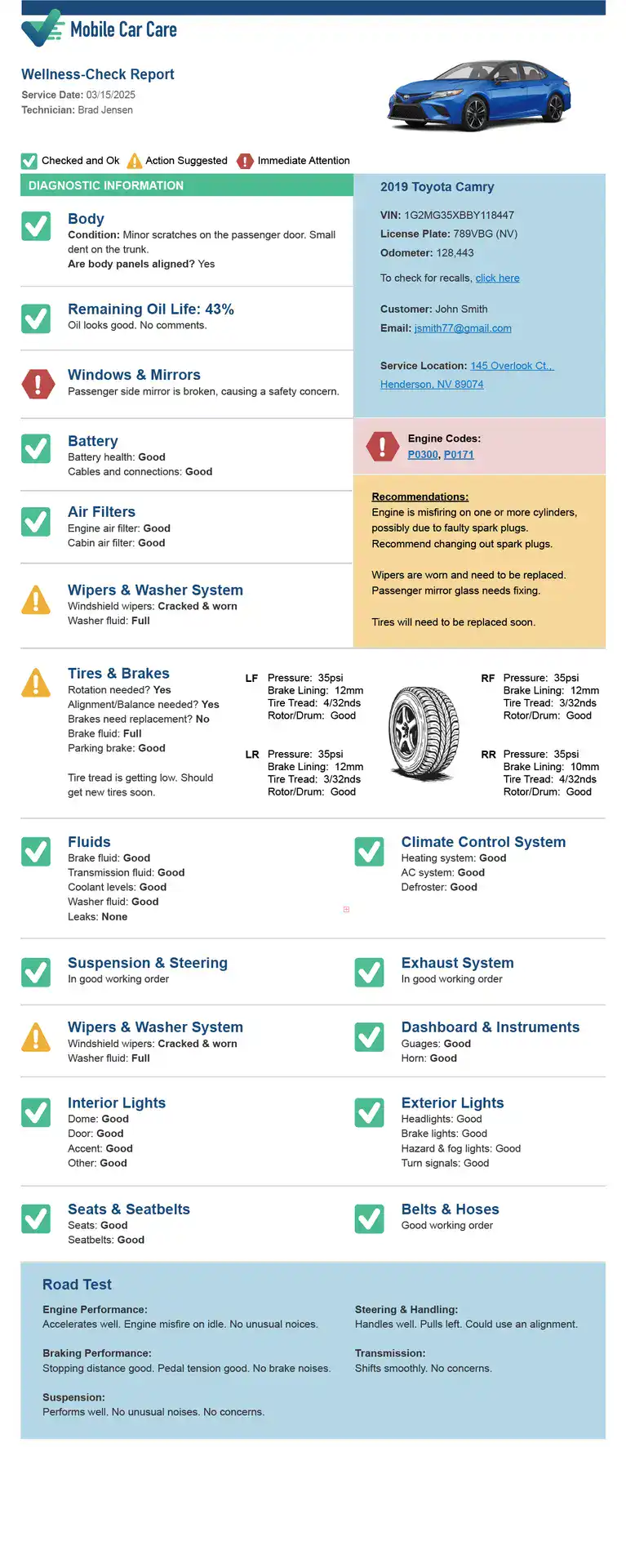
We designed our plans to offer clear, straightforward options for every type of driver. If you just want a professional set of eyes on your vehicle for a specific concern, our one-time Quick Check is the perfect solution. For those who want consistent, proactive care, our Essential Plan provides recurring 85-point wellness checks. For the ultimate convenience, the Total Care Plan includes everything in the Essential plan plus runner services for tires and batteries. Each plan brings expert car care right to your driveway.
Your Quick-Compare Checklist
When you’re weighing your options, a simple checklist can help. First, look at the scope of coverage. Make sure you understand exactly what a vehicle service plan includes and what it excludes. Next, consider the cost—look beyond the monthly fee to understand any potential deductibles. Finally, check the provider’s reputation. A quick search for customer reviews can tell you a lot about the company’s reliability and service quality. A great plan on paper is only valuable if it’s backed by a trustworthy team.
How to Evaluate Customer Service and Claims
The quality of a service plan often comes down to the people behind it. When something goes wrong with your car, the last thing you want is a complicated claims process. Look for a provider with a reputation for responsive, helpful customer support. A great way to choose a vehicle service contract is to see how easy it is to get in touch with them. With a mobile service like ours, the process is built right in. We come to you, diagnose the issue, and explain the solution on the spot.
Common Myths About Car Service Plans
Car service plans can feel like a bit of a mystery, and a lot of misinformation floats around. It’s easy to get tangled up in assumptions about what they are and what they do. Let’s clear the air and tackle some of the most common myths head-on so you can make a decision that feels right for you and your car.
Understanding what you’re really getting is the first step toward genuine peace of mind. When you know the facts, you can choose a plan that truly fits your life, instead of one that just sounds good on paper. We’ll walk through three big misconceptions to help you see past the hype.
Myth: They Cover Absolutely Everything
It’s a comforting thought: pay one fee and never worry about another car issue again. Unfortunately, that’s not quite how service plans work. While they are designed to cover a wide range of repairs and give you peace of mind, they aren’t all-inclusive. Think of them as a safety net for specific, major components, not a bumper-to-bumper guarantee for every little thing.
Most plans have a list of exclusions. Things like routine wear-and-tear items (think brake pads, tires, and windshield wipers), cosmetic damage, and issues caused by accidents or neglect typically aren’t covered. It’s essential to read the details of any auto service contract to understand exactly what’s included and what’s not, so there are no surprises down the road.
Myth: You Can Always Transfer Your Plan
If you’re thinking of selling your car in the future, you might assume your service plan will automatically transfer to the new owner. A transferable plan can definitely be a great selling point, but it’s not always a given. Some contracts are tied to the owner, not the vehicle, and others may have specific conditions or fees for transferring the coverage.
Before you sign up, check the fine print on transferability. If you’re buying a used car that supposedly comes with a service plan, do your homework to confirm the coverage was properly transferred to you. Taking a few minutes to verify the details can save you a major headache and ensure the protection you’re counting on is actually in place.
Myth: They’re a “Must-Have” for Every Car
You’ll often hear that a service plan is an absolute necessity, but the truth is, it depends entirely on your situation. These plans are optional contracts, and whether one is right for you depends on your car’s age, its reliability record, and your personal budget. For a brand-new car with a solid manufacturer’s warranty, an extra service plan might be redundant. For an older vehicle, it could be a lifesaver.
Instead of feeling pressured into a long-term contract, consider what level of service actually meets your needs. Sometimes, a simple, one-time inspection like our Quick Check plan is all you need to feel confident about your car’s health without committing to a recurring expense.
Can You Save Money on a Service Plan?
A car service plan is an investment in your vehicle’s health and your own peace of mind, but that doesn’t mean you can’t find a great deal. Just like any other major purchase, it pays to be a savvy shopper. The price you first see isn’t always the final price, and there are several ways to make a plan more affordable without sacrificing the quality of your coverage.
The key is to think beyond the sticker price and look at the overall value. Sometimes, a slightly more expensive plan that includes routine maintenance can save you money on oil changes and tire rotations down the road. Other times, a simple promotional code can lower your monthly payment. By looking for special offers and considering bundled services, you can find a plan that fits your budget and gives you the confidence that you’re covered when you need it most.
Look for Discounts and Special Offers
Don’t hesitate to ask about potential savings. Companies often run promotions for new customers, holidays, or seasonal events. Check their website for any listed deals or sign up for their email newsletter to get notified about upcoming offers. Since auto service contracts are optional products, you have the flexibility to shop for the best price. When you speak with a representative, simply ask if there are any discounts available. You might be surprised by what they can offer to earn your business, whether it’s a percentage off your first year or a reduced monthly fee.
Consider Bundles and Transfer Options
Bundling services is another smart way to get more value from your plan. Instead of paying for individual services as they come up, a comprehensive plan like our Essential Plan includes regular wellness checks and other services for a consistent monthly price, often saving you money over the long term. Also, ask if the plan is transferable. If you decide to sell your car, a service plan that can be transferred to the new owner can be a major selling point, potentially increasing your vehicle’s resale value and making the plan a wise financial move.
Is a Car Service Plan Right for You?
Deciding whether to invest in a car service plan is a personal choice, and honestly, there’s no single right answer. It really comes down to your specific car, your budget, and how much you value knowing you’re covered if something goes wrong. For some, the predictable monthly payment of a plan like our Essential Care subscription is a welcome alternative to the stress of a sudden, expensive repair. For others, it might feel like an unnecessary expense. The key is to figure out what makes the most sense for you.
A service plan isn’t just about covering repairs; it’s about buying convenience and confidence. It means having a clear plan for maintenance and a trusted partner to call when something feels off, without having to scramble to find a reliable mechanic or worry about a massive bill. Think about it this way: you’re trading the possibility of a large, unexpected expense for a smaller, regular one. This can make budgeting much simpler and remove a major source of financial anxiety. It’s about shifting from a reactive “fix it when it breaks” mindset to a proactive one where you’re always a step ahead. To figure out if a plan is a good fit, it helps to think through a few key areas. Let’s walk through what you should consider to make a confident decision for your peace of mind and your wallet.
Assess Your Vehicle’s Age and Condition
First things first, let’s talk about your car. If you’re driving a brand-new vehicle, it’s likely still covered by the manufacturer’s warranty. But if your car is a few years old or has racked up some serious miles, the odds of needing a repair start to climb. This is where a service plan can step in. Think of it as a safety net for when your original warranty runs out. Car warranties are designed to give you peace of mind, and a good service plan continues that feeling by helping you stay ahead of potential issues. It’s all about turning reactive stress into proactive care.
Consider Your Budget and Driving Habits
Next up is your wallet and your lifestyle. A service plan is a predictable expense, either paid upfront or monthly. You need to decide if that fixed cost fits your budget better than a surprise, four-figure repair bill. Auto service contracts are optional and their price can vary, so it’s smart to weigh the cost against the potential benefits. Also, think about how much you drive. If you have a long daily commute or take frequent road trips, your car experiences more wear and tear, making a service plan a more attractive option. The cost often reflects your car’s make, model, and how long the contract lasts, so your personal driving habits play a big role.
How to Get the Most from Your Service Plan
Once you’ve chosen a service plan, the next step is making sure you get every bit of value out of it. Think of it like a new tool in your garage—it works best when you know how to use it. A little proactive effort can save you a lot of headaches down the road when you actually need a repair. It’s all about being prepared so you can handle any car trouble with confidence. Here’s how to stay organized and make your
Know the Claims Process
When a covered part needs fixing, you’ll have to start a claim. This is simply the official process for requesting a repair under your plan. The best time to understand this process is right after you sign up, not when you’re stressed on the side of the road. Take a few minutes to read your agreement and find out who you need to contact and what information they’ll ask for. Save the claims phone number or website in your phone. Knowing these simple steps ahead of time makes the entire automotive warranty experience smoother and gets you back on the road faster.
Keep Good Records and Stay on Top of Maintenance
Keeping your car on a regular maintenance schedule is one of the most important things you can do—both for your vehicle’s health and for your service plan. Most plans require you to keep up with routine care like oil changes to keep your coverage active. Hold onto all your service receipts and reports in a folder or digital file. This creates a clear history of care that can make the claims process much easier. Services like our Essential Plan are designed to handle this for you, providing proactive checks and detailed reports that give you total peace of mind.
Related Articles
- Is a Monthly Car Care Plan Worth It? A Simple Guide – Mobile Car Care
- Mobile Car Maintenance Plans: A Complete Guide – Mobile Car Care
- Quarterly Car Service Deals: Your Savings Guide – Mobile Car Care
Frequently Asked Questions
What’s the difference between a car service plan and my car insurance? That’s a great question because they cover completely different things. Your car insurance is there for the big, unexpected events like accidents, theft, or storm damage. A car service plan, on the other hand, is designed to handle the mechanical side of things—the breakdowns that happen from normal use, like a transmission issue or a faulty water pump. Think of it this way: insurance protects you from external events, while a service plan protects you from your car’s internal failures.
So, this is different from the warranty that came with my new car? Yes, they serve different purposes. The manufacturer’s warranty that comes with a new car is the automaker’s promise to fix defects for a set period, like the first three years. A car service plan is something you can purchase to extend that protection after the original warranty expires. It’s a way to continue covering major repair costs on your own terms, which is especially helpful as a car gets older and becomes more likely to need work.
Will a service plan cover routine maintenance like oil changes and tire rotations? Typically, no. Most service plans are designed to cover the cost of unexpected mechanical or electrical repairs, not routine upkeep. However, keeping up with maintenance like oil changes is usually required to keep your plan active. Some providers, like us at Mobile Car Care, offer plans that are specifically built around proactive maintenance, bundling regular wellness checks to help you stay on top of your car’s health and prevent bigger issues from happening in the first place.
My car is a few years old. Is it too late to get a service plan? Not at all! In fact, this is often the perfect time to consider one. Most manufacturer warranties have expired by the time a car is a few years old, which means you’re responsible for the full cost of any repairs. A service plan acts as a safety net for your post-warranty vehicle, giving you a predictable way to handle repair costs just as the risk of them starts to increase.
What if my car already has a problem? Will the plan cover it? Service plans are designed to protect you from future, unexpected breakdowns, so they don’t cover issues that already exist when you sign up. This is known as a pre-existing condition. If your check engine light is already on, for example, the plan won’t cover the repair for that specific issue. That’s why it’s a good idea to get a thorough inspection before starting a plan, so you have a clear picture of your car’s current health.