
Let’s be honest, the logistics of buying a used car can be a nightmare. You have to coordinate with the seller, take time off work, and somehow get the car to a mechanic’s shop for a check-up. It’s a hassle that adds stress to an already big decision. What if the expert could just come to you? A mobile inspection service simplifies the entire process by meeting you and the seller wherever the car is. It’s the most convenient way to get a professional pre purchase inspection in Las Vegas, saving you time and making the entire experience smoother for everyone involved.
Key Takeaways
- Use the inspection report as your leverage: A professional report provides a clear, expert assessment of a car’s true condition, giving you the evidence you need to negotiate a fairer price or confidently walk away from a bad deal.
- Look beyond the surface for desert damage: The Las Vegas climate is harsh on vehicles, causing hidden damage to rubber hoses, belts, and batteries. A thorough inspection is essential for spotting these heat-related issues, as well as signs of past accidents or flood damage.
- Choose an inspector who is certified and convenient: Finding the right professional is key. Prioritize ASE-certified technicians for proven expertise and consider a mobile service that comes to the car’s location to save time and simplify coordination with the seller.
Why a Pre-Purchase Inspection is a Must in Las Vegas
Buying a used car can feel like a gamble, especially when you’re trying to find a reliable vehicle in the Las Vegas heat. You’ve found a car that looks great and drives well on the test drive, but what’s happening under the hood? A pre-purchase inspection (PPI) is your best tool for turning that gamble into a confident investment. It’s a thorough check-up by a qualified mechanic that gives you a clear picture of the car’s health before you commit.
What is a Pre-Purchase Inspection?
Think of a pre-purchase inspection as a deep dive into a used car’s condition, performed by an impartial expert. The main goal is to uncover any existing issues or potential problems that aren’t obvious during a test drive. A mechanic will examine everything from the engine and transmission to the brakes and electrical systems. This isn’t just about kicking the tires; it’s a comprehensive assessment that can reveal hidden damage, overdue maintenance, or signs of excessive wear. Getting a detailed inspection gives you the information you need to make a smart, informed decision instead of just hoping for the best.
Common Myths About Car Inspections
One of the biggest mistakes you can make when buying a used car is skipping the inspection, even if you consider yourself pretty car-savvy. It’s easy to think, “I know what to look for,” but even experienced car enthusiasts can miss subtle signs of trouble. A professional mechanic has the tools, training, and unbiased perspective to spot issues you might overlook. They see these cars every day and know the specific red flags for different makes and models. Believing a clean-looking car is a safe bet is one of the most common car-buying mistakes that can lead to expensive repairs down the road.
Why a Professional Opinion Matters
Ultimately, a professional inspection provides one thing you can’t put a price on: peace of mind. Knowing that an expert has thoroughly vetted the vehicle helps you feel confident in your purchase. The inspection report will highlight any issues, from minor wear and tear to significant mechanical problems or signs of a past accident. This information is powerful. It not only protects you from buying a lemon but also gives you leverage to negotiate a better price with the seller. A professional opinion turns an unknown risk into a known quantity, allowing you to either walk away from a bad deal or move forward with your eyes wide open.
What Does a Professional Inspection Cover?
So, what exactly happens during a pre-purchase inspection? It’s far more than a quick kick of the tires and a glance under the hood. A true professional inspection is a comprehensive, top-to-bottom review of the vehicle’s health, designed to uncover any hidden issues before you commit. Think of it as getting a full physical for your potential new car, where a trained expert methodically checks every system to see how it’s holding up. The goal is to give you a complete and honest picture of its condition, from major mechanical components to the smallest electronic details.
A thorough service, like the 85-point wellness check included in our Essential Plan, leaves no stone unturned. This detailed examination covers everything from the engine and transmission to the body, frame, and safety features, ensuring you know exactly what you’re buying. It’s the single best way to protect your investment and drive away with confidence. A professional inspector acts as your advocate, using their expertise to spot red flags you might miss. They check for signs of previous accidents, hidden rust, and potential mechanical failures that could lead to expensive repairs down the road. This isn’t just about finding problems; it’s about giving you the clarity and peace of mind to make a smart financial decision.
Checking the Body and Frame
First, an inspector will carefully examine the car’s exterior. This isn’t just about looking for scratches; it’s a hunt for clues about the car’s history. They’ll check for signs of a major accident, like damage to the frame or chassis, which can compromise the vehicle’s structural integrity. They also look for subtle red flags, such as mismatched paint colors between panels or uneven gaps around the doors and hood, which often point to past repairs. An inspector might even be suspicious of an engine that looks too clean, as it could be a sign that the seller is trying to wash away evidence of fluid leaks.
Testing the Interior and Electronics
Next, the inspection moves inside. The technician will assess the condition of the interior, looking for excessive wear and tear on the seats, dashboard, and carpets that might not align with the car’s mileage. More importantly, they’ll test all the electronic components to make sure everything works as it should. This includes the battery, alternator, and starter, as well as the lights, air conditioning, power windows, and infotainment system. In a modern car, fixing faulty electronics can be surprisingly expensive, so confirming everything is in working order is a crucial step.
Looking Under the Hood: Engine and Mechanics
This is the heart of the inspection. A skilled technician will perform a deep dive into the car’s mechanical systems, which are often the most critical and costly to repair. The examination covers the engine, transmission, brakes, suspension, and steering. They’ll check for fluid leaks, worn-out belts and hoses, and listen for any unusual noises that could signal underlying trouble. This mechanical evaluation is essential for understanding the car’s overall reliability and what maintenance costs you might face in the near future. It’s what separates a great deal from a future headache.
Making Sure Safety Features Work
Your safety on the road is non-negotiable. A key part of any pre-purchase inspection is verifying that all the car’s safety systems are functioning correctly. This includes checking the condition of the tires and brakes, testing the seatbelts, and ensuring that warning lights, like the airbag indicator, are not illuminated. For you and your family, this check provides invaluable peace of mind. Knowing that the car’s most important safety features are in good working order helps you feel confident that it will protect you when you need it most.
What the Final Report Will Tell You
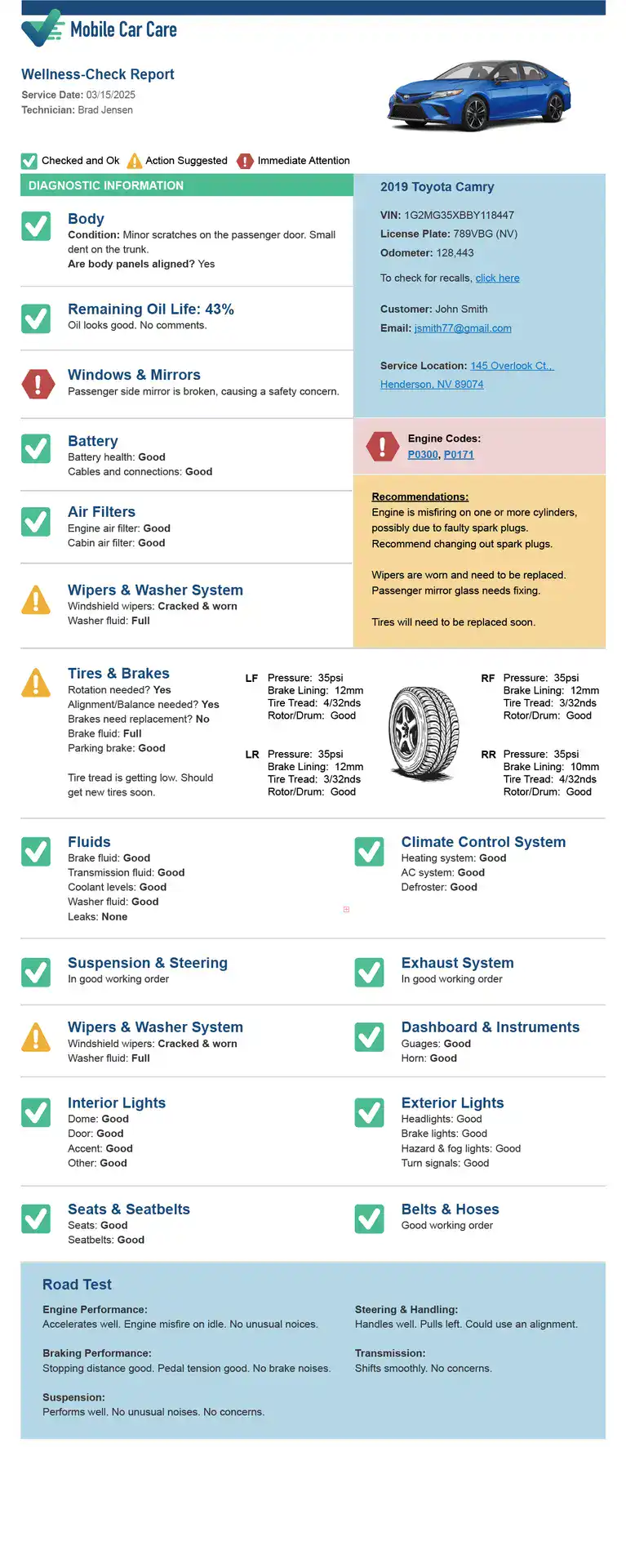
After the inspection is complete, you won’t just get a verbal summary. You’ll receive a detailed, written report that outlines everything the technician found. This document lists any identified issues, from minor cosmetic flaws to significant mechanical concerns, often with notes on the urgency and potential cost of repairs. This report is your most powerful tool. You can use it to negotiate a lower price with the seller or, if the problems are too severe, it gives you the clear evidence you need to confidently walk away from the deal.
How to Find the Best Inspector in Las Vegas
Finding the right person to inspect your potential new car is just as important as the inspection itself. You need someone with a sharp eye, deep knowledge, and an unbiased opinion. In a city like Las Vegas, you have plenty of options, from dealership service centers to independent shops and mobile mechanics. The key is to find a trusted professional who will give you a clear, comprehensive report so you can make a smart purchase. Think of this as hiring a detective for your car—you want the best one on the case.
Look for the Right Credentials
When you’re trusting someone with a major purchase, you want to know they’re qualified. In the auto world, the gold standard for mechanics is certification from the National Institute for Automotive Service Excellence (ASE). An ASE-certified technician has passed rigorous exams and has proven hands-on work experience. This isn’t just a piece of paper; it’s proof that they have a high level of technical skill and knowledge. Don’t be shy about asking if an inspector is ASE-certified. A true professional will be proud to confirm their qualifications and will understand why you’re asking. It’s a simple step that adds a huge layer of confidence.
Mobile Service or Traditional Shop: Which is Better?
Your two main options for an inspection are a traditional brick-and-mortar shop or a mobile service that comes to you. A shop has access to heavy-duty lifts and equipment, which can be useful. However, a mobile inspection service offers unmatched convenience. You don’t have to coordinate getting the car from the seller to a shop and back. A mobile mechanic can meet you at the seller’s home, office, or a neutral location. A thorough mobile inspection report is more than enough to spot major issues and give you the green light. For busy people, having an expert come to you saves time and simplifies the entire process.
Key Questions to Ask Your Inspector
Before you book an inspection, take a few minutes to interview your potential inspector. This helps ensure you’re hiring the right person for the job.
Here are a few key questions to ask:
- What specific things do you check during your inspection?
- How long does the inspection usually take?
- What does the final report look like? Will I get photos or videos of any problem areas?
- Can you provide an estimated cost for any repairs you find?
- Are you ASE-certified?
A professional inspector will have clear, confident answers. Their response will tell you a lot about their process and level of expertise.
Inspector Red Flags to Avoid
Knowing what to look for is important, but knowing what to avoid is critical. The biggest red flag has nothing to do with the inspector and everything to do with the seller. If a seller refuses to let you get an independent inspection, walk away. Most sellers will have no problem with it, so a refusal often means they’re hiding something serious. Another red flag is an inspector who is a little too friendly with the seller or was recommended by them without any third-party validation. You want an unbiased opinion, not one influenced by a prior relationship. Finally, be wary of any inspector who provides a vague report without specific details or photos.
What to Expect for Pricing
A pre-purchase inspection is an investment in your peace of mind, and it’s one of the best you can make when buying a used car. Prices in Las Vegas can vary, but you can generally expect to pay between $150 and $250 for a quality inspection. The cost might be higher for luxury, classic, or high-performance vehicles that require specialized knowledge. While it might feel like another expense, remember that the small cost of an inspection can save you thousands of dollars in future repairs. It also gives you powerful leverage to negotiate a lower price if the report uncovers any issues.
Common Car Problems to Spot in Las Vegas
Living in Las Vegas means dealing with unique environmental factors that can take a real toll on a vehicle. The intense sun, dry air, and occasional flash floods create a specific set of challenges for car owners. When you’re buying a used car here, you’re not just looking for standard mechanical issues; you’re also looking for problems caused by the desert itself. A thorough pre-purchase inspection is your best defense against buying a car with hidden damage that could lead to expensive repairs down the road. Knowing what to look for can save you a lot of headaches and help you make a smarter purchase.
Damage from the Desert Heat
The desert heat is relentless, and it can quietly cause serious damage to a car. Rubber and plastic components are especially vulnerable. Hoses can become brittle, belts can crack, and dashboard materials can warp or fade. The sun’s UV rays also break down a car’s paint and clear coat, leading to oxidation and peeling. Beyond the cosmetic issues, extreme heat puts a major strain on the battery and cooling system. A professional inspection is crucial because its main goal is to find these hidden problems before they become your problem. An expert can spot the early signs of heat degradation that an average buyer might miss, ensuring the car is ready for another Vegas summer.
Major Mechanical Red Flags
Some car problems are more than just an inconvenience—they’re deal-breakers. A professional inspection can uncover major issues like frame or chassis damage from a previous accident, which can compromise the car’s structural integrity and safety. Poorly done repair work is another huge red flag; it often indicates that corners were cut, potentially hiding deeper mechanical troubles. An inspector will also check for signs of serious engine or transmission problems that could lead to a complete failure. These are the kinds of expensive, complex issues that you want to know about upfront. A comprehensive 85-point wellness check is designed to catch these exact red flags, giving you a clear picture of the car’s true condition.
Spotting Signs of a Past Accident
Even if a vehicle history report comes back clean, a car could still have been in an unreported accident. That’s why a visual inspection is so important. Look for subtle signs that point to hidden damage. Mismatched paint between body panels is a classic giveaway that a section has been repaired or replaced. You should also check for uneven gaps around the doors, hood, and trunk, as this can indicate a bent frame. Another sneaky trick is an engine that looks too clean. While it might seem like a good thing, sellers sometimes steam-clean an engine bay to hide fluid leaks from failing gaskets or hoses. A trained eye can tell the difference between a well-maintained car and one that’s just been cleaned up to sell.
How to Identify Flood Damage
It might seem strange in a desert, but flash floods can and do happen in Las Vegas, and flood-damaged cars often end up back on the market. Water can wreak havoc on a vehicle’s electrical systems, engine, and interior, causing problems that may not show up for months. To spot potential flood damage, use your nose—a persistent musty or mildewy smell inside the car is a major warning sign. Check for silt or sand under the carpets, in the glove box, and around the seat tracks. You should also look for rust on unpainted metal parts under the dashboard or seats, as these areas shouldn’t normally be exposed to moisture. A professional inspection will also check engine and body codes for any signs of tampering, which can sometimes be done to hide a salvage title. Our comprehensive care plans include checks that can help uncover this kind of hidden history.
What to Expect on Inspection Day
Getting a pre-purchase inspection might sound like a big production, but it’s actually a straightforward process that saves you from major headaches down the road. Knowing what happens step-by-step can make you feel more confident as you get ready to buy your next car. From scheduling the appointment to reading the final report, here’s a simple breakdown of what you can expect on inspection day. It’s all about gathering the information you need to make a smart, informed decision without any last-minute surprises.
How to Schedule the Inspection
The first step is finding a trusted professional to handle the inspection. Instead of trying to coordinate schedules between a seller and a traditional auto shop, you can simplify everything by booking a mobile service. With a service like Mobile Car Care, a certified technician comes to the car’s location—whether that’s the seller’s home, office, or a neutral meeting spot. All you need to do is find a time that works for you and the seller. You can easily book a one-time Quick Check online, and we’ll handle the rest, making the logistics completely stress-free.
Get Your Paperwork Ready
Before the inspector arrives, it’s a good idea to do a little homework. Look up the specific make and model of the car you’re considering. A quick search in owner forums or consumer review sites can reveal common issues for that particular vehicle. Jot down any recurring problems you find and have the list ready for the inspector. Also, make sure you have the car’s basic information on hand, like the Vehicle Identification Number (VIN), year, and mileage. This preparation helps the technician know exactly what to look for and ensures all your specific concerns are addressed.
What Happens During the Inspection?
During the inspection, a technician will perform a thorough, multi-point check of the vehicle. The main goal is to identify any hidden problems before you commit to buying. This isn’t just a quick look under the hood; it’s a comprehensive evaluation. The inspector will examine the car for signs of previous accidents, check for mechanical defects, and assess general wear and tear. They’ll look for hidden engine trouble, potential flood damage, and make sure all the electronics are working correctly. Think of it as a complete physical for the car, designed to give you a clear picture of its true condition.
How to Read the Inspection Report
Once the inspection is complete, you’ll receive a detailed report outlining everything the technician found. Don’t worry, you don’t need to be a mechanic to understand it. The report is designed to be clear and easy to read, listing any issues in plain language. It will highlight areas that are in great shape, parts that may need attention soon, and any critical problems that require immediate repair. This document is your most powerful tool. It gives you the concrete evidence you need to either negotiate a better price with the seller or confidently decide to walk away from the deal.
How to Use Your Inspection Report
So, you have the inspection report in hand. Think of this document as your roadmap for making a smart, confident decision. It’s more than just a list of what’s right or wrong with the car; it’s your most powerful tool for the final stages of the buying process. The report gives you a clear, unbiased look at the vehicle’s true condition, separating the seller’s claims from reality. Whether it confirms you’ve found a great car or reveals some hidden issues, the information inside is what will guide your next move. Let’s break down how to interpret the findings and use them to your advantage.
Understand the Inspection Findings
First, take a moment to really read through the report. Don’t just skim for red flags. A professional inspection can uncover everything from major problems, like frame damage from a past accident or shoddy repair work, to smaller details you might have missed, like early signs of wear on the belts or hoses. Our technicians provide a detailed, 85-point wellness check that covers the vehicle from bumper to bumper. The report will categorize issues by severity, helping you understand what needs immediate attention versus what can wait. If anything is unclear, don’t hesitate to ask the inspector for clarification. Your goal is to have a complete picture of the car’s health.
Use the Report to Negotiate a Better Price
This is where the inspection really pays for itself. If the report uncovers issues—say, the tires are nearing the end of their life or the brakes will need replacing soon—you now have concrete evidence to support a lower offer. You can approach the seller calmly and say, “The inspection found that X and Y need to be addressed, and the estimated cost for that is $Z. I’m still interested, but I’d like to adjust the price to reflect these upcoming repairs.” This isn’t about lowballing; it’s about making a fair offer based on the car’s actual condition. Many sellers are reasonable and will be willing to negotiate a better price rather than lose a serious buyer.
Know When to Walk Away from the Deal
Sometimes, the most valuable thing an inspection report can do is tell you to walk away. While it’s tough to let go of a car you’ve set your heart on, some problems are simply not worth inheriting. Major red flags like a bent frame, signs of flood damage, or serious engine and transmission issues can lead to a black hole of expensive, stressful repairs. A trained professional will spot these critical issues that an average buyer might easily miss. If the report reveals deal-breakers, thank the seller for their time and move on. It’s far better to be out the small cost of an inspection than to be stuck with a lemon.
Your Next Steps After the Inspection
If the report is clean or reveals only minor, manageable issues that you’ve successfully negotiated on, congratulations! You’re ready to finalize the purchase with confidence. Once the car is yours, the best way to protect your investment is to stay on top of its health. Getting it on a regular maintenance schedule from day one will keep it running smoothly and help you avoid surprises down the road. Our Essential Plan is perfect for new owners, providing proactive, on-site care to ensure your new ride stays in great shape for years to come.
Set Yourself Up for a Smooth Inspection
A pre-purchase inspection is a team effort, and a little bit of prep work can make the entire process go off without a hitch. By thinking through the logistics ahead of time, you ensure that you, the seller, and the inspector are all on the same page. This isn’t just about being polite; it’s about making sure you get the most thorough and accurate assessment of the vehicle possible. A smooth inspection day means fewer surprises and a clearer path to deciding if this is the right car for you. Taking these simple steps will help you feel organized and in control.
How to Coordinate with the Seller
Clear and friendly communication with the seller is the first step to a successful inspection. You’ll need to work with them to find a time and location that’s convenient for everyone. This can sometimes be tricky, which is why a mobile inspection service is a game-changer. Instead of asking the seller to drive across town to a shop, our technicians can meet them at their home or office. This flexibility makes sellers more agreeable and the whole process less of a hassle. Just be upfront about your plans and confirm the details so there are no mix-ups on inspection day.
Make Sure the Car is Ready
The best time to schedule your pre-purchase inspection is before any money changes hands or paperwork is signed. This gives you the freedom to walk away if the inspection uncovers any deal-breakers. Before the appointment, double-check with the seller that the car will be accessible and ready to go. This means ensuring it’s not blocked in a crowded garage and that it has enough gas for a test drive. A car that’s ready for the inspector shows that the seller is cooperative and transparent, which is always a good sign when you’re buying a used vehicle.
What to Bring on Inspection Day
Being prepared with the right documents can give your inspector valuable insight into the car’s past. Ask the seller to gather any service records they have. This paperwork provides a timeline of the vehicle’s maintenance history, showing if oil changes were done on time or if major repairs have been completed. It’s also a good idea to get a vehicle history report beforehand to check for reported accidents or title issues. For your part, bring a list of any specific questions or concerns you have about the car so you can be sure the inspector addresses them.
How to Follow Up Afterwards
Once the physical inspection is over, the most important part is the report. A professional service will provide you with a detailed, easy-to-understand summary of their findings, often including photos of any problem areas. Don’t just skim it—read it carefully. This report is your roadmap for making an informed decision. If anything is unclear, don’t hesitate to ask the inspector for clarification. The goal is to have a complete picture of the vehicle’s health, from its engine performance to the condition of its tires, so you can move forward with confidence, whether that means negotiating the price or walking away from the deal.
How to Choose the Right Inspection Service
Once you’ve decided to get a pre-purchase inspection, the next step is finding the right person for the job. Not all inspectors or services are the same, and your choice can make a big difference in the quality of the report you receive. Think of it as choosing a trusted advisor for a major purchase—because that’s exactly what it is. You want someone thorough, knowledgeable, and reliable to give you the full picture before you commit.
Local Experts vs. National Chains
When you start your search, you’ll likely find a mix of national chains and local, independent mechanics. National chains can offer a standardized checklist and brand recognition, but a local expert often brings invaluable knowledge about the specific challenges cars face in the Las Vegas climate. A local technician understands how desert heat affects batteries, tires, and fluids. Many buyers find that local services provide more transparent reporting and a personal touch that gives them greater confidence in the results. They know what to look for in a car that’s lived its life in the desert.
Check for Insurance and Guarantees
A professional inspection service should always be insured. This protects you, the seller, and the inspector in the unlikely event that something happens to the vehicle during the inspection process. Don’t be afraid to ask for proof of insurance; this simple step is a hallmark of a legitimate and professional operation. Ultimately, a pre-purchase inspection is about making sure the car you’re buying is safe for you and your family. Choosing an insured and guaranteed service is the first step toward getting that peace of mind.
Compare Different Service Packages
Inspection services aren’t one-size-fits-all. Most companies offer a few different tiers of service, so it’s important to understand what’s included in each. A basic inspection might just cover the essentials, while a more comprehensive one will assess a vehicle’s complete condition, checking everything from the suspension and body to fluids and electronics, and always including a test drive. For example, our Quick Check Plan is great for a high-level overview. For a deeper dive, our Essential Plan includes a full 85-point wellness check that gives you a detailed report on the car’s health.
Find a Service That Fits Your Schedule
Let’s be honest—coordinating a car purchase is already a logistical puzzle. You have to align your schedule with the seller’s, handle paperwork, and visit the bank. The last thing you need is the extra hassle of getting the car to a traditional repair shop for an inspection. This is where mobile inspection services change the game. Instead of you going to the shop, the shop comes to you. A mobile inspector can meet you at your home, your office, or even the seller’s location, making it incredibly convenient to get an inspection from a trusted mechanic. This saves you time and stress, letting you focus on the important part: deciding if this is the right car for you.
Related Articles
- Las Vegas Mobile Car Care: Your Complete Guide
- How to Book a Vehicle Inspection in Henderson, NV
- Mobile Vehicle Inspection in Las Vegas
- The Complete Guide to Used Car Inspections
- Used Car Pre-Purchase Inspection Guide
Frequently Asked Questions
What if the seller refuses to let me get an inspection? This is one of the biggest red flags you can encounter. A confident seller with nothing to hide will have no problem with you getting a second opinion from a professional. If they push back, make excuses, or flat-out refuse, you should seriously consider walking away from the deal. It’s often a sign that they know about a significant problem and are hoping you won’t find it.
Is a mobile inspection as thorough as one done at a traditional auto shop? Yes, a professional mobile inspection is designed to be just as effective at identifying critical issues. While a shop has a hydraulic lift, a skilled mobile technician has the tools and expertise to thoroughly assess all the major systems, including the engine, brakes, and frame. They know exactly what to look for and can spot everything from signs of a past accident to heat damage. The added convenience of having the service come to you is a huge advantage that doesn’t compromise the quality of the report.
How long does a typical inspection take, and do I need to be there? A comprehensive inspection usually takes about 60 to 90 minutes to complete. You are absolutely welcome to be present during the process to see what the technician sees and ask questions in real-time. However, you don’t have to be. We know you’re busy, so our service is designed for your convenience. The most important thing is the detailed report you receive afterward, which will give you all the information you need to make your decision.
I have a clean vehicle history report. Do I still need an inspection? Definitely. A vehicle history report is a great starting point, but it only tells you part of the story—specifically, what’s been officially reported. It won’t tell you about unreported accidents, shoddy repair work, or the current condition of crucial wear-and-tear items like tires, belts, and brakes. A physical inspection is the only way to get a true picture of the car’s present health and how it has held up in the Las Vegas climate.
What’s the difference between a basic check and a more comprehensive one? Think of it like a check-up versus a full physical. A basic inspection will give you a high-level overview of the car’s main components and is great for an initial assessment. A more comprehensive service, like our 85-point wellness check, is a deep dive into the vehicle’s overall health. It examines everything from the engine and transmission to the smallest electronic details, giving you the complete picture you need to make a major investment with total confidence.