
The idea of curbside service has grown far beyond just putting out the trash cans once a week. It’s now a catch-all term for getting just about anything you need brought directly to you. This shift is all about saving you precious time and eliminating hassle from your daily routine. From your weekly groceries and Friday night takeout to essential services for your home and vehicle, the “curb” has become the new frontier for on-demand help. It’s a simple concept that has reshaped how we shop, eat, and even manage our chores, proving that the best services are the ones that meet you where you are.
Key Takeaways
- Curbside service is designed to fit your life, not the other way around: It brings essential tasks, from recycling to car maintenance, directly to your location, saving you time and eliminating the hassle of extra trips.
- Making tasks easier encourages follow-through: The core principle behind curbside service is that simplicity leads to action. This applies to recycling your plastics and staying on top of your car’s health, helping you prevent small issues from becoming costly problems.
- You play a vital role in the service’s success: For any curbside model to work smoothly, clear communication is essential. Whether it’s sorting recyclables correctly or providing accurate details about your car, your input ensures you get the efficient, high-quality experience you expect.
What Exactly Is Curbside Service?
You’ve probably heard the term “curbside service” a lot, whether you’re picking up dinner or dropping off your recycling. But what does it really mean? At its core, curbside service is any service that comes directly to you, saving you a trip and a whole lot of hassle. It’s a model built entirely around convenience, designed to fit into your life instead of making you rearrange your schedule.
From retail to restaurants and even car care, this approach is all about bringing essential tasks right to your doorstep, driveway, or parking spot. It transforms errands that used to take hours into simple, seamless interactions.
The Core Idea
The fundamental idea behind curbside service is efficiency. It involves collecting or delivering something directly from your location, whether that’s a bin of recyclables on the curb or a grocery order brought to your car. The main goal is to streamline the process for you, the customer. By removing the need for you to go somewhere, businesses can make it easier for you to use their services. This approach not only saves you time but also encourages higher participation, whether that’s for a city-wide recycling program or a local business. It’s a simple but powerful shift: instead of you going to the service, the service comes to you.
Where You’ll See It in Action
Curbside service is everywhere. You’re likely most familiar with it from your local waste and recycling programs. Many cities have launched initiatives like the Houston pilot program to make recycling easier and more effective for residents. Beyond public utilities, the retail and restaurant industries have fully embraced this model for pickups and deliveries.
This model also has significant environmental benefits. Studies show that curbside collection can dramatically improve organic waste composting and reduce harmful emissions. Now, this same convenient, on-site approach is expanding to other essential services, including vehicle maintenance, bringing professional help right to your driveway.
How Does Curbside Service Work?
From the outside, curbside service looks simple: you place an order or schedule an appointment, and someone takes care of the rest. But behind that simplicity is a well-organized process designed for maximum efficiency. Whether it’s your weekly recycling, a grocery delivery, or a mobile mechanic coming to your driveway, the core steps are surprisingly similar. It all boils down to a coordinated effort between you, the service provider, and the technology that connects everything. Let’s pull back the curtain to see how it all comes together.
The Pickup and Scheduling Process
The first step always starts with you. For recurring services like waste management, this is as simple as following a set schedule and putting your items out by the road. For on-demand services, you’ll use an app or website to schedule a specific time slot that fits your day. This initial step is what makes the entire model so convenient—it works around your life, not the other way around. This system is incredibly effective. In the world of recycling, for example, curbside collection is the most successful method by a long shot. The principle is the same for any curbside service: by bringing the service directly to you, it removes friction and makes it easier to get things done.
What Happens Behind the Scenes
Once your items are picked up or your service is underway, your direct involvement is over, but the process is just getting started. This is where the operational magic happens. Your package is taken to a sorting facility, your food order is sent to the kitchen for preparation, or your recyclables are transported to a materials recovery facility (MRF). At these facilities, a combination of people and machines takes over. In a modern recycling center, for instance, materials are sorted, cleaned, and processed so they can be turned into new products. This behind-the-scenes work is the engine of the curbside economy, ensuring that everything runs smoothly after the truck pulls away from your curb.
The Technology That Makes It Possible
Technology is the invisible force that makes modern curbside service possible. It starts with the scheduling apps on your phone and extends to the complex logistics software that plans the most efficient routes for delivery and pickup fleets. It’s also present in the sophisticated machinery that processes goods and materials. For example, recycling centers now use advanced equipment like optical scanners and metal separators to sort materials at high speeds. As this technology improves, it makes the entire process more efficient and cost-effective. Innovations are constantly emerging, like new methods that use microwaves to break down mixed plastics into reusable materials. This commitment to technology ensures that curbside services can continue to offer convenience at scale.
Why Is Curbside Service So Popular?
Let’s be honest: our to-do lists are long enough without adding extra errands. The rise of curbside service isn’t just a trend; it’s a direct response to our need for simpler, more efficient ways to manage our lives. From groceries and dinner to package returns, having services come to us saves our most valuable resource: time. It removes the friction of travel, waiting rooms, and scheduling gymnastics, allowing us to reclaim parts of our day.
This shift is about more than just convenience; it’s about control. When you can get things done from your driveway or office parking lot, you have more flexibility to focus on what truly matters, whether that’s finishing a work project or getting to your kid’s soccer game on time. This model has proven successful across industries because it meets a universal need. Think about it—if something is easier to do, you’re more likely to do it. That’s true for recycling your plastics, and it’s certainly true for staying on top of your car’s health. By bringing essential tasks to your doorstep, curbside services help you stay productive and proactive without the usual hassle.
Unbeatable Convenience for You
The number one reason curbside service has taken off is simple: it makes life easier. When a task requires less effort, we’re far more likely to follow through. Research on recycling programs shows this clearly. Curbside collection is incredibly effective, achieving a collection rate of 70% or more for household recyclables just by making it as simple as rolling a bin to the curb. The same principle applies when you need an oil change or a tire rotation. Instead of blocking off half your day to drive to a shop and wait, a technician comes to you. This means you can keep working, making lunch, or playing with your kids while your car gets the attention it needs. It’s a game-changer for managing your schedule.
A Greener Choice for Communities
Choosing curbside services can also be a step toward a more sustainable lifestyle. On a large scale, these programs contribute to significant environmental benefits. For example, studies have found that curbside collection programs are highly successful in diverting organic waste from landfills, which helps reduce methane emissions. While mobile car care might seem unrelated, it shares a similar principle of efficiency. When one technician services multiple vehicles in a neighborhood, it can reduce the overall miles driven compared to each car owner making individual trips to a garage. More importantly, consistent, proactive maintenance keeps your vehicle running at its best, improving fuel economy and cutting down on emissions. A healthy car is a more efficient car.
Smarter Operations and Lower Costs
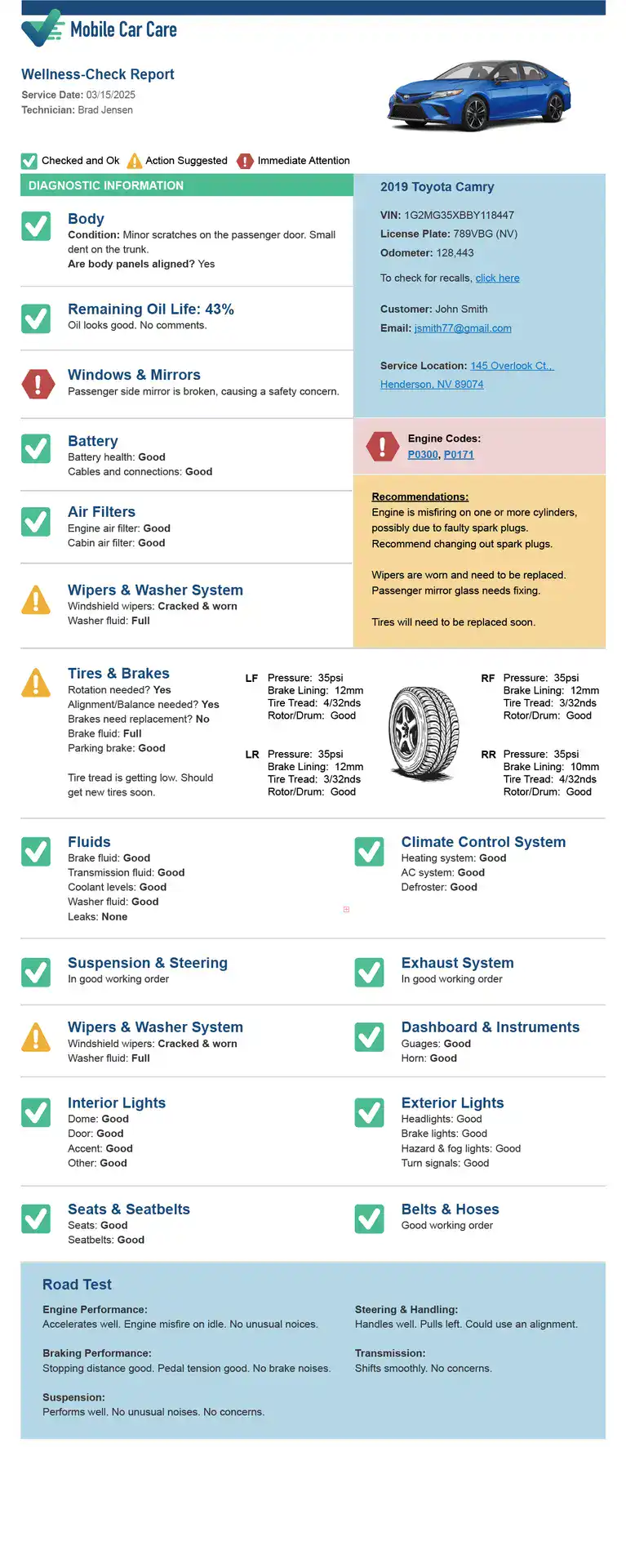
Curbside service isn’t just smart for you; it’s a smarter operational model. For businesses, eliminating the need for a large, public-facing facility can reduce overhead costs. For consumers, the benefits are even more direct, especially when it comes to proactive care. Think of it as preventative medicine for your car. Catching a small issue like worn brake pads or low fluid during a routine check is a simple, low-cost fix. If you ignore it, it can snowball into a major, expensive repair that leaves you stranded. By bringing the technician to you, services like our Quick Check make it easy to stay ahead of problems, saving you from costly surprises and keeping your budget on track.
What Can You Get Curbside?
The idea of curbside service has grown far beyond just putting out the trash cans once a week. It’s now a catch-all term for getting just about anything you need brought directly to you, whether that’s to your car or right to your front door. This shift is all about convenience, saving you precious time and eliminating hassle from your daily routine. From your weekly groceries and Friday night takeout to essential services for your home and vehicle, the “curb” has become the new frontier for on-demand service. It’s a simple concept that has reshaped how we shop, eat, and even manage our chores, proving that the best services are the ones that meet you where you are.
Waste and Recycling
This is the original curbside service and the one we’re all most familiar with. The process is straightforward: you sort your trash and recyclables into designated bins, roll them to the curb on a specific day, and let your local service handle the rest. But there’s more happening behind the scenes. When you participate in curbside recycling, those materials are collected, sorted, and processed to become new products. Many communities are actively working to improve residential recycling efforts, sometimes offering incentives like lower fees to encourage everyone to participate. It’s a foundational service that keeps our neighborhoods clean and supports sustainability.
Restaurant and Grocery Orders
Remember when you had to walk through every aisle of the grocery store or wait inside a restaurant for your takeout order? Curbside pickup has completely changed that. Now, you can place your order online or through an app, drive to the location, and have an employee bring everything directly to your car. This service became incredibly popular because it saves a massive amount of time and reduces stress. For busy parents, professionals, or anyone with a packed schedule, being able to get a week’s worth of groceries or a hot meal without ever leaving your vehicle is a game-changer for efficiency.
Retail Shopping
Retailers big and small have also embraced the curbside model. It offers the instant gratification of in-person shopping combined with the ease of ordering online. You can browse a store’s inventory from your couch, make a purchase, and often pick it up within a few hours. This is perfect for last-minute gifts, essential household items you can’t wait for, or simply avoiding shipping delays. By letting you skip the checkout lines and crowded stores, retailers have found a powerful way to provide a safer, faster, and more convenient shopping experience that fits perfectly into a busy lifestyle.
Other Local Services
The curbside concept isn’t just for picking up goods—it’s also about bringing expert services directly to your home. Think about it: instead of you driving across town and waiting in a lobby, the service comes to you. The best example of this is mobile vehicle maintenance. Rather than scheduling your day around a trip to the mechanic, a certified technician can perform an Essential Care service right in your driveway while you’re at home or work. This modern approach to car care saves you time, gives you peace of mind, and ensures your vehicle gets the attention it needs without disrupting your life.
Common Curbside Challenges and Misconceptions
Curbside services seem simple on the surface—you order something, and it shows up where you are. But behind that convenience is a complex system with its own set of hurdles. From public perception to operational snags, understanding these challenges gives you a better appreciation for what it takes to make these services run smoothly. Let’s clear up a few common misunderstandings.
Busting Myths About Cost and Effectiveness
A frequent assumption is that convenience comes at a premium, making curbside options less effective or more expensive than traditional methods. However, that’s not always the case. Take recycling, for example. Curbside programs are incredibly effective, collecting 70% or more of household recyclables—far more than drop-off centers. Why? Because making it easy for people encourages participation. The same principle applies to other services. A mobile mechanic who comes to you might seem like a luxury, but it saves you time, towing fees, and the stress of a garage visit, making it a highly efficient way to handle car care.
The Problem with Contamination
In the world of curbside services, “contamination” refers to anything that disrupts the process. For recycling, it’s putting a greasy pizza box in the paper bin, which can ruin an entire batch of materials. This issue of quality control exists everywhere. For a curbside grocery order, it might be a melted carton of ice cream. For mobile car maintenance, it could be a miscommunication about your car’s issue that leads to the wrong parts being brought to the appointment. Clear communication and straightforward processes are essential to prevent these mix-ups and ensure you get the quality service you expect.
Managing Fluctuating Market Costs
Behind every curbside service is a supply chain with its own economic pressures. For recycling programs to succeed, there must be a stable market for the collected materials. If the price of recycled plastic drops, it impacts the entire system. Similarly, a mobile service is affected by fluctuating costs for fuel, parts, and skilled labor. Many businesses use subscription models, like our Total Care Plan, to create stability. This approach helps manage unpredictable costs on the back end while offering you consistent pricing and reliable service.
The Importance of Community Education
For any curbside service to work well, everyone involved needs to be on the same page. You, the customer, play a huge role. Just as communities use education and even offer incentives to teach people how to recycle correctly, service providers need to educate their customers. Knowing what’s included in a maintenance check, how to schedule an appointment, or what information to provide helps the entire process run like a well-oiled machine. When you understand how a service works, you can get the most value out of it, ensuring a great experience every time.
Related Articles
- Car Care Subscription Services: A Complete Guide – Mobile Car Care
- Subscription Car Safety Checks: Your Ultimate Guide – Mobile Car Care
- How Mobile Car Service Benefits Your Company Fleet – Mobile Car Care
- Quarterly Car Service Deals: Your Savings Guide – Mobile Car Care
Frequently Asked Questions
Is curbside service more expensive than going somewhere myself? Not necessarily. While some services might have a convenience fee, you have to consider the total value. When you factor in the time you save, the gas you don’t use, and the stress you avoid, curbside services often come out ahead. For something like car care, catching a small problem in your driveway can save you from a huge, expensive repair and a towing bill down the road, making it a very smart financial choice.
How is a service like mobile car maintenance considered “curbside”? The term “curbside” has grown to mean any service that comes directly to you, wherever you are. It’s less about the literal curb and more about the convenience of on-location service. Whether a technician meets you in your driveway at home or in your designated spot at the office, the principle is the same: we bring the expertise to you so you don’t have to disrupt your day.
What happens if there’s an issue with my service or order? Clear communication is the key to any good curbside service. If a grocery order has a mistake, the store will have a process for fixing it. It’s the same with mobile car care. A professional technician will walk you through their findings and explain any recommended work. Reputable providers want to ensure you have a great experience, so they make it easy to address any questions or concerns that come up.
Do I need to be home or present for the entire service? This really depends on the service, but the goal is always to minimize the disruption to your schedule. For a package pickup, you can just leave it on the porch. For vehicle maintenance, you’ll likely need to be there to hand off the keys and approve the work, but you can absolutely go back inside to work or handle other tasks while the technician takes care of your car.
Are these services really better for the environment? They certainly can be. Think about it in terms of efficiency. When one service vehicle follows a planned route to visit multiple homes in an area, it reduces the total number of individual car trips everyone would have taken otherwise. Plus, when it comes to your car, proactive maintenance ensures it runs as efficiently as possible, which improves fuel economy and cuts down on emissions.